
Chemical injection is one of the most important controlled processes in modern industry. Whether a plant is injecting corrosion inhibitor into a pipeline, dosing antiscalant into a cooling water system, or adding precise amounts of reagent into a chemical reactor, the reliability of the injection package directly affects product quality, safety, and operating cost. A chemical injection skid manufacturer must do more than assemble pumps and tanks; it must understand the medium, the process, the control philosophy, and the maintenance reality of the site.
Depamu (Hangzhou) Pump Industry Technology Co., Ltd. has focused on high-end positive displacement pumps and fluid equipment since 2003. With more than 400 employees, a 35,000 m² production site, registered capital of RMB 54 million, and annual output value of around RMB 500 million, the company has built a comprehensive capability that covers research and development, design, manufacturing, skid assembly, testing, and delivery. Its product range includes metering pumps, high-pressure reciprocating pumps, automatic chemical dosing systems, screw pumps, rotary lobe pumps, gear pumps, pneumatic pumps, electric pumps, and related water-steam sampling equipment.
What Is a Chemical Injection Skid and What Should It Include?
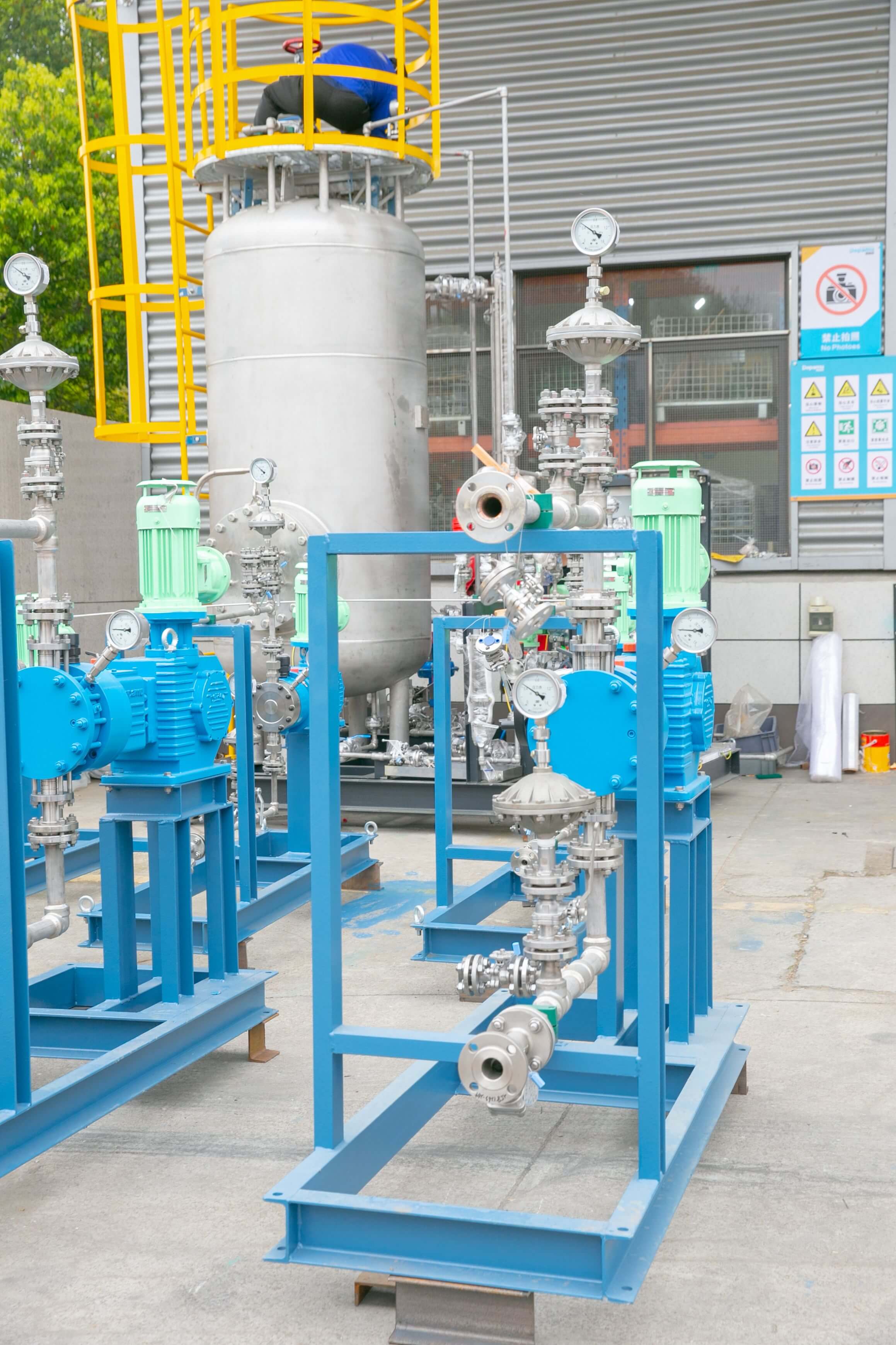
A chemical injection skid is a pre-engineered, skid-mounted package that combines chemical storage, dosing, transfer, control, and safety components on a common structural frame. Instead of installing a pump, tank, valves, instruments, and controls separately at the site, the customer receives a compact and tested unit that can be lifted into position, connected to piping and power, and commissioned with far less site work. This is why the chemical injection skid has become a standard solution in oil and gas, refining, petrochemical, power, and water treatment projects.
The heart of the skid is the metering pump. It determines dosing accuracy, turndown ratio, pressure capability, and reliability. A typical chemical injection skid may include a chemical storage tank, mixer, level instrumentation, one or more metering pumps, pulsation dampener, safety valve, back-pressure valve, calibration pot, pressure gauges, flow meter, piping and valves, drip tray, and a local control panel. For automatic operation, the control system can accept flow signals, 4–20 mA signals, pulse inputs, or PLC/HMI commands so that the injection rate follows the process demand.
The purpose of the skid is to turn a complex dosing process into a repeatable, compact, and well-documented system. A good chemical injection skid manufacturer will ask for a process datasheet before selecting components, because the wrong pump or piping material can lead to poor dosing accuracy, leakage, corrosion, or excessive maintenance.
Manufacturing Capability of a Chemical Injection Skid Manufacturer
Skid quality depends on the manufacturer’s ability to control the pump, the fabrication, the instrumentation, and the final test. Depamu was founded in 2003 and has grown into a high-tech enterprise with more than 400 employees and a 35,000 m² production base. The company introduced advanced German technology and has continued to develop its own range of positive displacement pumps and fluid systems. It operates three brands, Depamu, Kenirova, and Dailepu, and aims to become a leading global provider of fluid equipment.
For a chemical injection skid, in-house pump manufacturing is a major advantage. The metering pump is not a purchased accessory; it is a core product. Depamu’s hydraulic diaphragm metering pumps are designed for precise dosing and leak-free operation, which is important when the medium is corrosive, volatile, toxic, or expensive. The company also produces high-pressure process reciprocating pumps that can reach pressures above 35 MPa, making them suitable for high-pressure injection, pipeline boosting, and oil and gas field applications. This combination of metering and high-pressure pump technology allows the company to support both low-flow chemical dosing and demanding high-pressure injection duties.
The company’s sales have grown steadily in recent years, from approximately RMB 450 million in 2023 to approximately RMB 510 million in 2024 and approximately RMB 560 million in 2025. Its products are used in oil refining and petrochemicals, oil and gas fields, nuclear power, electric power, metallurgy, new energy, environmental water treatment, new materials, and food processing. This broad application experience is valuable when a customer needs a standard chemical injection skid or a custom chemical injection package for a difficult medium.
Key Design Factors When Specifying a Chemical Dosing Skid
Every chemical injection skid supplier should ask for a clear process datasheet. Small changes in viscosity, specific gravity, vapor pressure, solids content, or temperature can change pump selection, piping design, and control logic. The following factors are essential for a reliable chemical dosing skid.
| Design Parameter | Engineering Consideration |
|---|---|
| Chemical properties | Corrosion, toxicity, viscosity, vapor pressure, and compatibility with wetted materials |
| Flow rate and turndown | Minimum and maximum dosing rate, required accuracy, and pump turndown ratio |
| Discharge pressure | Pump pressure rating, piping class, relief valve setting, and back-pressure control |
| Temperature | Material limits, thermal expansion, pump head design, and insulation requirements |
| Solids and abrasives | Valve type, flushing arrangement, filtration, and wear-resistant materials |
| Control mode | Manual stroke adjustment, 4–20 mA, pulse input, flow-paced control, or PLC/HMI integration |
| Site conditions | Indoor or outdoor installation, ambient temperature, hazardous area classification, and available utilities |
| Safety and maintenance | Leak detection, drip tray, relief protection, ventilation, access space, and spare parts strategy |
For example, a low-flow antiscalant dosing skid may use a hydraulic diaphragm metering pump with a calibration pot and flow-paced control. A high-pressure corrosion inhibitor injection package for an oilfield pipeline may require a high-pressure reciprocating pump, special piping, and a more robust relief system. The same chemical injection skid company should be able to explain why one configuration is selected over another, not simply offer the lowest price.
Chemical Injection Skid Applications Across Industries
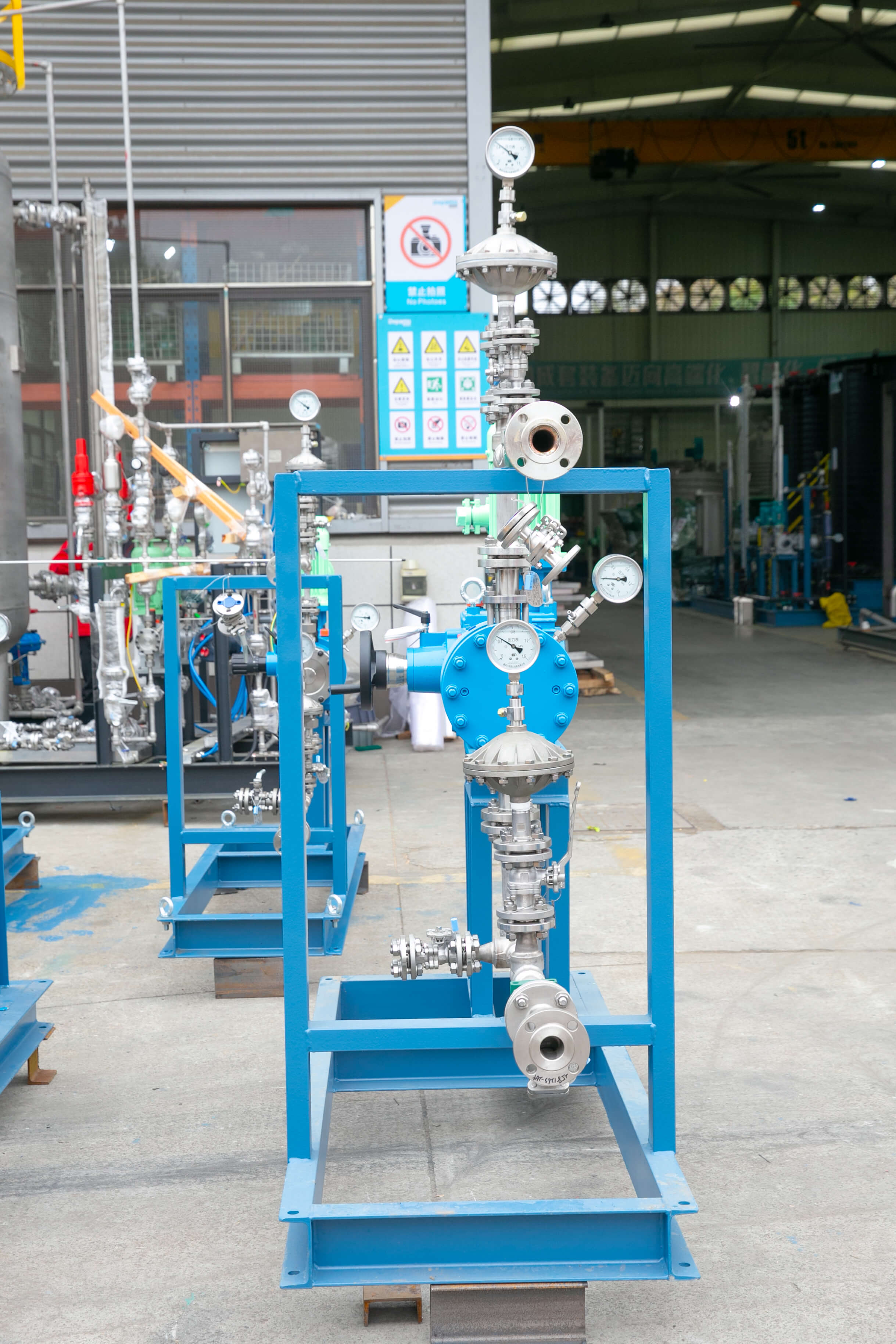
Chemical injection skids are used wherever a controlled amount of chemical must be added to a process. The required flow, pressure, and materials vary widely by industry. Depamu’s application experience reflects this diversity. Oil refining and petrochemicals account for about 41% of sales, oil and gas fields about 23%, nuclear power, electric power, metallurgy, and new energy about 15%, environmental water treatment about 13%, new materials and food about 3%, and other industries about 5%.
In oil refining and petrochemical plants, injection skids are used for corrosion inhibitors, antifoulants, desalting chemicals, polymerization additives, and other process chemicals. The duty is often continuous, and the skid must handle flammable or hazardous media with proper materials and safety features. In oil and gas fields, chemical injection systems for oil and gas applications may dose methanol, hydrate inhibitors, demulsifiers, scale inhibitors, or biocides. These sites often require high-pressure injection, remote operation, and resistance to harsh outdoor conditions.
In nuclear power, electric power, and metallurgy, chemical dosing skids support boiler water treatment, condensate polishing, steam-water cycle chemistry, and wastewater treatment. Accuracy and reliability are critical because small dosing errors can affect corrosion control and equipment life. In environmental water treatment, chemical dosing skid for water treatment applications includes coagulant dosing, flocculant dosing, pH adjustment, disinfection, and antiscalant injection. Flow-paced control is commonly used so that the chemical dose follows changes in plant flow.
In new materials and food processing, injection skids may be used for precise additive dosing, pH control, or small-volume reagent injection. The materials and cleaning requirements depend on the process. A chemical injection skid supplier should be able to adapt the package to the industry rather than offer one standard design for every application.
How to Select the Right Chemical Injection Skid Manufacturer
Choosing a chemical injection skid manufacturer is not only a purchasing decision; it is a technical partnership. The supplier should understand pump selection, skid layout, control logic, safety, and site commissioning. The following selection checklist can help B2B buyers compare proposals.
| Selection Area | Questions to Ask |
|---|---|
| Pump capability | Does the manufacturer design and produce its own metering pumps and high-pressure pumps? |
| Skid engineering | Can the supplier provide piping design, layout, material selection, and skid fabrication? |
| Control integration | Can the control panel support flow-paced dosing, alarms, remote signals, and data communication? |
| Testing and documentation | Is the skid factory assembled and tested? What test reports and drawings are provided? |
| Customization | Can the supplier handle special materials, multi-point injection, high pressure, or limited space? |
| After-sales support | Are spare parts, commissioning support, and maintenance guidance available? |
A reliable chemical injection skid supplier will provide a clear technical proposal with a process description, equipment list, material selection, control philosophy, utility requirements, and scope of supply. The quotation should identify what is included and what is excluded, especially for site installation, utilities, and commissioning. This clarity reduces project risk and helps compare offers on a like-for-like basis.
Automatic Chemical Dosing Skid vs. Manual Dosing
Automatic chemical dosing skids are increasingly preferred because they reduce operator exposure and improve dosing consistency. A manual system depends on the operator to adjust the pump stroke or valve position based on a test result or a visual reading. An automatic skid can follow a flow signal, receive a 4–20 mA setpoint from the plant control system, and log alarms and operating data. For critical chemical injection, this difference can be significant.
| Feature | Manual Dosing | Automatic Chemical Dosing Skid |
|---|---|---|
| Dosing accuracy | Depends on operator adjustment and test frequency | Consistent setpoint and flow-paced control |
| Operator exposure | Higher during manual adjustment and sampling | Lower through remote monitoring and automation |
| Response to process change | May lag until the next operator round | Can respond to flow or analyzer signals in real time |
| Alarm management | Limited without additional instrumentation | Level, pressure, flow, and pump alarms can be integrated |
| Documentation | Paper logs and manual records | PLC/HMI data logging and historical trends |
Custom Chemical Injection Packages for Complex Media
Not every chemical injection duty can be handled by a standard skid. High pressure, high temperature, corrosive chemicals, viscous fluids, volatile liquids, and slurries with solids require careful engineering. Depamu’s product range includes hydraulic diaphragm metering pumps, high-pressure process reciprocating pumps, automatic chemical dosing systems, screw pumps, rotary lobe pumps, gear pumps, and other fluid equipment. This breadth allows the company to select the right pump technology for the medium rather than forcing one pump type into every application.
For high-pressure injection, a high-pressure reciprocating pump can provide stable flow and continuous operation, with pressure capability above 35 MPa for demanding duties. For precise low-flow dosing of aggressive chemicals, a hydraulic diaphragm metering pump can provide leak-free operation and adjustable stroke control. For a complete automatic chemical dosing skid, the package can integrate chemical storage, mixing, metering, piping, and control on one frame. Custom options may include multi-pump configurations, multi-point injection, special wetted materials, outdoor enclosures, winterization, and remote monitoring interfaces. The exact configuration should always be confirmed against the process datasheet and site requirements.
Installation, Commissioning, and Maintenance Guidance
A skid-mounted design simplifies site work, but correct installation is still essential. The skid should be lifted using the designated lifting points, placed on a level foundation, and anchored according to the project drawings. Piping should be aligned without forcing the pump flanges, because excessive pipe stress can cause leakage or misalignment. Before commissioning, the suction and discharge lines should be flushed and checked for debris.
Commissioning should include pump calibration, relief valve setting, control loop checks, alarm testing, and a leak test. The calibration pot or flow meter should be used to confirm the dosing rate at several stroke settings. If the process allows, the system should be started with water or a safe flushing fluid before introducing the actual chemical. Operators should be trained on normal start-up, normal shutdown, emergency shutdown, and chemical changeover procedures.
Maintenance requirements depend on the chemical and the pump type, but a practical schedule usually includes:
- Daily checks of pump noise, leakage, pressure, and chemical tank level.
- Weekly inspection of piping joints, valves, and relief devices.
- Periodic calibration of the metering pump using the calibration pot or flow meter.
- Replacement of diaphragms, valve seats, seals, and filters according to the manufacturer’s manual and actual wear.
- Verification of control signals, alarms, and remote monitoring functions.
- Checking the lubricant in the pump drive or hydraulic system where applicable.
Following the manufacturer’s manual is important because maintenance intervals vary with chemical compatibility, temperature, and operating hours. A chemical injection skid manufacturer that provides clear documentation and spare parts support helps the plant avoid unplanned downtime.
FAQ
What is a chemical injection skid?
A chemical injection skid is a skid-mounted package that combines chemical storage, metering pumps, piping, valves, instrumentation, and controls for accurate chemical dosing. It is factory assembled and tested so that site installation is faster and more predictable.
How do I choose a chemical injection skid manufacturer?
Choose a manufacturer with in-house pump design, skid fabrication capability, control integration experience, factory testing, and clear documentation. Review the technical proposal carefully, including the scope of supply, material selection, control philosophy, and after-sales support.
Can a chemical injection skid be customized for high pressure or corrosive media?
Yes. Chemical injection skids can be customized with different pump types, wetted materials, piping classes, relief systems, and control options. High-pressure reciprocating pumps and hydraulic diaphragm metering pumps are often selected for demanding pressure or corrosive duty, depending on the process data.
What is the difference between a chemical injection skid and a chemical dosing system?
A chemical dosing system may refer to the pump and control components alone, while a chemical injection skid is the complete skid-mounted package that includes the tank, mixer, piping, instrumentation, and controls. The skid is assembled and tested as a single unit before delivery.
How is the chemical injection skid tested before delivery?
Factory testing typically includes pump calibration, pressure and leak tests, control loop checks, alarm verification, and functional testing of the complete package. The exact test plan should be agreed with the customer during the project phase.
What information is needed to request a quotation from a chemical injection skid supplier?
Provide the chemical name and concentration, required flow rate, discharge pressure, temperature, viscosity, solids content, control mode, site conditions, utility data, and delivery requirements. This information allows the supplier to prepare an accurate technical proposal and quotation.
Summary
Selecting a chemical injection skid manufacturer is a process of matching process conditions with engineering capability. Depamu’s long experience in metering pumps, high-pressure reciprocating pumps, and automatic dosing systems makes it a suitable partner for B2B buyers who need a standard or custom chemical injection package. A good skid is not just a collection of components; it is a properly engineered, factory-tested, and supported system that delivers accurate dosing, safe operation, and low maintenance over its service life.