
A high pressure process pump is rarely a commodity purchase. It sits on a critical process line where a single unscheduled stop can shut down a refinery unit, interrupt an oilfield water-injection programme, or break the dosing discipline of a water treatment train. That is why procurement teams, EPC contractors and plant engineers spend so much time searching for a high pressure process tubular pump manufacturer they can trust for decades, not just for one delivery. This guide explains what a high pressure process tubular pump actually does, which parameters define a correct selection, where these machines are used across heavy industry, and how to audit a supplier before you place an order.
DEPAM (Hangzhou) Pump Industry Technology Co., Ltd. — founded in 2003 and focused on high-end positive displacement pumps and fluid equipment — has built its business around exactly this type of specification-driven demand. With more than 400 employees, a plant area of roughly 35,000 m², registered capital of RMB 54 million and annual output value of around RMB 500 million, the company designs, manufactures and packages pumps for petroleum refining, chemicals, oil and gas fields, nuclear power, electric power, metallurgy, new energy, environmental water treatment, new materials and food processing. This article shares the technical and commercial logic behind a good high pressure process pump decision.
What Is a High Pressure Process Tubular Pump and Where Does It Fit?
In international B2B sourcing, engineers and buyers often use the term high pressure process tubular pump to describe a positive displacement process pump arranged in a tubular, in-line or barrel-style configuration, designed to push process fluid at high pressure through a closed pipeline route. Unlike a general-service centrifugal pump, whose head depends on impeller speed and flow, a positive displacement pump delivers a nearly constant flow regardless of discharge pressure — a characteristic that becomes essential when the downstream system is a high-pressure reactor, a long-distance pipeline, a wellhead injection string or a dosing point.
The working principle is straightforward but demanding. A plunger or a diaphragm reciprocates inside a pressure-retaining body; suction and discharge check valves rectify the flow; and the displacement volume per stroke, multiplied by stroke rate, defines the flow rate. Because the pressure boundary is separated from the drive by a robust hydraulic or mechanical design, these pumps can hold high discharge pressures continuously while handling media that would destroy a standard centrifugal impeller — slurries with fine solids, high-viscosity polymers, hot process streams and aggressive chemicals.
The practical consequence is that a high pressure process tubular pump is selected with a different mindset from a water transfer pump. Flow must be verified across the whole operating envelope, the pressure rating must include transient and relief conditions, and the material of construction of the wetted parts must match the fluid rather than the budget. Get these three factors right and the pump becomes a quiet, reliable asset; get them wrong and the plant inherits a maintenance problem for its entire service life.
Inside DEPAM: A High Pressure Process Tubular Pump Manufacturer with In-House Capability
DEPAM operates as an integrated manufacturer rather than a trading intermediary. Its scope covers product research and development, engineering design, manufacturing, assembly, factory testing and complete package delivery. The company introduced advanced German technology and has continued to develop its own hydraulic and mechanical platforms over more than two decades. Three brands operate under the group — DEPAM, Kenuoluowa and Dailepu — serving different product families and market segments while sharing the same engineering and quality infrastructure.
The product portfolio is deliberately broad, because process plants rarely buy a single isolated machine. Alongside its high-pressure process reciprocating pump platform, DEPAM manufactures metering pumps (including hydraulic diaphragm metering pumps), pneumatic pumps, electric pumps, screw pumps, rotary lobe pumps, gear pumps, emulsifying pumps, special centrifugal pumps, chemical dosing packages, water and steam sampling systems, water treatment equipment and supercritical extraction units. For an EPC contractor or an owner-operator, this means a single high pressure process tubular pump supplier can also cover chemical injection skids, sampling systems and auxiliary transfer duty, reducing interface risk and spare-parts fragmentation.
Customisation is a core part of the offer rather than an exception. Based on the client’s medium characteristics, flow rate, pressure, temperature and site process requirements, DEPAM supplies standard products, non-standard products and fully customised fluid handling solutions. Typical customisation drivers include high-pressure transfer, precision dosing, chemical agent injection, process boosting and complex media transport — each of which changes valve design, diaphragm or plunger selection, sealing philosophy, motor rating and control architecture.
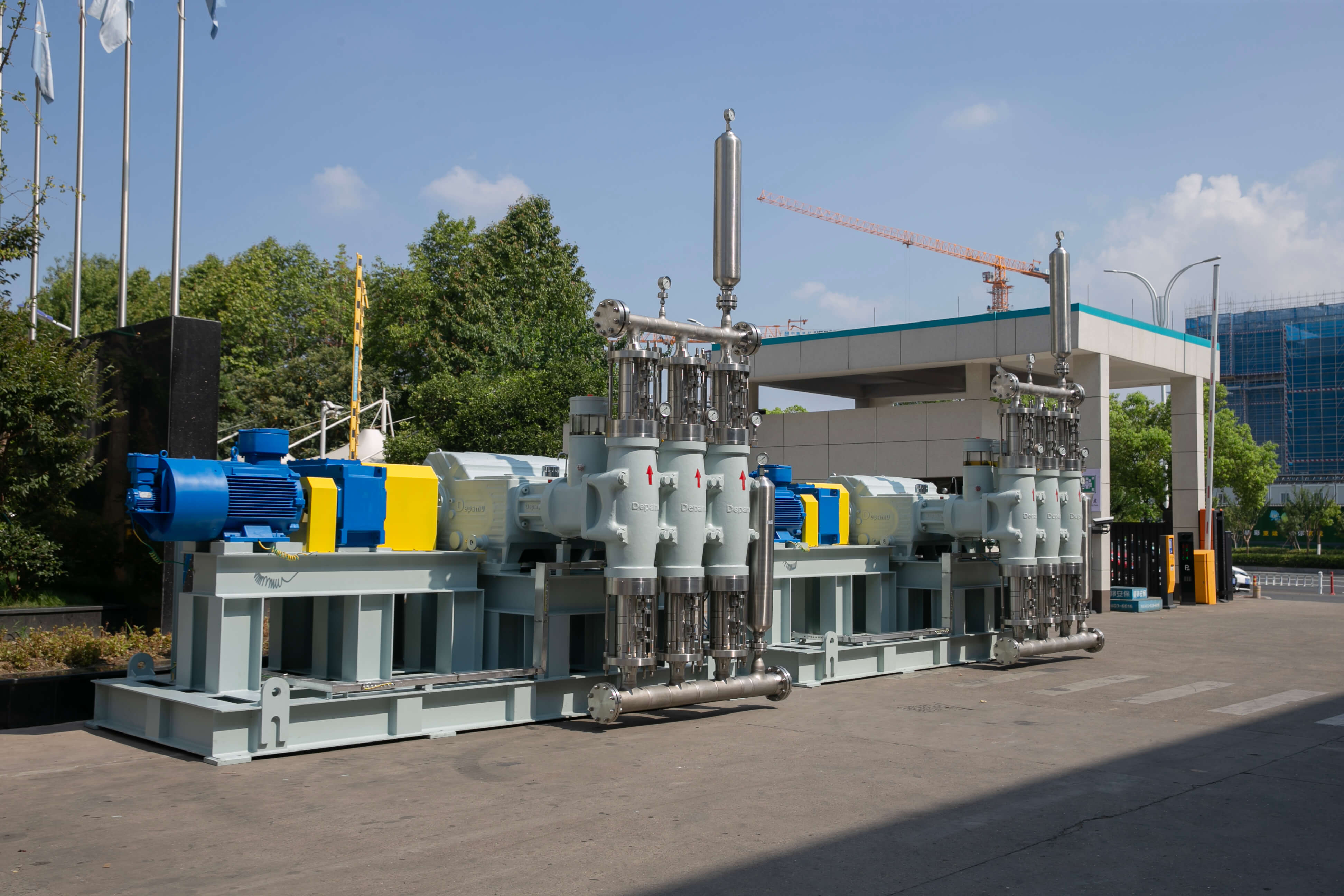
Key Selection Parameters for a High Pressure Process Pump
Most specification failures trace back to incomplete enquiry data. A high pressure process tubular pump manufacturer can only guarantee performance if the enquiry states the real operating envelope, including the worst case. The table below summarises the information a competent supplier will request before issuing a technical proposal and quotation.
| Parameter | What to provide | Why it drives the design |
|---|---|---|
| Flow rate | Normal, minimum and maximum flow, plus turndown requirement | Sets plunger or diaphragm size and stroke rate range |
| Discharge pressure | Design, operating and relief pressure, including transients | Defines pressure boundary, valve loading and drive power |
| Temperature | Minimum and maximum fluid temperature | Influences elastomer choice, clearances and cooling needs |
| Viscosity and density | Viscosity curve or range, specific gravity | Affects valve type, suction conditions and absorbed power |
| Solids content | Concentration, particle size and abrasiveness | Determines wear-resistant materials and valve design |
| Corrosivity | Chemical composition, pH, chloride level | Selects wetted metallurgy, diaphragm and seals |
| Suction conditions | Available NPSH, suction pressure, line layout | Prevents cavitation and loss of volumetric efficiency |
| Duty cycle | Continuous or batch, hours per day, start-stop frequency | Sizes drive train, bearings and lubrication strategy |
| Control and instrumentation | Manual, variable speed, PLC or DCS interface | Defines actuator, control panel and signal scope |
| Site conditions | Ambient temperature, hazardous area, utilities, footprint | Sets motor protection class, skid layout and ancillaries |
Applications: Where High Pressure Process Pumps Deliver Value
DEPAM’s revenue mix reflects how heavily process industries depend on this equipment. Petroleum refining and chemicals account for roughly 41% of sales, oil and gas fields about 23%, nuclear power, electric power, metallurgy and new energy together around 15%, environmental water treatment about 13%, new materials and food around 3%, and other industries the remaining 5%. Each segment places a different demand on the pump, and the same platform is configured very differently from one project to the next.
In oil and gas fields, the dominant duty is water injection and high-pressure transfer. Large volumes of produced water or injection water must be pushed into the reservoir at sustained pressure; flow stability and long continuous runtimes matter more than peak efficiency. In refining and petrochemical plants, high-pressure process pumps handle feedstock transfer, reactor feed, quench and wash-water duty, often with hot or corrosive streams. In chemical plants and water treatment, the emphasis shifts towards precision: hydraulic diaphragm metering pumps inject corrosion-inhibitors, antiscalants, biocides and pH-adjusting agents with repeatable accuracy and zero leakage. Boiler water treatment, circulating water systems and wastewater plants frequently combine metering pumps with a complete automatic chemical dosing package — tanks, agitators, piping and intelligent control pre-assembled and factory-tested so that site work is limited to connecting power and pipework.
Other applications include pipeline boosting over long distances, high-viscosity polymer and resin transfer, and process duties in metallurgy, new energy materials and food production where hygiene, temperature control or shear sensitivity influences the pump choice. Because a single family of high pressure process pumps cannot cover all of these, a manufacturer that also builds screw pumps, rotary lobe pumps, gear pumps and special centrifugal pumps can recommend the right technology instead of forcing one product into every duty.
Comparing Pump Technologies for High-Pressure Duty
Buyers frequently ask why a positive displacement pump is preferred over a centrifugal unit at high pressure. The comparison below summarises the practical differences that influence capital and operating cost. Values are indicative and should always be confirmed against a specific project datasheet.
| Criterion | High-pressure reciprocating / tubular pump | Centrifugal pump | Rotary screw / lobe pump |
|---|---|---|---|
| Typical pressure capability | Very high (up to 35 MPa and above on process platforms) | Moderate; falls sharply at low flow | Moderate to high, limited by seals and clearances |
| Flow vs pressure behaviour | Nearly constant flow, almost independent of pressure | Flow varies strongly with system head | Flow roughly proportional to speed |
| Viscous media | Excellent, with correct valve selection | Poor efficiency at high viscosity | Very good for clean, high-viscosity fluids |
| Solids in suspension | Handled with abrasion-resistant trim within limits | Tolerated but causes rapid wear | Good for gentle, non-abrasive solids |
| Dosing accuracy | High — adjustable by stroke length and frequency | Limited without additional control | Moderate |
| Pulsation | Inherent; managed with dampeners | Low | Low |
Selection Guide: How to Specify the Right Configuration
A structured enquiry shortens the engineering cycle and reduces the risk of later change orders. The following sequence works well for both new projects and replacements of existing high pressure process pumps.
- Define the process duty first. State whether the pump is for continuous transfer, batch dosing, pipeline boosting or injection, and confirm the required turndown.
- Fix the full operating envelope. Capture maximum pressure including relief settings, minimum and maximum flow, and the worst-case temperature.
- Characterise the medium. Provide viscosity range, density, solids content, pH, chlorides and any tendency to crystallise, polymerise or degas.
- Decide the leakage philosophy. For toxic, volatile or high-value chemicals, specify a hydraulic diaphragm or diaphragm-protected design rather than a packed plunger.
- Confirm suction conditions. Calculate available NPSH and review the suction line layout; positive displacement pumps have their own cavitation and acceleration-loss limits.
- Select materials of construction. Match wetted parts to the fluid, and specify elastomer grades explicitly rather than relying on default selections.
- Define control scope. Decide between manual stroke adjustment, variable-speed drive, and full PLC/DCS integration with remote setpoint and feedback.
- Agree documentation and testing. Clarify the inspection scope, material certificates, test reports and the package boundary before purchase order release.
Installation, Commissioning and Safe Operation
Even a well-selected pump can fail early if installation is rushed. High-pressure positive displacement pumps are sensitive to suction-side losses, to pipe strain, and to the absence of adequate pressure protection. The discharge line must always include a relief valve or equivalent protection set at or below the pump’s rated pressure, and pulsation dampeners should be sized for the actual flow and line length rather than chosen by rule of thumb.
Before commissioning, verify that the foundation or skid is level and rigid, that the coupling alignment is within tolerance, that all suction joints are airtight, and that the suction strainer is clean. Run the pump with the discharge open to atmosphere or to a safe low-pressure route for a short period, checking rotation direction, noise, vibration and current draw. Only then bring the system up to design pressure gradually, in steps, while watching for seal leakage, valve knocking and abnormal temperature rise. Operators should be trained on emergency shutdown, relief-valve inspection and the correct procedure for switching between duty and standby units, and all rotating parts must be guarded with appropriate personal protective equipment requirements stated in the operating manual.
Maintenance Planning and Troubleshooting
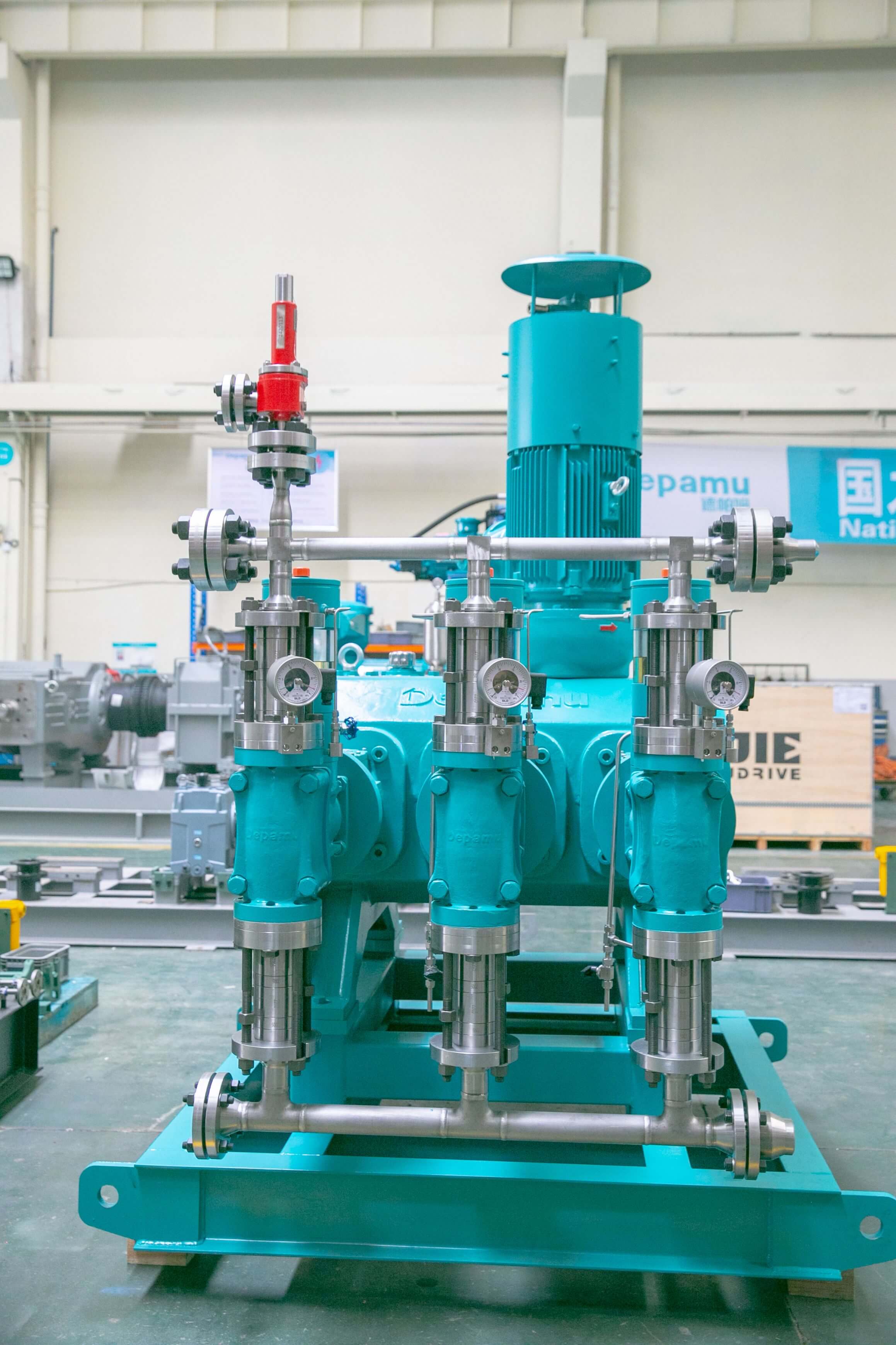
Maintenance cost in high-pressure service is dominated by three wear points: check valves, diaphragms or plunger packing, and the hydraulic end of diaphragm pumps. A preventive programme built around operating hours and measured performance — rather than calendar intervals alone — usually gives the best availability. Track discharge pressure, flow, power draw and valve temperature; a slow drift in any of these signals internal wear long before a failure occurs.
| Symptom | Likely cause | Recommended action |
|---|---|---|
| Loss of flow at stable pressure | Worn or fouled check valves, air ingress on suction | Inspect and clean valves, check suction joints and strainer |
| Pressure cannot be reached | Internal bypass, worn diaphragm or packing, relief valve passing | Test relief valve, inspect hydraulic end, replace wear parts |
| Knocking or vibration | Cavitation, gas in the fluid, loose foundation, pulsation resonance | Review NPSH margin, vent the line, tighten anchoring, resize dampener |
| Overheating of hydraulic end | Low hydraulic oil level, blocked cooling, incorrect oil grade | Restore oil level, clean cooling path, confirm specified lubricant |
| Seal or diaphragm leakage | Chemical incompatibility, ageing, pressure transients | Re-verify material selection, add surge protection, replace element |
Spare-parts strategy deserves the same attention as the pump itself. Wear parts that are cheap but slow to arrive are effectively expensive: a two-week wait for a valve kit can cost far more than the part. When evaluating any high pressure process tubular pump company, ask for a recommended first-year spares list, standard lead times, and confirmation that critical items remain available for the expected service life of the plant.
How to Evaluate a High Pressure Process Tubular Pump Supplier
Price alone is a poor selection criterion in this equipment class. A supplier should be able to demonstrate engineering capability, not just catalogue availability: a written technical proposal with calculated performance, material justification for the specific medium, a clear drawing of the package boundary, and a test regime that is agreed before manufacturing starts.
Site-support capability matters too. Confirm whether the supplier can provide installation supervision, commissioning assistance, operator training and spare-parts support in your region, and whether it can deliver a fully assembled and factory-tested package so that site work is limited to utilities and pipework. If the duty involves multiple technologies — a high-pressure injection pump plus metering pumps plus a dosing skid — a manufacturer that builds all three in-house reduces the number of interfaces you must manage and gives one point of accountability for performance.
Finally, look at continuity. DEPAM’s sales have grown from roughly RMB 450 million in 2023 to RMB 510 million in 2024 and RMB 560 million in 2025, which reflects both expanding process-industry demand and the company’s ability to keep investing in engineering capacity. A supplier with stable growth, an established manufacturing base and a broad installed footprint across refining, oil and gas, power, nuclear, metallurgy and water treatment is more likely to be present when you need support in year ten of the pump’s life.
Efficiency, Digitalisation and Life-Cycle Cost
High-pressure pumping is energy intensive, and the total cost of ownership is dominated by electricity, wear parts and downtime rather than by the initial purchase price. Selecting a pump whose volumetric efficiency is verified at the actual duty point, rather than at a catalogue best point, is the first lever. The second is control: variable-speed drives and automated stroke adjustment let operators match output to real demand instead of throttling or bypassing, which reduces both energy use and wear.
Digitalisation is changing how these assets are managed. Intelligent dosing packages with PLC control, flow feedback and remote communication allow plants to log injection volumes, detect drift and schedule maintenance on condition rather than on the calendar. On the manufacturing side, an integrated design-to-delivery workflow shortens the path from datasheet to tested skid, which matters for projects with compressed schedules. For high pressure process tubular pump manufacturers serving global markets, the ability to combine mechanical reliability with clean, documented control interfaces is becoming as important as pressure capability itself.
FAQ
What is the difference between a high pressure process tubular pump and a standard centrifugal pump?
A high pressure process tubular pump is a positive displacement machine that delivers a nearly constant flow almost independent of discharge pressure, which suits high-pressure injection, dosing and viscous or solids-containing media. A centrifugal pump generates head through impeller speed and its flow falls sharply as system resistance rises, so it is better suited to high-flow, lower-pressure transfer duty.
Which information does a high pressure process tubular pump manufacturer need to quote accurately?
You should provide flow range including minimum and maximum, design and operating discharge pressure with relief settings, fluid temperature range, viscosity and density, solids content and particle size, chemical composition and pH, available NPSH, duty cycle, hazardous-area classification, control requirements and site utility conditions. Complete data allows the supplier to size the hydraulic end, valves, materials and drive correctly on the first proposal.
Can a high pressure process pump handle corrosive, volatile or toxic chemicals without leakage?
Yes, provided the correct sealing philosophy is selected. Hydraulic diaphragm metering pumps are designed so that the process medium is fully contained by a diaphragm, with no packed gland in contact with the fluid. This makes them suitable for aggressive, volatile or high-value chemicals where leakage is unacceptable. The diaphragm and wetted materials must still be matched to the specific chemical and temperature.
Do you supply complete chemical dosing packages as well as individual pumps?
Yes. DEPAM supplies automatic chemical dosing packages that integrate chemical storage, dissolving, agitation, metering and automatic control into a single skid. The package uses metering pumps as the core, together with solution tanks, agitators and an intelligent control system, supports dry or liquid chemical feeding and multi-point dosing, and is assembled and tested before shipment so that site work is limited to connecting piping and power.
How often should a high pressure process pump be maintained?
Maintenance intervals should be based on duty severity and monitored performance rather than on a fixed calendar alone. As a practical approach, check suction strainers, valve condition, oil level, coupling alignment and vibration at regular short intervals, and plan valve and diaphragm or packing replacement according to measured flow and pressure drift. Continuous-duty high-pressure units in abrasive or corrosive service normally require more frequent inspection than clean-fluid installations.
Can the pump be customised for a specific medium, flow and pressure combination?
Yes. Customisation is a standard part of the manufacturing scope. Based on medium characteristics, flow, pressure, temperature and site process requirements, the supplier can provide standard products, non-standard variants or fully engineered fluid solutions, covering changes to wetted materials, valve design, diaphragm or plunger configuration, drive rating, instrumentation and package layout.
Summary
Choosing a high pressure process tubular pump manufacturer is ultimately a decision about process reliability. The pump must match the real operating envelope, the materials must match the medium, and the supplier must be able to demonstrate engineering depth, testing discipline and long-term support rather than simply quoting the lowest price. A structured enquiry covering flow, pressure, temperature, viscosity, solids, corrosivity and control requirements is the fastest route to an accurate proposal and a pump that performs as specified.
DEPAM (Hangzhou) Pump Industry Technology Co., Ltd. addresses this requirement with an integrated model — research and development, design, manufacturing, package assembly and factory testing under one roof — supported by metering pumps, high-pressure process reciprocating pumps, chemical dosing packages and a broad range of complementary fluid equipment. For buyers sourcing high-pressure process duty in refining, chemicals, oil and gas, power, nuclear, metallurgy, new energy or water treatment, the practical next step is to send a complete datasheet and ask for a technical proposal that explains the selection rather than only the price.