
Precise chemical dosing is one of the quiet foundations of reliable industrial production. In petrochemical plants, water treatment facilities, power stations, food processing lines, and new energy processes, the right amount of chemical must be injected at the right pressure, at the right moment, and with repeatable accuracy. A hydraulic diaphragm metering pump is often the core equipment that makes this possible. Choosing a hydraulic diaphragm metering pump supplier is therefore an engineering decision, not only a purchasing transaction.
This guide explains how hydraulic diaphragm metering pumps work, what B2B buyers should evaluate in a supplier, how to prepare a useful quotation request, and how to plan installation and maintenance. It also outlines how Depamu (Hangzhou) Pump Industry Technology Co., Ltd. supports standard, non-standard, and custom fluid solutions for industrial dosing and transfer duties.
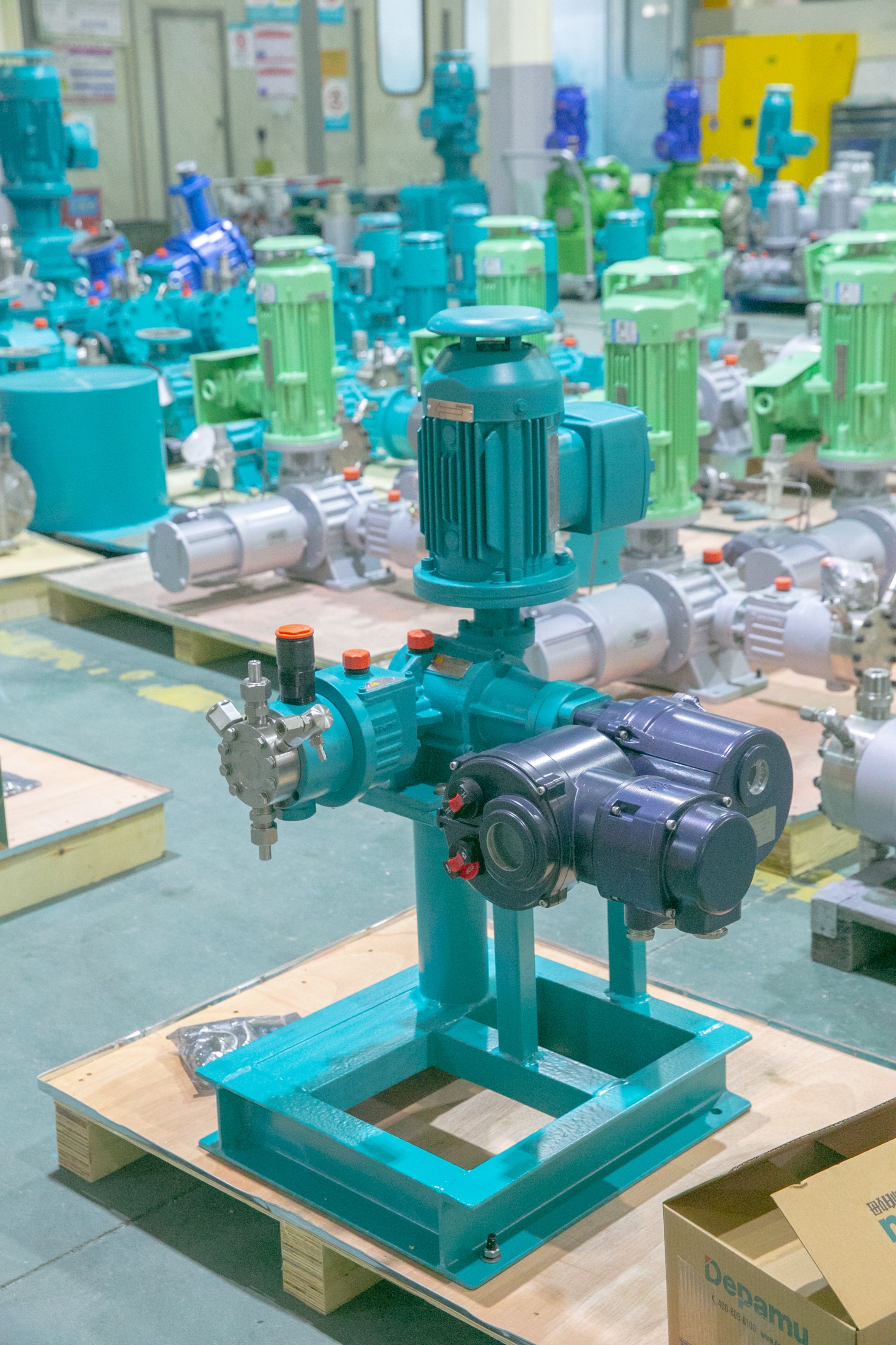
What Is a Hydraulic Diaphragm Metering Pump and Why Does the Supplier Matter?
A hydraulic diaphragm metering pump uses hydraulic fluid to drive a flexible diaphragm. The diaphragm separates the hydraulic side from the process fluid, so the pumped chemical does not come into direct contact with the plunger or hydraulic oil. The movement of the diaphragm displaces a precise volume of liquid into the discharge line. By adjusting stroke length and operating frequency, the operator can change the dosing rate in a controlled and repeatable way.
This design is valued in chemical dosing because it combines accurate metering with strong containment. The hydraulic drive allows the pump to work against high discharge pressures while the diaphragm provides a barrier against leakage. For corrosive, toxic, volatile, or high-pressure media, that barrier is important for both process safety and environmental protection. A well-selected hydraulic diaphragm metering pump can be applied to chemical injection, boiler water treatment, cooling water treatment, wastewater dosing, and many other process duties.
The supplier matters because a metering pump is only one part of a dosing system. The pump must match the medium, flow rate, pressure, temperature, viscosity, control method, and site conditions. A capable hydraulic diaphragm metering pump supplier should be able to review the process data, recommend a suitable configuration, confirm materials and connections, and support commissioning. When the supplier is also an industrial metering pump manufacturer with in-house engineering and manufacturing, communication is usually more direct and customization is easier to manage.
How to Evaluate a Hydraulic Diaphragm Metering Pump Supplier
B2B buyers should look beyond a product list and evaluate whether the supplier can support the entire equipment lifecycle. A useful starting point is engineering capability. Can the supplier interpret a process data sheet, ask the right technical questions, and propose a pump or packaged system that fits the duty? For chemical dosing, small differences in viscosity, backpressure, temperature, or control logic can change the recommended configuration. A supplier that only quotes a model number may leave the integration work to the buyer.
Manufacturing scale and product breadth are also relevant. Depamu was established in 2003 and has more than 400 employees, a factory area of about 35,000 square meters, registered capital of RMB 54 million, and annual production value of approximately RMB 500 million. Its portfolio includes metering pumps, high-pressure process reciprocating pumps, pneumatic pumps, electric pumps, chemical dosing packages, water and steam sampling equipment, water treatment equipment, screw pumps, rotary lobe pumps, and gear pumps. This breadth allows the company to discuss a single pump or a complete fluid package rather than forcing every duty into one product family.
Industry experience should be reviewed in the context of the buyer’s own process. Depamu’s sales distribution shows strong activity in petrochemical and chemical processing at about 41%, oil and gas fields at about 23%, nuclear, power, metallurgy, and new energy at about 15%, environmental water treatment at about 13%, and new materials and food at about 3%, with other industries making up the remaining 5%. These shares do not replace a detailed technical review, but they do show where the manufacturer has concentrated experience. Buyers can ask for similar duty references, material recommendations, and service arrangements without expecting confidential customer information.
- Check whether the supplier can provide standard products, non-standard products, and custom fluid solutions.
- Review the ability to supply pumps, dosing skids, controls, and accessories as one coordinated package.
- Confirm which documents, drawings, and operating information are available for the proposed scope.
- Ask how spare parts and maintenance recommendations are handled after delivery.
- Clarify who supports commissioning and troubleshooting when the pump is installed on site.
Hydraulic Diaphragm Metering Pump Quotation: Specifications Buyers Should Prepare
An accurate hydraulic diaphragm metering pump quotation depends on clear process information. If the buyer sends only a flow rate, the supplier must make assumptions about pressure, material compatibility, control method, and installation. Those assumptions can lead to an undersized pump, the wrong diaphragm material, or a control system that does not match the plant. A structured inquiry reduces this risk and shortens the technical review.
| Information to Provide | Why It Matters for Pump Selection | Useful Details |
|---|---|---|
| Process fluid and concentration | Determines wetted materials, diaphragm compatibility, and sealing requirements. | Chemical name, concentration, temperature, and any solids or suspended matter. |
| Required flow rate | Sets pump capacity and turndown range. | Normal and maximum dosing rate, minimum rate, and whether batch or continuous dosing is required. |
| Discharge pressure | Affects hydraulic design, motor power, and diaphragm stress. | Normal operating pressure, maximum pressure, and any backpressure variation. |
| Temperature range | Influences material choice and hydraulic fluid selection. | Minimum and maximum process temperature, ambient temperature, and any heat tracing. |
| Viscosity and solids | Affects suction conditions, valve design, and whether a different pump type is more suitable. | Viscosity at operating temperature, particle size, and solids concentration. |
| Control method | Defines whether manual, local, remote, or automatic dosing control is needed. | 4-20 mA signal, pulse input, PLC integration, flow-proportional control, or standalone operation. |
| Power supply and area classification | Supports motor and electrical configuration. | Voltage, frequency, phase, enclosure requirements, and site electrical standards. |
| Installation and connection details | Ensures the pump fits the available space and piping system. | Connection size and standard, mounting arrangement, available footprint, and access for maintenance. |
| Documentation and spare parts | Supports operation, maintenance planning, and long-term plant reliability. | Required drawings, manuals, material certificates, recommended spare parts, and packaging requirements. |
With this information, a hydraulic diaphragm metering pump direct manufacturer can review the duty and propose a configuration with appropriate materials, diaphragm type, motor, control interface, and accessories. For a complete chemical dosing package, the buyer should also provide details about the chemical storage area, dissolving or dilution requirements, mixing tank volume, injection points, and automatic control philosophy. These details allow the supplier to integrate the metering pump with tanks, mixers, piping, instruments, and controls in a skid-mounted system.
Key Applications for Hydraulic Diaphragm Metering Pumps
Hydraulic diaphragm metering pumps are widely used where accurate chemical injection and reliable containment are required. In petrochemical and chemical processing, they can dose additives, inhibitors, catalysts, and other process chemicals. In oil and gas field operations, metering pumps may be used for chemical injection, while high-pressure process reciprocating pumps support duties such as water injection, process boosting, and high-pressure transfer. These are related but distinct equipment categories, and the correct choice depends on flow, pressure, medium, and continuous operating requirements.
In environmental water treatment, metering pumps are used for coagulation, disinfection, pH adjustment, antiscalant dosing, and other chemical conditioning steps. A metering pump supplier for water treatment should understand dose control, turndown, and the importance of stable injection under changing plant flow. In power plants and industrial boiler systems, chemical dosing helps control corrosion and scale; complete chemical dosing packages can integrate storage, dissolving, mixing, metering, and automatic control into a compact skid. Depamu’s automatic chemical dosing package is designed around a metering pump and includes a dissolution tank, agitator, and intelligent control system, with factory assembly and testing before delivery.
Other applications include food and new material processes where precise additive dosing is required, metallurgy and new energy processes where chemical preparation and transfer must be controlled, and general industrial duties involving high-pressure, high-viscosity, high-temperature, or difficult media. For such cases, standard catalog pumps may not be enough. Custom metering pump solutions may include special materials, non-standard connections, modified control logic, or an integrated package that matches the available space and operating procedures.
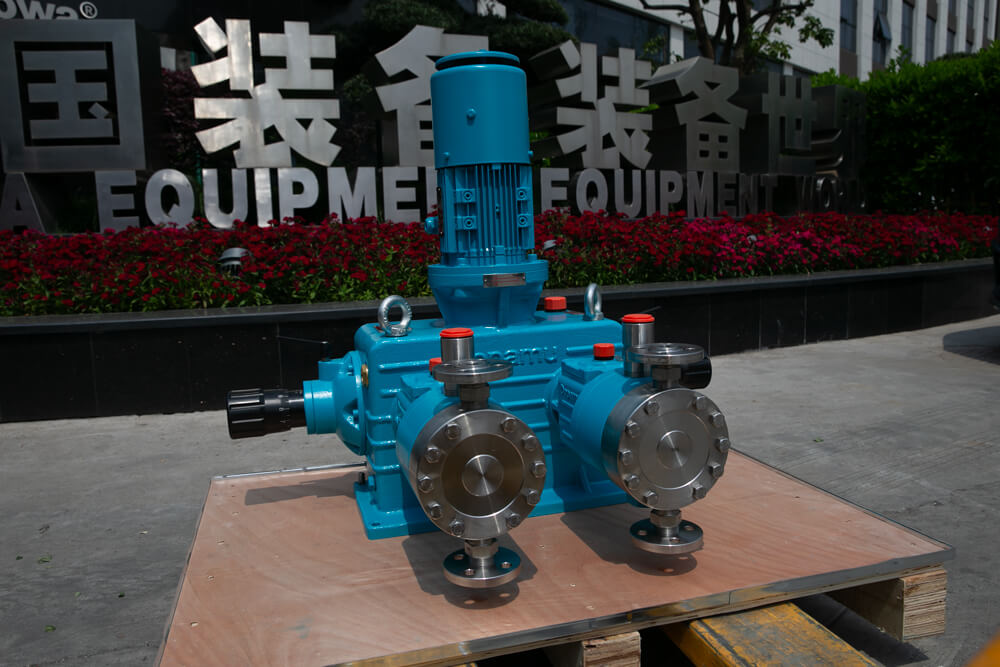
Direct Manufacturer or Trading Supplier: What B2B Buyers Should Compare
A hydraulic diaphragm metering pump direct manufacturer can usually provide more direct access to engineering and production information. When a buyer needs a non-standard material, a modified control interface, or a complete dosing skid, the ability to discuss the design with the people who build it is valuable. Direct communication can also make it easier to clarify configuration details, drawing approvals, and factory assembly requirements.
Trading suppliers can be useful in some markets because they may offer local inventory, consolidated purchasing, or commercial flexibility. The important point is to identify who is responsible for technical selection and after-sales support. A buyer should ask whether the supplier has direct access to the manufacturer’s engineering team, how spare parts are sourced, and who handles warranty and troubleshooting. If the answer is unclear, the lowest initial price may not represent the lowest lifecycle cost.
For international B2B procurement, documentation and communication are especially important. The supplier should be able to confirm model details, materials, connections, control signals, packaging, and shipping information in a clear quotation. Buyers should compare offers on the same technical basis rather than on pump model alone. A quotation that includes the correct accessories, recommended spares, and technical support may be more valuable than a lower offer that leaves integration work and risk with the buyer.
Installation, Commissioning, and Maintenance Best Practices
Good installation helps a metering pump deliver stable performance. The pump should be mounted on a rigid base that is suitable for the equipment weight and operating loads. Suction piping should be as short and direct as practical, with adequate support to prevent strain on the pump head. A suction filter, pulsation dampener, safety valve, and back-pressure valve may be required depending on the system design. These accessories should be selected as part of the dosing system, not added without considering their effect on pressure and flow.
Commissioning should include verification of piping connections, motor rotation, control signals, and calibration. The pump should be vented and checked for leakage before it is put into chemical service. Operators should confirm the relationship between stroke length, frequency, and actual dosing rate, then record the settings. If the pump is part of an automatic chemical dosing package, the control system should be tested against the intended injection logic, alarm conditions, and remote signals.
- Check diaphragm condition and hydraulic oil level according to the manufacturer’s instructions.
- Inspect suction and discharge valves for wear, blockage, or incorrect seating.
- Verify calibration after changes in chemical, pressure, or dosing rate.
- Keep recommended spare diaphragms, seals, valves, and hydraulic oil available for critical duties.
- Record operating pressure, stroke settings, and maintenance actions for trend review.
Maintenance intervals depend on the chemical, operating pressure, temperature, and running hours. A maintenance plan should be based on the supplier’s manual and actual site experience rather than a single fixed interval for every application. For corrosive or high-purity media, diaphragm and wetted-part inspection is particularly important. For high-pressure duties, piping and accessory condition should be checked together with pump performance. These practices help protect personnel, reduce unplanned downtime, and maintain dosing accuracy over time.
Why Depamu Is a Relevant Partner for Hydraulic Diaphragm Metering Pump Projects
Depamu (Hangzhou) Pump Industry Technology Co., Ltd. has focused on high-end volumetric pumps and fluid equipment since 2003. The company operates with more than 400 employees and a factory area of about 35,000 square meters, with annual production value of approximately RMB 500 million. Its reported sales have grown from about RMB 450 million in 2023 to about RMB 510 million in 2024 and about RMB 560 million in 2025. These figures reflect a manufacturing base built around continuous product development and industrial fluid equipment delivery.
The product range covers metering pumps, high-pressure process reciprocating pumps, pneumatic pumps, electric pumps, chemical dosing packages, water and steam sampling equipment, water treatment equipment, screw pumps, rotary lobe pumps, gear pumps, emulsifying pumps, and special centrifugal pumps. For a hydraulic diaphragm metering pump for chemical dosing, the company can review the medium, flow, pressure, temperature, and site process requirements, then propose a standard product, a non-standard configuration, or a custom fluid solution. The same capability supports complete dosing packages that combine pumps, tanks, mixers, piping, and controls.
Depamu’s equipment has been applied in petrochemical, chemical, oil and gas field, nuclear, power, metallurgy, new energy, environmental water treatment, new materials, and food applications. The company operates multiple brands, including Depamu, and positions itself around long-term development in fluid equipment. For buyers comparing a hydraulic diaphragm metering pump supplier, this combination of manufacturing scale, product breadth, application coverage, and customization capability provides a practical basis for technical discussion. To contact the supplier, buyers should use the official sales channel and provide the process data outlined above so that the first technical review can be accurate and efficient.
FAQ
What is a hydraulic diaphragm metering pump used for?
A hydraulic diaphragm metering pump is used for accurate and repeatable injection of liquids in chemical dosing and process applications. Typical duties include chemical injection in petrochemical and chemical plants, boiler and cooling water treatment, wastewater chemical dosing, additive dosing in food and new material processes, and other applications where controlled flow and reliable containment are important.
How do I choose a reliable hydraulic diaphragm metering pump supplier?
Evaluate the supplier’s application engineering, manufacturing capability, product range, customization experience, documentation, and after-sales support. Ask how the supplier will confirm materials, pressure, flow, control method, and installation details. A hydraulic diaphragm metering pump direct manufacturer should be able to discuss both the pump and the surrounding dosing system, including accessories and controls.
Can a hydraulic diaphragm metering pump be customized for corrosive or high-pressure media?
Yes, customization is often possible when the process data is clear. The pump configuration can be reviewed for wetted materials, diaphragm compatibility, connections, hydraulic design, motor, and control interface. Corrosive, high-pressure, high-temperature, or difficult media should always be reviewed by the manufacturer before a final model is selected.
What details are needed for a hydraulic diaphragm metering pump quotation?
Provide the chemical name and concentration, required flow rate, discharge pressure, temperature range, viscosity and solids content, control method, power supply, area classification, connection standard, installation environment, and any documentation or spare parts requirements. For a packaged dosing system, also provide tank volume, mixing requirements, injection points, and automatic control details.
How can I contact a hydraulic diaphragm metering pump direct manufacturer?
Use the manufacturer’s official sales channel and prepare a short process data sheet before contacting the team. Include the duty, medium, flow, pressure, temperature, control requirements, and site conditions. A clear inquiry helps the supplier route the request to the right technical specialist and provide a more useful response.
What maintenance items should be included in a dosing pump plan?
Typical maintenance items include diaphragm inspection, hydraulic oil level checks, suction and discharge valve inspection, seal checks, calibration verification, and spare parts planning. The exact interval should follow the manufacturer’s manual and the actual chemical, pressure, temperature, and running hours of the application.
Is a hydraulic diaphragm metering pump suitable for continuous operation?
Hydraulic diaphragm metering pumps can be applied to continuous dosing duties when the model, materials, and accessories are selected for the process conditions. Continuous operation should be reviewed with the supplier using the actual pressure, temperature, chemical, and running pattern so that the pump and maintenance plan are appropriate for the duty.
Summary
Selecting a hydraulic diaphragm metering pump supplier is a technical and commercial decision that affects dosing accuracy, chemical containment, maintenance, and long-term operating cost. Buyers should provide complete process data, compare suppliers on engineering support and customization capability, and confirm how installation, spare parts, and service will be handled. A clear quotation based on the actual duty is more valuable than a model number without system context.
Depamu (Hangzhou) Pump Industry Technology Co., Ltd. combines a long manufacturing history, a broad volumetric pump portfolio, and the ability to deliver standard, non-standard, and custom fluid solutions. For chemical dosing, water treatment, petrochemical, oil and gas, power, new energy, and other industrial applications, working with a capable hydraulic diaphragm metering pump direct manufacturer can help turn a dosing requirement into a reliable, maintainable system.