
Polyacrylamide (PAM) is one of the most widely used flocculants in modern water and wastewater treatment, but it is also one of the most difficult chemicals to dose accurately. PAM solutions are viscous, shear-sensitive and prone to aging, which means a standard transfer pump or a poorly sized metering pump can quickly destroy polymer chains and waste chemical. Choosing the right PAM dosing pump manufacturer is therefore not a simple purchasing decision — it directly affects flocculation performance, chemical consumption and the stability of the entire treatment process.
This guide explains how polyacrylamide dosing pumps work, what to consider when specifying an automatic PAM dosing system, how preparation and dosing stages should be designed, and what a serious PAM dosing pump supplier should be able to deliver in terms of engineering support, customization and after-sales service. It is written for plant managers, process engineers, EPC contractors and procurement teams who need a dependable solution rather than an off-the-shelf catalog item.
What Is a PAM Dosing Pump and Why Is It Different from Ordinary Chemical Dosing?
A PAM dosing pump is a positive displacement pump designed to deliver dissolved polyacrylamide solution at a controlled, repeatable flow rate. Unlike low-viscosity chemicals such as sodium hypochlorite or sulfuric acid, a prepared PAM solution typically has a concentration between 0.1% and 0.5% and behaves as a non-Newtonian, high-molecular-weight fluid. Its viscosity can rise sharply as concentration increases, and the long polymer chains that make PAM an effective flocculant are extremely sensitive to mechanical shear.
This is why pump selection matters so much. Centrifugal pumps, high-speed gear pumps and undersized piping can physically cut polymer chains, reducing the molecular weight of the flocculant and forcing operators to increase dosage to compensate. A properly selected polyacrylamide dosing pump delivers the solution gently, with low internal velocity, generous valve passages and smooth, pulsation-controlled displacement. The result is better floc formation, lower chemical consumption and more stable effluent quality.
PAM dosing also demands accurate turndown. Sludge flow rates, feed solids and process conditions change throughout the day, so the pump must be able to operate reliably from perhaps 10% to 100% of its rated capacity without losing repeatability. Pumps that combine adjustable stroke length with variable-speed drive control generally offer the widest and most stable operating range.
Why Shear-Sensitive Fluids Need Purpose-Built Equipment
In a typical sludge dewatering line, the PAM solution is injected into the sludge stream immediately before a static mixer, centrifuge or belt press. The mixing energy and the residence time are both short, so the polymer must arrive at the injection point with its molecular structure intact. Every unnecessary valve, elbow or high-shear pump in the dosing line is a potential source of polymer degradation. A dedicated PAM dosing package minimizes these risks by using short, large-diameter suction lines, flooded suction where possible, and low-shear pump technology.
Air entrainment is the second major risk. PAM solutions foam easily, and entrained air causes erratic dosing, cavitation-like behavior in the pump head and inaccurate calibration. Good system design therefore includes gentle agitation in the preparation tank, properly submerged suction inlets and adequate venting rather than vigorous stirring.
How an Automatic PAM Dosing System Is Structured
An automatic PAM dosing system is more than a pump on a skid. It is an integrated sequence of preparation, maturation, storage and dosing, all coordinated by a control system. In most industrial and municipal plants, the system includes a dry powder or liquid polymer feed unit, a wetting and dispersion chamber, a dissolution tank with low-speed agitator, a maturation tank where the polymer chains fully unfold, a storage tank and finally the dosing pumps that deliver the prepared solution to the process.
Each stage has a specific function. The wetting stage must disperse powder particles without forming “fish eyes” — partially hydrated lumps that never dissolve completely. The maturation stage usually requires 30 to 90 minutes of gentle mixing so that the polymer reaches its full viscosity. The storage tank buffers demand fluctuations and allows the dosing pumps to draw from a stable, homogeneous solution. Skipping or shortening the maturation stage is one of the most common reasons why a plant consumes more polymer than expected.
Depamu (Hangzhou) Pump Industry Technology Co., Ltd. builds these functions into skid-mounted packages that combine chemical storage, dissolution, agitation, metering and automatic control. Since the company began operations in 2003 and now operates a 35,000 m² facility with more than 400 employees, it has accumulated substantial experience in matching pump technology to specific media characteristics, flow rates, pressures, temperatures and site process requirements. The company offers standard products, non-standard designs and fully customized fluid handling solutions.
Preparation, Dosing and Control Working Together
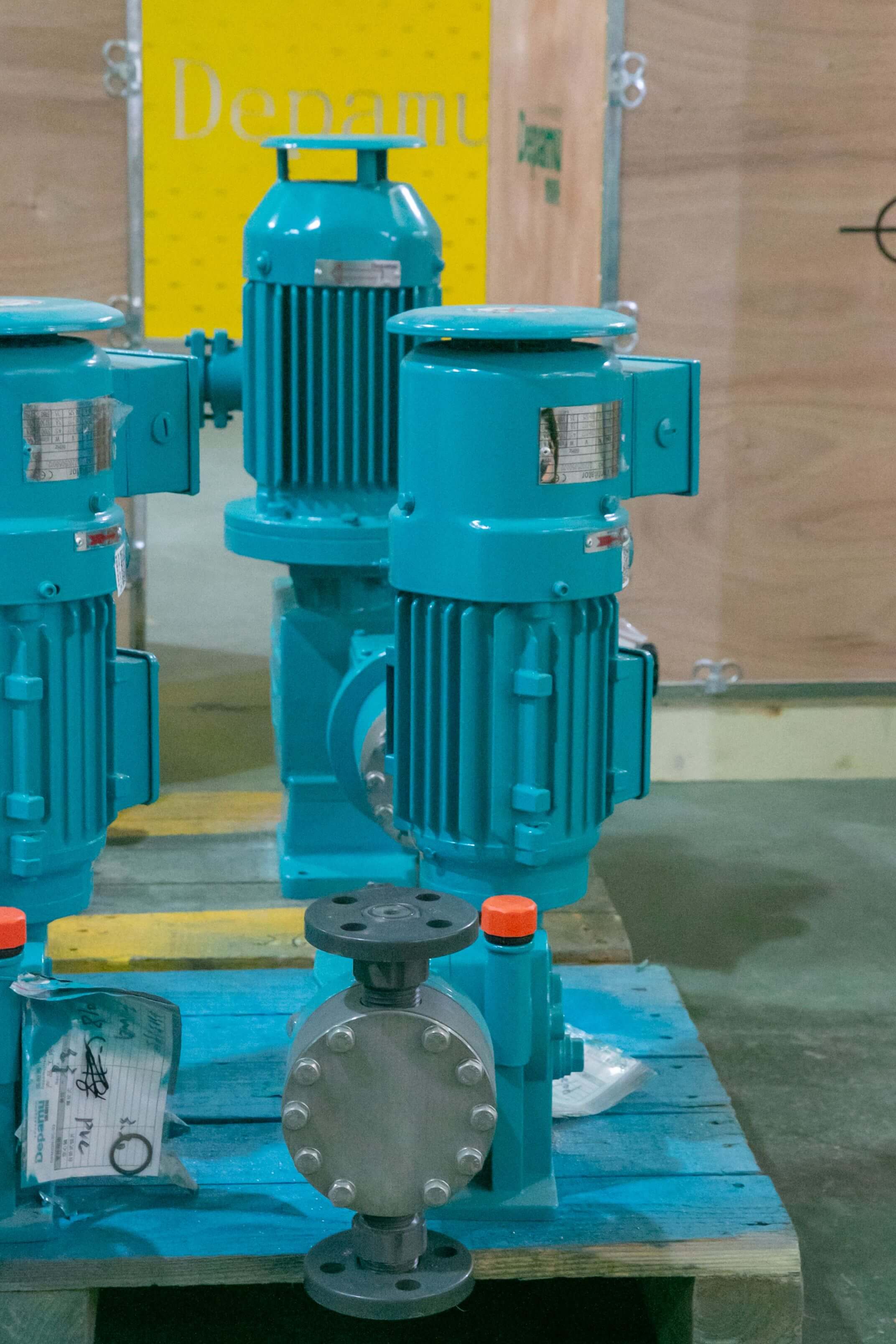
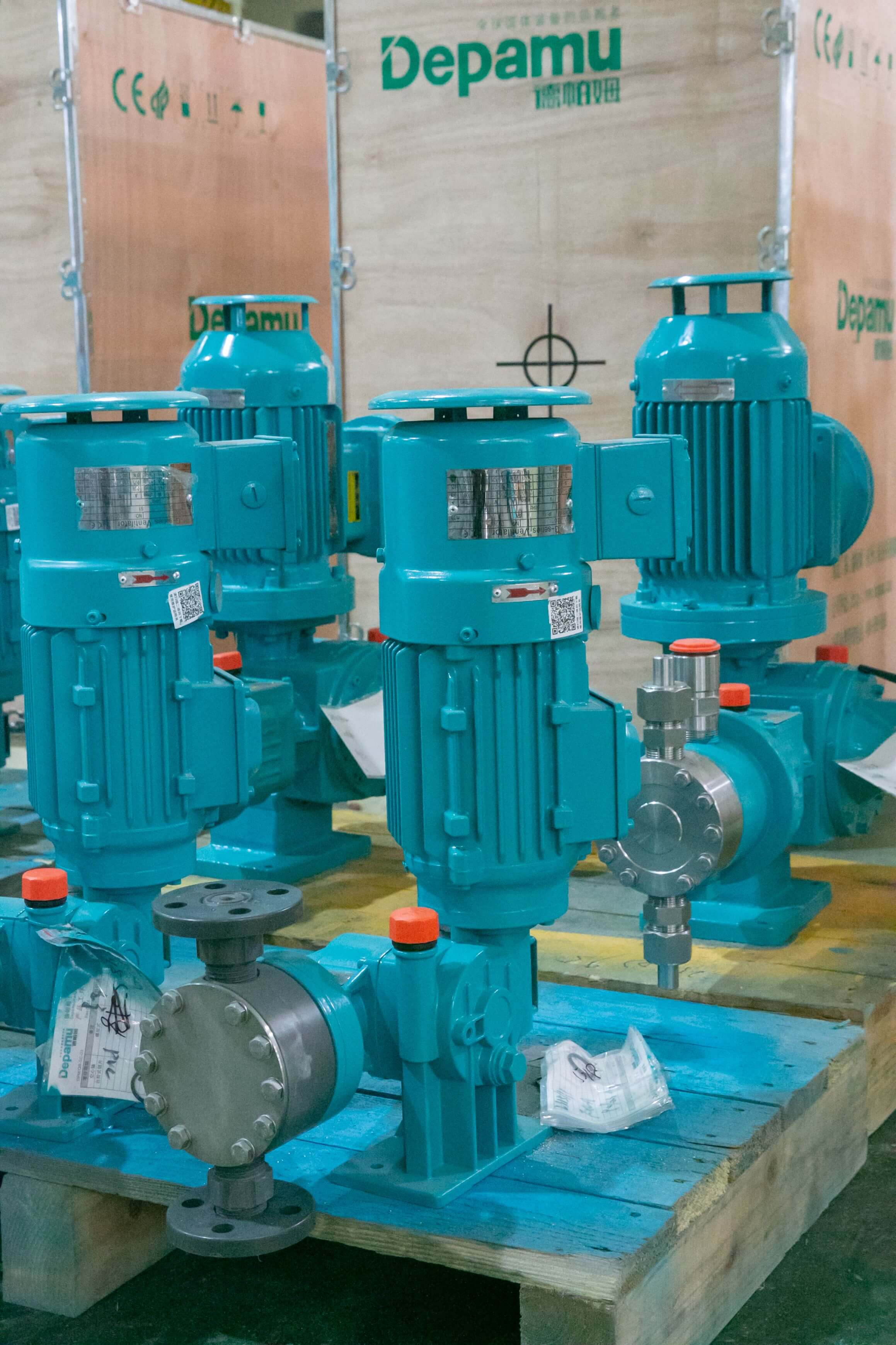
The dosing stage itself typically uses a diaphragm metering pump or a low-shear progressive cavity pump, depending on concentration and flow. Hydraulic diaphragm metering pumps are a strong choice for precise, leak-free injection because the hydraulic fluid behind the diaphragm produces an even stroke and isolates the process liquid from the drive mechanism. This design is well suited to corrosive, volatile or high-pressure media, which is why diaphragm metering pumps are widely used in petrochemical, environmental, pharmaceutical, food and new energy applications.
Control integration is what makes the package truly automatic. A well-designed system links polymer demand to process signals such as sludge feed flow, turbidity or a downstream flow meter, and adjusts either the pump stroke or the motor speed. Level sensors in the storage tank trigger preparation cycles, while flow verification and low-level alarms protect the pumps from dry running. Because the package is assembled and tested before delivery, on-site work is limited to connecting utilities and process piping.
Key Selection Parameters for a PAM Dosing Pump
Specifying a PAM dosing pump correctly requires more than a flow rate. The pump must match the prepared solution’s viscosity, the required accuracy, the process pressure, the available suction conditions and the control philosophy of the plant. The following parameters form a practical checklist that an experienced PAM dosing pump supplier will ask for before issuing a proposal.
| Parameter | Typical Requirement | Why It Matters |
|---|---|---|
| Prepared solution concentration | 0.1%–0.5% (application dependent) | Defines viscosity, pump type and line sizing |
| Dosing flow range | From a few liters per hour up to several cubic meters per hour | Sets pump size and turndown strategy |
| Discharge pressure | Usually low to medium; higher in pipeline injection | Determines motor power and pump head design |
| Dosing accuracy | Typically ±1% to ±2% of set point | Directly affects chemical cost and process stability |
| Turndown ratio | 10:1 or wider preferred | Allows response to variable plant demand |
| Wetted materials | PVC, PVDF, PTFE diaphragm, stainless steel options | Compatibility with the polymer solution and any additives |
| Suction conditions | Flooded suction recommended | Prevents air entrainment and dosing fluctuation |
| Control mode | Manual, 4–20 mA, pulse or PLC-linked | Enables automatic flow-proportional dosing |
Two parameters deserve special attention. First, viscosity is often underestimated: a solution that looks thin in a beaker can behave very differently in a long suction line. Second, the difference between design flow and actual operating flow is frequently large, so pumps should be selected near the middle of their range rather than at maximum capacity. Providing a realistic minimum, normal and maximum flow to the manufacturer allows a more accurate and economical selection.
Diaphragm Metering Pump vs. Screw Pump for PAM
Hydraulic diaphragm metering pumps are generally preferred when dosing accuracy, leak-free operation and high discharge pressure are priorities. They handle the solution smoothly, offer precise stroke adjustment and can be fitted with PTFE diaphragms and corrosion-resistant heads. Progressive cavity (screw) pumps and lobe pumps are often used for transfer duties — moving prepared solution from the maturation tank to the storage tank, or feeding larger volumes at lower pressure. They tolerate viscosity well but are less precise when used as the final dosing element.
A practical configuration therefore uses a low-shear transfer pump for tank-to-tank movement and a diaphragm metering pump for final injection. This division of labor protects the polymer, keeps dosing accurate and reduces maintenance. In many plants, a PAM chemical dosing skid is assembled with exactly this combination, together with flow meters, pressure gauges, calibration columns and a control cabinet.
Where PAM Dosing Systems Are Used
Polyacrylamide dosing appears in any process where fine solids must be agglomerated into larger, faster-settling flocs. The largest application is municipal and industrial sludge dewatering, where PAM is added before centrifuges, belt filter presses or screw presses to improve cake dryness and reduce filtrate solids. Accurate dosing has a direct financial impact here: over-dosing wastes expensive polymer and can make the cake sticky, while under-dosing produces wet cake and high disposal costs.
In industrial wastewater treatment, PAM dosing is used in paper mills, textile finishing, food processing, tanneries, and electroplating plants. In mining and mineral processing, polyacrylamide helps clarify thickener overflow and improve tailings consolidation. In oil and gas fields, high-molecular-weight PAM is used in polymer flooding and water shut-off operations, where stable, high-pressure injection is required — a duty that overlaps with the high-pressure reciprocating pump technology that companies like Depamu have developed for oilfield service.
Drinking water treatment uses PAM as a flocculant aid at very low dosages, demanding high accuracy and clean system design. New energy and materials production, including lithium processing and specialty chemical manufacturing, also relies on controlled polymer addition for solid-liquid separation. Because these applications differ in concentration, flow and control requirements, customized engineering is usually more economical than adapting a standard package after installation.
Installation, Commissioning and Maintenance Best Practices
Even a well-selected pump performs poorly if the installation is wrong. The suction line should be as short and straight as possible, with a diameter at least equal to the pump inlet and preferably larger. The storage tank outlet should be elevated above the pump inlet to provide flooded suction, and a dedicated calibration pot should be installed so operators can verify flow without dismantling piping. Discharge lines should include a pressure relief valve, a pressure gauge and an injection arrangement that introduces the polymer into the center of the process stream rather than against a pipe wall.
Commissioning should include a water trial before polymer is introduced. This verifies pump direction, valve operation, relief settings, control signals and instrument response without wasting chemical or contaminating tanks. Once polymer is in the system, the dosing pump should be calibrated volumetrically at several stroke settings, and the results recorded so that future adjustments have a reference point.
Routine Maintenance That Protects Dosing Accuracy
- Flush the pump head and dosing lines with clean water before any shutdown longer than a few hours, because dried PAM film can block valves and diaphragms.
- Inspect suction and discharge valves for polymer buildup; clean or replace them at the interval recommended by the manufacturer.
- Check diaphragm condition periodically and replace it preventively rather than after a failure.
- Verify calibration monthly or whenever the polymer grade or concentration changes.
- Keep agitator speed in the maturation tank low enough to avoid vortex formation and air entrainment.
- Record daily dosage, flow and pressure data to detect gradual drift before it affects process performance.
Maintenance planning should also consider spare parts availability. A PAM dosing pump supplier that maintains local stock of diaphragms, valve balls, seats and seals can dramatically reduce downtime compared with one that ships every component from overseas.
How to Evaluate a PAM Dosing Pump Manufacturer
The market contains many companies that assemble dosing skids from purchased components and a smaller number that design and manufacture the core pump technology themselves. The difference becomes visible during commissioning and after the first year of operation, when process conditions change and engineering support is needed. A manufacturer with in-house research, design and manufacturing capability can modify a pump head, change materials, adjust control logic or resize a package without relying on a third party.
Depamu’s product range covers metering pumps, high-pressure process reciprocating pumps, pneumatic and electric pumps, chemical dosing packages, water and steam sampling devices, water treatment equipment, screw pumps, lobe pumps and gear pumps. This breadth allows the company to select the right technology for a specific medium instead of forcing every application into a single product family. Its experience spans petroleum refining and chemicals (about 41% of sales), oil and gas fields (about 23%), nuclear power, power generation, metallurgy and new energy (about 15%), environmental water treatment (about 13%), and new materials and food (about 3%), with remaining business in other sectors.
Financial stability is another useful indicator. The company’s sales have grown from approximately RMB 450 million in 2023 to about RMB 510 million in 2024 and around RMB 560 million in 2025, supported by a registered capital of RMB 54 million and annual output value of roughly RMB 500 million. For buyers, this signals continuity of supply, capacity for larger projects and the ability to invest in engineering support over the long term.
Questions Worth Asking Before You Issue a Purchase Order
Ask whether the proposed pump has references in similar media and duty conditions, and whether the manufacturer can supply performance curves at the actual viscosity rather than only at water. Ask how dosing accuracy is verified at the factory, what the recommended spare parts list looks like, and how quickly technicians can be mobilized. Ask for the control philosophy in writing, including signal types, alarm handling and fail-safe behavior. A PAM dosing pump manufacturer that answers these questions clearly and in detail is usually the safer long-term partner.
It is equally reasonable to request a factory acceptance test, documentation packages including material certificates and wiring diagrams, and a commissioning checklist. These requests are standard practice in international B2B procurement and should not be treated as unusual.
FAQ
What is the difference between a PAM dosing pump and a general chemical metering pump?
The basic working principle is similar, but a PAM dosing pump is configured for high-viscosity, shear-sensitive polymer solutions. That usually means larger valve passages, low internal velocities, flooded suction, gentle valve action and materials selected for polymer service. A general metering pump may dose the same flow rate on paper, but it can damage the polymer chains and cause inaccurate or unstable dosing in practice.
Can one supplier provide the complete PAM preparation and dosing system?
Yes. Integrated packages combine polymer feed, wetting, dissolution, maturation, storage, metering and automatic control on a single skid. Depamu builds these chemical dosing packages with metering pumps as the core element, together with dissolution tanks, agitators and control systems, and tests them before delivery so that site work is limited to connecting piping and power.
How do I determine the right dosing flow rate for my application?
Start with the dry solids load, the target dosage in milligrams of polymer per kilogram of solids, and the prepared solution concentration. Convert this into a volumetric flow rate in liters per hour, then apply a safety margin for peak conditions. Always provide the manufacturer with minimum, normal and maximum flows so the pump can be selected near the middle of its range rather than at its limit.
What dosing accuracy can be expected from a diaphragm metering pump?
Well-selected hydraulic diaphragm metering pumps typically achieve repeatability within roughly ±1% to ±2% of the set point under stable suction and constant discharge pressure. Accuracy depends heavily on correct installation, flooded suction, proper calibration and the absence of air entrainment in the solution.
Why does my PAM solution lose viscosity over time?
Polymer chains degrade through mechanical shear, high mixing energy, excessive pump speed, prolonged agitation, bacterial activity or exposure to certain chemicals and temperatures. Reducing shear in the dosing line, keeping agitator speed low, using the solution within its recommended storage window and avoiding unnecessary recirculation all help preserve viscosity.
How do I get an accurate quotation for a PAM dosing system?
Provide the prepared solution concentration, viscosity or polymer type, required flow range, discharge pressure, control signals, available utilities, tank capacity requirements, material preferences and site conditions. A short process description and a P&ID sketch, if available, allow the manufacturer to quote a package that matches the real duty rather than a generic catalog configuration.
Summary
A PAM dosing system succeeds or fails on details that are easy to overlook: viscosity, shear sensitivity, suction conditions, maturation time and control logic. Selecting a pump on flow rate alone often leads to polymer degradation, unstable dosing, higher chemical consumption and frequent maintenance. The right approach is to specify the complete preparation-to-injection chain, then choose pump technology that matches the medium and the process demand.
Working with an experienced PAM dosing pump manufacturer shortens this process considerably. Depamu’s combination of in-house pump design, integrated dosing packages, customization capability across media and process conditions, and a track record in water treatment, petrochemicals, oil and gas, power and new energy gives buyers a single point of responsibility for the whole fluid handling system. Whether the requirement is a single metering pump or a fully automated dosing skid, clear technical communication at the specification stage remains the most reliable way to secure long-term dosing performance.