
Sludge is one of the most difficult fluids in any plant. It is abrasive, often fibrous, frequently non-Newtonian, and its consistency can change from one shift to the next. When a wastewater treatment plant, a chemical facility or an oil and gas site needs reliable sludge movement, the pump choice usually comes down to a positive displacement design — and more often than not, that means a rotary lobe pump. Finding the right sludge rotary lobe pump manufacturer is therefore not a simple purchasing decision; it is a decision about uptime, maintenance cost and process stability for the next ten to fifteen years.
This guide is written for engineers, EPC contractors, plant maintenance managers and procurement teams who are evaluating a sludge rotary lobe pump supplier for a new project or a replacement upgrade. It covers how rotary lobe pumps behave on sludge duty, which parameters must be specified before a quotation can be accurate, how to compare vendors, and what a realistic maintenance plan looks like. It also explains how a full-range fluid equipment manufacturer such as DEPAMU (Hangzhou) Pump Industry Technology Co., Ltd. approaches custom sludge pumping solutions, based on more than two decades of experience in positive displacement and reciprocating pump technology.
Why Rotary Lobe Pumps Dominate Modern Sludge Handling
A rotary lobe pump is a positive displacement pump built around two rotating lobes inside a casing. The lobes rotate in opposite directions without touching each other, creating expanding and contracting cavities that move the fluid gently from suction to discharge. Because the displacement is fixed per revolution, flow is largely independent of discharge pressure. That characteristic is exactly what sludge handling needs: the pump keeps delivering the same volume even as line resistance rises, so the process does not slow down when a filter press or a long discharge line starts to load up.
The second advantage is gentleness combined with solids passage. Sludge frequently contains rags, hair, fibrous material, grit and screenings. A rotary lobe pump with a large free passage between the lobes and the casing can pass these solids without clogging, and because the lobes do not crush the medium, the pump avoids the emulsification and shear damage that centrifugal pumps cause in polymer-flocculated sludge. This matters in dewatering applications, where over-shearing the sludge can destroy the floc structure and increase polymer consumption.
Third is self-priming and suction capability. Sludge is often drawn from a tank or a sump below floor level. A rotary lobe pump can evacuate a suction line and lift sludge from a pit, which simplifies sump design and avoids the need for a separate priming system. Finally, rotary lobe pumps are reversible: by changing rotation direction, the same pump can be used for tanker unloading or for back-flushing a line, which adds flexibility on multi-purpose sludge stations.
The trade-off is that rotary lobe pumps are wear parts by nature. Clearances are small, and abrasive sludge will eventually erode the lobe faces and casing liners. That is precisely why the quality of the sludge rotary lobe pump manufacturer matters so much: it determines the metallurgy, the machining tolerances, the seal arrangement and, ultimately, how many years you get from a set of rotors.
DEPAMU: A Sludge Rotary Lobe Pump Manufacturer Built on Positive Displacement Expertise
DEPAMU (Hangzhou) Pump Industry Technology Co., Ltd. was founded in 2003 and has spent more than twenty years focused on high-end positive displacement pumps and fluid equipment. The company operates a plant of approximately 35,000 square meters with a team of more than 400 employees and an annual output value of around RMB 500 million. Technology was originally introduced from Germany and has since been developed in-house, with the company operating three brands — DEPAMU, KNILOWA and DAILIPU — across domestic and export markets.
Rotary lobe pumps, screw pumps and gear pumps sit alongside the company’s core lines of metering pumps, high-pressure process reciprocating pumps, pneumatic and electric pumps, chemical dosing packages, water and steam sampling systems, and water treatment equipment. This breadth is a practical advantage for buyers: a single sludge rotary lobe pump supplier that also manufactures metering and dosing equipment can deliver a coordinated package covering sludge transfer, polymer dosing and chemical addition, rather than forcing the plant to integrate three different vendors on site.
The company’s sales mix reflects where this equipment is actually used. Petroleum refining and chemical processing account for roughly 41 percent of business, oil and gas fields about 23 percent, nuclear power, power generation, metallurgy and new energy approximately 15 percent, environmental protection and water treatment about 13 percent, and new materials and food around 3 percent, with the remainder spread across other industries. Sludge and wastewater duty therefore sits inside a portfolio that also serves some of the most demanding high-pressure and corrosion-resistant applications in heavy industry.
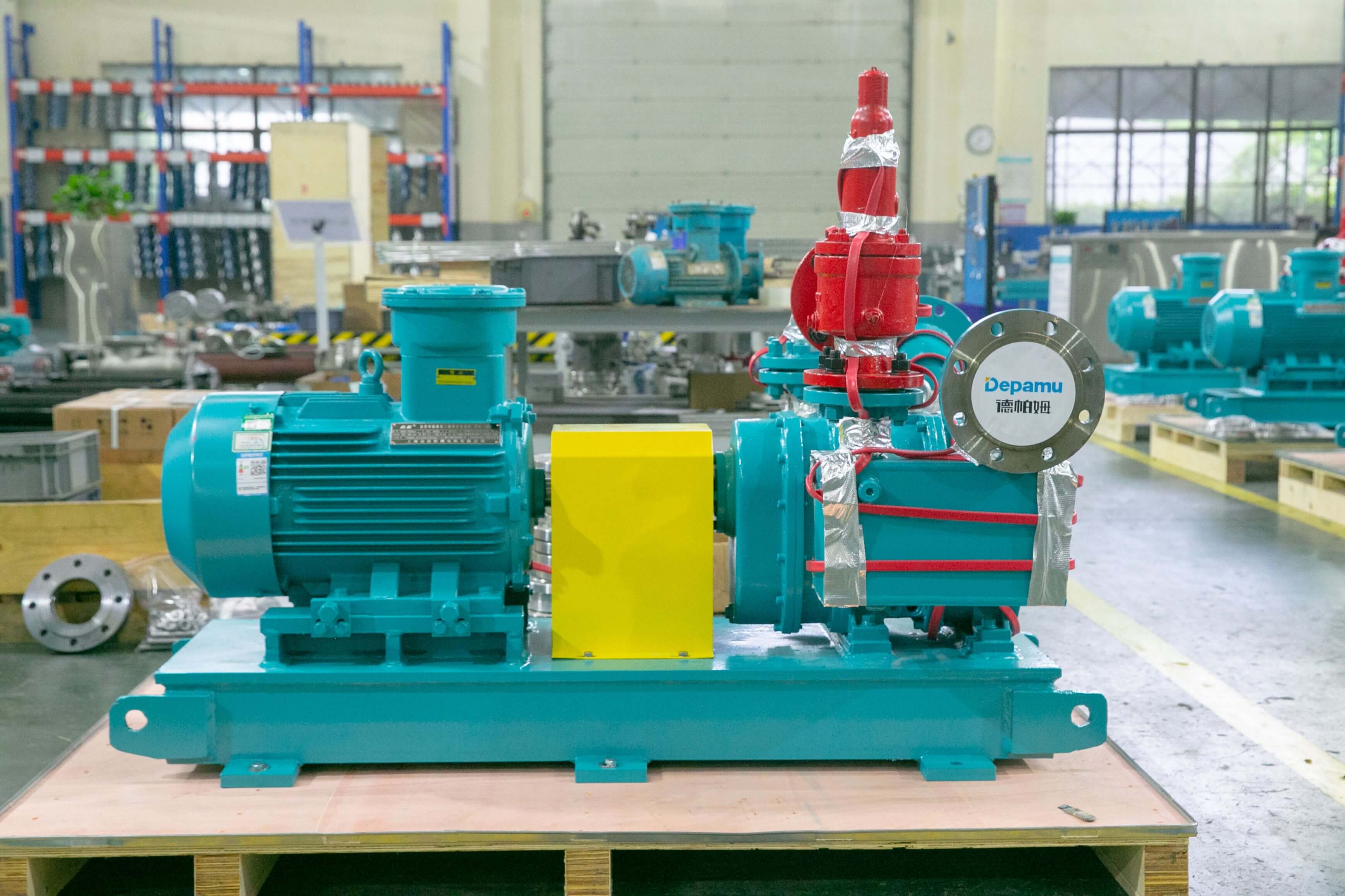
Product Portfolio Overview: Where Rotary Lobe Pumps Fit
Buyers often arrive at a sludge project with only one product in mind, then discover that the duty is better served by a combination of machines. The table below summarizes the main equipment families a full-range fluid equipment manufacturer can supply, and how each typically supports sludge and wastewater processes.
| Equipment family | Typical role in sludge and wastewater duty | Common industries |
|---|---|---|
| Rotary lobe pumps (sludge pumps) | Primary and waste activated sludge transfer, thickened sludge, dewatered sludge feed to filter presses and centrifuges, tanker loading | Municipal and industrial wastewater, chemical, food processing, paper |
| Screw pumps | High-viscosity and high-solids sludge, screenings and slurry transfer where a progressive cavity design suits the medium | Wastewater, oil and gas, chemical, mining |
| Metering pumps (hydraulic diaphragm) | Precise polymer, coagulant, disinfectant and pH correction dosing with zero leakage | Water treatment, chemical, power, pharmaceutical, new energy |
| Automatic chemical dosing packages | Skid-mounted preparation, mixing and dosing of dry or liquid chemicals with automatic control | Boiler water treatment, circulating water, wastewater, petrochemical |
| High-pressure process reciprocating pumps | High-pressure injection, pipeline boosting and transfer of viscous or particle-laden media up to 35 MPa and above | Oil and gas fields, refining, chemical, metallurgy |
| Gear pumps, rotor pumps, pneumatic and electric pumps | Auxiliary transfer, lubricating and viscous fluid handling, drum and sump emptying | General industry, chemical, food, new materials |
For most sludge duties, the decision narrows to a rotary lobe pump versus a progressive cavity screw pump. Rotary lobe pumps generally win where flow is high, solids content is moderate but variable, and maintenance must be quick and in-line. Screw pumps are often preferred for very high viscosity or where a smooth, pulsation-free low-flow output is essential. A capable sludge rotary lobe pump company will tell you honestly which design fits your duty rather than simply quoting the product it prefers to build.
What Makes a Rotary Lobe Pump Suitable for Sludge Specifically
Several design details determine whether a rotary lobe pump survives sludge duty. The lobe profile should provide a large free passage relative to the connection size, so that screenings and fibrous material pass rather than wrap around the rotor. The rotor material should be selected for abrasion rather than only for corrosion: nitrile or EPDM rubber-coated lobes are common for abrasive sludge, while stainless steel or duplex lobes suit cleaner but corrosive media. The shaft seal is the single most common failure point, and a sludge pump should normally be supplied with a robust mechanical seal plus a flush or quench arrangement, or with a lip seal and lantern ring where the medium is gritty.
Drive configuration also matters. Sludge pumps are frequently required to run at low speed to limit wear, so a geared motor or a variable speed drive is usually specified. A VFD allows the operator to match pump speed to the actual sludge production rate, which reduces both energy consumption and rotor wear during low-load periods. Finally, a removable front cover or a “front pull-out” rotor design can cut a rotor replacement from a full day to a couple of hours, which is a decisive factor in plants with limited maintenance windows.
Duty Parameters You Must Specify Before Requesting a Quotation
Accurate quotations for sludge pumps depend on accurate data. Vague enquiries such as “we need a pump for sludge” typically produce either an oversized pump or a conservative and expensive design. The table below lists the parameters that a professional sludge rotary lobe pump vendor will ask for, and why each one changes the pump selection.
| Parameter | Why it affects the selection | Typical information to provide |
|---|---|---|
| Flow rate | Sets the pump displacement and speed; sludge flow is often given as a range rather than a fixed value | Minimum, normal and maximum m³/h, plus whether flow control is required |
| Solids content | Determines free passage, rotor profile and allowable speed | Percentage dry solids, plus maximum particle size |
| Discharge pressure | Affects bearing, shaft and seal selection; also confirms the required motor power | Bar or MPa at the pump outlet, including static head and line losses |
| Temperature | Limits elastomer choice and seal design | Normal and maximum operating temperature |
| Chemistry and abrasiveness | Drives casing and rotor metallurgy, coating and seal materials | pH, chlorides, sand or grit content, presence of solvents |
| Suction conditions | Confirms self-priming feasibility, NPSH margin and pit depth | Lift height, suction line length and diameter, tank or sump arrangement |
| Duty cycle | Continuous duty requires different bearings and cooling than intermittent service | Hours per day, starts per hour, batch or continuous operation |
| Site and standards | Determines motor voltage, protection class, flange standard and documentation requirements | Voltage and frequency, hazardous area classification, applicable flange and inspection standards |
Beyond the fluid data, buyers should state whether the pump will be installed indoors or outdoors, whether a skid or baseplate is required, and whether the plant expects a specific documentation package for commissioning and handover. Export projects often require English or bilingual manuals, test reports and a defined spare parts list — points worth confirming early rather than after the purchase order is signed.
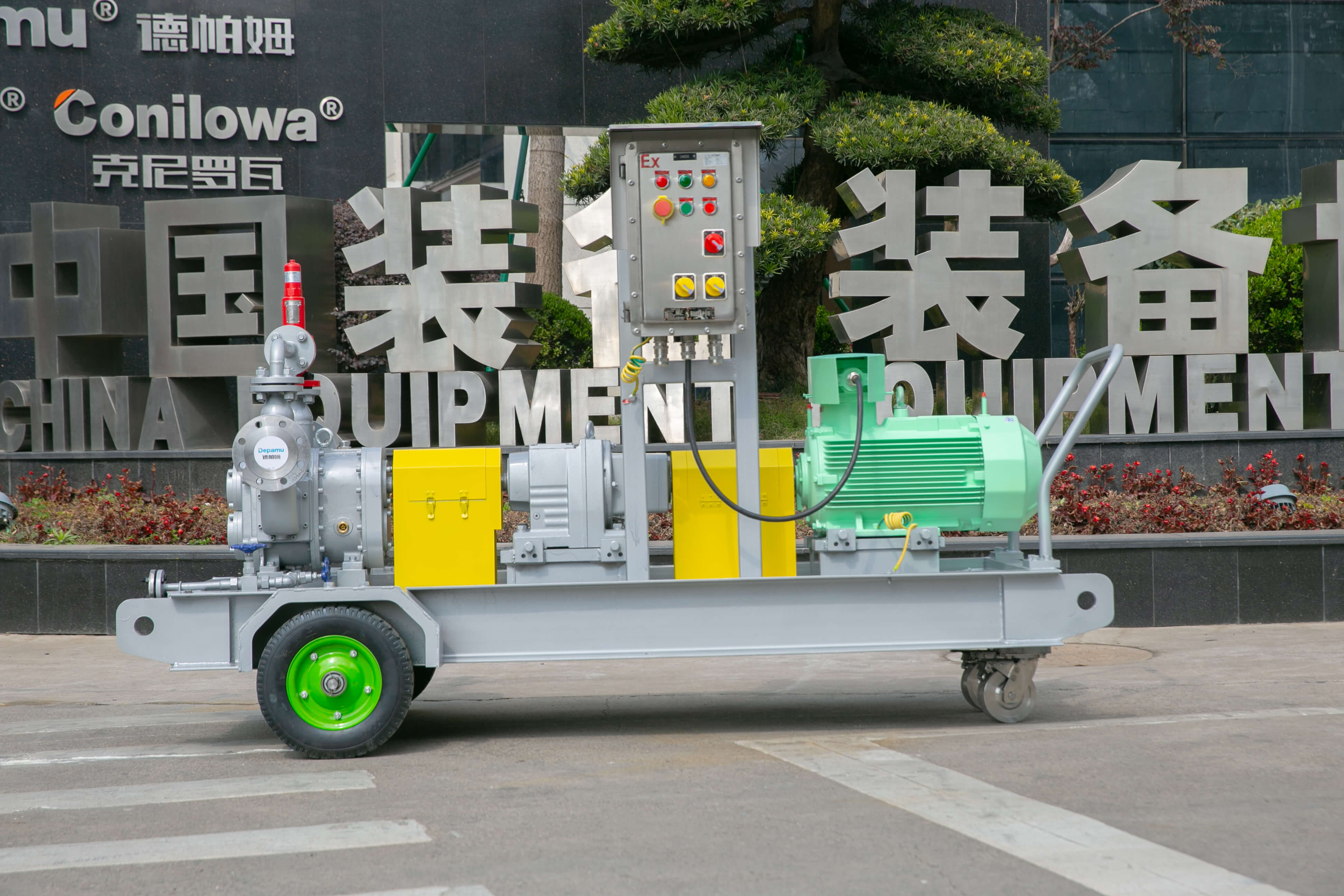
Applications: Where Rotary Lobe Sludge Pumps Are Deployed
In municipal and industrial wastewater treatment, rotary lobe pumps handle the full sludge line: primary sludge from clarifiers, waste activated sludge from aeration basins, thickened sludge from gravity thickeners, and digested sludge from anaerobic digesters. They are also widely used as feed pumps for belt filter presses, screw presses, centrifuges and plate-and-frame presses, where a stable, pressure-independent flow is directly linked to dewatering performance and cake dryness.
In the chemical and petrochemical sector, the same pump principle is used for slurries, filter cake transfer, catalyst slurry and oily sludge from tank cleaning and API separators. The oil and gas industry uses rotary lobe and reciprocating pumps for drilling waste, produced water sludge and viscous crude transfer, often in remote locations where reliability and easy field maintenance outweigh a lower purchase price. In power generation, sludge from flue gas desulfurization and wastewater treatment is moved with abrasion-resistant lobe pumps, while food and new materials plants use hygienic stainless steel variants for by-product and residue handling.
DEPAMU’s equipment base reflects this diversity. Because the company serves petroleum refining and chemical processing, oil and gas fields, nuclear power, power generation, metallurgy, new energy, environmental water treatment, new materials and food, its engineering team routinely works with media that combine high pressure, high temperature, abrasion and corrosion. That experience is transferable directly to sludge projects, where the medium is rarely uniform and the operating envelope can change seasonally.
Sludge Profiles and Appropriate Pump Configuration
- Thin primary or waste activated sludge (0.5–3% dry solids): medium-speed rotary lobe pump with rubber-coated lobes, mechanical seal and VFD control.
- Thickened sludge (3–8% dry solids): larger free passage, reduced speed, hardened rotor faces and a robust flush arrangement at the seal.
- Dewatered cake and high-solids material: often better served by a screw pump or a rotor pump with an enlarged inlet; rotary lobe pumps remain an option when pressure stability is more important than viscosity handling.
- Abrasive sludge containing grit or sand: wear-resistant lobe coating, replaceable wear plates and a seal design with a quench or flush connection.
- Corrosive industrial sludge: stainless steel or duplex casing and rotors with elastomer selection matched to pH and chloride level.
Evaluating a Sludge Rotary Lobe Pump Supplier: A Practical Checklist
Price alone is a poor selection criterion for sludge equipment, because the total cost of ownership is dominated by maintenance and downtime rather than by the initial purchase. A credible sludge rotary lobe pump manufacturer should be able to answer technical questions directly, provide a clear bill of materials, explain the seal arrangement in detail, and offer spare parts and service support for the expected life of the machine.
The following checklist helps procurement and engineering teams compare suppliers on equal terms. It applies whether the enquiry is for a single pump or for an OEM sludge rotary lobe pump programme under a buyer’s own brand.
- Engineering capability: in-house design and manufacturing, not only assembly of purchased components.
- Customization scope: ability to adapt casing, rotor, seal and drive to the specific medium, flow, pressure and temperature.
- Material documentation: material certificates and a clear statement of the wetted parts.
- Testing: performance and pressure testing before shipment, with the test report included in the documentation package.
- Seal expertise: a seal arrangement proposed for the actual sludge condition, not a generic single mechanical seal.
- Maintainability: a design allowing rotor or liner replacement in place, with a defined wear-part list and lead times.
- Package capability: ability to supply baseplates, VFD panels, control instrumentation and skid-mounted systems.
- Export experience: documentation, packing and shipping practice suitable for international projects.
- Communication: response time, technical English quality and willingness to review drawings with the client.
Company scale is a useful proxy here. A manufacturer with a 35,000 square meter facility, more than 400 employees and an annual output value around RMB 500 million has the production depth to support both standard and non-standard orders, and the engineering resources to review a sludge duty carefully. DEPAMU’s revenue has grown steadily from about RMB 450 million in 2023 to roughly RMB 510 million in 2024 and about RMB 560 million in 2025, which indicates a supplier able to sustain investment in manufacturing and service rather than a trading intermediary reselling third-party pumps.
Installation, Operation and Maintenance Best Practices
Most premature rotary lobe pump failures on sludge duty trace back to installation or operating practice rather than to the pump itself. Suction lines should be kept short, straight and generously sized; a suction line that is too small or that includes unnecessary bends can cause cavitation, which manifests as noise, vibration and rapid rotor damage. The pump must be installed with sufficient access around the front cover for rotor inspection, and the baseplate must be properly grouted to avoid pipe strain on the casing.
During commissioning, confirm rotation direction before the pump is filled, verify that relief protection is in place, and check that the seal flush, if fitted, is flowing. Suction valves and strainers must be fully open; a partly closed suction valve is one of the most common causes of sludge pump damage in the first weeks of operation. Establish an operating speed that matches the actual sludge production rate, and use the VFD to reduce speed rather than throttling the discharge, since throttling a positive displacement pump raises pressure and wear.
For maintenance, a scheduled programme based on operating hours is more effective than reactive repair. Routine checks should include seal leakage, coupling alignment, lubricant condition, vibration trend and discharge pressure at a known speed. Wear parts — lobes, wear plates and seals — should be inspected at defined intervals and replaced as a set where possible. Keeping a spare rotor set and seal kit on site is inexpensive compared with an unplanned digester or dewatering shutdown, and it is a reasonable request when negotiating the initial purchase.
Common Operational Issues and Their Causes
- Reduced flow with unchanged speed: worn lobes or wear plates, partially blocked suction strainer, or air ingress through a damaged suction gasket.
- Overheating and noise: insufficient free passage for the solids present, excessive speed, or wrong relief valve setting.
- Seal leakage: abrasion of the seal faces by grit, dry running, or loss of flush flow.
- Vibration: misalignment, worn coupling element, cavitation or pipe strain on the casing.
- Frequent clogging: the pump is undersized for the particle sizes in the sludge and a larger free passage or a different pump type is required.
When an issue persists, the correct response is to review the duty with the original manufacturer rather than to increase speed or pressure. A sludge rotary lobe pump supplier with genuine engineering capability will re-examine the solids profile and recommend a change in rotor geometry, material or speed instead of simply selling replacement parts.
Customized and Complete Fluid Solutions
Many sludge projects are not solved by a pump alone. A dewatering station typically needs sludge feed, polymer preparation and dosing, dilution water, and an automatic control system that links these functions. DEPAMU’s range covers this entire chain: rotary lobe, screw, rotor and gear pumps for transfer; hydraulic diaphragm metering pumps for precise and leak-free chemical dosing; and fully automatic chemical dosing packages that integrate chemical storage, dissolving, mixing, metering and control into one skid. These packages are assembled and tested before delivery, so on-site work is limited to connecting piping and power.
Beyond sludge, the company manufactures high-pressure process reciprocating pumps capable of pressures above 35 MPa for injection and pipeline boosting, water and steam sampling systems, supercritical extraction equipment, and specialty centrifugal pumps. This means a single supplier can cover high-pressure process duty, precise dosing and sludge handling within the same plant — an important advantage for EPC contractors seeking to reduce the number of interfaces, documentation sets and site visits.
Customization is handled the same way across the portfolio: the customer provides medium characteristics, flow, pressure, temperature and site process requirements, and the engineering team proposes a standard, modified or fully non-standard solution. For sludge applications this typically means adjusting the free passage, choosing wear-resistant materials, specifying the seal environment and selecting the drive and control arrangement. For OEM buyers, the same engineering support can be applied to private-label sludge rotary lobe pump programmes.
FAQ
What is a sludge rotary lobe pump and why is it used for sludge transfer?
A sludge rotary lobe pump is a positive displacement pump with two rotating lobes that move sludge at a flow rate largely independent of discharge pressure. It is used for sludge transfer because it passes fibrous solids and grit without clogging, handles viscous and variable media, self-primes from sumps, and shears the sludge less than a centrifugal pump — which helps protect floc structure in dewatering processes.
How do I choose the right sludge rotary lobe pump manufacturer?
Compare suppliers on engineering capability, not price alone. Ask whether the pump is designed and built in-house, how the seal arrangement was selected for your sludge, what wear parts are expected and their lead times, whether performance testing and material documentation are included, and whether the manufacturer can support customization and export documentation. A supplier that asks detailed questions about solids content, pressure, temperature and abrasiveness is usually the more reliable partner.
Can a rotary lobe pump handle high-solids or abrasive sludge?
Yes, with the correct configuration. High-solids sludge requires a larger free passage, reduced operating speed and hardened or rubber-coated lobes, while abrasive sludge containing sand or grit requires wear-resistant lobe and liner materials plus a seal with flush or quench protection. For extremely high viscosity or very high dry-solids content, a screw pump may be the better choice, so the application should always be reviewed by the manufacturer.
Do you offer OEM and custom-built sludge pumping solutions?
Yes. DEPAMU provides standard, non-standard and fully customized fluid solutions based on the medium characteristics, flow, pressure, temperature and site process requirements. For sludge duty this can include modified free passage, alternative rotor and casing materials, specific seal arrangements, VFD-driven configurations and skid-mounted packages. OEM and private-label manufacturing can also be discussed for buyers with their own brand requirements.
What information is needed for an accurate sludge pump quotation?
A complete enquiry should include flow rate range, dry solids content and maximum particle size, discharge pressure, operating temperature, pH and abrasive or corrosive components, suction conditions and lift height, duty cycle, motor voltage and frequency, and any hazardous area or documentation requirements. Providing these details allows the manufacturer to propose a correctly sized pump and an accurate price rather than a conservative estimate.
How should a sludge rotary lobe pump be maintained?
Follow an hours-based maintenance schedule: monitor seal leakage, coupling alignment, lubricant condition, vibration and discharge pressure at a known speed, and inspect lobes, wear plates and seals at defined intervals. Keep a spare rotor set and seal kit on site, use the VFD to reduce speed when sludge production is low, and never throttle the discharge to control flow.
Summary
Selecting a sludge rotary lobe pump manufacturer is a long-term decision that affects dewatering performance, maintenance hours and operating cost. Rotary lobe pumps are an excellent match for sludge because they deliver pressure-independent flow, pass fibrous and gritty solids, self-prime from sumps and treat flocculated sludge gently. The quality of the machine, however, depends on details: lobe profile and material, seal arrangement, drive configuration and in-place maintainability.
Buyers should specify the duty precisely, compare suppliers on engineering depth and service capability rather than price alone, and confirm that the manufacturer can support customization, spares and export documentation. DEPAMU (Hangzhou) Pump Industry Technology Co., Ltd., founded in 2003 with more than 400 employees, a 35,000 square meter plant and a portfolio spanning rotary lobe, screw, gear, metering and high-pressure reciprocating pumps plus automatic dosing packages, offers the range and engineering experience to serve sludge, wastewater and industrial fluid projects as a single, integrated sludge rotary lobe pump supplier. A detailed duty review at the enquiry stage remains the most effective way to reduce total cost of ownership over the life of the pump.