
Choosing a twin screw pump manufacturer is rarely a simple purchasing decision. A twin screw pump usually sits on a critical process line — transferring crude oil, feeding a high-viscosity polymer, dosing chemicals into a boiler water circuit, or moving sludge through a wastewater plant. If the pump is undersized, poorly built or supported by a supplier who cannot answer technical questions, the consequences show up as vibration, seal failures, unplanned shutdowns and production losses. This guide is written for procurement engineers, EPC contractors and plant maintenance managers who need to evaluate a twin screw pump supplier with confidence, and it explains what a competent screw pump company should be able to demonstrate before you place an order.
Depamu (Hangzhou) Pump Industry Technology Co., Ltd. is one of the industrial fluid equipment companies operating in this space. Founded in 2003 and headquartered in Hangzhou, the company has grown into a manufacturer with more than 400 employees, a plant area of about 35,000 square meters and annual output value of roughly RMB 500 million. Its portfolio covers metering pumps, high-pressure process reciprocating pumps, air-operated and electric pumps, chemical dosing packages, water-steam sampling systems, water treatment equipment, and rotary positive displacement pumps including screw pumps, rotary lobe pumps and gear pumps. That breadth is relevant to buyers because twin screw pumps are rarely bought in isolation — they are part of a fluid system that also needs dosing, boosting, sampling and control.
What a Twin Screw Pump Does and Why Fluid Properties Matter
A twin screw pump is a rotary positive displacement pump built around two intermeshing screw rotors that rotate inside a close-fitting casing. As the rotors turn, the cavities between the screw threads travel axially from the suction side to the discharge side, moving a fixed volume of liquid with every revolution. Because the rotors do not touch each other and are synchronized by timing gears, the pump can handle fluids that would destroy a conventional centrifugal impeller — heavy oils, polymers, emulsions, slurries, and liquids that must not be sheared or emulsified further.
This operating principle produces several characteristics that matter in industrial service. Flow is essentially pulsation-free compared with a single-screw or plunger pump, so pipework, instruments and heat exchangers are exposed to less vibration. The pump is self-priming and has good suction capability, which helps when the suction tank is below the pump or when the liquid has a high viscosity. Shear is low, so shear-sensitive products in food, polymer and cosmetic processes retain their structure. And because output is proportional to speed, flow control through a variable frequency drive is straightforward and repeatable.
The key point for buyers is that twin screw pump performance is highly sensitive to fluid data. Viscosity at both pumping and ambient temperature, specific gravity, solids content and particle size, lubricity, corrosiveness, vapour pressure and operating temperature all influence rotor geometry, casing material, seal type and allowable speed. A serious twin screw pump manufacturer will ask for this data before quoting, not after the order.
Twin Screw Pump Manufacturer Selection Criteria
Most buyers shortlist suppliers on price and lead time, then discover technical gaps during commissioning. A better approach is to score each candidate against the criteria that actually determine lifecycle cost. The table below summarizes what to verify when you audit a twin screw pump supplier, and why each item matters in real plant operation.
| Evaluation Area | What to Check | Why It Matters |
|---|---|---|
| Application engineering | Does the supplier request full fluid data — viscosity, density, temperature, solids, vapour pressure — before selecting a model? | Prevents oversizing, cavitation, seal overheating and short rotor life. |
| Material and configuration options | Casing and rotor materials, hardening treatments, seal arrangements, heating jackets, port orientation. | Determines corrosion resistance and whether the pump can be cleaned or stripped in place. |
| Manufacturing capability | In-house machining, assembly, test bench capacity and the ability to build non-standard units. | Affects delivery reliability and consistency between repeat orders. |
| Testing and documentation | Performance test records, hydrostatic test, material certificates, drawings, O&M manuals, spare parts list. | Required for plant handover, audits and future maintenance planning. |
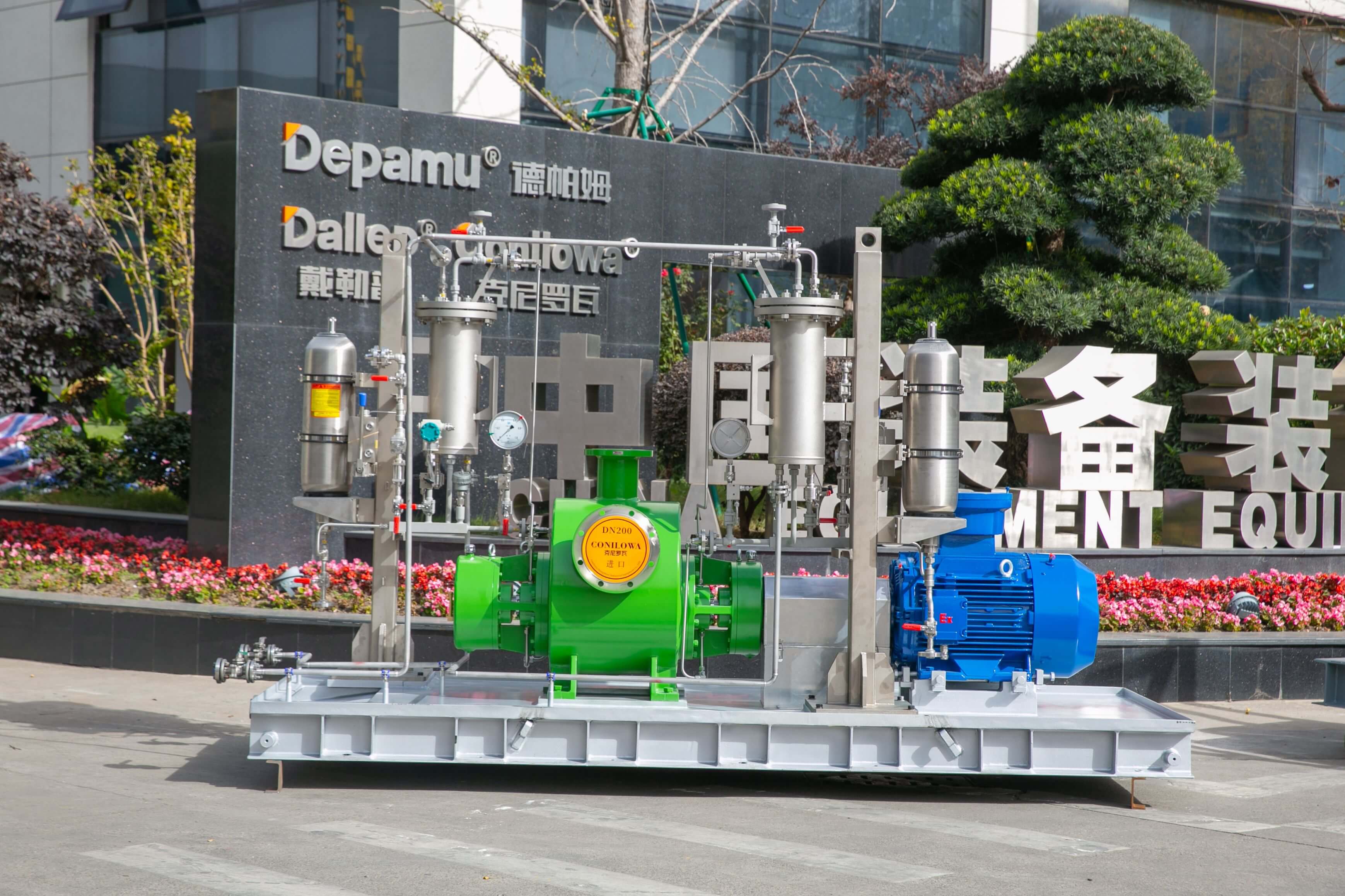
| System integration | Can the supplier deliver a complete skid — pump, motor, baseplate, instrumentation, control panel? | Reduces on-site interface risk and commissioning time. |
| After-sales support | Spare rotor and seal availability, response time, technical documentation in the buyer’s language. | Directly controls mean time to repair when a seal or bearing fails. |
Ask for the Data Behind the Selection
A credible twin screw pump company will present a datasheet that ties the proposed model to your process conditions: rated flow at design viscosity, differential pressure, speed, absorbed power, NPSH requirement, seal flush plan and material specification. If the quotation contains only a model number and a price, the selection has probably not been engineered. Requesting the hydraulic calculation and the shaft power margin is a quick way to separate application-focused manufacturers from catalogue resellers.
Confirm Custom and OEM Capability Early
Many industrial projects need more than a standard pump. Port positions may need to change to fit an existing skid, the driver may be specified by the client, the baseplate may need to match a structural drawing, and the control philosophy may require integration with a DCS. Companies such as Depamu state that they can supply standard products, non-standard products and customized fluid solutions based on the customer’s medium characteristics, flow, pressure, temperature and site process requirements — which is exactly the kind of flexibility an OEM twin screw pump buyer should confirm in writing during the technical clarification stage.
Twin Screw Pump Applications Across Major Industries
Twin screw pumps earn their place in processes where viscosity, pressure, shear sensitivity or solids content rule out other pump types. In oil and gas field operations they are used for crude oil transfer, produced water handling and pipeline boosting, where stable flow and tolerance of changing fluid composition are essential. In petroleum refining and petrochemical plants they handle heavy fractions, bitumen, polymers, tars and viscous intermediates, often at elevated temperature and with heating jackets to keep the product mobile.
In chemical production, twin screw pumps feed viscous reaction mass, transfer emulsions and move slurries that would block a narrow-clearance gear pump. In environmental water treatment they handle sludge, flocculant mother liquor and dewatering feed, where gentle handling prevents floc breakage. In the food and new materials sectors, low-shear pumping protects texture and particle integrity in products such as syrups, pastes and pigment dispersions.
This application spread is reflected in how the market for industrial pumps is structured. According to company information, Depamu’s sales are distributed with petroleum refining and chemicals accounting for roughly 41 percent, oil and gas fields about 23 percent, nuclear power, power generation, metallurgy and new energy about 15 percent, environmental water treatment about 13 percent, and new materials and food about 3 percent, with the remainder in other industries. That mix is a useful signal for buyers: a supplier with concentrated experience in viscous, high-pressure and chemically aggressive duty is more likely to recognize the failure modes your process will produce.
Twin Screw Pump vs Gear Pump vs Rotary Lobe Pump
Buyers often compare several rotary positive displacement designs before committing to a twin screw pump supplier. Each type has a different sweet spot, and the right answer depends on viscosity, pressure, solids and cleaning requirements rather than on a single performance figure.
| Pump Type | Typical Strength | Typical Limitation | Common Duty |
|---|---|---|---|
| Twin screw pump | Smooth, low-pulsation flow; high viscosity; good suction; low shear; compact footprint at high flow | Close rotor clearances require clean or well-screened media; higher purchase cost | Crude and heavy oil transfer, polymer feed, pipeline boosting |
| Gear pump | Simple, compact, cost-effective for clean lubricating liquids at moderate pressure | Poor solids tolerance; shear damage to sensitive products | Lubricating oil circulation, fuel transfer, hydraulic service |
| Rotary lobe pump | Gentle handling of solids and shear-sensitive products; easy cleaning | Lower pressure capability; pulsation at low lobe count | Food, pharmaceutical, sludge and high-solid slurries |
| Progressive cavity pump | Good solids and viscosity tolerance at moderate flow | Elastomer stator wear; limited high-temperature service | Sludge, slurry, viscous residue transfer |
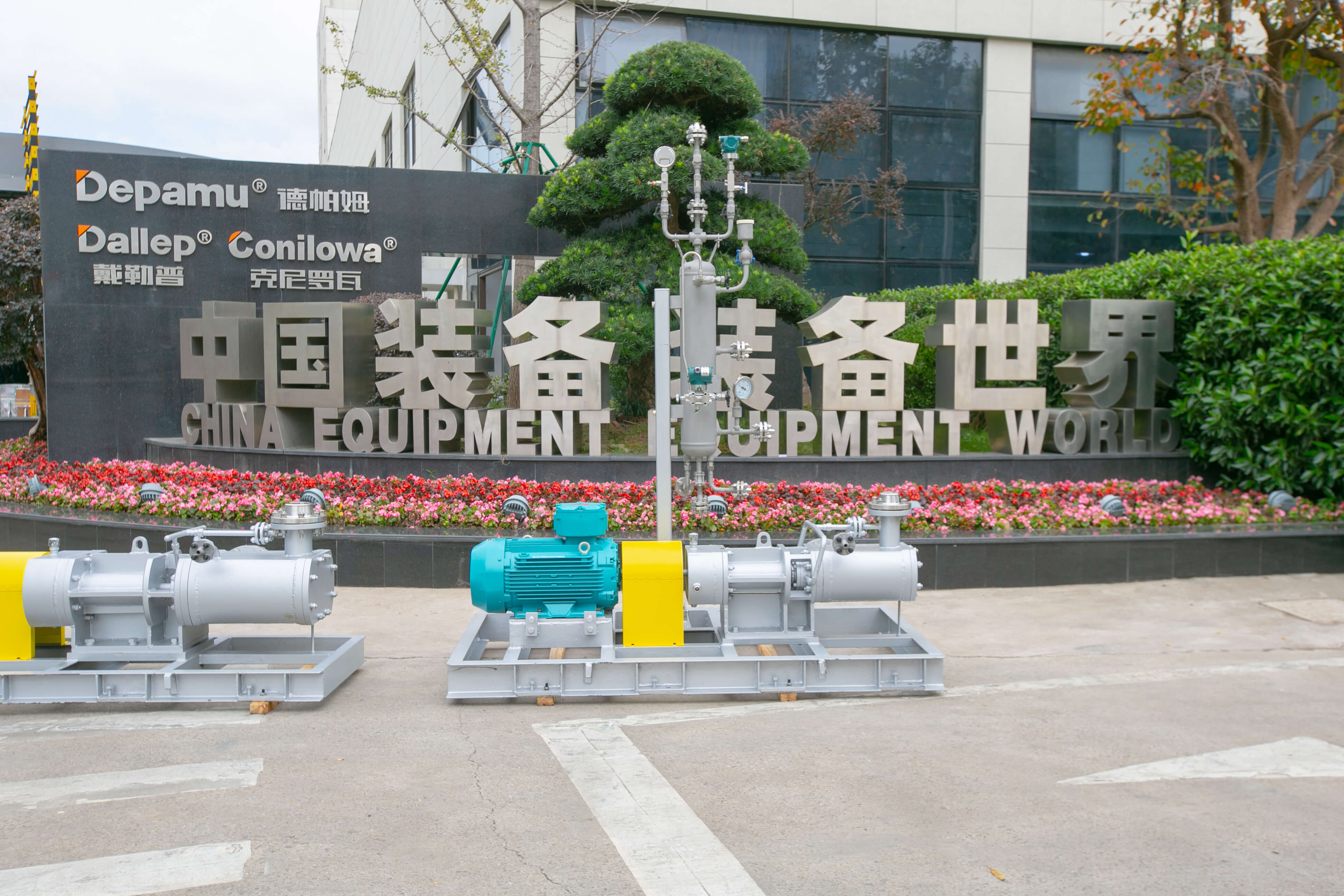
Because Depamu manufactures screw pumps alongside rotary lobe pumps, gear pumps and metering pumps, buyers can request an unbiased comparison for a specific duty during technical clarification rather than forcing one technology into every application. That is particularly valuable in skid projects where a single supplier must guarantee hydraulic and mechanical compatibility across several pump types.
Installation, Operation and Maintenance Best Practices
Installation
- Mount the pump on a rigid, grouted baseplate and verify coupling alignment after piping is connected, not before.
- Keep suction lines short and generously sized; avoid unnecessary elbows and high points that can trap air.
- Fit a suction strainer during commissioning and remove or clean it as specified — twin screw rotors have close clearances.
- Provide a relief valve or bypass on the discharge side; a positive displacement pump must never be dead-headed.
- For hot services, use heating jackets and warm the pump through before start-up to control thermal expansion.
Operation
Start the pump with the suction line flooded and the discharge path open. Monitor suction pressure, discharge pressure, motor current and vibration during the first hours of operation to establish a baseline. Because flow varies with speed, use the variable frequency drive for process control rather than throttling, which wastes energy and raises internal temperature. Record seal flush pressure and temperature if an API-style seal plan is in use.
Preventive Maintenance
- Inspect mechanical seals and flush systems on a fixed interval; seal failure is the most common cause of unplanned twin screw pump downtime.
- Check coupling alignment and timing gear lubrication at each service interval.
- Trend vibration and bearing temperature — a gradual rise usually indicates rotor or bearing wear before leakage appears.
- Keep a spare seal cartridge and bearing set on site for critical duty; confirm lead times with the supplier when the pump is ordered.
- After any rotor or casing work, verify clearances against the manufacturer’s specification before restart.
Suppliers that provide clear O&M documentation, spare parts lists and responsive technical support reduce the cost of these routines significantly. When comparing twin screw pump suppliers, ask how quickly a seal kit or rotor set can be shipped and whether commissioning support is available remotely or on site.
How to Request an Accurate Twin Screw Pump Quotation
A precise inquiry shortens the quotation cycle and reduces the risk of a technically wrong offer. Include the following in your request for quotation: fluid name and composition, viscosity at pumping and ambient temperature, density, solids content and particle size, operating and design pressure, required flow range, operating temperature, suction conditions and available NPSH, motor voltage and frequency, area classification, control and instrumentation requirements, and any applicable project specification or standard you must comply with.
Pricing for a twin screw pump depends mainly on flow and pressure rating, rotor and casing material, seal arrangement, heating provisions, driver type, control philosophy and whether the unit is supplied bare-shaft or as a complete skid. Custom baseplates, special coatings and third-party inspection add cost but are often unavoidable in refinery and offshore projects. Ask for the price to be broken down by pump, driver, baseplate, instrumentation and options so different offers can be compared on a like-for-like basis.
It is also worth asking about total scope. Depamu, for example, supplies metering pumps, high-pressure process reciprocating pumps, chemical dosing packages, water-steam sampling devices and water treatment equipment in addition to screw pumps, rotary lobe pumps and gear pumps, and can deliver complete fluid systems assembled and tested before shipment. For projects where a screw pump, a dosing skid and a sampling system must work together, consolidating the scope with one qualified manufacturer typically reduces interface risk and site labour.
FAQ
What should I include in an inquiry to a twin screw pump manufacturer?
Provide the fluid name and composition, viscosity at operating and ambient temperature, density, solids content, required flow range, suction and discharge pressure, operating temperature, available NPSH, motor supply details and any project specification. Complete data allows the manufacturer to size rotors, select materials and specify the correct seal arrangement, which shortens the quotation cycle and avoids rework after order placement.
How do I compare twin screw pump suppliers objectively?
Compare on application engineering depth, material and seal options, manufacturing and test capability, documentation package, delivery reliability and spare parts response. Ask each supplier for the hydraulic calculation, shaft power margin and material specification behind the offer. A supplier that can explain why a particular rotor geometry and seal plan suits your fluid is usually a safer choice than one that quotes on model number and price alone.
Can a twin screw pump handle high viscosity and high pressure at the same time?
Yes, within the limits set by the selected model. Twin screw pumps are rotary positive displacement machines, so they maintain flow against rising pressure better than centrifugal pumps and tolerate high viscosity without losing suction performance. The practical limits depend on rotor size, speed, material strength and seal design, so the exact flow-pressure-viscosity envelope must be confirmed by the manufacturer for each application.
Is an OEM or customized twin screw pump available?
Many industrial manufacturers offer non-standard and customized configurations, including modified port positions, alternative materials, special baseplates, specified drivers and integrated control panels. Depamu states that it can supply standard products, non-standard products and customized fluid solutions according to medium characteristics, flow, pressure, temperature and site process requirements, so OEM buyers should raise customization requirements during technical clarification rather than after the order.
What is the typical maintenance focus for a twin screw pump?
Mechanical seals, timing gear lubrication, coupling alignment and bearing condition are the main focus areas. Vibration and temperature trending usually reveal wear before leakage or loss of flow appears, so condition monitoring pays for itself on critical duty. Keeping a spare seal cartridge and bearing set on site, and confirming spare part lead times at the time of purchase, minimizes downtime.
How is a twin screw pump quotation calculated?
Quotations are built from flow and pressure rating, rotor and casing material, seal type and flush plan, heating provisions, driver and control requirements, baseplate design and any testing or inspection scope. For a meaningful comparison, request a cost breakdown by pump, driver, baseplate, instrumentation and optional items, and confirm what is included in the scope of supply.
Summary
Selecting a twin screw pump manufacturer comes down to matching process data with engineering capability. The pump must be sized against real viscosity, pressure, temperature and solids conditions; the materials and seal arrangement must suit the fluid; and the supplier must be able to document, test and support what it sells. A manufacturer with in-house design, machining, assembly and testing — and with a product range broad enough to cover the metering, boosting and dosing equipment around the pump — can take responsibility for the whole fluid system instead of a single component.
Depamu (Hangzhou) Pump Industry Technology Co., Ltd., founded in 2003, operates a plant of about 35,000 square meters with more than 400 employees and annual output value of approximately RMB 500 million, supplying metering pumps, high-pressure process reciprocating pumps, chemical dosing packages, water treatment equipment and rotary positive displacement pumps including screw pumps, rotary lobe pumps and gear pumps to oil refining, petrochemical, oil and gas, nuclear power, power generation, metallurgy, new energy, environmental water treatment, new materials and food applications. For buyers evaluating twin screw pump suppliers, the practical next step is to send a complete process datasheet and ask for an engineered selection, a documented quotation and a spare parts recommendation — that is where a reliable supplier relationship begins.