
Selecting a centrifugal water pump manufacturer is a strategic procurement decision, not simply a price comparison. Industrial centrifugal pumps are used in water treatment, cooling systems, chemical transfer, process water circulation, and many other demanding duties. The supplier behind the pump affects delivery schedule, customization flexibility, equipment compatibility, and long-term operational stability. For buyers sourcing from overseas, it is important to evaluate a manufacturer’s factory scale, engineering capability, product range, and ability to integrate pumps into complete fluid systems.
Depamu (Hangzhou) Pump Industry Technology Co., Ltd. is a high-tech enterprise established in 2003. The company focuses on high-end positive displacement pumps and fluid equipment, and its portfolio includes specialty centrifugal pumps alongside metering pumps, high-pressure reciprocating pumps, chemical dosing systems, screw pumps, rotary lobe pumps, gear pumps, pneumatic pumps, electric pumps, emulsion pumps, water and steam sampling systems, and supercritical extraction equipment. This article provides a practical procurement guide for evaluating a centrifugal water pump manufacturer, a centrifugal water pump processing factory, and a centrifugal water pump customization manufacturer, using Depamu’s manufacturing and customization capabilities as a reference.
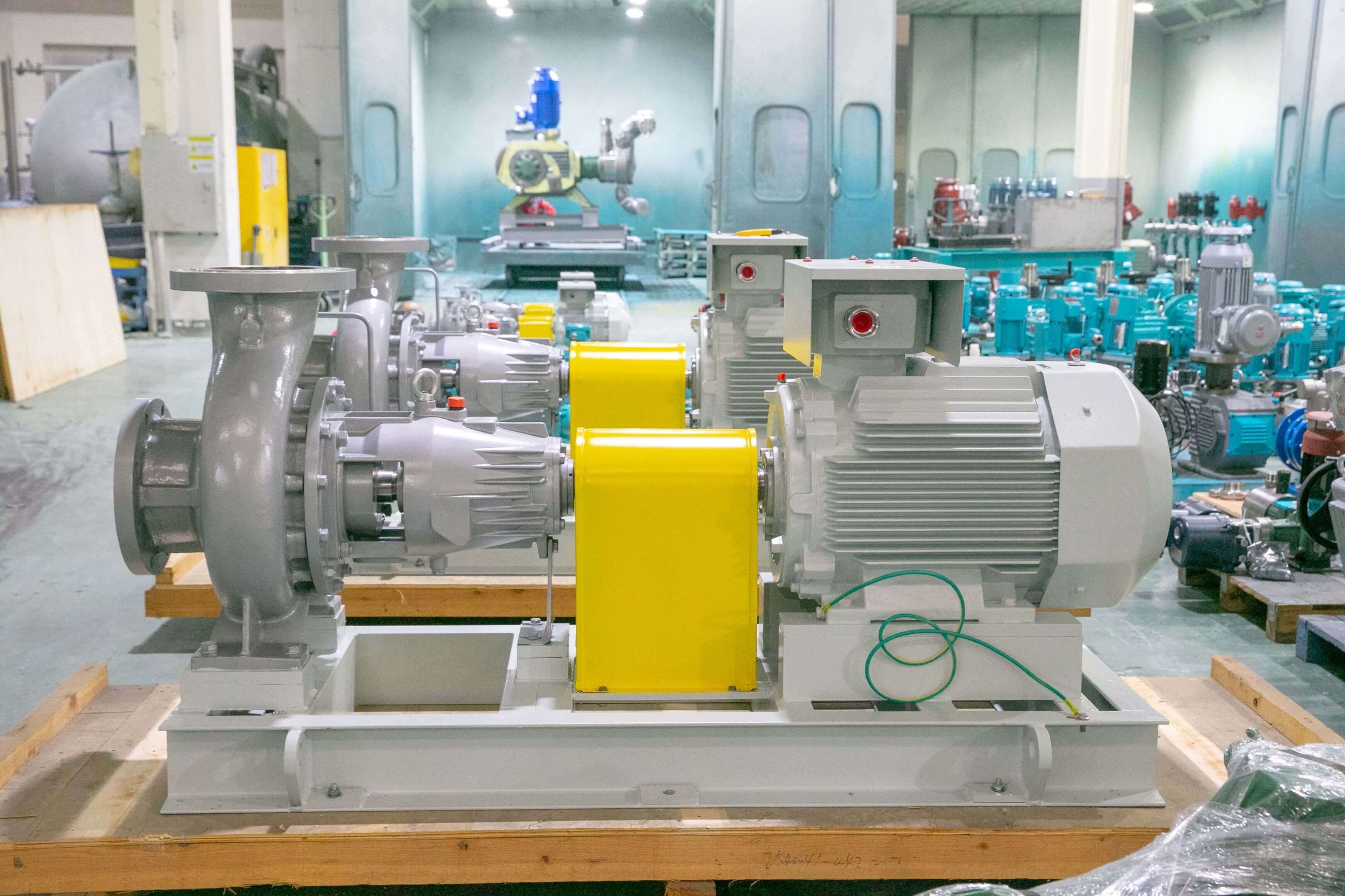
Why a Centrifugal Water Pump Manufacturer Should Be Evaluated Beyond Price
Centrifugal water pumps operate in continuous industrial environments where reliability and service life matter. A low initial quotation can become expensive if the pump is poorly matched to the duty point, if spare parts are difficult to obtain, or if the supplier cannot support customization when site conditions change. Buyers should therefore look beyond catalog prices and examine the manufacturer’s production base, engineering team, quality control process, and experience in relevant industries.
Factory scale is one useful indicator. Depamu has more than 400 employees and a factory area of approximately 35,000 square meters, with registered capital of RMB 54 million and annual output value of around RMB 500 million. The company’s sales performance has grown from approximately RMB 450 million in 2023 to RMB 510 million in 2024 and RMB 560 million in 2025. For international buyers, this consistent growth suggests a stable manufacturing organization with the capacity to handle repeat orders, project-based requirements, and long-term supply programs.
A centrifugal water pump quality supplier should also be able to explain how the pump will be selected. Flow rate, head, medium properties, temperature, intermittency, and installation layout all influence the final configuration. A manufacturer that asks detailed process questions is usually better prepared to deliver a reliable solution than one that quotes only from a standard price list. This is especially important for industrial centrifugal pump supplier projects involving water treatment, chemical plants, power stations, and oil and gas facilities.
Depamu as a Centrifugal Water Pump Manufacturer and Fluid Equipment Supplier
Depamu is a research, development, production, and sales enterprise with more than two decades of experience in high-end positive displacement pumps and fluid equipment. The company introduced advanced technology from Germany and has continued to innovate around industrial fluid transfer, precise dosing, high-pressure injection, and packaged chemical dosing systems. It operates three brands, including the Depamu brand, to serve different market requirements and product positioning.
For buyers searching for a centrifugal water pump manufacturer, it is important to understand the supplier’s complete product scope. Depamu’s core products include hydraulic diaphragm metering pumps, high-pressure process reciprocating pumps, and automatic chemical dosing systems. These products are supported by screw pumps, rotary lobe pumps, gear pumps, pneumatic pumps, electric pumps, emulsion pumps, specialty centrifugal pumps, water and steam sampling systems, and supercritical extraction equipment. This breadth allows the company to act as a fluid equipment manufacturer rather than a single-product supplier.
The company’s centrifugal pump offering is therefore best viewed as part of an integrated fluid equipment portfolio. In many projects, a centrifugal water pump may work alongside metering pumps for chemical dosing, high-pressure reciprocating pumps for process injection, or a packaged dosing system for water treatment. A supplier with this combined capability can help buyers reduce interface risk between equipment packages and simplify technical communication. That is a meaningful advantage when evaluating a centrifugal water pump strength manufacturer for complex industrial projects.
How a Centrifugal Water Pump Customization Manufacturer Handles Complex Conditions
Customization begins with the medium and the process. Water, cooling water, chemical solutions, and wastewater streams place different demands on materials, sealing, and hydraulic design. A centrifugal water pump customization manufacturer should collect data on medium composition, suspended solids, viscosity, pH, temperature, flow rate, discharge pressure, suction conditions, and operating schedule before proposing a configuration. Depamu’s customization approach is based on the customer’s medium characteristics, flow, pressure, temperature, and site process requirements.
For project-based procurement, the manufacturer should also clarify the scope of supply. Will the order include only the pump, or a complete skid with valves, instruments, base frame, control panel, and interconnecting piping? Depamu provides standard products, non-standard products, and customized fluid solutions, and it has the capability to deliver from product development and design manufacturing to packaged delivery. This is relevant for buyers who want one technical contact for pumps, dosing systems, and auxiliary equipment.
Depamu’s product applications reflect this project-oriented capability. Petroleum refining and chemicals account for approximately 41% of sales, oil and gas fields for approximately 23%, nuclear, power, metallurgy, and new energy for approximately 15%, environmental water treatment for approximately 13%, new materials and food for approximately 3%, and other industries for approximately 5%. These application areas require different engineering priorities, from corrosion resistance and precise dosing to high-pressure injection and continuous water treatment operation.
| Industry sector | Approx. share of sales |
|---|---|
| Petroleum refining and chemicals | 41% |
| Oil and gas fields | 23% |
| Nuclear, power, metallurgy, and new energy | 15% |
| Environmental water treatment | 13% |
| New materials and food | 3% |
| Other industries | 5% |
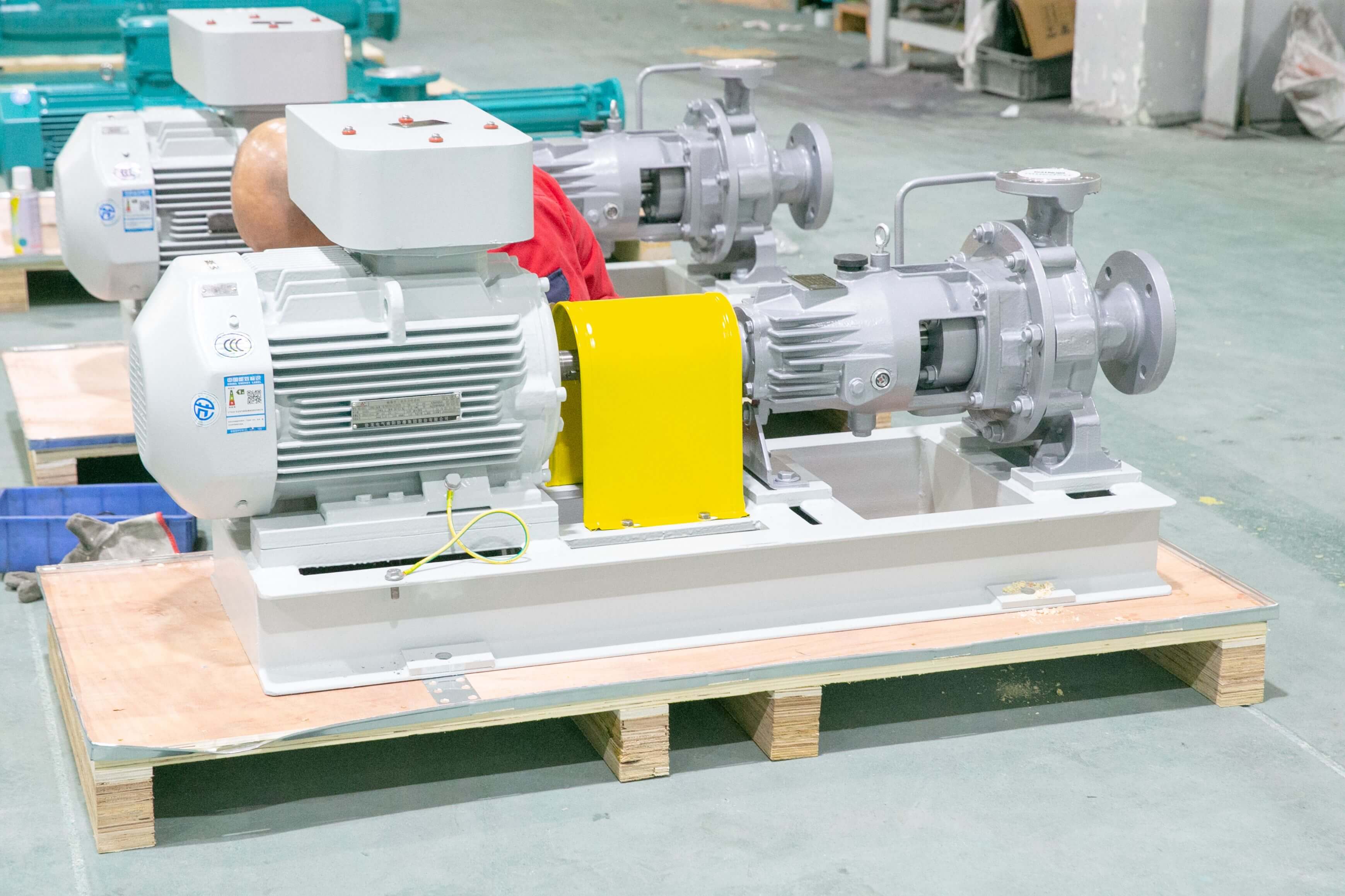
Production and Delivery Capabilities of a Centrifugal Water Pump Processing Factory
When buyers audit a centrifugal water pump processing factory, they should look at how engineering, machining, assembly, and testing are coordinated. A factory that can control these stages internally is better positioned to maintain consistency across repeat orders. Depamu’s operations cover product development, design manufacturing, and packaged delivery. Its 35,000-square-meter production site and workforce of more than 400 employees provide the organizational capacity for standard product production, non-standard fabrication, and project-based assembly.
Packaged systems require particular attention. Depamu’s automatic chemical dosing systems integrate chemical storage, dissolution, mixing, metering, and automatic control into a skid-mounted system. The company completes assembly and testing before delivery, so the system only requires piping and power connection at the site. For a centrifugal water pump manufacturer serving water treatment and chemical projects, this kind of pre-delivery integration can reduce installation time and improve start-up predictability.
Delivery capability also depends on documentation and communication. International buyers typically need drawings, nameplates, packaging specifications, and shipping marks that match project requirements. A manufacturer accustomed to serving petroleum refining, chemicals, oil and gas, power, water treatment, and new materials projects is more likely to understand these expectations. Buyers should confirm the scope of supply, inspection points, and delivery schedule before placing an order, especially for customized centrifugal pump solutions.
Procurement Guide: How to Choose a Centrifugal Water Pump Strength Manufacturer
Choosing a centrifugal water pump strength manufacturer requires a structured evaluation. Start with the manufacturer’s basic profile: year of establishment, employee count, factory area, registered capital, annual output value, and sales trend. These facts indicate whether the supplier has the resources to support stable production. Depamu was established in 2003, has more than 400 employees, occupies approximately 35,000 square meters, and has shown continuous sales growth from 2023 to 2025.
Next, review the technical fit. Confirm whether the supplier can offer standard products, non-standard products, and customized fluid solutions. Ask how it selects materials and configurations for corrosive, high-temperature, high-pressure, or solids-containing media. For centrifugal water pump projects, the manufacturer should be able to explain the relationship between flow, head, efficiency, and site conditions without relying on vague claims.
Then examine the supply scope. A single pump order is different from a packaged system order. If the project also requires chemical dosing, high-pressure injection, or water sampling, a supplier with a broader fluid equipment portfolio can reduce coordination work. Depamu’s range includes metering pumps, high-pressure process reciprocating pumps, chemical dosing systems, screw pumps, rotary lobe pumps, gear pumps, pneumatic pumps, electric pumps, emulsion pumps, specialty centrifugal pumps, water and steam sampling systems, and supercritical extraction equipment.
Finally, confirm delivery and documentation details. Ask for the proposed schedule, assembly and testing arrangements, packaging method, and technical documents. For OEM centrifugal pump factory projects, clarify drawing approval, nameplate requirements, and packaging marks. A reliable centrifugal water pump quality supplier should provide clear answers before the order, not after shipment. This procurement guide can help international buyers compare quotations on a like-for-like basis and avoid hidden interface costs.
FAQ
Is Depamu a centrifugal water pump manufacturer?
Depamu is a manufacturer of high-end positive displacement pumps and fluid equipment. Its product portfolio includes specialty centrifugal pumps as well as metering pumps, high-pressure process reciprocating pumps, chemical dosing systems, screw pumps, rotary lobe pumps, gear pumps, pneumatic pumps, electric pumps, emulsion pumps, water and steam sampling systems, and supercritical extraction equipment. Buyers can discuss standard, non-standard, and customized fluid solutions based on medium, flow, pressure, temperature, and site process requirements.
How should buyers choose a centrifugal water pump customization manufacturer?
Buyers should evaluate the manufacturer’s factory scale, engineering capability, product range, customization process, and experience in relevant industries. Confirm how the supplier collects medium and process data, how it selects materials and configurations, and what is included in the supply scope. Depamu’s approach is based on the customer’s medium characteristics, flow, pressure, temperature, and site process requirements, with support from design manufacturing to packaged delivery.
What industries can use centrifugal water pumps and fluid equipment from Depamu?
Depamu’s products are applied in petroleum refining, chemicals, oil and gas fields, nuclear industry, power, metallurgy, new energy, environmental water treatment, new materials, and food. The company’s sales distribution includes approximately 41% petroleum refining and chemicals, 23% oil and gas fields, 15% nuclear, power, metallurgy, and new energy, 13% environmental water treatment, 3% new materials and food, and 5% other industries. Centrifugal pumps can be considered alongside other fluid equipment depending on the duty.
Can Depamu provide complete fluid equipment packages beyond centrifugal pumps?
Yes. Depamu provides standard products, non-standard products, and customized fluid solutions. Its portfolio includes metering pumps, high-pressure process reciprocating pumps, automatic chemical dosing systems, screw pumps, rotary lobe pumps, gear pumps, pneumatic pumps, electric pumps, emulsion pumps, specialty centrifugal pumps, water and steam sampling systems, and supercritical extraction equipment. This allows the company to support projects that require多个设备类别 integrated into one supply scope.
Summary
Evaluating a centrifugal water pump manufacturer should go beyond the initial quotation. International buyers should review factory scale, engineering support, product range, customization capability, industry experience, and delivery coordination. Depamu (Hangzhou) Pump Industry Technology Co., Ltd. provides a useful reference for this evaluation: established in 2003, more than 400 employees, approximately 35,000 square meters of factory space, registered capital of RMB 54 million, annual output value of around RMB 500 million, and sustained sales growth from 2023 to 2025.
As a fluid equipment manufacturer, Depamu combines specialty centrifugal pumps with metering pumps, high-pressure reciprocating pumps, chemical dosing systems, screw pumps, rotary lobe pumps, gear pumps, pneumatic pumps, electric pumps, emulsion pumps, water and steam sampling systems, and supercritical extraction equipment. For buyers seeking a centrifugal water pump processing factory, quality supplier, strength manufacturer, or customization manufacturer, the most reliable approach is to compare technical fit, scope of supply, and project experience in parallel. This centrifugal pump procurement guide is intended to support that decision process with factual evaluation criteria.