
Gear pumps are among the most widely used positive displacement pumps in modern industry. They move liquids by trapping fluid between rotating gears and the pump casing, then forcing it out at a steady, predictable rate. Because of that simple but effective working principle, gear pumps are frequently selected for transferring viscous oils, chemical intermediates, resins, adhesives, fuels, and other fluids that must be moved without pulsation, emulsification, or loss of volumetric efficiency.
But the performance of a gear pump depends far more on its manufacturer than on the working principle itself. Clearances, gear geometry, surface finish, shaft support, seal design, and material selection all determine whether a pump will run reliably for years or fail within months in a demanding process line. Choosing the right gear pump manufacturer is therefore a strategic procurement decision, not only a purchasing transaction.
This guide explains how to evaluate an industrial gear pump supplier, what technical questions to ask, how different gear pump configurations compare, and how a manufacturer with broader fluid equipment capabilities can support complete project requirements rather than supplying a single component.
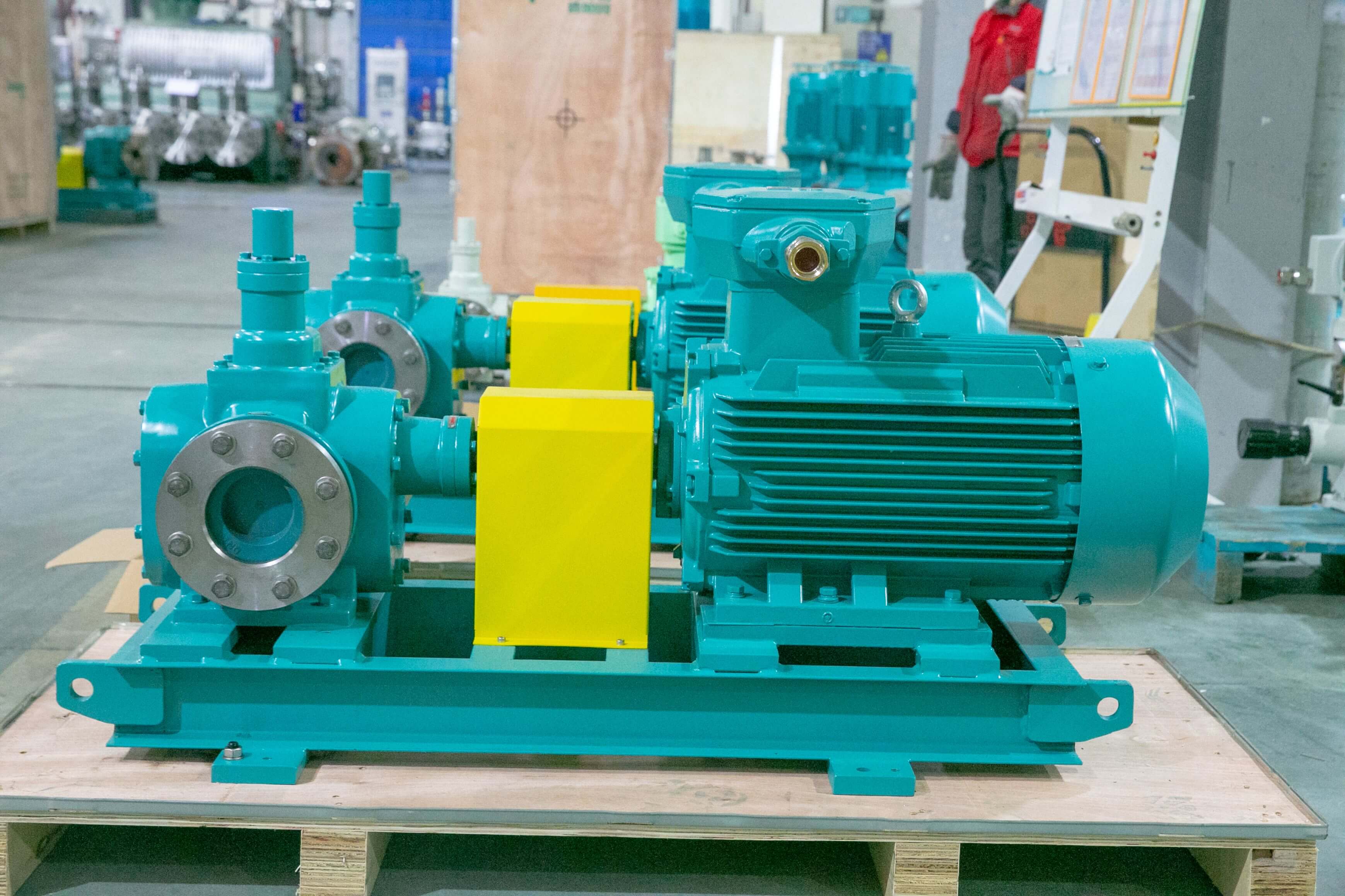
What Should You Evaluate in a Gear Pump Manufacturer?
Most buyers begin with price, but price is the least reliable indicator of long-term value in pump procurement. A gear pump that costs slightly more at the outset but delivers stable flow, low maintenance demand, and interchangeable spare parts will almost always produce a lower total cost of ownership. When comparing a gear pump manufacturer against alternatives, evaluate capability rather than catalogue pages.
The first dimension is engineering capability. A capable manufacturer does not simply assemble standard models; it understands how viscosity, temperature, pressure, solids content, lubricity, and corrosion resistance interact. For a fluid with high viscosity at ambient temperature but low viscosity at operating temperature, the selected clearances and speed must reflect the actual duty point, not the datasheet default. This is why technical dialogue before quotation matters more than a product list.
The second dimension is manufacturing depth. Gear pumps require accurate gear cutting, controlled tooth profile, precise bore alignment, and reliable sealing arrangements. A factory with in-house machining, inspection, assembly, and testing has direct control over these variables. A trading company or assembler does not. Buyers should confirm who actually machines the gears, who performs the pressure and leak tests, and who holds the technical documentation.
The third dimension is scope. Many projects need more than one pump. They need metering pumps, chemical dosing packages, screw pumps, rotor pumps, valves, skids, and controls that integrate cleanly. A manufacturer able to supply a coordinated fluid equipment package reduces interface risk, shortens commissioning time, and clarifies responsibility if a performance issue appears.
How Depamu Approaches Gear Pump Manufacturing
Depamu (Hangzhou) Pump Industry Technology Co., Ltd. was founded in 2003 and has spent more than two decades focused on high-end positive displacement pumps and fluid equipment. The company operates a factory area of approximately 35,000 square meters with more than 400 employees, and its annual output value is approximately RMB 500 million. Its product scope includes metering pumps, high-pressure reciprocating process pumps, pneumatic and electric pumps, chemical dosing packages, water and steam sampling systems, water treatment equipment, screw pumps, rotor pumps, and gear pumps.
This breadth is relevant to gear pump buyers because gear pumps rarely operate in isolation. A gear pump transferring a chemical feed stream may sit upstream of a dosing skid or downstream of a mixing tank. When one supplier understands the whole process chain, the pump selection, flange standards, material compatibility, and control philosophy can be aligned from the beginning rather than resolved later on site.
Depamu’s customer base spans petroleum refining and chemicals, oil and gas fields, nuclear power, power generation, metallurgy, new energy, environmental water treatment, new materials, and food processing. Petroleum refining and chemical processing represent roughly 41% of sales, oil and gas fields about 23%, nuclear power, power, metallurgy and new energy about 15%, environmental water treatment about 13%, and new materials and food about 3%. This distribution shows a supplier accustomed to demanding duty conditions, including corrosive media, high pressure, and continuous operation.
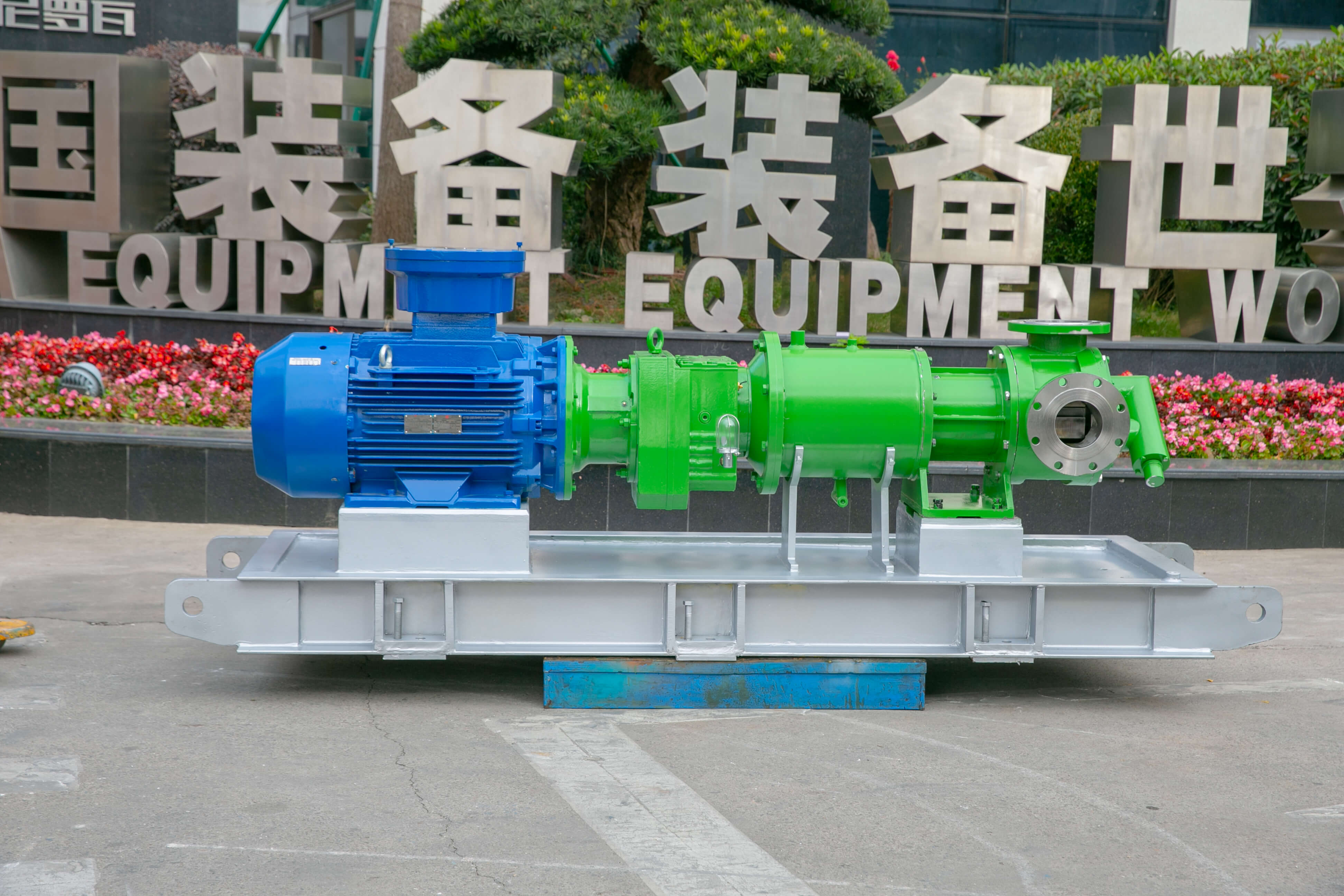
Engineering and Customization Capability
Depamu’s engineering process begins with the medium and the process conditions, not with a fixed model number. Buyers provide fluid characteristics, required flow rate, discharge pressure, operating temperature, viscosity range, solids content, available NPSH, and site utilities. From these inputs, the manufacturer proposes a configuration covering gear type, casing and gear materials, shaft sealing method, bearing arrangement, connection standard, and drive options.
This approach matters because gear pumps are frequently specified for fluids that fall outside standard ranges. Resins, adhesives, heavy fuel oils, polymer melts, and concentrated chemical solutions behave very differently from water. A custom gear pump manufacturer must be able to adjust internal clearances, heating arrangements, seal faces, and materials rather than forcing the application into an unsuitable standard unit.
Production Capacity and Delivery Reliability
Delivery reliability is a practical concern for project buyers. A pump manufacturer with substantial production floor space, in-house machining, and standardized testing procedures can maintain schedules even when specifications change late in the project. Because Depamu manufactures both standard and non-standard pumps and also assembles complete skid-mounted packages before shipment, equipment arrives tested and pre-assembled, which shortens site installation and reduces the number of interfaces a contractor must manage.
Gear Pump Types and Configurations a Professional Gear Pump Factory Can Supply
Gear pumps are not a single product category. External gear pumps, internal gear pumps, and related designs differ in how they handle viscosity, shear, solids, and pressure. Understanding these differences helps buyers write a specification that a gear pump factory can answer precisely.
| Gear Pump Configuration | Working Characteristics | Typical Media | Typical Application |
|---|---|---|---|
| External gear pump | Two meshing gears, compact structure, steady flow, good efficiency at moderate pressure | Lubricating oils, hydraulic fluids, fuel oils, solvents, chemical intermediates | Transfer, circulation, dosing support, lubrication systems |
| Internal gear pump | Gentle handling, low shear, strong self-priming, suited to viscous fluids | Resins, adhesives, syrups, polymer solutions, high-viscosity oils | Viscous material transfer, coating feed, food and chemical processing |
| Heated or jacketed gear pump | Casing or cover heating maintains viscosity and prevents solidification | Waxes, bitumen, hot oils, molasses, temperature-sensitive chemicals | High-temperature transfer, pipeline feeding, tank unloading |
| Custom / OEM gear pump | Specified materials, connections, seals, mounting and drive arrangement | Corrosive chemicals, special solvents, food-grade media, project-specific fluids | Original equipment integration, skid building, revamp projects |
When a project involves several pump technologies on one skid, for example a gear pump for viscous transfer alongside a metering pump for precise additive injection, sourcing from a single positive displacement pump manufacturer simplifies hydraulic balancing, control logic, and spare parts planning.
Where Industrial Gear Pumps Are Used: Application Scenarios
Gear pumps appear in almost every process industry, but their role changes with the duty. In petroleum refining and petrochemical plants, they commonly handle lube oils, fuel oils, solvents, and chemical intermediates where steady flow and self-priming are more important than high head. In these environments, material compatibility and seal reliability are usually the deciding factors.
In oil and gas field operations, gear pumps support transfer duties such as oil circulation, chemical additive feed, and small-volume transfer where a compact, robust unit is needed. Because field conditions vary widely, enclosures, couplings, and drive arrangements often need adaptation, which is exactly where a manufacturer’s customization capability becomes valuable.
In power generation, metallurgy, and new energy, gear pumps are selected for lubrication circuits, auxiliary oil systems, and chemical feed lines. In environmental water treatment, they often handle polymer solutions, flocculants, and sludge-related transfer duties where gentle handling and repeatable flow matter. In food and new materials production, hygienic construction, cleanability, and material traceability become priorities.
Across all these sectors, the common requirements are the same: predictable flow, resistance to the medium, tolerance of the actual operating temperature, and a maintenance plan that can be executed by local technicians. A high viscosity gear pump selection for resin or adhesive service may look similar to a lube oil pump on a drawing, but the internal clearances and speed limits are fundamentally different.
Gear Pump vs. Other Positive Displacement Pumps: A Practical Comparison
Buyers often ask whether a gear pump, screw pump, or rotor pump is the right choice. There is no universal answer; each design has a natural operating range.
- Gear pump: compact, cost-effective, good for clean lubricating or viscous fluids at moderate to high pressure, low pulsation, limited tolerance for large solids.
- Screw pump: excellent for high-viscosity and shear-sensitive media, smooth continuous flow, good suction capability, often preferred for sludge, slurries, and polymer transfer.
- Rotor pump: gentle handling of products containing soft solids, easy cleaning, widely used in food and pharmaceutical service.
- Centrifugal pump: high flow at lower viscosity, but flow varies with system resistance and shear-sensitive fluids may degrade.
- Metering pump: selected when precise, adjustable dosing is required rather than simple transfer.
Because Depamu manufactures gear pumps together with screw pumps, rotor pumps, metering pumps, and complete dosing systems, buyers can receive an unbiased recommendation based on the process rather than on a narrow product catalogue. That is a meaningful advantage when the medium is difficult or when the duty point sits close to the boundary between two pump technologies.
Custom Gear Pump Solutions for OEM and Project Buyers
Customization requests typically fall into four categories. The first is material adaptation, where wetted parts must resist acidic, alkaline, or solvent attack. The second is thermal adaptation, where jacketing, heating, or cooling is needed to keep viscosity within a workable range. The third is mechanical adaptation, covering flange standards, mounting orientation, shaft extensions, and coupling types. The fourth is control integration, linking the pump to a variable frequency drive, local control panel, or plant distributed control system.
A reliable OEM gear pump supplier should be able to document each of these adaptations, provide dimensional drawings for integration, and confirm test records before shipment. For skid builders and equipment integrators, consistent dimensions and repeatable performance across production batches are often more important than any single technical specification, because the pump must fit the same enclosure and piping arrangement every time.
Project buyers, by contrast, usually need documentation, spare parts lists, and commissioning support. Supplying a pump is only part of the obligation; supplying the information needed to operate and maintain it is what separates a component vendor from an engineering partner.
Installation, Operation and Maintenance Best Practices
Most gear pump problems originate from installation rather than from the pump itself. Correct alignment between pump and driver, properly supported piping, and an adequately sized suction line prevent the majority of early failures. Gear pumps are self-priming to a degree, but they should not be expected to lift fluids from deep pits without consideration of suction conditions.
Operating practice matters equally. Running a gear pump dry causes rapid wear because the fluid is the lubricant for the gear and bearing surfaces. Starting against a closed discharge valve, operating far outside the viscosity range used for selection, or ignoring cavitation symptoms will all reduce service life. Temperature control is especially important for fluids that thicken or solidify when they cool.
Maintenance should follow a simple, repeatable routine: monitor discharge pressure and flow trends, inspect for seal leakage, check coupling alignment, verify relief valve function, and replace wear components according to operating hours rather than only after failure. Keeping a small stock of seals and wear plates avoids extended downtime when a pump eventually needs attention.
What to Ask Before Requesting a Gear Pump Quotation
An accurate quotation depends on complete process information. Before contacting any gear pump supplier, prepare the following details: fluid name and concentration, viscosity at operating temperature, required flow rate, discharge pressure, suction conditions, operating temperature range, solids content and particle size, intermittency of operation, available utilities, connection standard, and any material or certification requirements.
It is also useful to ask how the manufacturer verifies performance before delivery. Factory pressure testing, leak testing, and performance verification reduce the risk of surprises during commissioning. Buyers should ask for dimensional drawings, material certificates where relevant, operation and maintenance manuals, and a recommended spare parts list with lead times.
Finally, compare quotations on a like-for-like basis. A lower price may reflect a simpler seal arrangement, a lower-grade material, or a different drive configuration. When a gear pump quotation is compared against another, check that the medium, viscosity, pressure, and temperature assumptions are identical.
FAQ
What should I look for in a gear pump manufacturer?
Look for in-house engineering, in-house machining and assembly, documented testing, experience with your specific medium and duty conditions, and the ability to support customization. Also confirm that the manufacturer can supply spare parts and technical documentation after delivery, because long-term support is as important as the initial specification.
Can Depamu supply custom gear pumps for specific media and duty conditions?
Yes. Depamu engineers select the configuration according to the customer’s medium characteristics, flow rate, pressure, temperature, and site process requirements. Standard products, non-standard products, and customized fluid solutions are all available, including adaptations for material compatibility, sealing, heating, connections, and drive arrangements.
What industries are gear pumps used in?
Gear pumps are used in petroleum refining, chemical processing, oil and gas fields, power generation, metallurgy, new energy, environmental water treatment, new materials, and food processing. The specific configuration changes with the medium, but the core requirement remains steady flow and reliable operation under the actual process conditions.
How do I choose between a gear pump and a screw pump?
Choose a gear pump for clean or lubricating fluids at moderate to high pressure where compact size and steady flow are priorities. Choose a screw pump for high-viscosity, shear-sensitive, or mildly contaminated media where smooth continuous transfer and strong suction capability are needed. A manufacturer offering both technologies can recommend based on the duty rather than the catalogue.
What information is needed for an accurate gear pump quotation?
Provide the fluid name and concentration, viscosity at operating temperature, required flow rate, discharge pressure, suction conditions, temperature range, solids content, operating schedule, connection standard, and any material or documentation requirements. Complete data allows the manufacturer to size the pump correctly and avoid over- or under-specification.
Can gear pumps handle high-viscosity liquids?
Yes, within the limits of the selected design. Internal gear pumps and jacketed configurations are commonly used for viscous fluids. The key is to confirm viscosity at the actual operating temperature, not only at ambient conditions, and to check whether heating is required to keep the fluid pumpable.
Does Depamu supply equipment beyond gear pumps?
Yes. Depamu manufactures metering pumps, high-pressure reciprocating process pumps, pneumatic and electric pumps, chemical dosing packages, water and steam sampling systems, water treatment equipment, screw pumps, rotor pumps, and gear pumps. Complete packaged systems can be assembled and tested before shipment.
How should a gear pump be maintained to extend service life?
Never run the pump dry, keep suction conditions adequate, monitor discharge pressure and flow, check for seal leakage, verify coupling alignment, and replace wear parts on a planned schedule. Following the manufacturer’s operation and maintenance manual and keeping critical spares available will significantly reduce unplanned downtime.
Summary
Selecting a gear pump manufacturer is a decision about reliability, engineering support, and total cost of ownership rather than a comparison of catalogue prices. The right partner understands how viscosity, temperature, pressure, corrosion, and solids influence pump design, can machine and test the product in-house, and remains available for spare parts and technical support after commissioning.
Depamu (Hangzhou) Pump Industry Technology Co., Ltd. combines more than two decades of positive displacement pump experience, a 35,000 square meter manufacturing base, a broad product portfolio spanning gear pumps, screw pumps, rotor pumps, metering pumps, and dosing systems, and proven service across petroleum refining, chemicals, oil and gas, power, metallurgy, new energy, environmental water treatment, new materials, and food processing. For buyers who need a standard gear pump or a fully customized fluid solution, starting the conversation with complete process data is the fastest route to a reliable, correctly sized result.