
High-pressure process transfer is one of the most demanding duties in industrial fluid handling. Whether a plant is injecting chemicals into a refinery process line, boosting pressure in an oil and gas gathering system, or dosing treatment chemicals into a water circuit, the pump must combine hydraulic performance, material compatibility, control accuracy, and long-term serviceability. That is why buyers searching for a high-pressure process tubular pump manufacturer are usually not looking for a catalog item alone. They need an engineering-oriented partner who can connect pump selection with the actual process conditions.
Depamu (Hangzhou) Pump Industry Technology Co., Ltd. is a Chinese high-tech enterprise focused on high-end volumetric pumps and fluid equipment. Since 2003, the company has built a product portfolio that includes metering pumps, high-pressure process reciprocating pumps, pneumatic and electric pumps, chemical dosing packages, water and steam sampling devices, water treatment equipment, screw pumps, rotary lobe pumps, and gear pumps. For international buyers, this range is relevant because high-pressure process duties often require more than one pump type, plus skid integration, controls, and documentation.
What Buyers Should Expect from a High-Pressure Process Tubular Pump Manufacturer
A high-pressure process tubular pump factory should be judged by how well it translates process data into a reliable pump package. Flow rate, discharge pressure, temperature, viscosity, solids content, corrosion risk, duty cycle, and available utilities all influence the final configuration. A supplier that only quotes a pump model without asking about the process is likely to leave integration problems for the buyer to solve later.
For process plants, the most valuable manufacturer is one that can support standard products, non-standard designs, and complete fluid solutions. This means reviewing the medium, the suction conditions, the control philosophy, the installation footprint, and the maintenance access before finalizing the design. In high-pressure service, small specification errors can become expensive downtime events, so early technical alignment is essential.
Engineering capability matters more than catalog range
A broad catalog is useful, but engineering capability determines whether the pump will perform in the field. The manufacturer should be able to explain how the pump handles pressure fluctuations, how the control system maintains dosing accuracy, how materials are selected for corrosive media, and how the package will be tested before shipment. These questions are especially important for custom high-pressure process tubular pump manufacturer projects where the duty is outside standard operating ranges.
From standard pumps to custom fluid packages
Many projects begin with a standard pump requirement and evolve into a custom package once the site conditions are reviewed. A chemical dosing system may need a dissolving tank, mixer, metering pump, piping, valves, instrumentation, and automatic control. A high-pressure transfer skid may require pulsation control, pressure monitoring, safety relief, and remote communication. The manufacturer’s ability to integrate these elements reduces interface risk and shortens commissioning time.
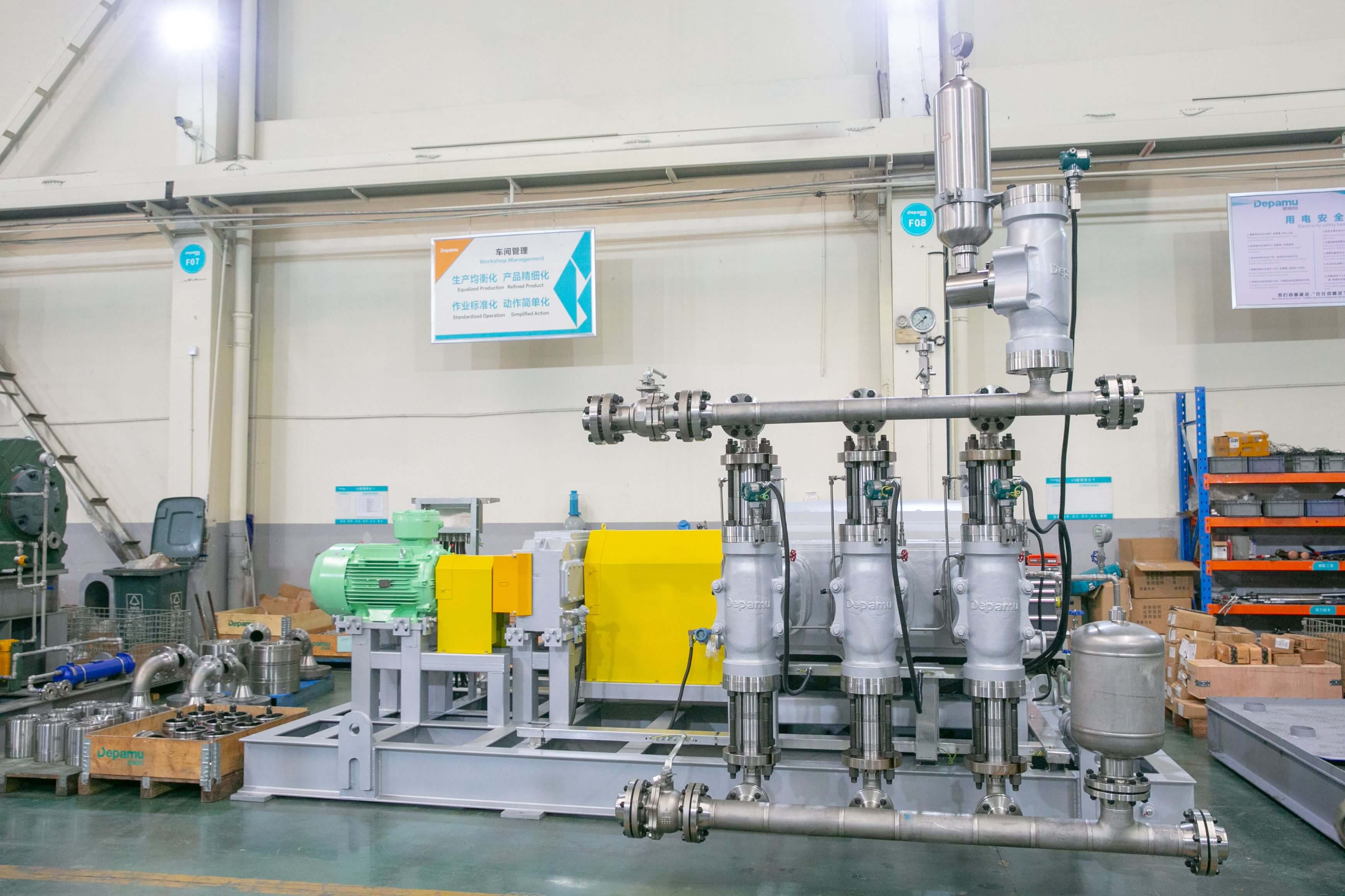
Inside Depamu: Manufacturing Strength Behind High-Pressure Process Pump Solutions
Depamu (Hangzhou) Pump Industry Technology Co., Ltd. was founded in 2003 and has grown into a manufacturer with more than 400 employees and a factory area of approximately 35,000 square meters. The company reports an annual output value of about RMB 500 million, with sales of approximately RMB 450 million in 2023, RMB 510 million in 2024, and RMB 560 million in 2025. These figures reflect sustained growth in a competitive industrial pump market and provide context for buyers evaluating long-term supply stability.
The company operates three brands—Depamu, Keniluo Wa, and Dailepu—and positions itself as a solution provider rather than a simple equipment trader. Its capabilities cover product research and development, design, manufacturing, and packaged delivery. This vertically integrated approach is important for high-pressure process applications because pump performance, baseplate design, piping layout, instrumentation, and control logic must work together as one system.
Depamu’s high-pressure process reciprocating pumps are designed for duties that require stable flow and high discharge pressure. They are relevant to process transfer, pipeline boosting, high-pressure injection, and similar applications where the pump must handle demanding media and continuous operation. The company also supplies metering pumps that use hydraulic diaphragm technology for precise chemical injection, including duties involving corrosive, volatile, or high-pressure media. For projects requiring complete chemical preparation and dosing, automatic chemical dosing packages combine storage, dissolution, mixing, metering, and control in a skid-based format.
Product portfolio relevant to high-pressure process duties
Depamu’s product range includes metering pumps, high-pressure process reciprocating pumps, pneumatic pumps, electric pumps, chemical dosing packages, water and steam sampling devices, water treatment equipment, screw pumps, rotary lobe pumps, gear pumps, emulsion pumps, special centrifugal pumps, and supercritical extraction equipment. This breadth allows the company to support both single-pump requirements and integrated fluid systems.
- Metering pumps: precise chemical injection for petrochemical, water treatment, pharmaceutical, food, and new energy processes.
- High-pressure process reciprocating pumps: high-pressure transfer, pipeline boosting, and injection duties with stable flow characteristics.
- Chemical dosing packages: integrated storage, mixing, metering, and automatic control for water treatment and process chemical addition.
- Water and steam sampling devices: sampling support for power, nuclear, and industrial water-steam cycles.
- Rotary and screw pumps: transfer of viscous, sensitive, or complex media where gentle handling is required.
Market experience across demanding industries
The company’s products have been applied in petroleum refining, chemicals, oil and gas fields, nuclear industry, power, metallurgy, new energy, environmental water treatment, new materials, and food. Petroleum refining and chemicals account for approximately 41% of sales, oil and gas fields approximately 23%, nuclear, power, metallurgy, and new energy approximately 15%, environmental water treatment approximately 13%, new materials and food approximately 3%, and other industries approximately 5%. This application mix shows that the product portfolio is used across both continuous process industries and utility systems.
Key Selection Factors for High-Pressure Process Tubular Pumps
A practical high-pressure process tubular pump selection guide should start with the process, not the pump model. The same flow and pressure requirement can lead to very different configurations depending on media chemistry, temperature, solids, viscosity, and operating profile. For international projects, buyers should also consider available power supply, site ambient conditions, control system compatibility, and spare parts strategy.
| Selection Factor | Why It Matters | What to Specify |
|---|---|---|
| Medium chemistry | Determines wetted materials, sealing, and corrosion protection. | Chemical composition, concentration, pH, chloride content, and compatibility requirements. |
| Flow rate | Affects pump size, stroke rate, and control range. | Normal, minimum, and maximum flow; turndown ratio; accuracy requirement. |
| Discharge pressure | Defines pressure class, structural design, and safety devices. | Operating pressure, design pressure, pressure fluctuations, and relief setting. |
| Temperature | Influences elastomer selection, clearances, and thermal expansion. | Normal and maximum temperature, startup conditions, and insulation requirements. |
| Viscosity and solids | Impacts valve design, suction conditions, and wear rate. | Viscosity range, particle size, solids concentration, and abrasiveness. |
| Duty cycle | Continuous or batch operation affects component life and maintenance planning. | Hours per day, starts per hour, expected annual operating time, and load profile. |
| Control mode | Determines dosing accuracy and integration with plant automation. | Manual, local, PLC, 4–20 mA, pulse, Modbus, or remote monitoring requirements. |
| Installation and footprint | Affects skid layout, maintenance access, and site construction cost. | Available space, indoor or outdoor installation, lifting limits, and piping connections. |
Match the pump to the process, not the datasheet
Some buyers compare only headline pressure and flow values. In reality, a pump that meets the datasheet may still underperform if the suction system is inadequate, the medium contains unexpected solids, or the control range is too narrow. A responsible high-pressure process tubular pump supplier will ask for a process data sheet, piping and instrument diagram, utility details, and site conditions before recommending a configuration.
When a custom high-pressure process tubular pump is the better choice
Customization is often necessary when the medium is corrosive, viscous, abrasive, high-temperature, or otherwise difficult to handle. It is also relevant when the pump must fit a compact skid, interface with an existing control system, or meet project-specific documentation requirements. In these cases, a custom high-pressure process tubular pump manufacturer can adjust materials, sealing, connection details, control logic, and package layout to match the project rather than forcing the project to match a standard catalog item.
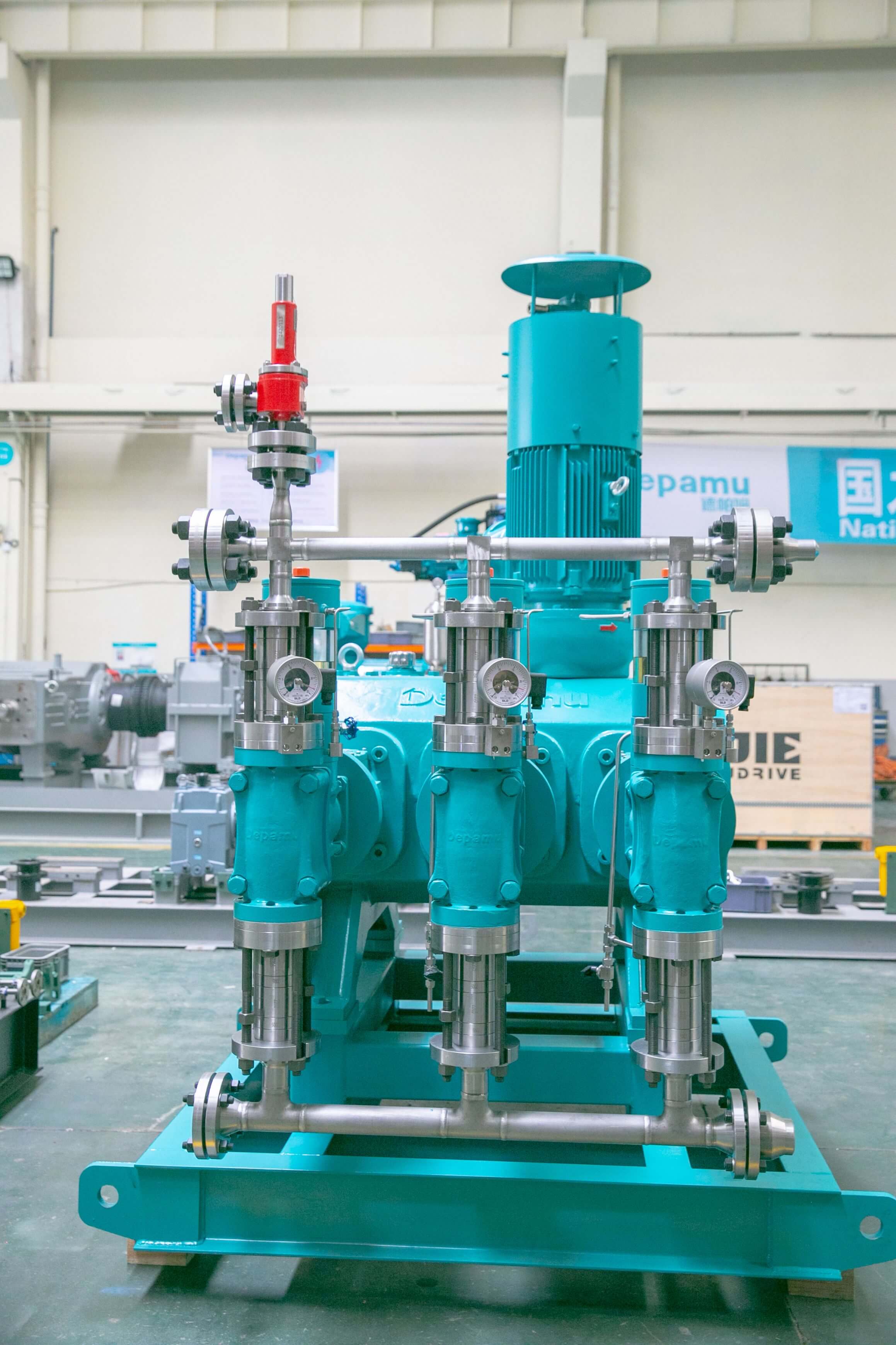
Applications and Operating Scenarios
High-pressure process pumps are used where reliable fluid transfer directly affects production continuity, safety, and product quality. In petroleum refining and chemicals, typical duties include chemical injection, process transfer, high-pressure injection, and pressure boosting. The medium may be corrosive, flammable, volatile, or sensitive to contamination, so material selection and sealing design must be carefully reviewed.
In oil and gas fields, high-pressure process pumps can support water injection, pipeline boosting, and high-pressure transfer. These applications often require stable flow over long operating periods and a design that can handle remote site conditions. In power, nuclear, metallurgy, and new energy applications, pumps and sampling systems support water-steam cycles, chemical dosing, and process treatment. Environmental water treatment relies on metering pumps and automatic dosing packages for coagulation, pH adjustment, disinfection, and other chemical addition duties.
New materials and food applications introduce additional requirements such as gentle handling, hygiene, and accurate dosing. Across these industries, Depamu’s mix of metering pumps, reciprocating pumps, rotary pumps, and packaged systems allows the company to select a configuration based on the actual fluid behavior rather than a single product category.
High-pressure process tubular pump solutions for harsh media
For harsh media, the discussion should cover wetted materials, diaphragm or seal options, valve design, flushing arrangements, and maintenance access. A high-pressure process pump is not only a hydraulic machine; it is also a containment device. Leakage control and material compatibility are therefore central to safe operation, especially when the medium is toxic, corrosive, or expensive.
Integrated skid and dosing systems
Many industrial projects prefer an integrated package instead of separate components. Depamu’s automatic chemical dosing packages combine chemical storage, dissolution, mixing, metering, and automatic control in a skid-based system. These packages can support dry powder or liquid dosing, multi-point injection, and automatic interlocking control. Because the package can be assembled and tested before shipment, site work is reduced to piping and power connection, which helps shorten commissioning time.
Custom Engineering and OEM Support
For project-based buyers, the value of a manufacturer is often measured by how well it handles non-standard requirements. Depamu can provide standard products, non-standard products, and custom fluid solutions based on medium characteristics, flow, pressure, temperature, and site process requirements. This capability is relevant to OEM high-pressure process tubular pump projects, EPC contractors, and system integrators that need a consistent technical partner across multiple packages.
Early technical alignment is important. Buyers should share the process data sheet, interface requirements, applicable standards, documentation expectations, and delivery schedule as early as possible. If the pump will be part of a larger skid, the manufacturer also needs interface drawings, utility data, and control system details. Clear inputs reduce design iterations and help avoid costly changes during fabrication.
Depamu’s three brands and product portfolio allow the company to serve different market requirements while maintaining a common engineering and manufacturing base. Whether the requirement is a single metering pump, a high-pressure process reciprocating pump, or a complete chemical dosing package, the same principle applies: the solution should be built around the process, not around a generic catalog description.
Maintenance, Spare Parts, and Lifecycle Cost
Lifecycle cost is a better purchasing metric than initial price alone. A low-cost pump can become expensive if it requires frequent spare parts, long downtime, or repeated troubleshooting. For high-pressure process service, buyers should review maintenance access, wear-part strategy, spare parts availability, documentation quality, and service support before placing an order.
Maintenance requirements depend on the pump type, medium, duty cycle, and operating conditions. Common checkpoints include diaphragms, valves, seals, lubrication, fasteners, pressure settings, and control calibration. A manufacturer should be able to provide clear operating instructions, recommended spare parts, and technical support for troubleshooting. For remote international projects, documentation and spare parts planning are particularly important because every maintenance event has a logistics cost.
Buyers should also consider how the pump package will be monitored. Pressure gauges, flow meters, level sensors, and control interlocks can help operators detect abnormal conditions early. When the pump is part of a chemical dosing package, automatic control can improve dosing consistency and reduce manual intervention. These features should be defined during selection rather than added after installation.
How to Evaluate a High-Pressure Process Tubular Pump Supplier
Evaluating a supplier requires more than comparing quotations. A structured review helps separate a capable industrial high-pressure process pump manufacturer from a trading company that cannot support engineering changes or long-term service. The following checklist can be used during inquiry and vendor qualification.
- Application experience: Ask how the supplier handles similar media, pressures, temperatures, and duty cycles.
- Engineering support: Confirm whether the supplier can review process data, propose configurations, and provide drawings.
- Customization capability: Check whether materials, connections, controls, and skid layouts can be adapted to project requirements.
- Manufacturing and assembly: Review the factory’s product scope and its ability to deliver complete packages.
- Testing and documentation: Clarify inspection, testing, nameplates, manuals, and project documentation requirements.
- Spare parts and service: Confirm recommended spare parts, lead times, and technical support channels.
- Total cost: Compare energy use, maintenance demand, downtime risk, and logistics cost—not only the purchase price.
For a faster quotation, buyers should provide the medium, concentration, flow range, discharge pressure, temperature, viscosity, solids content, control mode, power supply, installation environment, and required delivery date. If drawings or site constraints are available, they should be included in the inquiry. A responsive high-pressure process tubular pump manufacturer will use this information to propose a suitable pump type, material configuration, and package scope.
FAQ
What is a high-pressure process tubular pump used for?
A high-pressure process tubular pump is used for demanding fluid transfer duties where stable flow and high discharge pressure are required. Typical applications include chemical injection, process transfer, pipeline boosting, high-pressure injection, and water treatment chemical dosing. The final configuration depends on the medium, pressure, temperature, viscosity, and duty cycle.
How do I choose a high-pressure process tubular pump manufacturer?
Choose a manufacturer that can review your process data, explain material and control selections, support customization, and provide clear documentation and spare parts support. A good manufacturer will ask about medium chemistry, flow range, pressure, temperature, solids, duty cycle, and site conditions before recommending a configuration.
Can Depamu customize high-pressure process pumps for corrosive or high-viscosity media?
Depamu can provide standard products, non-standard products, and custom fluid solutions based on medium characteristics, flow, pressure, temperature, and site process requirements. For corrosive or high-viscosity media, the technical review should cover wetted materials, sealing, valve design, and maintenance access.
What information should I provide for a high-pressure process pump quotation?
Provide the medium and concentration, normal and maximum flow, discharge pressure, temperature, viscosity, solids content, control mode, power supply, installation environment, and required delivery date. Drawings, interface requirements, and project standards should also be included when available.
Are high-pressure process pumps suitable for continuous operation?
Suitability for continuous operation depends on the selected pump type, materials, duty cycle, and operating conditions. Buyers should specify expected operating hours, load profile, and maintenance windows so the manufacturer can recommend an appropriate configuration and spare parts strategy.
How does Depamu support maintenance and spare parts?
Depamu’s product and package scope includes metering pumps, high-pressure process reciprocating pumps, chemical dosing packages, and related fluid equipment. Maintenance support should be planned around the specific pump model, medium, and duty. Buyers should request operating instructions, recommended spare parts, and technical support details during the procurement process.
Summary
Selecting a high-pressure process tubular pump manufacturer is a technical decision, not just a purchasing transaction. The right supplier should understand the process, recommend suitable materials and controls, support custom engineering, and provide a clear path for maintenance and spare parts. Depamu (Hangzhou) Pump Industry Technology Co., Ltd. combines a broad volumetric pump portfolio with design, manufacturing, and packaged delivery capabilities. With experience across petroleum refining, chemicals, oil and gas fields, power, nuclear, new energy, environmental water treatment, new materials, and food, the company is positioned to support both standard and custom high-pressure process pump requirements. For international buyers, the most effective next step is to prepare a detailed process data sheet and request a technical proposal from a qualified high-pressure process tubular pump supplier.