
Choosing a hydraulic diaphragm metering pump is not simply a matter of matching a flow rate on a datasheet. In chemical dosing, water treatment, petrochemical processing and oil and gas operations, a metering pump sits at the point where process safety, product quality and operating cost all meet. A pump that doses slightly too much can destroy a catalyst, contaminate a product batch or drive up chemical consumption; a pump that doses too little can leave a boiler unprotected or push a wastewater stream out of compliance. That is why the question buyers ask most often — which hydraulic diaphragm metering pump is good, professional, reliable and suitable for my process — has no single answer. It depends on the media, the pressure, the turndown ratio, the control philosophy and, above all, the manufacturer behind the hardware.
This guide walks through the technical criteria that define a good hydraulic diaphragm metering pump, the practical differences between pump types, the application scenarios where precision dosing creates measurable value, and the signals that separate a professional metering pump manufacturer from a trading company reselling generic equipment.
Why Hydraulic Diaphragm Metering Pumps Are the Default Choice for Critical Dosing
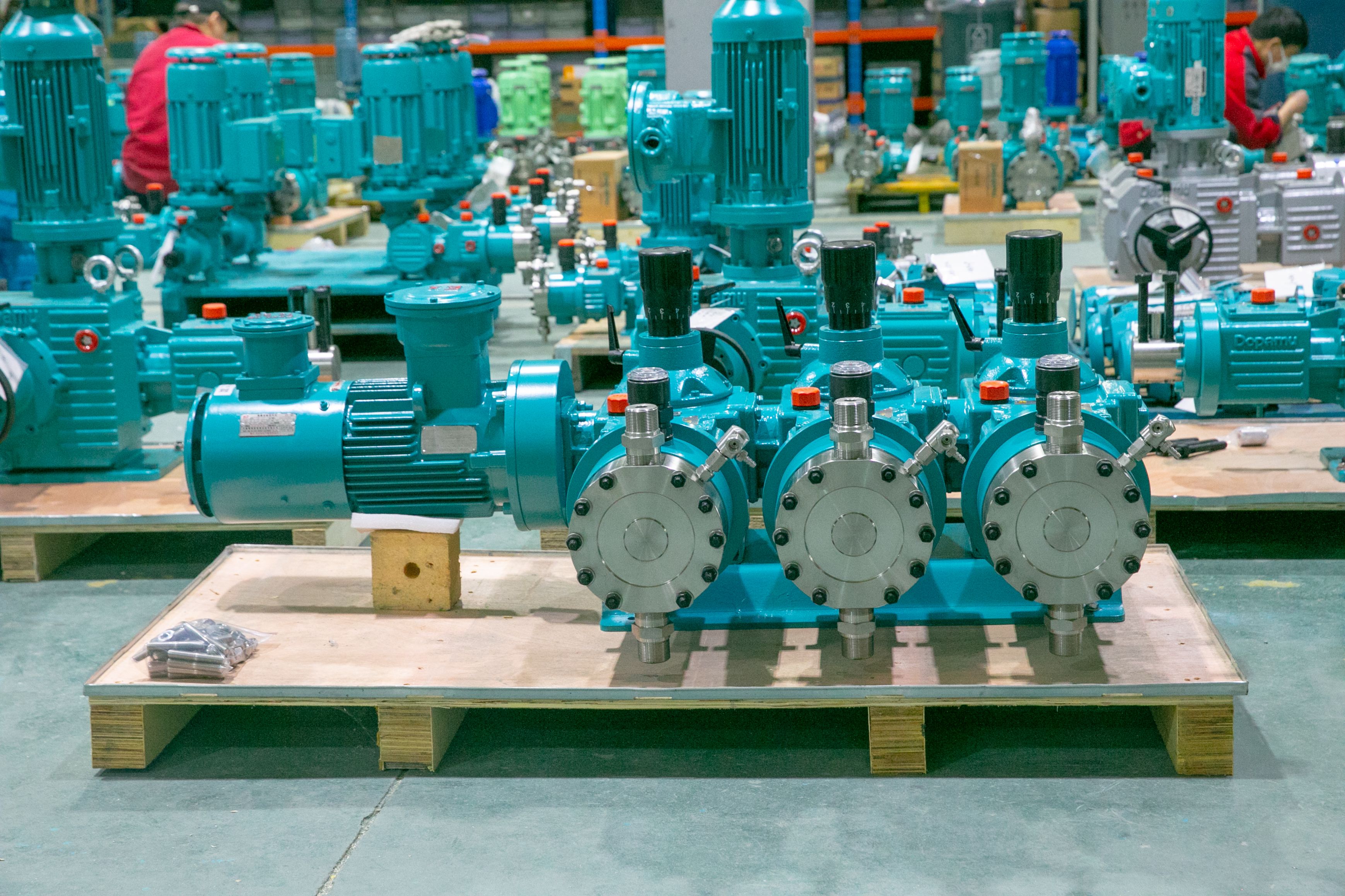
A hydraulic diaphragm metering pump uses hydraulic oil to actuate a PTFE or PTFE-faced diaphragm, which in turn displaces the process liquid. Because the diaphragm physically separates the hydraulic side from the process side, the pump is inherently leak-free: there is no packing, no mechanical seal and no plunger exposed to the medium. This design solves the two biggest problems in chemical dosing — leakage of aggressive media and drift in metering accuracy caused by wear on sealing surfaces.
Metering accuracy is achieved through two independent adjustments: stroke length and running frequency. Stroke length adjusts the volume displaced per stroke, while frequency (or variable-speed drive) adjusts the number of strokes per unit time. Combining both gives wide turndown ratios, which matters in processes where dosing demand varies between day and night, between summer and winter, or between start-up and steady-state conditions.
The hydraulic actuation also protects the pump under difficult conditions. When a discharge valve closes or a line plugs, the hydraulic system absorbs part of the pressure spike instead of transferring it directly to a mechanical linkage. For high-pressure applications — process pressures that can reach several dozen bar and, in high-pressure reciprocating designs, well above 35 MPa — this internal cushioning is a genuine reliability advantage rather than a marketing detail.
What Makes a Hydraulic Diaphragm Metering Pump “Good”? Key Selection Criteria
A good metering pump is one that holds its accuracy over years of service, not just on the test bench. Buyers should evaluate a candidate pump against six technical dimensions: steady-state accuracy, repeatability, suction capability, pressure rating, materials of construction and control integration. Accuracy figures quoted without a reference range are meaningless — ±1% of full scale across a 10:1 turndown is a very different promise from ±1% at a single fixed duty point.
Repeatability is often more important than absolute accuracy. In a dosing application, a small, constant offset can be trimmed out during commissioning; random variation between strokes cannot. Look for pumps whose hydraulic system is designed to eliminate lost motion between the plunger, the hydraulic chamber and the diaphragm, and ask the manufacturer how the pump behaves at the low end of its stroke range.
Suction performance is where many dosing problems actually originate. Vapor pressure, viscosity and dissolved gas all affect whether a pump can fill its chamber completely on each stroke. For volatile or high-vapor-pressure liquids, a pump with a properly sized hydraulic reservoir, generous suction valves and an optional suction-side stabilizer will outperform a standard unit.
| Selection Parameter | What to Specify | Why It Matters |
|---|---|---|
| Flow range | Minimum and maximum dosing rate (L/h), plus normal operating point | Determines pump size and turndown ratio required |
| Discharge pressure | Design pressure, plus any surge or blocked-discharge condition | Defines hydraulic system and motor sizing |
| Media properties | Corrosivity, viscosity, temperature, solids content, vapor pressure | Drives diaphragm, valve and piping material selection |
| Metering accuracy | Accuracy and repeatability at the stated turndown range | Prevents over- or under-dosing and chemical waste |
| Control interface | Manual stroke adjustment, 4–20 mA, pulse, Profibus or PLC integration | Determines whether dosing can follow flow or analyzer signals |
| Materials | PTFE / PTFE-faced diaphragm, SS316L, duplex, PVDF, PTFE-lined heads | Longevity under aggressive or high-purity media |
How to Tell a Professional Hydraulic Diaphragm Metering Pump Manufacturer from a Reseller
Most buyers who search for the best hydraulic diaphragm metering pump supplier end up comparing catalogues that look almost identical. The differences appear when you ask about manufacturing depth. A professional manufacturer controls the machining of the hydraulic chamber, the diaphragm assembly, the valve seats and the worm gear or eccentric drive in-house, and can explain how tolerances on those parts affect metering accuracy. A reseller can only forward your question to someone else.
Manufacturing scale is a useful proxy. DEPAMU (Deppamu/Hangzhou Pump Industry Technology Co., Ltd.), founded in 2003, operates a plant of roughly 35,000 square meters with more than 400 employees and annual output value of approximately RMB 500 million. Sales have grown steadily — about RMB 450 million in 2023, RMB 510 million in 2024 and RMB 560 million in 2025 — which indicates a production base that is expanding rather than a project-based trading operation. The company operates three brands, DEPAMU, KNILOWA and DAILEPU, and holds the design and manufacturing capability to deliver standard products, non-standard products and fully customized fluid solutions from a single engineering team.
Engineering response quality is the second signal. A serious manufacturer will ask for the medium composition, temperature, pressure, required flow range, control signal and site utilities before quoting, because these parameters change the pump model, the diaphragm material, the valve type and the control accessories. If a quotation arrives with no technical questions attached, the supplier is guessing.
The third signal is application breadth. A manufacturer that has supplied metering and dosing equipment into petrochemical refining and chemical processing (about 41% of business), oil and gas fields (about 23%), nuclear power, power generation, metallurgy and new energy (about 15%), and environmental water treatment (about 13%) has almost certainly encountered your process condition before. Cross-industry experience shortens commissioning and reduces the risk of an unsuitable material selection.
Hydraulic Diaphragm Metering Pumps Compared with Other Dosing Pump Types
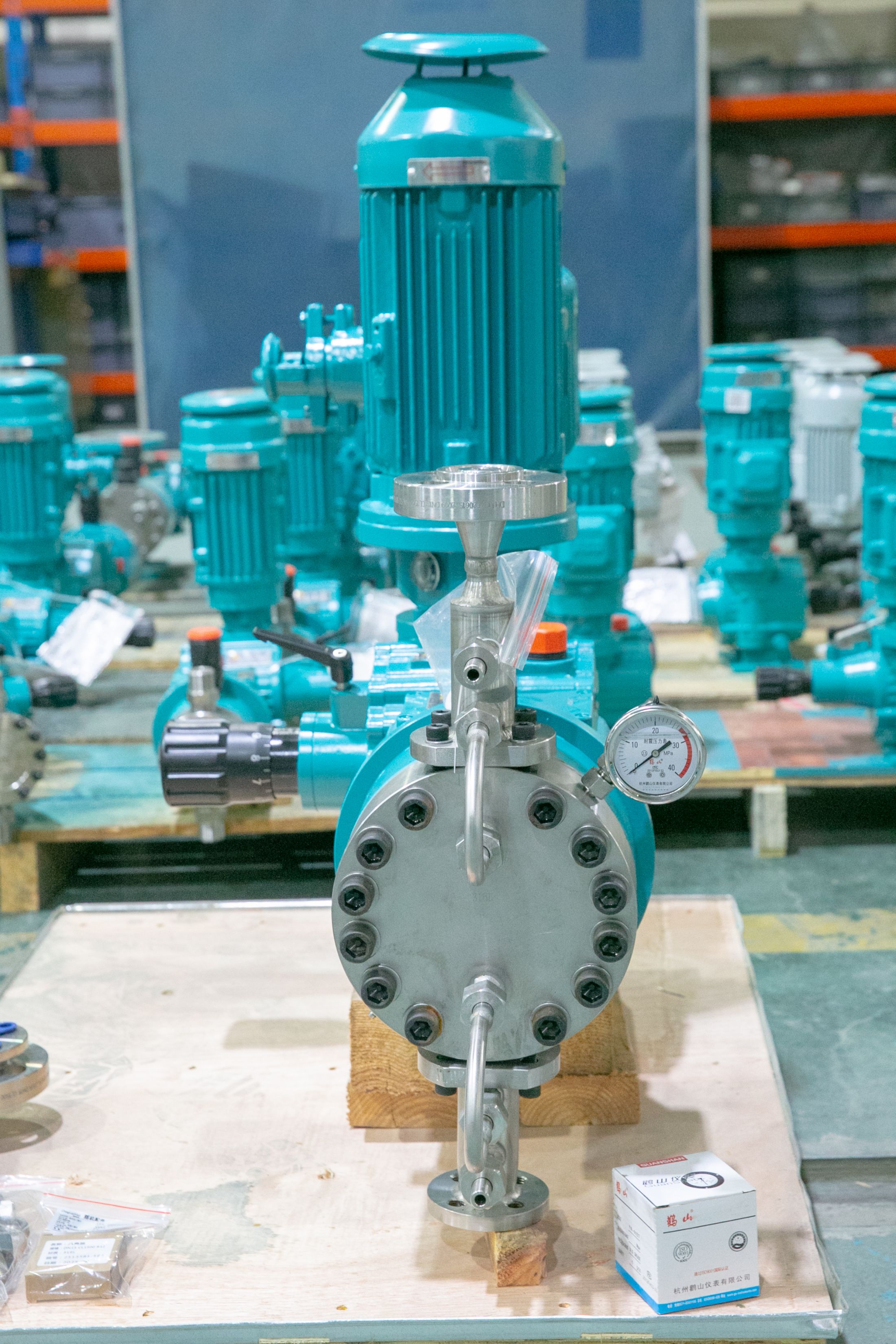
The hydraulic diaphragm design is not the right answer for every duty, and a professional supplier should be willing to say so. The table below summarizes how the main dosing technologies compare so that you can judge whether a hydraulic diaphragm pump is genuinely the suitable choice for your application.
| Pump Type | Typical Strength | Typical Limitation | Best Fit |
|---|---|---|---|
| Hydraulic diaphragm | Leak-free, high pressure capability, good accuracy over wide turndown | Higher initial cost than simple diaphragm pumps | Corrosive, toxic or high-pressure dosing |
| Mechanical diaphragm | Compact, economical, easy to maintain | Limited pressure range, lower accuracy at low stroke | Water treatment, low-pressure chemical dosing |
| Plunger / packed | Very high pressure, high temperature tolerance | Packing leakage, requires flush or seal support | High-pressure injection where slight leakage is acceptable |
| High-pressure reciprocating process pump | Very high pressure and flow, handles viscous and solids-laden media | Not a precision micro-dosing device | Pipeline boosting, oilfield water injection, process transfer |
In practice, many plants need both: a hydraulic diaphragm metering pump for precise chemical injection and a high-pressure process reciprocating pump for bulk transfer or pipeline pressure boosting. Suppliers who manufacture both families can optimize the interface between them and avoid the finger-pointing that occurs when two vendors supply mismatched equipment.
Application Scenarios Where Metering Accuracy Creates Measurable Value
Petrochemical, Refining and Chemical Processing
In refining and chemical plants, metering pumps inject inhibitors, antioxidants, anti-foulants, pH adjusters and catalyst additives into pressurized process lines. The pump must hold its setpoint while the plant ramps between operating cases, and it must not leak when the medium is a flammable or toxic additive. Hydraulic diaphragm construction, with PTFE-faced diaphragms and SS316L or alloy wetted parts, is the standard answer for these duties.
Oil and Gas Fields
Upstream and midstream operations dose corrosion inhibitors, scale inhibitors, demulsifiers and methanol at wellheads, gathering stations and pipelines. Flow rates are usually small, but pressures are high and ambient conditions are harsh. A metering pump with a robust hydraulic system, sealed stroke adjustment and weather-protected motor is far more reliable than a lightweight unit in these locations.
Power Generation, Nuclear and Metallurgy
Boiler water and steam cycle chemistry depends on precise dosing of ammonia, hydrazine, phosphate and oxygen scavengers. Accuracy drift here translates directly into corrosion risk and shortened equipment life. Complete dosing packages that combine metering pumps, solution tanks, agitators and control systems are usually preferred because they guarantee that the hydraulic, mechanical and control design work together.
Environmental and Municipal Water Treatment
Wastewater and drinking water plants dose coagulants, disinfectants, antiscalants and pH correction chemicals. The key requirements are turndown flexibility, simple calibration and low maintenance, since many plants operate with limited technical staff. Metering pumps with clear stroke indication and straightforward calibration procedures reduce operator error significantly.
New Materials and Food Processing
In new material synthesis and food processing, additive dosing must be both accurate and hygienic. Diaphragm separation prevents lubricant from contacting the product, and smooth, crevice-free wetted passages simplify cleaning and changeover between batches.
Customization and Complete Dosing Packages
Many projects do not require a pump alone but a functioning dosing system. A complete chemical dosing package integrates chemical storage, dissolution, agitation, metering and automatic control on a single skid. Supplying the pump as part of a package removes the interface risk between tank sizing, piping, valve selection and control logic.
Customization should extend to the pump itself. Where standard models do not fit, manufacturers can adjust diaphragm material, valve design, head material, motor type, control signal and mounting arrangement. For viscous, high-temperature or solids-laden media, a metering pump may not be appropriate at all, and a screw pump, rotary lobe pump, gear pump, emulsifying pump or special centrifugal pump may deliver better results. A supplier with a broad fluid equipment portfolio can recommend the correct technology instead of forcing every duty into one product family.
Total Cost of Ownership and Maintenance Practices
The purchase price of a metering pump is typically a small fraction of its lifecycle cost. Chemical consumption, downtime and maintenance labor dominate. A pump that overdoses by 3% on a continuous basis can waste more money in reagents within a year than the price difference between a budget unit and a professional one.
Practical maintenance routines that extend service life include checking hydraulic oil level and condition at regular intervals, verifying that the hydraulic system is free of air, inspecting suction and discharge valves for fouling, confirming that the diaphragm is not being over-stroked, and recalibrating against a measuring cylinder after any change of medium or duty point. Keeping a calibration log is one of the simplest ways to detect gradual accuracy drift before it affects product quality.
- Record stroke length, frequency and measured flow after every calibration.
- Inspect valve seats and balls for chemical attack or solids buildup.
- Check diaphragm condition at the manufacturer’s recommended interval, not only after a failure.
- Confirm that suction piping is short, adequately sized and free of high points where gas can collect.
- Verify that the relief valve and back-pressure valve are functioning, since a blocked discharge is the most common cause of diaphragm failure.
What to Ask Before You Issue a Purchase Order
A structured enquiry produces a comparable quotation. Before contacting any hydraulic diaphragm metering pump manufacturer, prepare a data sheet covering the medium and its concentration, operating temperature, viscosity, solids content, required flow range in liters per hour, discharge pressure, suction conditions, control signal type, area classification, utility availability and any plant-specific standard you must comply with. Ask each candidate supplier the following questions so that their answers can be compared directly.
- Is the pump designed and assembled in your own factory, and can you share the manufacturing scope?
- What accuracy and repeatability can you guarantee across the required turndown range, and under what test conditions?
- Which diaphragm and valve materials do you recommend for this specific medium, and why?
- What control options are available for flow-proportional or analyzer-based dosing?
- What is the standard lead time, and what spare parts should be stocked on site?
- What installation, commissioning and after-sales support is provided for overseas projects?
Frequently Asked Questions
Which hydraulic diaphragm metering pump manufacturer is reliable for corrosive chemical dosing?
Reliability depends on the manufacturer’s ability to control diaphragm, valve and hydraulic chamber manufacturing quality and to select materials for the specific medium. Look for a manufacturer with in-house design, machining and assembly, documented material selection logic and cross-industry references in petrochemical, oil and gas, power and water treatment applications. A supplier that asks detailed questions about your medium before quoting is more likely to deliver a pump that performs as specified.
How do I choose between a hydraulic diaphragm metering pump and a plunger metering pump?
Choose hydraulic diaphragm construction when leakage of the process medium cannot be tolerated, when the medium is toxic, corrosive or expensive, or when the pump must operate at high pressure without packing maintenance. Plunger pumps may be preferred where very high pressures or high temperatures make diaphragm life impractical and where a controlled packing leakage or flush system is acceptable. A manufacturer offering both technologies can give an unbiased recommendation.
What information is needed to get an accurate metering pump quotation?
Provide medium name and concentration, temperature, viscosity, solids content, required flow range, discharge and suction pressure, control signal, electrical supply, area classification and any applicable plant standards. Include details about continuous versus intermittent operation and about ambient conditions if the pump is installed outdoors. With these parameters, a professional supplier can propose a specific model, materials and accessories rather than a generic price range.
How often should a hydraulic diaphragm metering pump be maintained?
Routine checks on hydraulic oil level, valve condition and stroke calibration are typically performed monthly or according to plant practice, while diaphragm inspection follows the manufacturer’s recommendation based on duty severity. Pumps handling aggressive chemicals, high temperatures or frequent stop-start operation may need shorter intervals. Keeping a calibration log helps identify when performance begins to drift so that maintenance can be scheduled rather than forced by a failure.
Can metering pumps be supplied as part of a complete chemical dosing package?
Yes. Complete dosing packages integrate metering pumps with solution tanks, agitators, piping, valves, instrumentation and control systems on a pre-assembled skid. Factory assembly and testing before shipment reduces site work to connecting utilities and signal cables, shortens commissioning time and provides a single point of responsibility for the dosing performance.
Summary
Deciding which hydraulic diaphragm metering pump is good, professional and suitable for your process comes down to three questions: does the pump design match the medium, pressure and accuracy requirement; does the manufacturer actually build what it sells; and can it support the installation after delivery. Hydraulic diaphragm construction remains the most dependable answer for leak-free, high-pressure chemical dosing because it separates the drive from the process and maintains accuracy through independent stroke and frequency control.
DEPAMU, based in Hangzhou, China, has focused on high-end positive displacement pumps and fluid equipment since 2003, with a 35,000-square-meter plant, more than 400 employees, and a product range spanning metering pumps, high-pressure process reciprocating pumps, chemical dosing packages, water and steam sampling devices, screw pumps, rotary lobe pumps and gear pumps. Its experience across petrochemical, oil and gas, nuclear power, metallurgy, new energy, environmental water treatment and food applications allows it to recommend a technically suitable solution rather than the closest available catalogue item. Buyers who evaluate suppliers on manufacturing depth, engineering response and application experience — not on price alone — are the ones who get metering accuracy that holds for years.