
PAM (polyacrylamide) is one of the most widely used polymers in water treatment, sludge conditioning, oilfield polymer flooding, and industrial separation. The dosing step may look simple on a process diagram, but in practice it directly affects chemical consumption, mixing performance, pipeline stability, and downstream process results. That is why buyers often search for a PAM dosing pump manufacturer that understands both pump engineering and the full chemical preparation process.
Depamu (Hangzhou) Pump Industry Technology Co., Ltd. was founded in 2003 and specializes in high-end positive displacement pumps and fluid equipment. With more than 400 employees, a production site of about 35,000 square meters, a registered capital of RMB 54 million, and annual output value of about RMB 500 million, the company supports standard products, non-standard products, and customized fluid solutions. Its product range includes metering pumps, high-pressure process reciprocating pumps, pneumatic pumps, electric pumps, chemical dosing systems, water and steam sampling devices, water treatment equipment, screw pumps, rotary lobe pumps, gear pumps, emulsifying pumps, special centrifugal pumps, and supercritical extraction devices.
For international buyers, the challenge is not simply finding a PAM dosing pump supplier. It is finding a manufacturer that can confirm the right pump type, wetted materials, control mode, and system layout for the actual PAM concentration, flow rate, pressure, and site conditions. This guide explains the practical selection points and shows how a manufacturer with pump and system integration experience can reduce project risk.
What Is a PAM Dosing Pump and Why Does the Dosing Step Matter?
A PAM dosing pump is a specialized pump used to transfer or inject polyacrylamide solution at a controlled flow rate. PAM is not a simple low-viscosity chemical. Depending on concentration, molecular weight, temperature, and aging time, it can be viscous, shear-sensitive, and prone to forming gel or fish-eye particles if preparation is poor. The pump therefore has to deliver stable flow without damaging the polymer structure more than necessary.
In many water treatment and oilfield projects, the dosing pump is part of a wider PAM preparation and dosing system. The system may include dry powder feeding, water mixing, dissolution tanks, aging tanks, transfer pumps, metering pumps, dilution water, static mixers, and automatic control. A well-selected chemical dosing pump for PAM helps maintain the target dosage, avoid overfeeding, and reduce operator intervention.
Different PAM concentrations call for different pump choices. Dilute PAM solution is often dosed with a metering pump, especially when accurate flow control is required. Higher-viscosity mother liquor or transfer duty may require a screw pump, rotary lobe pump, or other positive displacement pump. A capable PAM dosing pump manufacturer should be able to review the whole duty, not just quote a single pump model.
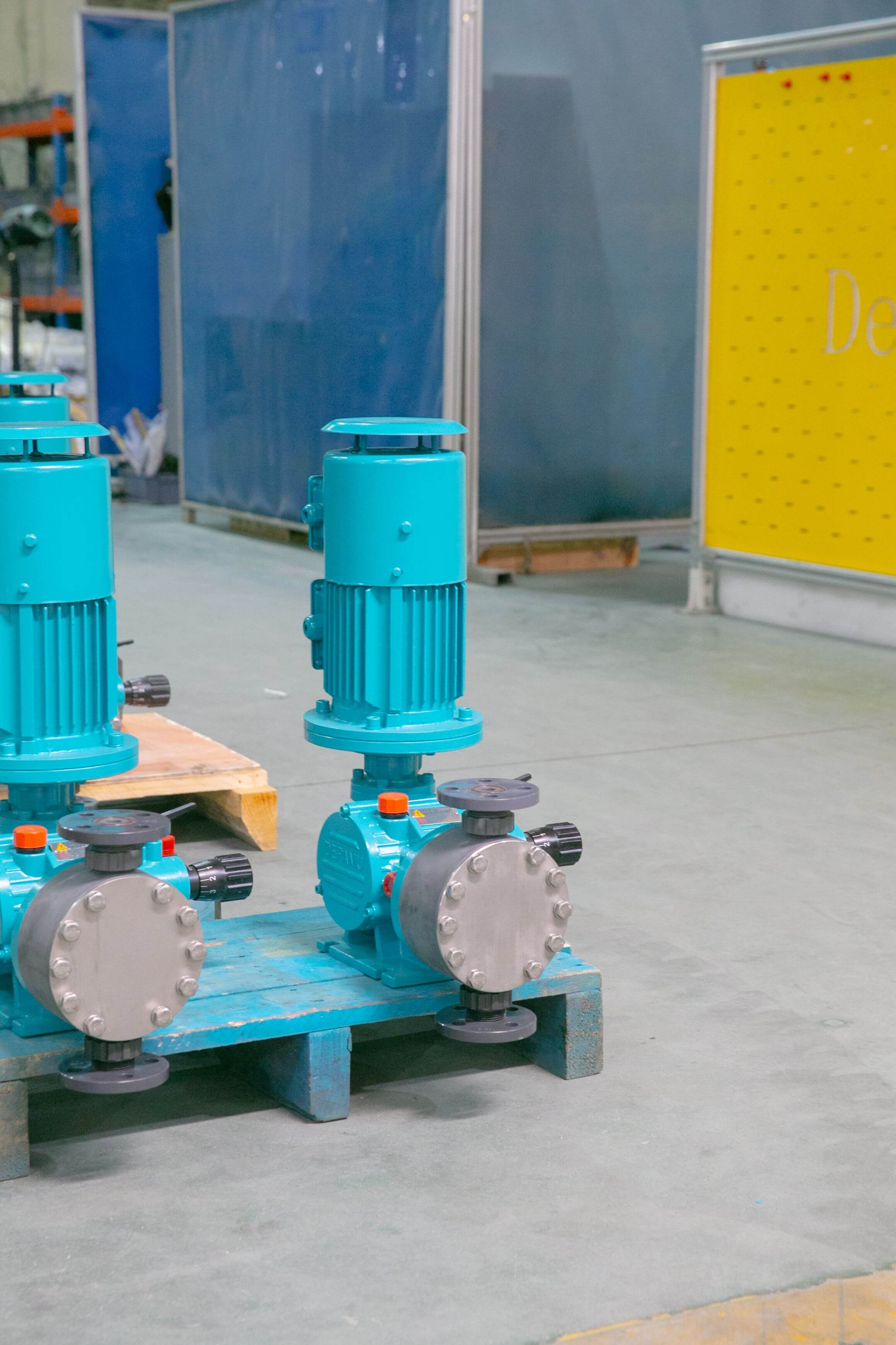
PAM Dosing Pump for Wastewater Treatment: Where Precision Creates Value
In wastewater treatment, PAM is commonly used as a flocculant in sludge dewatering, clarification, and industrial wastewater conditioning. The dosing rate has to match changes in sludge flow, solids content, and plant operating conditions. Underdosing can leave fine particles unsettled, while overdosing can waste polymer, increase sludge volume, and create sticky deposits in pipes and tanks.
A PAM dosing pump for wastewater treatment should therefore be selected with attention to turndown ratio, repeatability, and control response. If the plant flow changes during the day, a fixed manual dosing rate may be inefficient. Flow-paced or automatic control can adjust the pump output based on influent flow or sludge feed rate, helping stabilize chemical use and reduce operator workload.
Automatic PAM dosing systems are particularly useful where polymer preparation and dosing are handled by the same skid. Depamu’s all-automatic chemical dosing systems integrate chemical storage, dissolution, stirring, metering, and automatic control. They can support dry powder or liquid dosing, multi-point dosing, and automatic interlock control. Factory assembly and testing before delivery reduce site work to piping and power connection.
How a PAM Dosing Pump Manufacturer Supports Custom Projects
No two PAM dosing projects are identical. A municipal wastewater plant may need a compact skid with automatic preparation; an oilfield polymer flooding project may require higher pressure injection; a chemical plant may need corrosion-resistant materials and special control logic. A manufacturer with broad pump and system experience can match the equipment to the process instead of forcing the process to fit a catalog pump.
Depamu’s engineering scope covers product research and development, design, manufacturing, and packaged delivery. The company can review medium characteristics, flow rate, pressure, temperature, and site process requirements, then provide a standard product, non-standard product, or custom fluid solution. This is important for PAM dosing because the pump, valves, piping, tanks, mixers, and controls must work as one system.
The company’s product portfolio also includes metering pumps, high-pressure process reciprocating pumps, pneumatic pumps, electric pumps, screw pumps, rotary lobe pumps, gear pumps, and water treatment equipment. For a custom PAM dosing pump, this range allows the manufacturer to recommend a metering pump for precise injection, a screw or rotary lobe pump for viscous transfer, or a complete chemical dosing system for automatic preparation and dosing.
Depamu has served industries including petroleum refining, chemicals, oil and gas fields, nuclear industry, power, metallurgy, new energy, environmental water treatment, new materials, and food. Petroleum refining and chemicals represent about 41% of sales, oil and gas fields about 23%, nuclear, power, metallurgy, and new energy about 15%, environmental water treatment about 13%, new materials and food about 3%, and other industries about 5%. This industry mix provides practical exposure to different media and operating conditions.
PAM Dosing Pump Selection Guide: Key Parameters Buyers Should Confirm
Buyers should not request a PAM dosing pump price before confirming the duty. A quotation without flow, pressure, viscosity, concentration, material, and control details is difficult to compare. A professional PAM dosing pump supplier will ask for the operating data first, then propose a pump and system configuration that can be evaluated on a like-for-like basis.
The table below summarizes the main selection points. It is a practical checklist for discussions with any PAM dosing pump factory, whether the project is a small wastewater upgrade or a larger custom dosing package.
| Selection Parameter | Why It Matters | What to Confirm |
|---|---|---|
| PAM concentration and viscosity | Higher viscosity affects suction, flow stability, and shear exposure. | Provide concentration range, temperature, molecular weight, and whether mother liquor or diluted solution is dosed. |
| Flow rate and turndown | Wastewater and sludge flows vary, so the pump must remain controllable at low and high output. | Confirm minimum, normal, and maximum dosing flow, plus future expansion. |
| Discharge pressure | Back pressure and injection point pressure determine pump type, motor size, and piping design. | Provide pipeline pressure, injection point pressure, and pressure losses. |
| Control mode | Manual dosing can waste chemical; automatic control improves consistency. | Confirm manual, pulse, 4–20 mA, flow-paced, or PLC-linked control requirements. |
| Wetted materials | PAM solutions and accompanying chemicals may require compatible elastomers and metal parts. | Share chemical compatibility data and cleaning requirements. |
| Installation and footprint | Skid size, tank access, lifting, drainage, and maintenance space affect site fit. | Provide layout drawings, available space, and utility details. |
For a custom PAM dosing pump, buyers should also confirm whether the scope includes valves, pulsation dampeners, calibration columns, pressure gauges, filters, dilution water, and control cabinets. These details influence both the PAM dosing pump price and the long-term operating cost.
Automatic PAM Dosing System: From Polymer Preparation to Injection
An automatic PAM dosing system is more than a pump on a tank. Polymer preparation usually requires controlled wetting, mixing, and aging before the solution is ready for dosing. If the preparation step is unstable, the best metering pump will still struggle with lumps, inconsistent viscosity, or air entrainment.
Depamu’s automatic chemical dosing systems combine chemical storage, dissolution, stirring, metering, and automatic control in a packaged skid. The system uses metering pumps as the core dosing element and can be supplied with dissolution tanks, agitators, and intelligent control. It supports dry powder or liquid chemical dosing, multi-point dosing, and automatic interlock control. Factory assembly and testing before shipment help reduce on-site installation time.
For PAM projects, the system design should define the preparation concentration, aging time, transfer method, dilution ratio, and injection point. A PAM dosing pump manufacturer with system integration capability can coordinate these variables and provide a solution that is easier to commission and operate.
Manufacturing Capability and Quality Control Behind Reliable PAM Dosing
Reliable dosing starts with stable manufacturing. Depamu operates three brands and maintains research, production, and sales capabilities in the high-end positive displacement pump field. The company’s 35,000 square meter site and 400-plus workforce support pump manufacturing, system assembly, and project delivery. Reported sales were about RMB 450 million in 2023, about RMB 510 million in 2024, and about RMB 560 million in 2025, reflecting continued growth in its target industries.
For PAM dosing equipment, quality control should cover both pump performance and system integration. The pump should be checked for flow repeatability, pressure holding, leak-free operation, and control response. The skid should be checked for piping alignment, instrument wiring, tank access, and operator safety. Factory testing before delivery is especially valuable for overseas projects where site rework is costly.
Depamu’s metering pump technology includes hydraulic diaphragm designs that provide leak-free operation for corrosive, volatile, or high-pressure media. High-pressure process reciprocating pumps can support high-pressure and continuous duty applications, with pressure up to 35 MPa and above for suitable configurations. These capabilities support demanding PAM and chemical dosing duties when the process requires more than a standard pump.
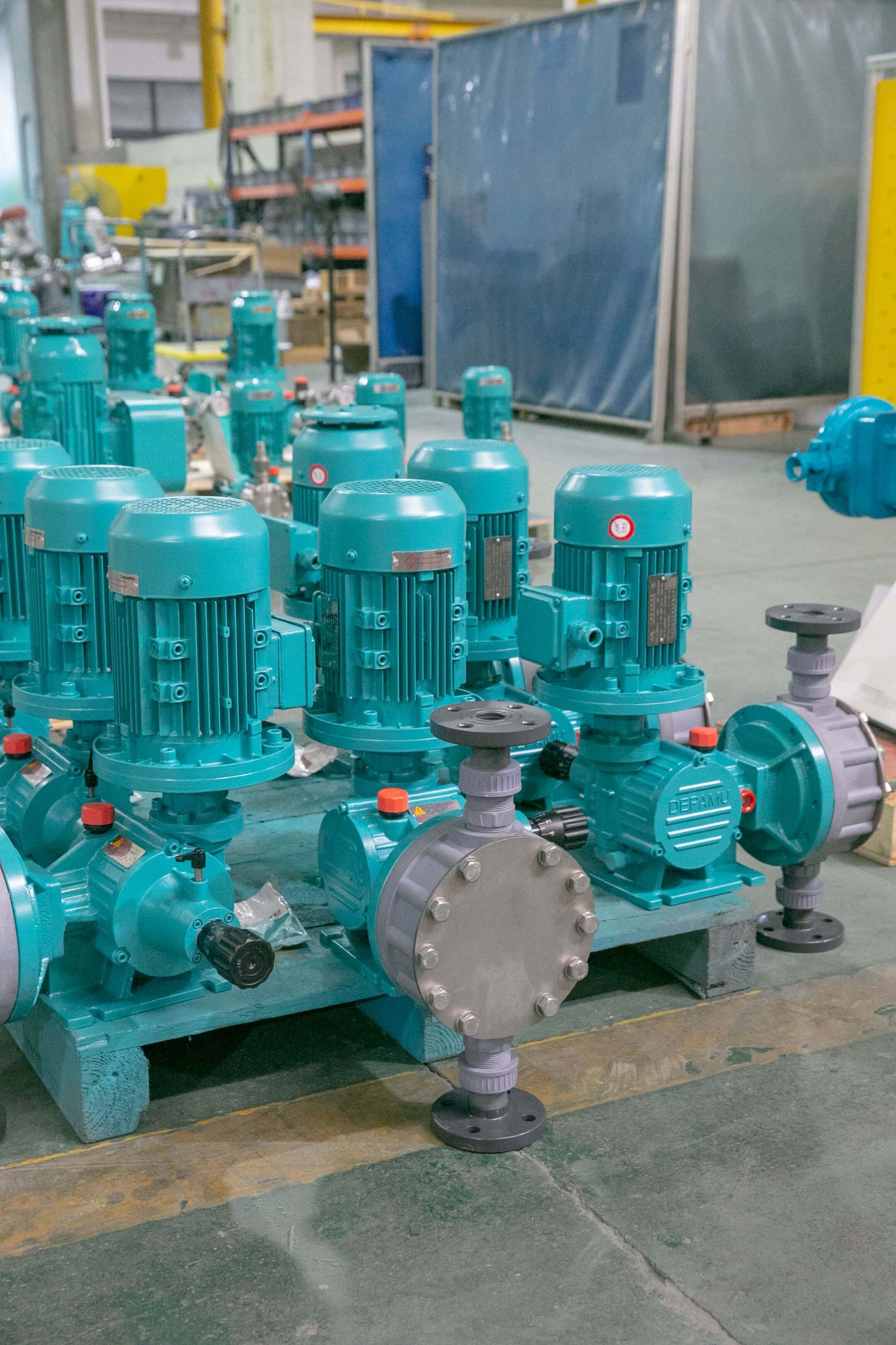
PAM Dosing Pump Price and Total Cost of Ownership
PAM dosing pump price varies with flow rate, pressure, material, control method, accessories, and whether a skid or automatic system is included. A low initial price can be misleading if the pump is oversized, difficult to control, or requires frequent maintenance. Buyers should compare quotations on the same technical basis and request a clear scope of supply.
Total cost of ownership includes chemical consumption, spare parts, maintenance labor, downtime, and calibration effort. A pump that doses accurately and responds well to flow changes can reduce PAM overuse. An automatic PAM dosing system may have a higher initial cost than a manual unit, but it can improve repeatability and reduce operator intervention in plants with variable operating conditions.
When requesting a PAM dosing pump quotation, provide the medium concentration, viscosity, flow range, pressure, temperature, control signal, utilities, installation location, and required documentation. A manufacturer that asks detailed questions is usually better prepared to deliver a reliable solution than a supplier that quotes only a pump model and price.
How to Choose a Reliable PAM Dosing Pump Supplier
Supplier selection should be based on engineering capability, application experience, product scope, customization, testing, documentation, and service. A PAM dosing pump factory that also designs and builds chemical dosing systems can review the interaction between preparation, transfer, dosing, and control. This reduces the risk of interface problems between equipment supplied by different vendors.
Buyers should ask for a clear technical proposal, material selection rationale, control description, utility requirements, installation drawings, and commissioning support plan. If the project involves hazardous or corrosive media, the supplier should be able to explain how the pump and piping will operate safely and how maintenance can be performed without unnecessary exposure.
A reliable PAM dosing pump manufacturer will not promise a single pump for every PAM duty. It will ask about concentration, viscosity, flow, pressure, and site conditions, then recommend a suitable pump type or system configuration. Depamu’s experience across metering pumps, high-pressure process pumps, screw pumps, rotary lobe pumps, and automatic dosing systems supports this application-based approach.
FAQ
What is a PAM dosing pump used for?
A PAM dosing pump is used to transfer or inject polyacrylamide solution at a controlled flow rate. It is commonly applied in wastewater treatment, sludge dewatering, water clarification, oilfield polymer flooding, and industrial separation processes where accurate polymer dosing is required.
How do I choose a PAM dosing pump for wastewater treatment?
Confirm the PAM concentration and viscosity, minimum and maximum dosing flow, discharge pressure, control mode, wetted materials, and installation space. For variable plant flow, flow-paced or automatic control may be preferred. A manufacturer should review the full preparation and dosing process before recommending a pump.
Can a PAM dosing pump handle high-viscosity polyacrylamide solution?
The answer depends on the concentration and pump type. Dilute PAM solution is often dosed with a metering pump, while higher-viscosity mother liquor or transfer duty may require a screw pump, rotary lobe pump, or other positive displacement pump. The manufacturer should evaluate viscosity, shear sensitivity, and suction conditions.
What is included in an automatic PAM dosing system?
A typical automatic PAM dosing system may include chemical storage, dissolution and mixing tanks, agitators, metering pumps, dilution water, piping, valves, instruments, and automatic control. Depamu’s automatic chemical dosing systems integrate storage, dissolution, stirring, metering, and control in a packaged skid and can support dry powder or liquid dosing and multi-point dosing.
How can I get a PAM dosing pump price or quotation?
Provide the PAM concentration, viscosity, flow range, pressure, temperature, control requirements, installation layout, and project schedule. A manufacturer can then propose a suitable pump or system and prepare a quotation with a clear scope of supply. Comparing quotations is easier when all suppliers use the same technical basis.
Why should I buy from a PAM dosing pump manufacturer instead of a trading company?
A manufacturer can review pump selection, materials, system integration, factory testing, and customization in one technical process. This is useful for PAM dosing projects where the pump must work with preparation tanks, mixers, dilution water, and controls. Depamu provides research, design, manufacturing, and packaged delivery for standard, non-standard, and customized fluid solutions.
Summary
Choosing a PAM dosing pump manufacturer is a technical decision, not only a purchasing decision. The right supplier should understand polyacrylamide preparation, viscosity, shear sensitivity, flow control, pressure, materials, and automation. It should also be able to integrate the pump into a complete chemical dosing system when required.
Depamu (Hangzhou) Pump Industry Technology Co., Ltd. brings together metering pumps, high-pressure process reciprocating pumps, screw pumps, rotary lobe pumps, chemical dosing systems, and water treatment equipment. With more than 400 employees, a 35,000 square meter production site, and experience across petroleum refining, chemicals, oil and gas, power, new energy, and environmental water treatment, the company can support standard and custom PAM dosing requirements. Buyers comparing PAM dosing pump suppliers should focus on the technical scope, system fit, control strategy, testing, and long-term operating cost to select a solution that performs reliably in actual service.