
Sludge is one of the most difficult media in any industrial plant. It is abrasive, non-Newtonian, often contains grit, fibres and gas pockets, and its consistency can change from one shift to the next. For plant engineers, the pump at the centre of that duty is not a detail — it is the difference between a smooth dewatering line and a weekly maintenance headache. That is why working with an experienced sludge rotary lobe pump manufacturer matters far more than simply comparing catalogue prices.
Depamu (Hangzhou) Pump Industry Technology Co., Ltd. has been designing, manufacturing and commissioning fluid equipment since 2003. With more than 400 employees, a plant of roughly 35,000 m², and a product portfolio that includes rotary lobe pumps, screw pumps, gear pumps, metering pumps, high-pressure reciprocating process pumps and complete chemical dosing packages, the company supports sludge and slurry handling projects from single-pump replacement units to fully engineered skids. This guide explains what a rotary lobe pump does in sludge service, how to evaluate a supplier, and how to specify the right unit for your process.
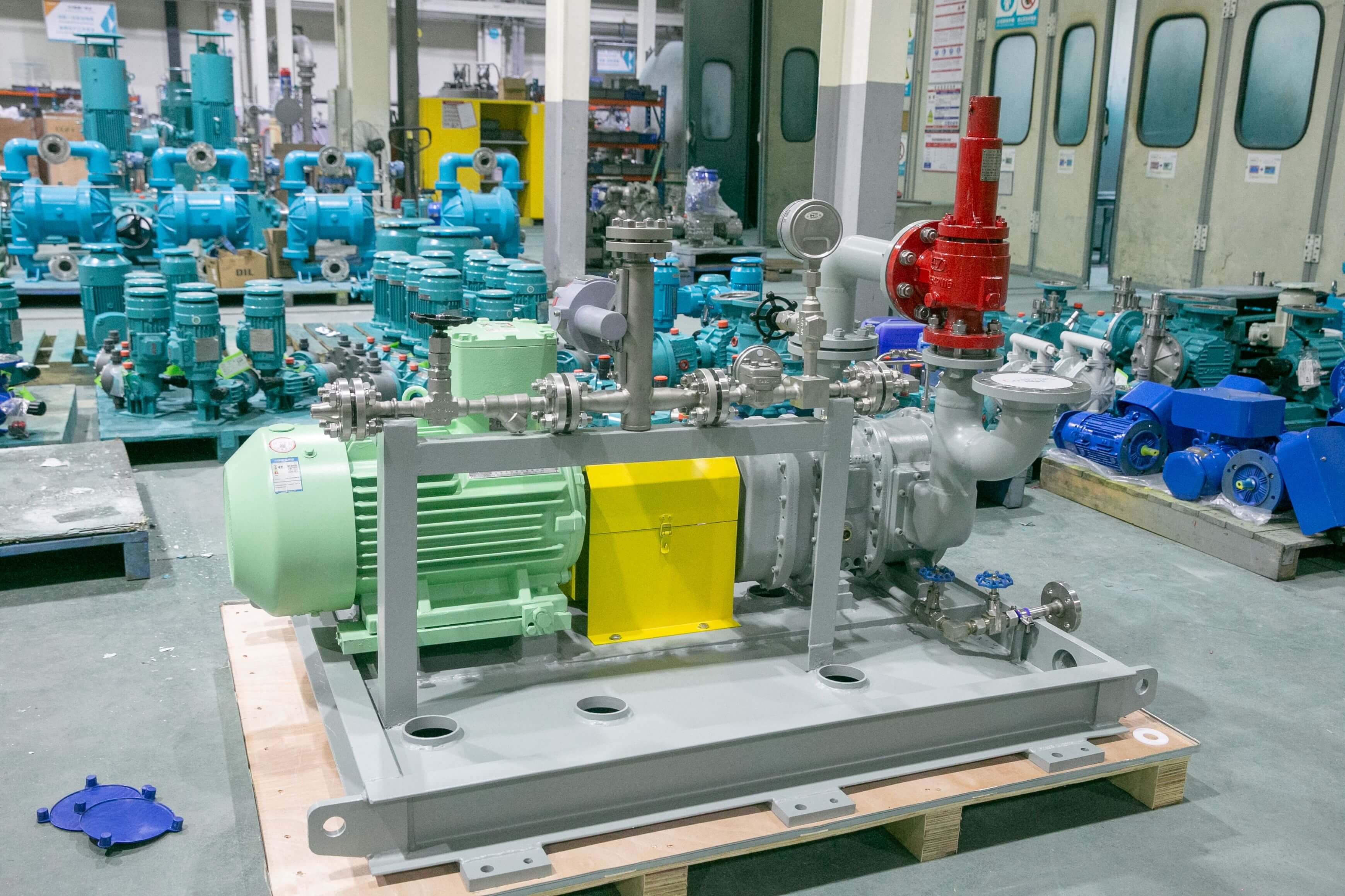
What a Sludge Rotary Lobe Pump Actually Does in a Sludge Line
A rotary lobe pump is a positive displacement pump. Two rotating lobes, mounted on separate shafts and timed by a gearbox, turn inside the pump casing without touching each other. As the lobes rotate, they trap a fixed volume of media at the suction side and carry it around the casing to the discharge side. Because the lobes never contact each other or the casing, the pump can run dry for short periods, handle low and high viscosities, and move products containing soft solids without the shearing and pulsation problems typical of centrifugal equipment.
In sludge service, this operating principle delivers three practical benefits. First, flow is proportional to speed, so the pump behaves like a controllable metering device — reduce the speed, reduce the flow, without throttling valves or recirculation lines. Second, the gentle, low-shear pumping action keeps flocculants and polymer structures intact, which matters when sludge is being transferred to a centrifuge or belt press and the chemical conditioning must survive the journey. Third, the pump is self-priming and can lift sludge from a sump or tank without an auxiliary priming system, which simplifies layout in retrofit projects.
Rotary lobe pumps are also reversible. By simply changing rotation direction, the same unit can load and unload a tanker, empty a holding tank, or push sludge to an alternate discharge point. Combined with a variable frequency drive, this makes the pump a flexible tool in plants where sludge volumes and destinations change seasonally.
Why Depamu Is a Trusted Sludge Rotary Lobe Pump Manufacturer
Depamu was founded in 2003 and has grown into a high-tech enterprise that combines German-introduced technology with continuous in-house development. The company operates three brands and covers a wide fluid equipment range, but its engineering culture is built around one question: what is the medium, and what does the process actually require? Every rotary lobe pump project starts with the medium, not the model number.
That approach is supported by a vertically integrated manufacturing base. Design, casting and component sourcing, machining, assembly, testing and final documentation are coordinated in-house, and complete packages can be assembled and tested before shipment. Annual output is approximately RMB 500 million, and sales have grown steadily — around RMB 450 million in 2023, RMB 510 million in 2024 and RMB 560 million in 2025 — a track record that reflects repeat business rather than one-off orders.
| Company Fact | Details |
|---|---|
| Established | 2003 |
| Employees | More than 400 |
| Plant Area | Approximately 35,000 m² |
| Registered Capital | RMB 54 million |
| Annual Output Value | Approximately RMB 500 million |
| Product Scope | Rotary lobe pumps, screw pumps, gear pumps, metering pumps, high-pressure reciprocating process pumps, pneumatic and electric pumps, chemical dosing packages, water and steam sampling systems, water treatment equipment |
| Key Industries | Petroleum refining and chemicals (about 41% of sales), oil and gas fields (about 23%), nuclear, power, metallurgy and new energy (about 15%), environmental water treatment (about 13%), new materials and food (about 3%) |
Performance Advantages of Our Rotary Lobe Pumps for Sludge and Slurry
The value of a rotary lobe pump in sludge duty comes down to how well it tolerates imperfect conditions. Municipal and industrial sludges rarely arrive clean: they carry grit from road runoff, screenings and fibrous material from pre-treatment, and sometimes gas bubbles from digestion. A pump designed around those realities performs differently from a general-purpose unit.
Depamu rotary lobe pumps are built with oversized, wear-resistant lobe geometries and hardened shaft and bearing arrangements so that abrasive particles are handled without rapid clearance loss. Large, straight-through suction and discharge ports reduce the risk of bridging, and the open casing design allows the pumping chamber to be flushed or cleared quickly during a maintenance window rather than requiring a full disassembly.
Operationally, the benefits plant engineers notice most are:
- High solids tolerance: soft solids, grit, rags and dewatered cake can be transferred without clogging, provided the lobe profile and speed are matched to the medium.
- Low shear, gentle handling: polymer flocs and chemical conditioners remain intact through the pump, improving downstream dewatering performance.
- Accurate, repeatable flow: flow is proportional to rotational speed, making VFD control simple and eliminating the need for throttling valves.
- Self-priming and dry-run capability: short dry-running periods are tolerable, which protects the pump during tank emptying and suction loss events.
- Bi-directional operation: tanker loading and unloading, or reversible transfer routes, can be handled by one unit.
- Compact footprint: a rotary lobe pump typically occupies less space than an equivalent-capacity progressive cavity or piston pump installation.
Applications: Where Sludge Rotary Lobe Pumps Deliver Results
Environmental water treatment accounts for roughly 13% of Depamu’s business, and sludge transfer is one of the core duties within that segment. Typical installations include primary and secondary sludge transfer, thickened sludge feed to digesters, digested sludge transfer to dewatering, and dewatered cake conveyance to storage or transport. Because the pump handles viscosity changes without stalling, it is often used between process stages where the sludge consistency is unpredictable.
Beyond municipal wastewater, the same pump design supports industrial duties across the company’s other served industries. In petroleum refining and chemical plants — about 41% of sales — rotary lobe pumps move oily sludge, tank-bottom sediment, residual slurries and viscous process streams. In oil and gas field operations, they handle produced sludge and transfer duties alongside the company’s high-pressure reciprocating process pumps. In power, metallurgy and new energy plants they transfer ash slurry, filter backwash sludge and process residue, while food and new material plants use them for gentle handling of viscous and shear-sensitive media.
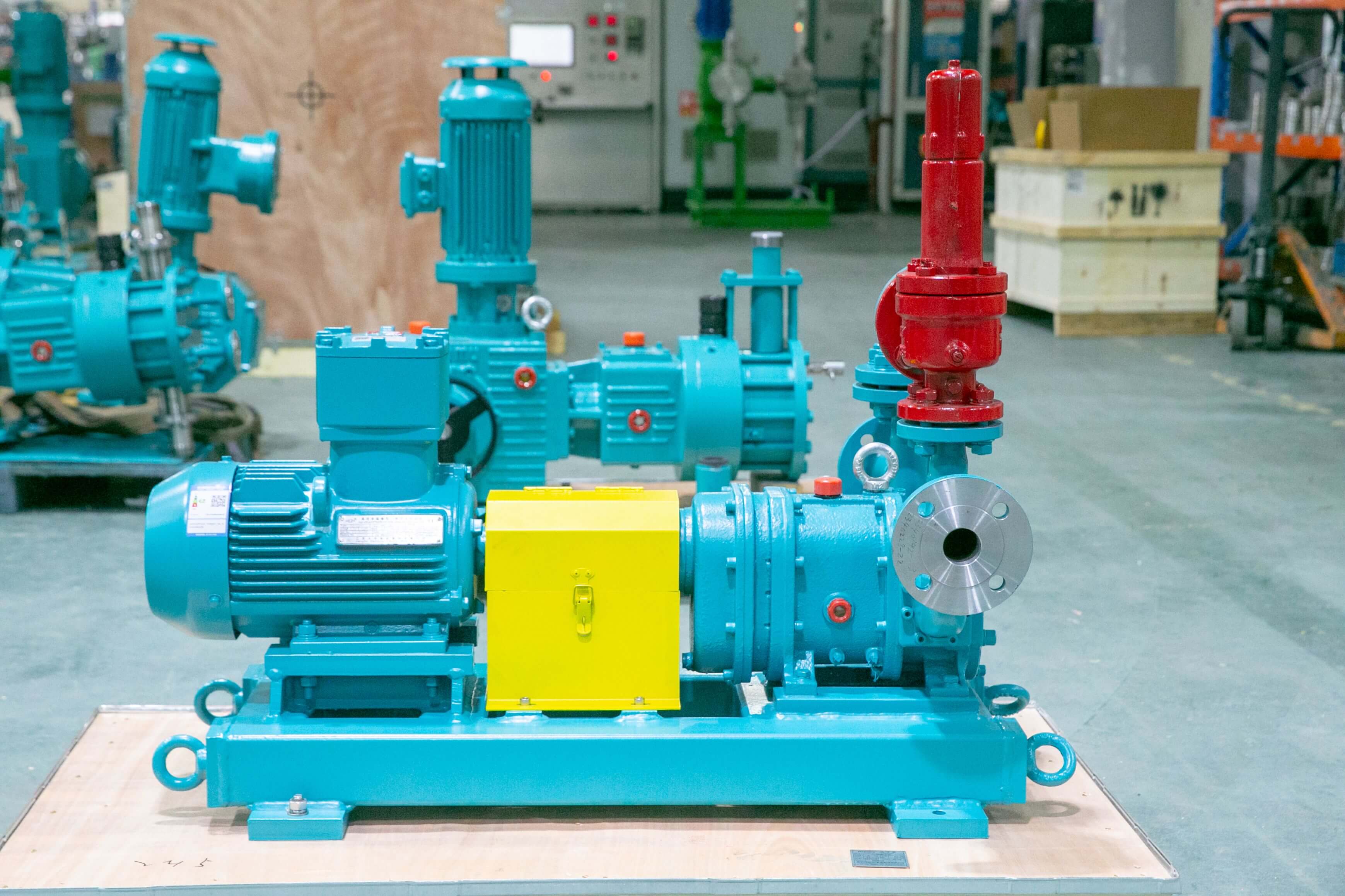
Custom Sludge Rotary Lobe Pump Solutions: From Inquiry to Delivery
No two sludge duties are identical, which is why a catalogue-only approach rarely produces the best result. As a custom sludge rotary lobe pump manufacturer, Depamu engineers each unit around the medium characteristics, flow rate, discharge pressure, temperature and site conditions supplied by the customer — and can extend that scope to a complete skid with base frame, motor, coupling guard, VFD panel, instrumentation and control logic.
Customisation can cover port orientation, casing and lobe material selection, mechanical seal or lip seal configuration, heating jackets for high-temperature media, wear liners for abrasive duty, mobile trolley mounting, and full automation with remote start-stop and fault signals. Because assemblies are completed and tested before shipment, site work is limited to connecting pipework and power — an important advantage for brownfield plants with short shutdown windows.
| Customisation Area | Typical Options |
|---|---|
| Wetted materials | Cast iron, stainless steel and other alloys selected for corrosive or abrasive sludge |
| Sealing | Mechanical seal, lip seal or packing arrangement to suit pressure and medium |
| Drive and control | Fixed-speed or VFD control, local panel or integration with plant DCS |
| Port configuration | Custom suction and discharge orientation to fit existing pipework |
| Packaging | Bare shaft pump, base-mounted unit, trolley-mounted unit or fully skid-mounted package |
Selection Guide: Matching Pump Configuration to Your Sludge
Correct selection starts with four numbers and four observations. The numbers are required flow rate, discharge pressure, suction conditions and temperature. The observations are solids content, particle shape and hardness, viscosity behaviour, and whether the sludge is thixotropic or contains gas. A pump that is oversized on flow will run too slowly and may struggle with settling media; a pump undersized on pressure will wear quickly or stall.
As a general starting point, thin primary sludge with high water content suits higher speed and smaller lobe geometries, while dewatered cake and high-solids sludge require larger displacement per revolution, lower speed and harder wear surfaces. Abrasive grit demands hardened components and a slightly larger internal clearance; corrosive chemical sludge demands an appropriate alloy and seal selection. Where the sludge contains large foreign objects, a macerator or screening step upstream will extend pump life considerably.
| Sludge Condition | Recommended Direction |
|---|---|
| Thin, watery primary sludge | Standard lobes, higher speed range, VFD for turndown |
| High-solids or dewatered cake | Larger displacement, low speed, reinforced lobe profile |
| Gritty or sandy sludge | Hardened wear surfaces, protective liner options, upstream screening |
| Corrosive chemical sludge | Corrosion-resistant casing and lobe material, matched seal faces |
| Long suction lift from sump | Self-priming configuration with correctly sized suction line |
Installation, Operation and Maintenance Best Practices
Most rotary lobe pump problems originate in installation rather than manufacture. Suction lines should be as short and straight as possible, with a diameter at least equal to the pump port and a minimum number of bends. A suction line that is too narrow or too long will cause cavitation and vibration, which accelerates wear. Pulsation dampeners on the discharge side protect pipework and instrumentation, especially where the discharge line is long or shared with other equipment.
During operation, monitor discharge pressure, motor current and casing temperature. A rising pressure at constant speed usually indicates a downstream blockage; a falling flow rate at constant speed usually indicates internal wear or suction restriction. Because rotary lobe pumps are positive displacement machines, do not run them against a closed valve — install a pressure relief device or an interlocked bypass, and confirm rotation direction before first start-up.
Maintenance is straightforward when planned. Routine checks include seal condition and leakage, lubricant level in the timing gearbox, lobe-to-casing clearance, coupling alignment and fastener torque. Seal replacement is the most common intervention and can typically be carried out in place without removing the pump from the line. Keeping a spare seal kit and a spare lobe set on site removes most unplanned downtime. Documenting the operating speed and discharge pressure at commissioning also creates a reference baseline, so any decline in performance can be diagnosed quickly.
When evaluating quotations, ask each candidate supplier for material certificates for wetted parts, a performance curve for your specific duty point, seal and bearing service life expectations, spare parts lead time, and documentation for operation and maintenance. A supplier who can answer these questions in writing is likely to be a stronger long-term partner than one offering only a headline price.
FAQ
What makes Depamu a suitable sludge rotary lobe pump manufacturer for demanding projects?
Depamu has manufactured fluid equipment since 2003, employs more than 400 people, operates a plant of approximately 35,000 m², and produces rotary lobe pumps alongside metering pumps, high-pressure reciprocating process pumps and complete chemical dosing packages. That breadth means a sludge project can be engineered as a single integrated package — pump, skid, instrumentation and controls — rather than assembled from unrelated suppliers, with testing completed before shipment.
Can rotary lobe pumps handle high-solids and dewatered sludge without clogging?
Yes, provided the pump is correctly specified. Rotary lobe pumps have a large, straight-through flow path and gently displace the medium with non-contacting lobes, so soft solids, grit and fibrous material can pass without the impeller-style clogging seen in centrifugal pumps. For dewatered cake and very high-solids sludge, the pump should be configured with larger displacement per revolution, reduced operating speed, and reinforced lobe profiles. Sharing solids content, particle size and temperature data with the supplier at enquiry stage ensures the right configuration is selected.
What information should I provide to get an accurate quotation for a custom sludge rotary lobe pump?
Six categories of information produce the most reliable quotation: medium description including solids content and viscosity, required flow rate and turndown range, suction and discharge pressure conditions, operating temperature, available space and port orientation, and whether a bare shaft pump, base-mounted unit or complete skid is required. Details on abrasiveness, corrosiveness and whether the sludge contains gas or large foreign objects will also influence material and seal selection. Site-specific requirements such as control integration, motor voltage and installation environment should be included as well.
How often does a sludge rotary lobe pump need maintenance?
Maintenance intervals depend on abrasiveness, solids content and running hours. Typical practice is a weekly visual check for seal leakage and unusual vibration, a quarterly inspection of lubricant and coupling alignment, and an annual clearance measurement to track wear. In highly abrasive duty, seal and clearance inspection may be brought forward. Keeping genuine spare seal kits and lobe sets in stock allows most interventions to be completed during a normal shutdown window.
Summary
Choosing a sludge rotary lobe pump is a specification exercise, not a price comparison. The pump must match the medium — its solids content, abrasiveness, viscosity and temperature — as well as the flow rate, discharge pressure and available space on site. A supplier who asks about the medium first and the model number second is far more likely to deliver a unit that performs reliably for years.
Depamu (Hangzhou) Pump Industry Technology Co., Ltd. has spent more than two decades building that specification-led approach across metering pumps, high-pressure reciprocating process pumps, complete dosing packages and rotary lobe pumps. With a 35,000 m² manufacturing base, more than 400 employees, three brands and a portfolio spanning environmental water treatment, petroleum refining and chemicals, oil and gas, power, metallurgy, new energy, new materials and food, the company is structured to support both standard requirements and fully customised fluid solutions. For buyers evaluating sludge rotary lobe pump options, the practical next step is to prepare a duty specification, share it with an engineering-led supplier, and compare proposals on technical fit, material choice, service support and spare parts availability — not on headline price alone.