
Choosing a stainless steel rotor pump supplier is rarely just a price decision. The pump sits at a critical point in the process line: it moves viscous products, shear-sensitive fluids, slurries, and hygiene-sensitive media that ordinary centrifugal pumps often cannot handle without damage or downtime. A pump that is well matched to the duty delivers stable flow for years; a pump that is poorly matched becomes a recurring maintenance problem. For procurement teams, process engineers, and project contractors, the real task is to find a stainless steel rotor pump manufacturer that combines mechanical competence, material discipline, and the ability to engineer around a specific process.
This guide explains how stainless steel rotor pumps work, which applications they suit, what to compare between suppliers, and how to structure a quotation request so that offers are genuinely comparable. It is written for international B2B buyers evaluating a stainless steel rotor pump supplier for chemical, food, water treatment, oil and gas, or new material projects.
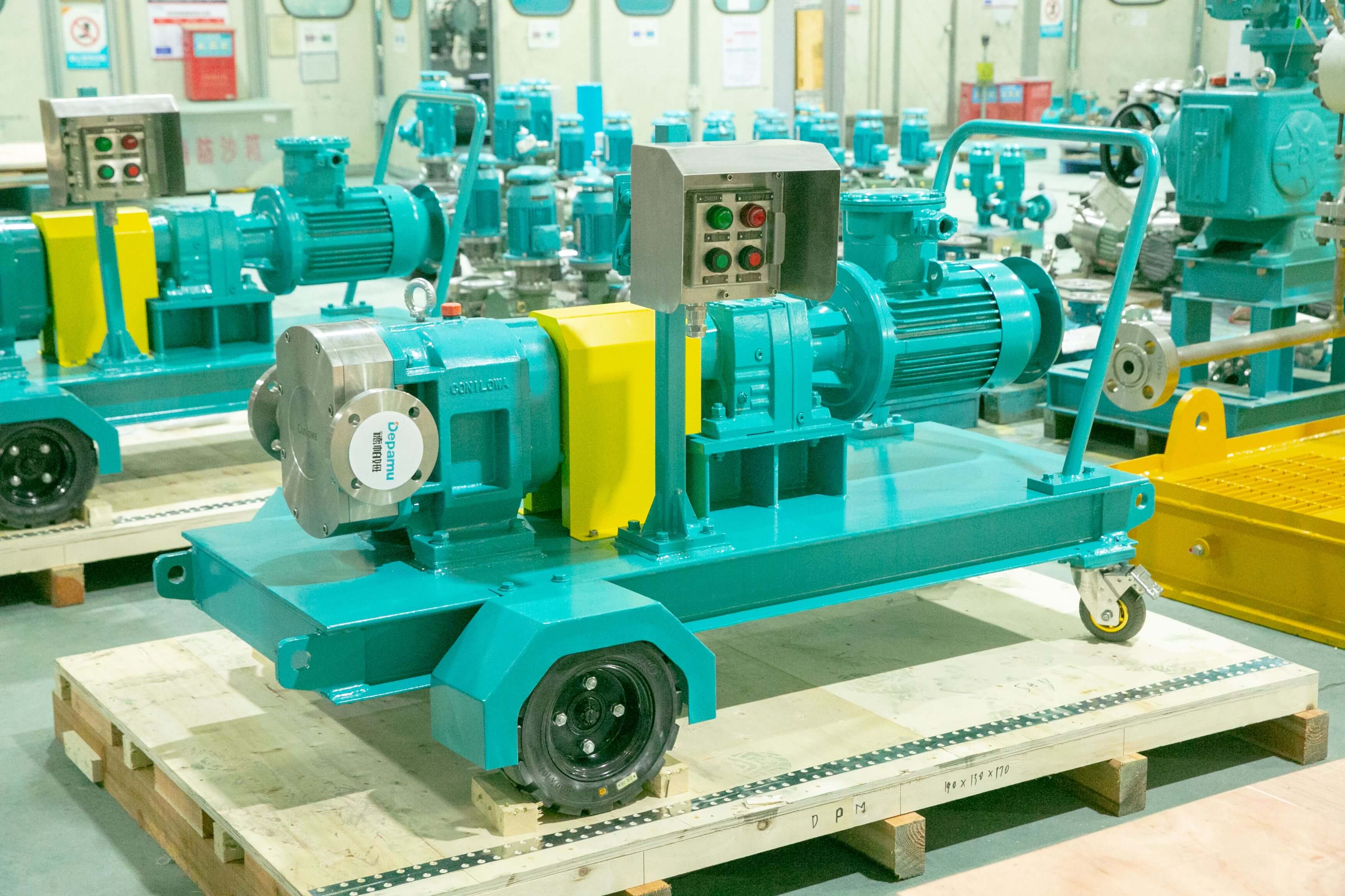
What a Stainless Steel Rotor Pump Does in a Process Line
A rotor pump — also called a rotary lobe pump or positive displacement rotary pump — moves fluid by trapping a fixed volume between two rotating lobes and the pump casing, then displacing that volume toward the discharge. Because the displacement is volumetric rather than kinetic, flow stays nearly constant even when pressure or viscosity changes. That is the core reason rotor pumps are preferred over centrifugal pumps for viscous media, for dosing-type duties, and for processes where the product must not be beaten or emulsified by high-shear impellers.
The stainless steel construction adds a second layer of value. Wetted parts in stainless steel give the pump corrosion resistance against many chemical media, simplify cleaning, and support hygienic design for food and pharmaceutical-adjacent processes. It also makes the pump a better fit for washdown environments and for products where metal contamination or rust staining would be unacceptable. When buyers search for a stainless steel rotor pump supplier, they are usually looking for exactly this combination: positive displacement performance plus a materials package that survives the medium.
Typical duties include transferring creams, pastes, syrups, fruit preparations, slurry with soft solids, chemical intermediates, wastewater sludge, and polymer solutions. In each case the pump is selected against three anchors: viscosity range, discharge pressure, and the sensitivity of the product to shear.
How to Evaluate a Stainless Steel Rotor Pump Supplier
Not every stainless steel rotor pump manufacturer is set up to do the same work. Some are primarily catalogue suppliers who resell standard models; others engineer pumps and complete skid systems around a customer’s medium, flow, pressure, temperature, and site conditions. The difference becomes obvious when the application is non-standard — high viscosity at low flow, abrasive solids, elevated temperature, or a requirement to fit an existing footprint and piping layout.
Manufacturing depth and engineering capability
Ask how the pump is designed and built: whether the manufacturer has in-house machining, assembly, and testing, and whether it can deliver both standard and non-standard configurations. Deppam (Hangzhou) Pump Industry Technology Co., Ltd., founded in 2003, operates a factory site of approximately 35,000 square meters with more than 400 employees and an annual output value of roughly RMB 500 million. The company’s product range covers metering pumps, high-pressure process reciprocating pumps, air-operated and electric pumps, chemical dosing packages, water and steam sampling devices, water treatment equipment, and screw pumps, rotor pumps, and gear pumps. That breadth matters to buyers because a rotor pump is often one element in a larger fluid system, and a supplier who can also deliver the dosing skid, the control cabinet, or the upstream pump reduces interface risk.
Material and configuration transparency
A credible supplier will state exactly which materials are used for the lobes, casing, shaft, seals, and gaskets, and will explain the reason for each choice relative to the medium. Stainless steel is a family of alloys, not a single specification, so buyers should confirm grades, surface finish, and elastomer compatibility in writing. Seals deserve particular attention: a single mechanical seal, a double seal with barrier fluid, or a seal-less arrangement may each be correct depending on whether the medium is toxic, crystallising, or prone to running dry.
Testing, documentation, and delivery scope
Ask what is tested before shipment and what documentation accompanies the pump: performance curves, material certificates, dimensional drawings, and installation and maintenance manuals. For export projects, buyers should also confirm packaging, spare parts recommendations, and the availability of wear parts over the expected service life. A stainless steel rotor pump supplier that can answer these questions precisely is usually the one that will respond precisely when a problem appears in the field.
| Selection factor | What to confirm with the supplier |
|---|---|
| Medium | Viscosity range, solids content and particle size, corrosivity, temperature, whether the product is shear-sensitive |
| Duty point | Required flow rate, discharge pressure, suction conditions, continuous or intermittent operation |
| Materials | Stainless steel grade for wetted parts, lobe material, seal type and elastomer, surface finish |
| Drive and control | Fixed speed or variable speed, gearbox ratio, motor protection class, integration with plant control |
| Scope of supply | Bare pump, pump unit, baseplate, coupling guard, instrumentation, skid and piping scope |
| After-sales | Spare parts list, recommended wear-part stock, documentation package, response process |
Where Stainless Steel Rotor Pumps Fit Best
Rotor pumps occupy a specific niche: medium-to-high viscosity, moderate-to-high pressure, gentle handling, and reliable repeatable flow. Understanding where they fit prevents both overspecification and misapplication.
Food, beverage, and new materials
In food and beverage lines, stainless steel rotor pumps handle concentrates, syrups, fruit preparations, sauces, and dairy-adjacent products where product structure must be preserved. Low internal velocity and gentle lobe action keep shear damage to a minimum, while stainless wetted parts support cleaning routines. In new material production, the same characteristics help transfer polymer solutions, slurries, and coating media without destroying particle size or dispersion quality.
Chemical and petrochemical transfer
Chemical plants use rotor pumps for intermediates, viscous resins, and media containing soft solids. Because flow is volumetric, the pump continues to deliver a predictable rate as viscosity rises — a decisive advantage when a centrifugal pump would simply stall or lose head. Deppam’s business is concentrated in these sectors: petroleum refining and chemicals account for roughly 41 percent of sales, with oil and gas fields at about 23 percent, nuclear power, power generation, metallurgy and new energy at about 15 percent, and environmental water treatment at about 13 percent.
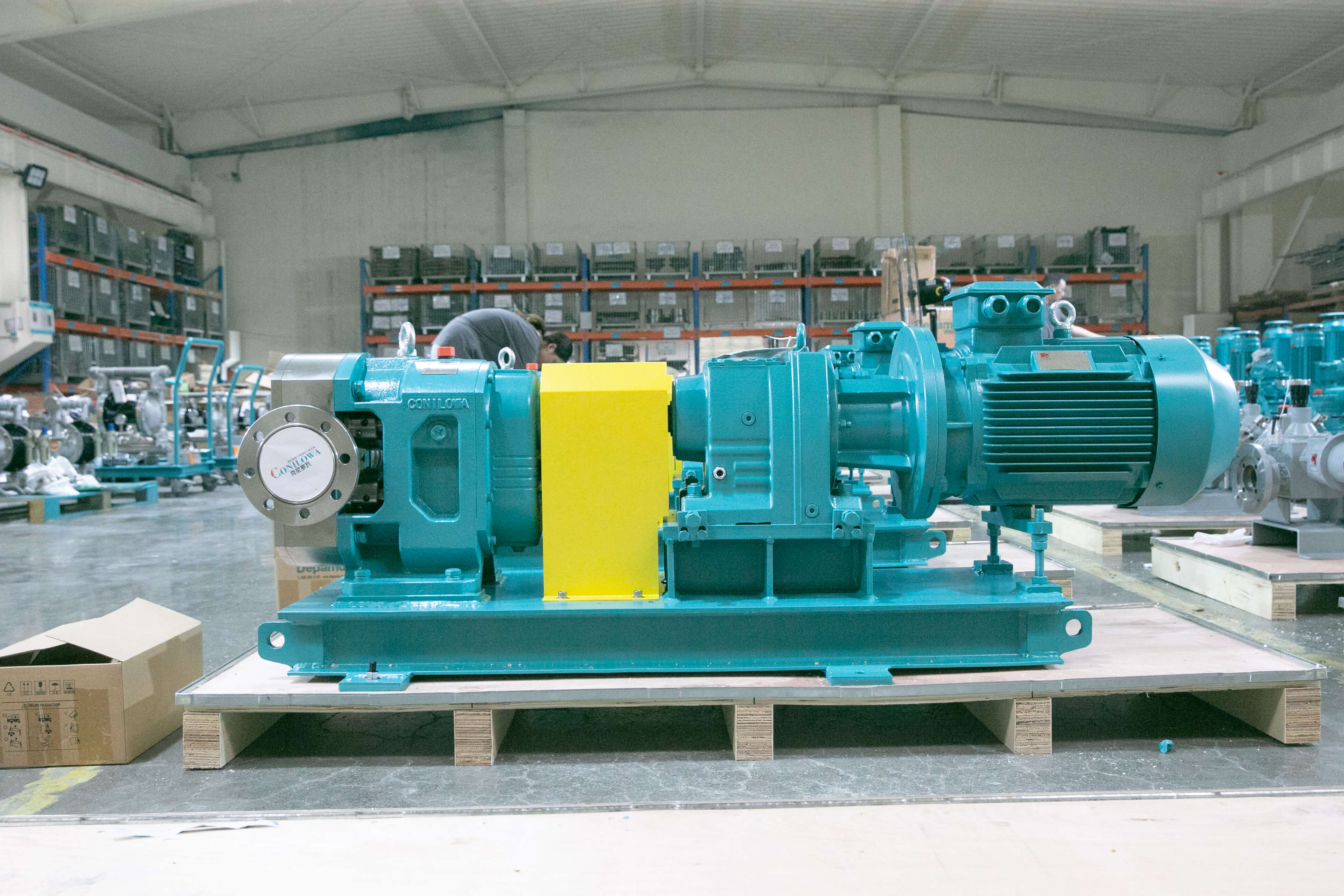
Water treatment and sludge handling
In environmental water treatment, rotor pumps move sludge, lime slurry, and flocculant solutions. Stainless steel construction resists the corrosion often encountered with chemical conditioning agents, and the positive displacement action handles the variable solids content typical of sludge lines. Rotor pumps are frequently paired with chemical dosing packages, where a metering pump handles precise additive injection while the rotor pump handles bulk transfer of the same or a companion medium.
Rotor Pump vs Centrifugal Pump vs Screw Pump
Buyers frequently compare three options. The right answer depends on viscosity, solids, shear sensitivity, and pressure requirement rather than on a general preference for one technology.
| Pump type | Strengths | Limitations |
|---|---|---|
| Stainless steel rotor pump | Gentle handling of shear-sensitive media, good for viscous fluids and soft solids, stable volumetric flow, easy cleaning | Not ideal for very high pressure alone; requires relief protection; wear parts need periodic inspection |
| Centrifugal pump | Simple, compact, low cost for low-viscosity clean fluids, high flow capability | Flow drops sharply with viscosity, high shear, poor suction performance on viscous products |
| Screw pump | Excellent for very high viscosity, smooth pulsation-free flow, good pressure capability | Less tolerant of abrasive solids, closer clearances, higher sensitivity to dry running |
Where a process requires both high pressure and high viscosity, some projects combine a rotor pump for transfer with a high-pressure process reciprocating pump for injection. Deppam manufactures both categories, which allows a single supplier to coordinate the hydraulic design of the whole train rather than leaving the buyer to reconcile two vendors’ assumptions.
Custom and OEM Rotor Pump Projects: What to Prepare
Custom stainless steel rotor pump projects move faster when the buyer supplies a complete duty description in the first exchange. A supplier cannot size a pump correctly from a flow rate alone. The information that changes the design most often includes: the full viscosity curve across the operating temperature range; whether solids are present and their hardness and maximum particle size; whether the medium is corrosive, toxic, crystallising, or flammable; the suction arrangement and available net positive suction head; the duty cycle; the cleaning regime; and the physical envelope available on site.
Deppam’s stated capability is to provide standard products, non-standard products, and customised fluid solutions based on a customer’s medium characteristics, flow, pressure, temperature, and site process requirements. For buyers, the practical test is whether the supplier asks these questions before issuing a quotation. A supplier that quotes from a flow figure alone is quoting a catalogue item, not a solution.
For OEM programmes, discuss branding, documentation language, packaging standards, and long-term spare parts planning early. These commercial details are as important as the hydraulic design when the pump becomes part of a packaged system sold under the buyer’s own name.
Installation, Operation, and Maintenance Essentials
Most rotor pump problems in the field trace back to installation rather than to the pump itself. Suction piping should be short, adequately sized, and free of air pockets; a starved suction line causes cavitation and rapid wear on lobes and seals. Because rotor pumps are positive displacement machines, a pressure relief valve or equivalent protection on the discharge side is essential — a closed valve downstream can destroy a pump in minutes.
Alignment between pump and drive must be checked after installation and rechecked after the system has reached operating temperature. Couplings and guards should be fitted correctly, and the rotation direction confirmed before the first start. On startup, the pump should never run dry; where dry-running protection is needed, a suitable seal arrangement and monitoring should be specified at the order stage.
For maintenance, establish a simple routine: monitor flow and pressure trends, inspect seals and listen for changes in sound or vibration, check lubrication according to the manual, and keep a small stock of wear parts — lobes, seals, and gaskets — matched to the medium. Teams that track performance data usually detect seal degradation weeks before a leak becomes a shutdown. In hygienic applications, verify that cleaning procedures are compatible with the elastomer and surface finish specified.
Procurement Advice: Comparing Quotations Fairly
The cheapest stainless steel rotor pump price is rarely the lowest cost of ownership. When comparing offers, normalise the scope: is the quotation for a bare pump or a complete unit with baseplate, coupling, guard, motor, and instrumentation? Are materials certificates included? Is the seal a standard item or a special design? Are spare parts priced for the first two years of operation?
A useful approach is to build a simple evaluation matrix covering hydraulic fit, material suitability, scope completeness, documentation, spare parts availability, and after-sales responsiveness. Weight the criteria according to the criticality of the duty. For a non-critical transfer duty, standardisation and price may dominate. For a continuous process with aggressive or high-value media, material quality and support capability should carry more weight.
It also helps to request a reference list of similar duties and to ask how the supplier handles a warranty claim in the buyer’s region. Deppam’s sales have grown steadily, from approximately RMB 450 million in 2023 to about RMB 510 million in 2024 and about RMB 560 million in 2025, which reflects an installed base that continues to expand across refining, chemicals, oil and gas, power, and water treatment.
FAQ
How do I choose between a stainless steel rotor pump and a centrifugal pump?
Choose a rotor pump when the medium is viscous, contains soft solids, is shear-sensitive, or when you need a stable flow rate that does not fall away as pressure rises. Choose a centrifugal pump for clean, low-viscosity fluids at high flow and relatively low pressure, where cost and simplicity matter more than gentle handling.
Can a stainless steel rotor pump handle food-grade and sanitary duties?
Yes, provided the pump is specified correctly. Hygienic rotor pump designs use stainless steel wetted parts, appropriate surface finishes, food-compatible elastomers, and cleanable geometry. Buyers should confirm the exact material grades, seal arrangement, and cleaning compatibility with the supplier before ordering.
What information does a stainless steel rotor pump manufacturer need to prepare a quotation?
The medium and its viscosity range, solids content and particle size, temperature, required flow rate, discharge pressure, suction conditions, duty cycle, cleaning regime, available space, and the desired scope of supply. Complete data at the enquiry stage usually shortens the selection process and avoids later redesign.
Is a custom or non-standard rotor pump available for unusual media?
Yes. Manufacturers with in-house engineering can adapt materials, seals, lobe geometry, drives, and baseplate arrangements to a specific duty. Deppam states that it provides standard products, non-standard products, and customised fluid solutions based on medium characteristics, flow, pressure, temperature, and site process requirements.
How often should a stainless steel rotor pump be maintained?
Maintenance intervals depend on the medium, duty cycle, and operating conditions rather than on a fixed calendar. In practice, teams should monitor flow and pressure trends continuously, inspect seals and elastomers on a scheduled basis, verify alignment and lubrication, and keep critical wear parts in stock so that a seal replacement does not become a production stoppage.
What causes a rotor pump to lose flow in service?
Common causes include worn lobes or casing clearances, damaged or hardened seals allowing internal bypass, air ingress on the suction side, a partially blocked suction strainer, or operation against a closed or restricted discharge. Systematic checks of suction conditions, relief valve settings, and wear-part condition usually identify the cause quickly.
Summary
Selecting a stainless steel rotor pump supplier is a process of matching hydraulic behaviour to the medium, confirming materials and seals in detail, and verifying that the manufacturer can engineer beyond a catalogue page. Rotor pumps earn their place in viscous, shear-sensitive, and solids-laden duties where centrifugal pumps lose efficiency and where product integrity matters. The supplier’s engineering depth, documentation discipline, and spare parts support determine whether that performance holds up over years of operation.
For buyers, the practical next step is to prepare a complete duty description and request a technically itemised quotation rather than a price alone. Deppam (Hangzhou) Pump Industry Technology Co., Ltd. combines a broad fluid equipment portfolio — metering pumps, high-pressure process reciprocating pumps, dosing packages, and screw, rotor, and gear pumps — with the ability to deliver standard, non-standard, and customised solutions for refining, chemicals, oil and gas, power, new energy, and water treatment projects. Comparing suppliers on engineering fit, material transparency, scope completeness, and long-term support will consistently produce a better decision than comparing headline prices.