
Three-screw pumps play a critical role in industrial fluid handling where smooth, continuous flow and reliable performance are essential. They are positive displacement pumps often selected for clean, lubricating liquids, high-viscosity media, and processes that require low pulsation. For buyers in oil and gas, petrochemicals, power generation, and chemical processing, the choice of a three-screw pump manufacturer can directly affect uptime, maintenance cost, and process safety. This guide explains how to evaluate a three-screw pump factory, what a strong manufacturer should provide, and how to match pump configuration to real operating conditions.
Depamu (Hangzhou) Pump Industry Technology Co., Ltd. is a high-tech enterprise founded in 2003 and focused on high-end positive displacement pumps and fluid equipment. The company combines research and development, production, sales, and complete system delivery. With more than 400 employees, a plant area of about 35,000 square meters, and an annual output value of around RMB 500 million, Depamu serves multiple process industries and supports standard, non-standard, and custom fluid solutions. Its portfolio includes metering pumps, high-pressure reciprocating process pumps, pneumatic and electric pumps, chemical dosing systems, water and steam sampling devices, water treatment equipment, screw pumps, rotary lobe pumps, and gear pumps.
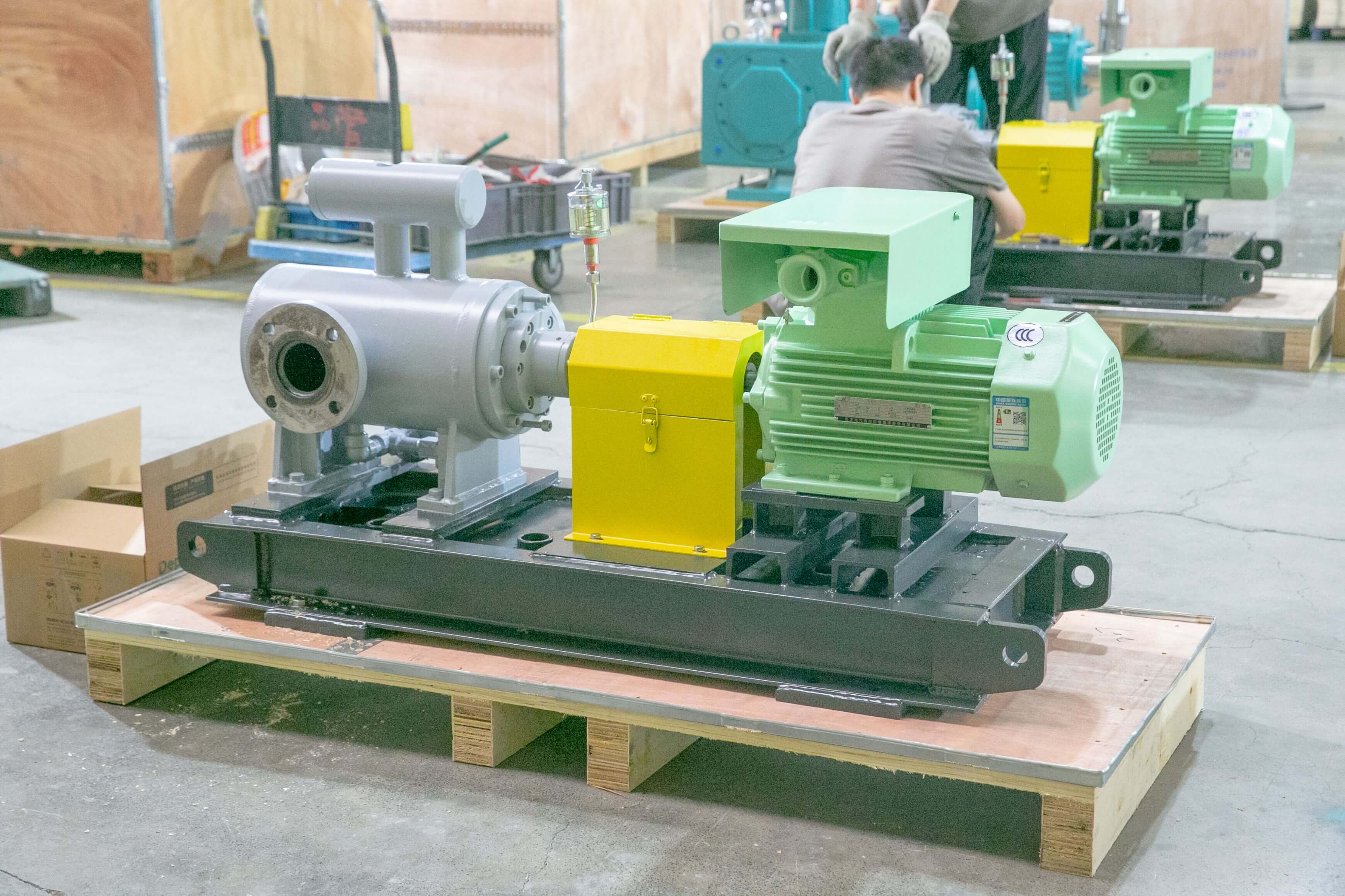
What Makes a Reliable Three-Screw Pump Manufacturer?
A reliable three-screw pump manufacturer is not simply a supplier of catalog products. Three-screw pumps are precision machines with close internal clearances, carefully matched screw geometry, and materials selected for the pumped medium. Small deviations in machining accuracy, assembly cleanliness, or material selection can lead to reduced efficiency, vibration, leakage, or premature wear. Buyers should therefore look beyond price and evaluate engineering depth, manufacturing control, testing capability, and experience with the target industry.
The first indicator is engineering capability. A strong three-screw pump manufacturer should be able to review the medium, viscosity, temperature, pressure, flow rate, lubricity, and cleanliness of the fluid before recommending a model. This is especially important because three-screw pumps are generally best suited to clean, lubricating liquids. If the process contains abrasive solids or has poor lubricity, the manufacturer should explain the limitations and, where appropriate, recommend an alternative pump design such as a high-pressure reciprocating process pump or another positive displacement solution.
The second indicator is manufacturing control. A qualified three-screw pump factory should have clear procedures for machining, inspection, rotor and screw matching, housing alignment, sealing, and final testing. Buyers can ask about dimensional inspection, material traceability, assembly environment, and performance testing. A manufacturer that can explain these steps in detail is usually better prepared to deliver consistent quality than one that only offers a catalog and a quotation.
The third indicator is application experience. Three-screw pumps are used in oil and gas, petrochemical processing, power generation, marine and industrial lubrication systems, and other demanding duties. A manufacturer with broad industry exposure can anticipate installation issues, seal selection requirements, drive arrangements, and maintenance access. This practical knowledge often matters as much as the pump itself.
Inside a Professional Three-Screw Pump Factory: From Design to Delivery
A professional three-screw pump factory should be organized around engineering, machining, assembly, testing, and delivery. The workflow usually begins with a technical review of the customer’s process data. The manufacturer then confirms the pump type, materials, seal arrangement, drive method, and control requirements. For standard products, the configuration may follow an existing platform. For custom projects, the design may require modified screw geometry, special materials, heating jackets, special seals, or a skid-based solution.
Depamu’s manufacturing base reflects this integrated approach. The company operates three brands and has built capabilities from product research and design to manufacturing and complete system delivery. Its product scope includes screw pumps, rotary lobe pumps, gear pumps, metering pumps, high-pressure reciprocating process pumps, chemical dosing systems, and water treatment equipment. This breadth allows the company to support projects that require more than a single pump, such as chemical dosing skids, water treatment packages, and custom fluid equipment assemblies.
Assembly and testing are especially important for three-screw pumps. The factory should control cleanliness during assembly because contamination can damage screw surfaces and bearings. Final testing should verify flow, pressure, running sound, vibration, seal performance, and absence of leakage. For custom or skid-mounted systems, factory assembly and testing before shipment can reduce site work and shorten commissioning time. Buyers should ask whether the manufacturer performs a performance test, a leak test, and a functional check of instrumentation and controls.
Delivery capability also matters. A three-screw pump manufacturer serving international projects should be able to provide drawings, material lists, inspection records, operating instructions, and spare parts recommendations. Clear documentation supports installation, maintenance, and future expansion. For overseas buyers, packaging, preservation, and shipping preparation are also part of the factory’s delivery quality.
Three-Screw Pump Applications Across Key Industries
Three-screw pumps are commonly selected for continuous process duties involving clean lubricating liquids, fuel oils, lubricating oils, hydraulic fluids, and other viscous media. In oil and gas operations, they can support transfer, boosting, and lubrication duties where stable flow and low pulsation are valued. In petrochemical and chemical plants, they are used in process transfer and circulating systems where the fluid is compatible with the pump materials and internal clearances. In power generation and industrial utilities, they support fuel supply, lubrication, and auxiliary fluid transfer.
Depamu’s broader product portfolio is applied across oil refining and petrochemicals, chemical processing, oil and gas fields, nuclear industry, power generation, metallurgy, new energy, environmental water treatment, new materials, and food processing. The company reports that oil refining and chemical processing account for about 41 percent of sales, oil and gas fields about 23 percent, nuclear, power, metallurgy, and new energy about 15 percent, environmental water treatment about 13 percent, new materials and food about 3 percent, and other industries about 5 percent. This industry mix shows that the company operates in demanding sectors where reliability and application understanding are essential.
For three-screw pump projects, the industry context shapes the specification. A fuel oil transfer application may require a specific viscosity range, heating arrangement, and seal type. A chemical process may require corrosion-resistant materials and careful selection of elastomers. A lubrication system may require compact packaging and reliable flow at varying temperatures. Buyers should expect a three-screw pump manufacturer to ask detailed questions rather than simply quoting a model number.
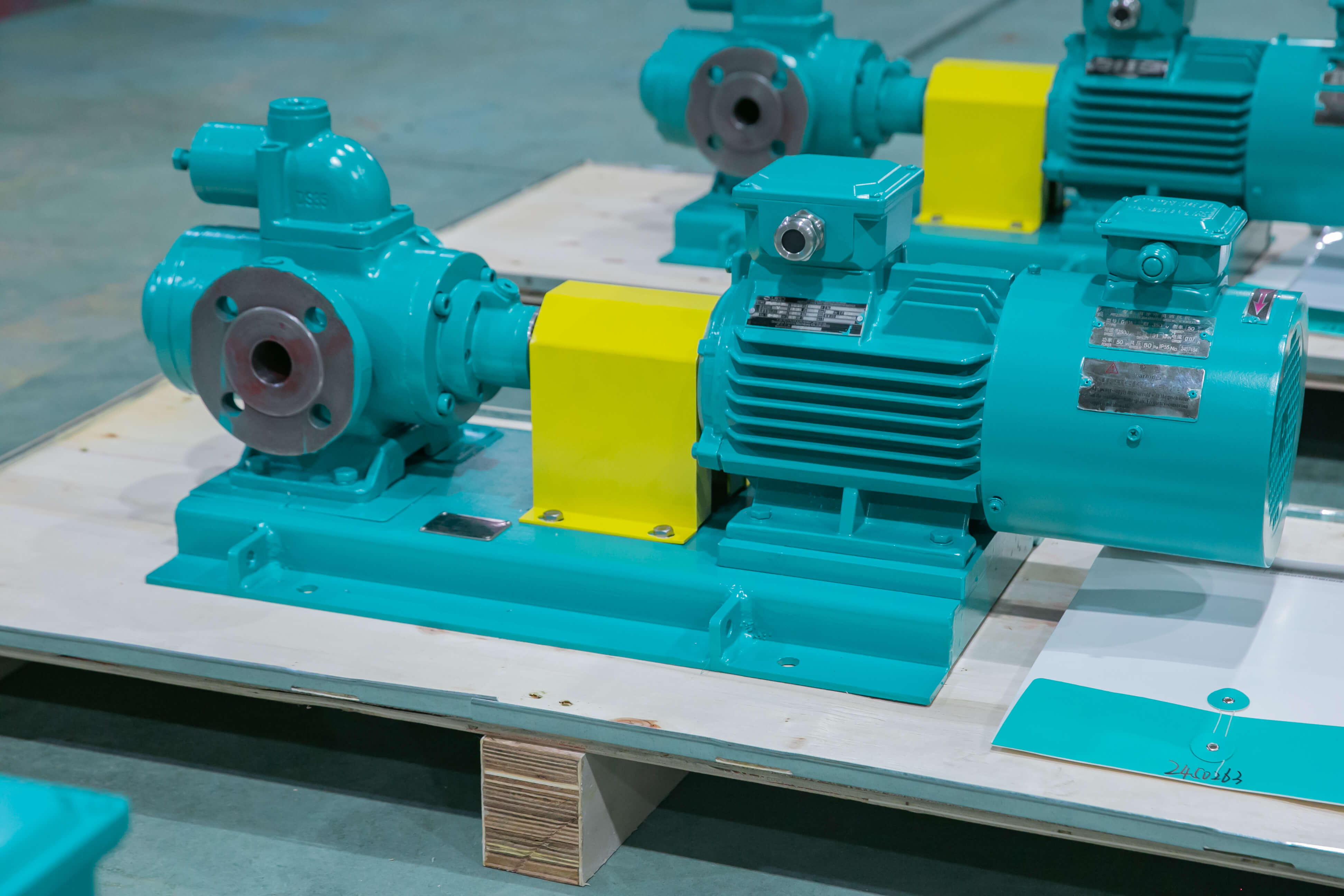
Custom Three-Screw Pump Solutions for Complex Operating Conditions
Many industrial projects cannot be served by a standard pump alone. Fluid properties, installation space, regulatory requirements, and interface conditions often require a custom three-screw pump solution. A capable custom three-screw pump manufacturer should be able to adjust materials, shaft sealing, heating or cooling arrangements, connections, mounting, drive options, and control interfaces. The goal is not to complicate the project but to ensure that the pump matches the actual duty and can be maintained safely over its service life.
When requesting a custom solution, buyers should provide the medium name and composition, viscosity at operating temperature, density, temperature range, required flow rate, discharge pressure, suction conditions, solids content, lubricity, and any special hazards. Installation details such as available space, piping orientation, access for maintenance, and utility availability are also important. If the pump will operate in a hazardous area, the drive and electrical components must be selected accordingly. If the fluid is sensitive to shear or requires low pulsation, this should be stated clearly.
Depamu’s engineering approach is based on the customer’s medium characteristics, flow, pressure, temperature, and site process requirements. The company can provide standard products, non-standard products, and customized fluid solutions. For projects that require more than a pump, it can integrate metering pumps, chemical dosing systems, water treatment equipment, and other fluid devices into a complete package. This integrated capability is valuable when the three-screw pump is part of a larger process skid or when multiple fluid duties must be coordinated.
Customization should always be supported by documentation. The manufacturer should provide a data sheet, outline drawing, material list, seal specification, utility requirements, and operating limits. For skid-based systems, wiring diagrams, instrument lists, and control logic should be included. A clear technical package reduces the risk of installation errors and helps maintenance teams plan spare parts and service activities.
How to Compare Three-Screw Pump Suppliers: A Practical Selection Checklist
Comparing three-screw pump suppliers requires a structured approach. Price is important, but it should be evaluated together with technical compliance, manufacturing quality, documentation, delivery, and after-sales support. The table below summarizes key selection factors that buyers can use during supplier evaluation.
| Selection Factor | Why It Matters | What to Confirm with the Supplier |
|---|---|---|
| Medium and lubricity | Three-screw pumps rely on the fluid for lubrication and close-clearance operation. | Confirm viscosity, lubricity, cleanliness, and compatibility with internal materials. |
| Flow and pressure | The duty point determines screw geometry, speed, and drive power. | Provide required flow, discharge pressure, suction conditions, and operating range. |
| Temperature | High or low temperatures affect clearances, seals, and material selection. | Confirm minimum and maximum operating temperatures and any heating requirements. |
| Solids and abrasives | Three-screw pumps are generally not selected for abrasive slurries. | Disclose solids content and ask whether an alternative pump type is more suitable. |
| Material compatibility | Corrosion can damage screws, housings, and seals. | Review wetted materials, elastomers, and any special coatings or treatments. |
| Shaft sealing | Seal selection affects leakage control, maintenance, and safety. | Confirm seal type, flush plan if required, and compatibility with the fluid. |
| Testing and documentation | Verification reduces site commissioning risk. | Ask for performance test records, leak test records, drawings, and manuals. |
This checklist can be used alongside a technical quotation. A strong three-screw pump manufacturer will answer these points clearly and highlight any limitations. If a supplier avoids questions about fluid cleanliness, material compatibility, or testing, buyers should proceed carefully. The lowest price may not represent the lowest lifecycle cost if the pump is not correctly specified.
Selection and Maintenance Tips for Industrial Three-Screw Pumps
Correct selection begins with accurate process data. Buyers should confirm the normal and maximum flow rate, suction pressure, discharge pressure, temperature range, viscosity at operating temperature, and fluid composition. The presence of water, air, or solids should be disclosed because these conditions can affect lubrication and wear. If the pump will operate over a wide viscosity range, the manufacturer should confirm the allowable speed and drive selection.
Installation also affects performance. The pump should be mounted on a stable base with proper alignment between the pump and driver. Suction piping should be designed to avoid air pockets and excessive pressure loss. Filtration may be required to protect internal clearances, depending on the process. For high-viscosity fluids, heating or insulation may be needed to maintain flowability. Maintenance access should be considered during layout so that seals, couplings, and instrumentation can be serviced safely.
Maintenance practices should follow the manufacturer’s instructions. Routine checks typically include leakage observation, vibration and noise monitoring, bearing temperature checks, coupling alignment, and lubricant condition where applicable. Spare parts such as seals, bearings, and wear components should be planned according to operating conditions. Keeping operating records helps identify changes in performance and supports early intervention. For critical duties, maintaining a recommended spare parts set can reduce downtime.
For buyers comparing a three-screw pump factory with other suppliers, it is useful to request a lifecycle view. Ask about expected maintenance intervals, recommended spare parts, energy consumption at the duty point, and service support. A reliable manufacturer will provide practical answers and help the buyer avoid oversized or undersized selections. This is especially valuable in continuous process plants where unplanned downtime is costly.
FAQ
What should I look for in a reliable three-screw pump manufacturer?
Look for engineering capability, manufacturing control, testing procedures, industry experience, and clear documentation. A reliable three-screw pump manufacturer should review your medium, viscosity, temperature, pressure, and flow requirements before recommending a model. It should also explain the limits of three-screw pump technology, especially for fluids with poor lubricity or high solids content. Factory testing, material traceability, and responsive technical support are important indicators of a serious supplier.
Can a three-screw pump factory provide custom pumps for high-viscosity media?
Yes, many three-screw pump projects require customization for viscosity, temperature, sealing, materials, and installation. A qualified custom three-screw pump manufacturer should be able to adjust the pump configuration and confirm the allowable operating range. Buyers should provide viscosity at operating temperature, startup conditions, heating requirements, and any special cleaning or flushing needs. The supplier should then confirm the drive power, speed, seal arrangement, and material compatibility.
How do I choose between a standard and a custom three-screw pump?
Choose a standard pump when the duty conditions match an existing product platform and no special materials, seals, heating, or interfaces are required. Choose a custom three-screw pump when the fluid, temperature, pressure, installation space, or control requirements fall outside the standard range. A good manufacturer will evaluate both options and recommend the most practical solution. Customization should be based on clear process data and documented technical requirements.
What industries commonly use three-screw pumps from a reliable supplier?
Three-screw pumps are used in oil and gas, petrochemicals, chemical processing, power generation, industrial lubrication, and other process industries where clean lubricating liquids and low-pulsation flow are required. Depamu serves oil refining and chemical processing, oil and gas fields, nuclear industry, power generation, metallurgy, new energy, environmental water treatment, new materials, and food processing. The right pump specification depends on the specific medium and operating conditions rather than the industry name alone.
How can I verify the manufacturing capability of a three-screw pump factory?
Ask for details about machining, inspection, assembly cleanliness, and final testing. A capable three-screw pump factory should be able to explain how screw and housing dimensions are controlled, how components are matched, and how performance is verified. Request drawings, test records, material lists, and documentation samples. If possible, review the factory’s product scope and experience with similar fluids or processes. Clear answers and complete documentation are strong signals of manufacturing capability.
What information is needed to request a quotation from a three-screw pump manufacturer?
Provide the medium name and composition, flow rate, suction and discharge pressure, temperature range, viscosity at operating temperature, density, solids content, and lubricity. Include installation details, available utilities, control requirements, and any hazardous area classification. For custom or skid-based projects, provide a process description and interface requirements. Complete data helps the manufacturer select the correct pump, seal, material, and drive, and reduces the risk of later changes.
Summary
Selecting a three-screw pump manufacturer is a technical procurement decision, not a simple price comparison. Buyers should evaluate engineering support, machining and assembly control, testing, documentation, application experience, and customization capability. Three-screw pumps perform best in clean, lubricating, high-viscosity duties with low pulsation requirements, and they should be specified with a clear understanding of fluid properties and operating conditions. Depamu (Hangzhou) Pump Industry Technology Co., Ltd. combines a broad positive displacement pump portfolio with custom fluid equipment capabilities, serving oil refining, chemicals, oil and gas, power, water treatment, and other industries. By using a structured selection checklist and requesting complete technical documentation, buyers can choose a reliable three-screw pump factory and support long-term process reliability.