
Choosing the right twin screw pump manufacturer is one of the most important procurement decisions in any process plant. Twin screw pumps sit on critical duty everywhere: feeding viscous crude, moving shear-sensitive polymers, transferring drilling mud, dosing chemical streams and keeping boiler and waste water systems running. When a pump fails, production stops, maintenance costs climb and safety risks increase. That is why experienced buyers do not simply compare price lists. They evaluate the manufacturer’s engineering depth, machining capability, testing standards and ability to deliver a custom twin screw pump that fits the actual medium, flow, pressure and temperature on site.
This guide explains how a professional twin screw pump supplier should be assessed, what a capable twin screw pump factory should be able to demonstrate, and how companies such as Depamu (Hangzhou) Pump Technology Co., Ltd. build positive displacement pump packages for the world’s most demanding industries. It also provides a practical selection and maintenance checklist that procurement teams can use before requesting a twin screw pump quotation.
What Is a Twin Screw Pump and Why Do Industrial Plants Rely on It?
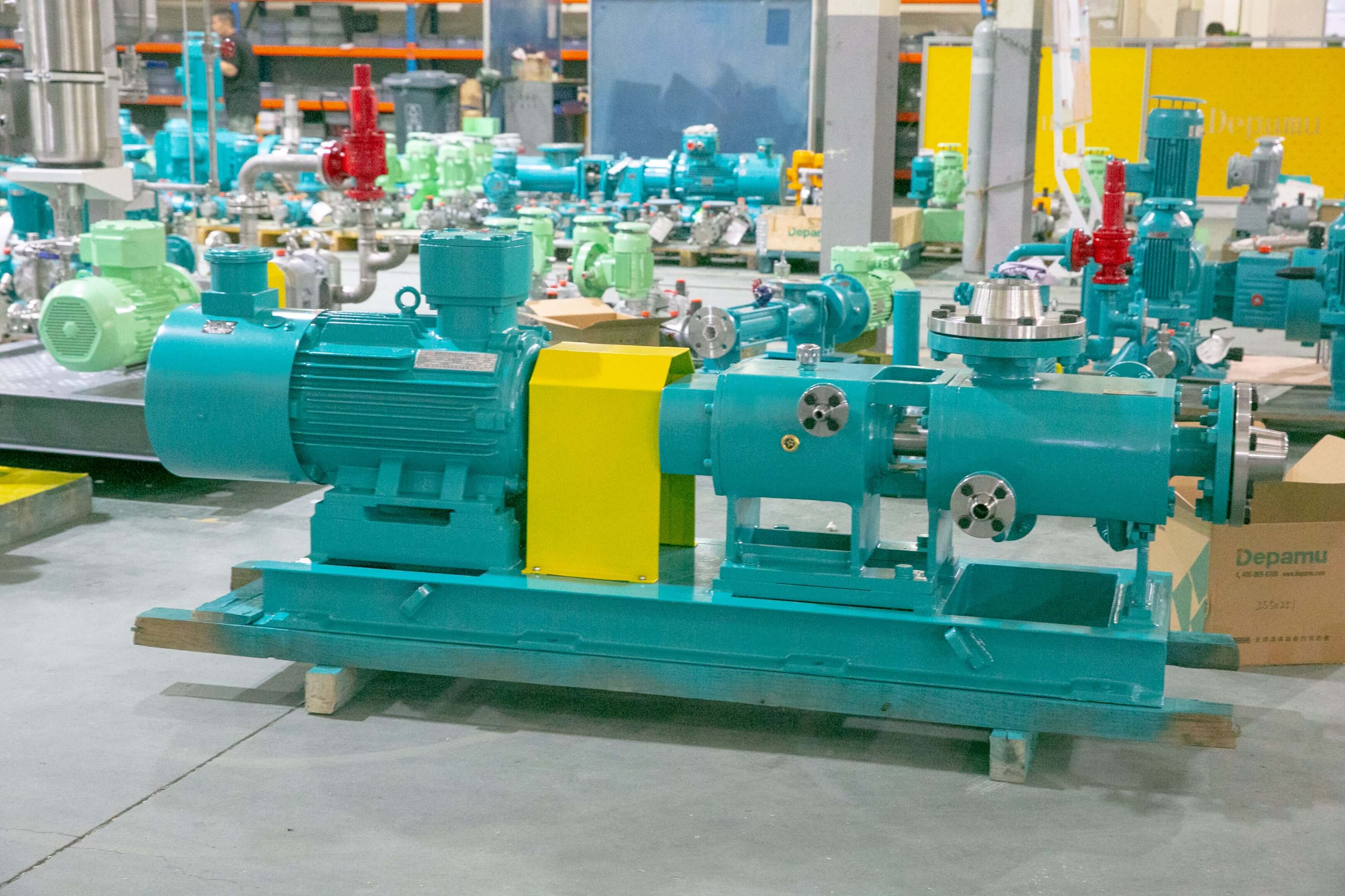
A twin screw pump is a positive displacement rotary pump in which two intermeshing screws rotate inside a close-tolerance casing. As the screws turn, they create sealed cavities that move fluid axially from the suction side to the discharge side. Because the pumping action depends on displacement rather than centrifugal force, the pump delivers a virtually pulsation-free, constant flow that is largely independent of discharge pressure. This makes it a natural choice for high viscosity fluid transfer, for fluids that must not be sheared or emulsified, and for systems that require accurate, repeatable delivery.
Compared with centrifugal pumps, twin screw pumps handle viscous media with far greater efficiency, retain suction capability on thick products and are self-priming in most installations. Compared with single screw pumps, the twin screw design offers higher flow capacity, better hydraulic balance, lower vibration and improved performance on low-lubricity or non-lubricating liquids. These advantages explain why twin screw technology is widely specified in crude oil gathering, refinery feedstock transfer, chemical process lines, tank farm unloading, marine fuel systems and environmental sludge handling.
Typical duty conditions found in industry include flow rates from a few cubic meters per hour up to several hundred, discharge pressures in the medium to high range, temperatures from ambient up to well above 200°C, and media ranging from clean lubricating oils to abrasive slurries. A capable manufacturer will therefore ask detailed process questions before quoting, because screw geometry, clearance, material selection and sealing arrangement all change with the application.
Depamu (Hangzhou) Pump Technology: A Twin Screw Pump Manufacturer with Deep Fluid Equipment Experience
Depamu (Hangzhou) Pump Technology Co., Ltd. was established in 2003 and has spent more than two decades focused on high-end positive displacement pumps and fluid equipment. The company operates a factory of approximately 35,000 square meters with more than 400 employees, a registered capital of RMB 54 million and an annual output value of around RMB 500 million. Its sales performance has grown consistently, from about RMB 450 million in 2023 to approximately RMB 510 million in 2024 and around RMB 560 million in 2025, which reflects steady demand for its pump and package solutions across multiple heavy industries.
The product portfolio covers metering pumps, high-pressure process reciprocating pumps, pneumatic and electric pumps, chemical dosing packages, water and steam sampling systems, water treatment equipment, and screw pumps, rotary lobe pumps and gear pumps. Within this range, screw pump technology serves a broad set of transfer duties, and the company’s engineering team can supply standard models as well as custom twin screw pump configurations based on the customer’s medium characteristics, flow rate, pressure, temperature and site process requirements.
Depamu operates three brands — Depamu, Kenirova and Dailepu — and positions itself as a total fluid equipment solution provider rather than a single-product workshop. That matters for buyers, because a twin screw pump supplier that also engineers dosing systems, reciprocating pumps and complete skid packages can integrate the pump into the wider process instead of delivering an isolated component.
Industries Served and Typical Twin Screw Pump Applications
The company’s sales distribution provides a clear picture of where its equipment is used. Petroleum refining and chemical processing account for roughly 41% of business, oil and gas fields about 23%, nuclear power, power generation, metallurgy and new energy around 15%, environmental water treatment about 13%, and new materials and food approximately 3%, with the remainder distributed across other sectors. Each of these industries places different demands on a screw pump, and a good industrial screw pump manufacturer must be able to match the design to the duty.
In petroleum refining and chemical plants, twin screw pumps are commonly used for crude and residue transfer, feedstock and product movement between units, tank farm circulation, loading and unloading operations, and the handling of viscous intermediates. Their low-shear action protects polymers and additives, while their strong suction performance makes them suitable for tanks and long suction lines. In oil and gas fields, the same technology supports crude gathering, multiphase transfer, produced water handling and transfer of drilling and completion fluids.
In environmental water treatment, twin screw pumps are often selected for sludge transfer, thickened sludge feeding to dewatering equipment and the movement of oily or abrasive waste streams. In power generation and metallurgy, they handle fuel oils, lubricating circuits and various process fluids. In new materials and food production, hygienic and low-pulsation designs move viscous syrups, edible oils and polymer melts where product integrity cannot be compromised.
| Industry | Typical Duty | Design Focus |
|---|---|---|
| Petroleum refining and chemical | Crude, residue, feedstock and tank farm transfer | High pressure, temperature resistance, low shear |
| Oil and gas fields | Crude gathering, produced water, drilling fluids | Abrasion resistance, solids handling, continuous duty |
| Power, metallurgy and new energy | Fuel oil, lubrication circuits, process fluids | Reliability, leak-free sealing, stable pressure |
| Environmental water treatment | Sludge, thickened sludge, oily waste streams | Clog-free flow path, wear materials, easy maintenance |
| New materials and food | Viscous syrups, oils, polymer melts | Hygienic construction, gentle pumping, low pulsation |
How to Evaluate a Twin Screw Pump Factory Before You Buy
Price is only one line in the total cost of ownership. A reliable pump supplier in China should be able to answer technical questions in detail, provide drawings and material certificates, and explain how the pump will behave at your duty point. Before placing an order, request the following information from any candidate factory.
1. Engineering and Selection Capability
A professional twin screw pump manufacturer will not sell a pump from a catalogue without asking about viscosity, density, solids content, temperature, discharge pressure, suction conditions and duty cycle. Ask for a completed data sheet, a calculated selection report and a performance curve showing flow versus pressure, power consumption and NPSH requirements. If a supplier cannot explain why a specific screw geometry, clearance and speed were chosen for your fluid, that is a warning sign.
2. Manufacturing and Machining Control
Screw rotors must be machined to tight tolerance and dynamically balanced to run smoothly. Evaluate the factory’s in-house machining capability, quality control flow, dimensional inspection process, welding standards and surface treatment procedures. A twin screw pump factory with a large, vertically integrated plant can usually control lead time and quality better than a trading company that outsources every component.
3. Material and Seal Selection
Media compatibility drives material choice. Standard cast iron or steel casings may be replaced by stainless steel, duplex steel or other alloys for corrosive fluids, and screw surfaces may require hardening or coating for abrasive duty. Sealing is equally important: mechanical seals, cartridge seals, packing or magnetic drive arrangements each suit different fluids and emission requirements. A capable supplier will present options with clear operating limits rather than a single fixed offer.
4. Testing Before Shipment
Every pump should be tested before dispatch. Ask for a hydrostatic test, a performance test with recorded flow, pressure and power data, a vibration and noise check, and a seal leakage inspection. Factory acceptance testing with photo and video records protects both parties and reduces commissioning risk on site.
Custom Twin Screw Pump Solutions for Complex Media
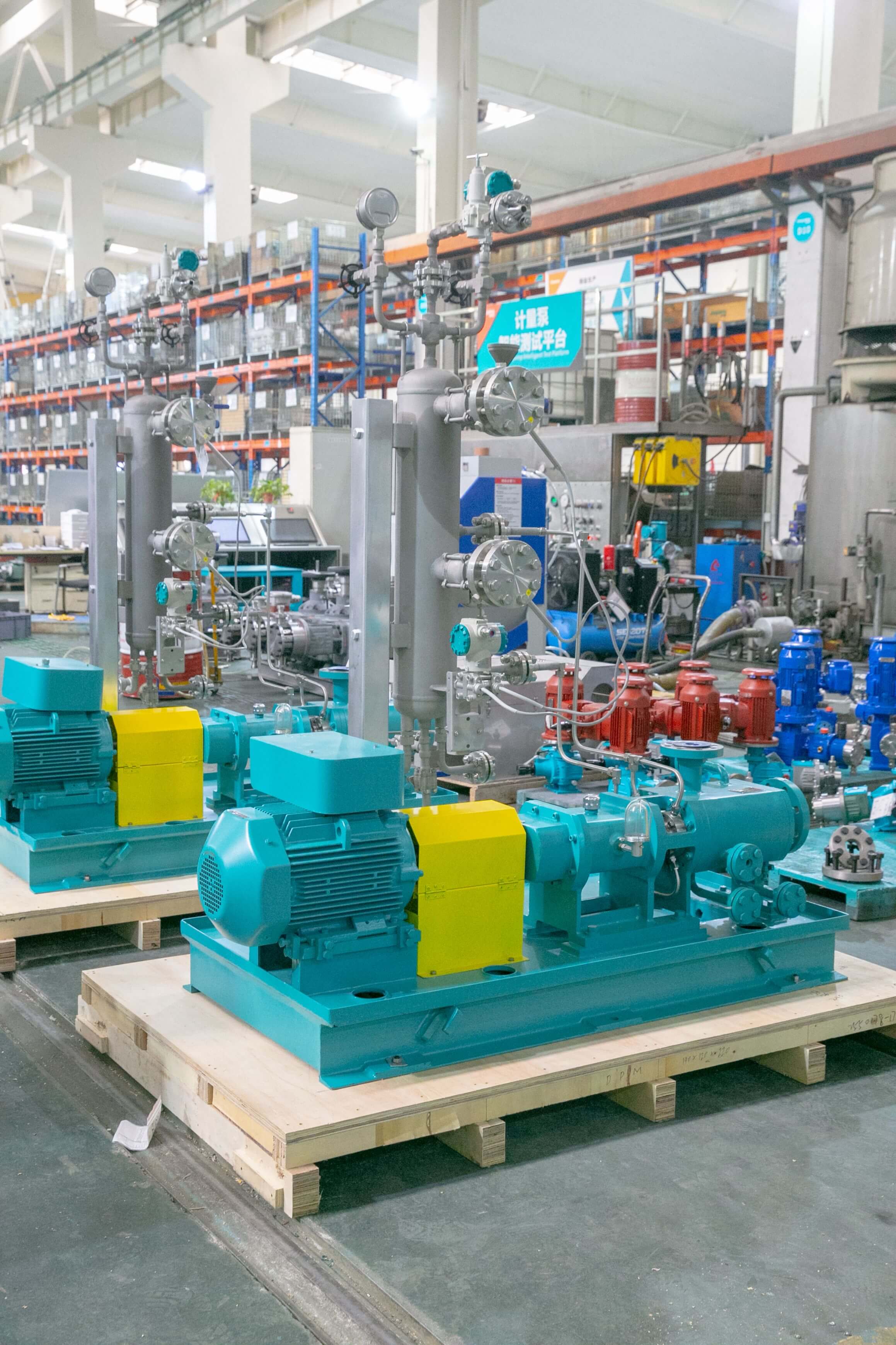
Many industrial duties cannot be met by a standard model. High viscosity, high temperature, abrasive particles, corrosive chemistry and fluctuating process conditions may require a modified hydraulic design, alternative materials, jacketed casings for temperature control, special seals, or a skid-mounted package with instrumentation and control. This is where the difference between a catalogue reseller and a genuine custom twin screw pump provider becomes obvious.
Depamu’s workflow starts with the process data supplied by the customer and continues through design, component manufacturing, assembly, testing and documentation. Where required, the team integrates the pump with related equipment such as metering pumps, dosing systems and control cabinets, producing a complete fluid transfer solution rather than a standalone machine. Because the company also produces chemical dosing packages and water and steam sampling systems, it can support projects that combine multiple fluid duties under one supply contract.
When requesting a custom quotation, prepare the following information in advance: fluid name and composition, viscosity range at operating temperature, density, solids content and particle size, flow rate, suction and discharge pressure, temperature, motor voltage and frequency, area classification, available utilities and preferred control interface. Complete data reduces engineering cycles and avoids costly changes later.
Installation, Operation and Maintenance Best Practices
Correct installation protects the investment. Twin screw pumps should be mounted on a rigid base with proper alignment between pump and driver, and piping should be supported independently to avoid stress on the casing. Suction lines must be short, generously sized and free of air traps, because positive displacement pumps require a stable, flooded suction. A relief valve or bypass must always be installed on the discharge side to protect the pump against overpressure, and instrumentation should include pressure gauges, a flow indicator and, on critical duties, temperature monitoring of the seal area.
During commissioning, verify rotation direction, check that all connections are tight, and confirm the relief valve setting. Start the pump with the discharge valve open for positive displacement units, then adjust operating conditions gradually. Record baseline values for flow, pressure, power, vibration and temperature so that future trends can be compared.
Routine maintenance is straightforward when planned properly. Inspect seals and couplings, check alignment and lubrication, monitor vibration and noise, verify relief valve function, and clean suction strainers regularly. For abrasive or crystallizing media, establish a flushing routine before shutdown to prevent deposits from hardening inside the pump. Keep a spare seal kit and wear parts on hand for critical units, and log all interventions so that repeated problems can be traced to their root cause.
FAQ
What should I check when choosing a twin screw pump manufacturer?
Check the manufacturer’s engineering capability, in-house machining, material and seal options, testing procedures and documentation. Ask for a selection report explaining screw geometry, speed and clearance for your fluid, and request performance test records before shipment. A strong twin screw pump manufacturer answers process questions in detail instead of only quoting a price.
Can a twin screw pump handle high viscosity and abrasive media?
Yes, within defined limits. Twin screw pumps excel at high viscosity transfer because flow is generated by displacement rather than centrifugal force. For abrasive media, hardened or coated rotors and suitable casing materials are required, and operating speed should be reduced. Always provide solids content and particle size so the supplier can recommend the correct configuration.
How do I request a twin screw pump quotation?
Provide fluid name and composition, viscosity at operating temperature, density, solids content, required flow rate, suction and discharge pressure, temperature, motor power supply, area classification and control requirements. With complete data, a supplier can return an accurate quotation and performance curve quickly, avoiding later redesign.
What is the difference between a twin screw pump and a centrifugal pump?
A centrifugal pump relies on impeller velocity and is efficient for low viscosity fluids at moderate pressure. A twin screw pump is a positive displacement machine that delivers constant flow independent of pressure, handles viscous and shear-sensitive media, and offers strong self-priming performance. For thick, delicate or high-pressure duties, the twin screw design is often the better choice.
How often does a twin screw pump need maintenance?
Maintenance intervals depend on duty severity, fluid cleanliness and operating hours. Typical checks include seal inspection, coupling alignment, lubrication, vibration monitoring and relief valve verification. Abrasive or crystallizing services may require flushing routines and more frequent wear-part inspection. Follow the manufacturer’s manual and keep maintenance records for trend analysis.
Can pumps be supplied as a complete packaged system?
Yes. Many industrial projects require a skid-mounted package combining the pump, motor, baseplate, piping, valves, instruments and control cabinet. Working with a manufacturer that also engineers dosing systems and fluid equipment packages reduces interface risk and simplifies commissioning on site.
Summary
Selecting a twin screw pump manufacturer is a technical decision, not a purchasing formality. The right partner understands your medium, calculates the duty point, machines critical components to tolerance, tests every unit before shipment and supports installation and maintenance over the full service life. Depamu (Hangzhou) Pump Technology Co., Ltd. brings more than two decades of positive displacement pump experience, a 35,000 square meter manufacturing base, a broad fluid equipment portfolio and proven service across petroleum refining, chemical, oil and gas, power, metallurgy, new energy, environmental water treatment, new materials and food industries. Whether the requirement is a standard screw pump or a fully engineered fluid transfer package, buyers should compare engineering depth, manufacturing control and service response — and then request a detailed quotation based on complete process data.