
A reliable hydraulic diaphragm metering pump supplier is judged less by a single price quote than by manufacturing depth, product range, customization ability and technical support. Buyers comparing suppliers should verify how the pump meters, how the dosing duty is matched to the process, and how quickly technical answers and service arrive.
What Makes a Hydraulic Diaphragm Metering Pump Supplier Reliable?
A reliable hydraulic diaphragm metering pump supplier combines a proven pump design with the engineering capacity to match a dosing task to real process conditions. Reliability shows up in consistent metering accuracy, leak-free diaphragm operation, documented testing before shipment, and a technical team that can answer application questions instead of only quoting a price.
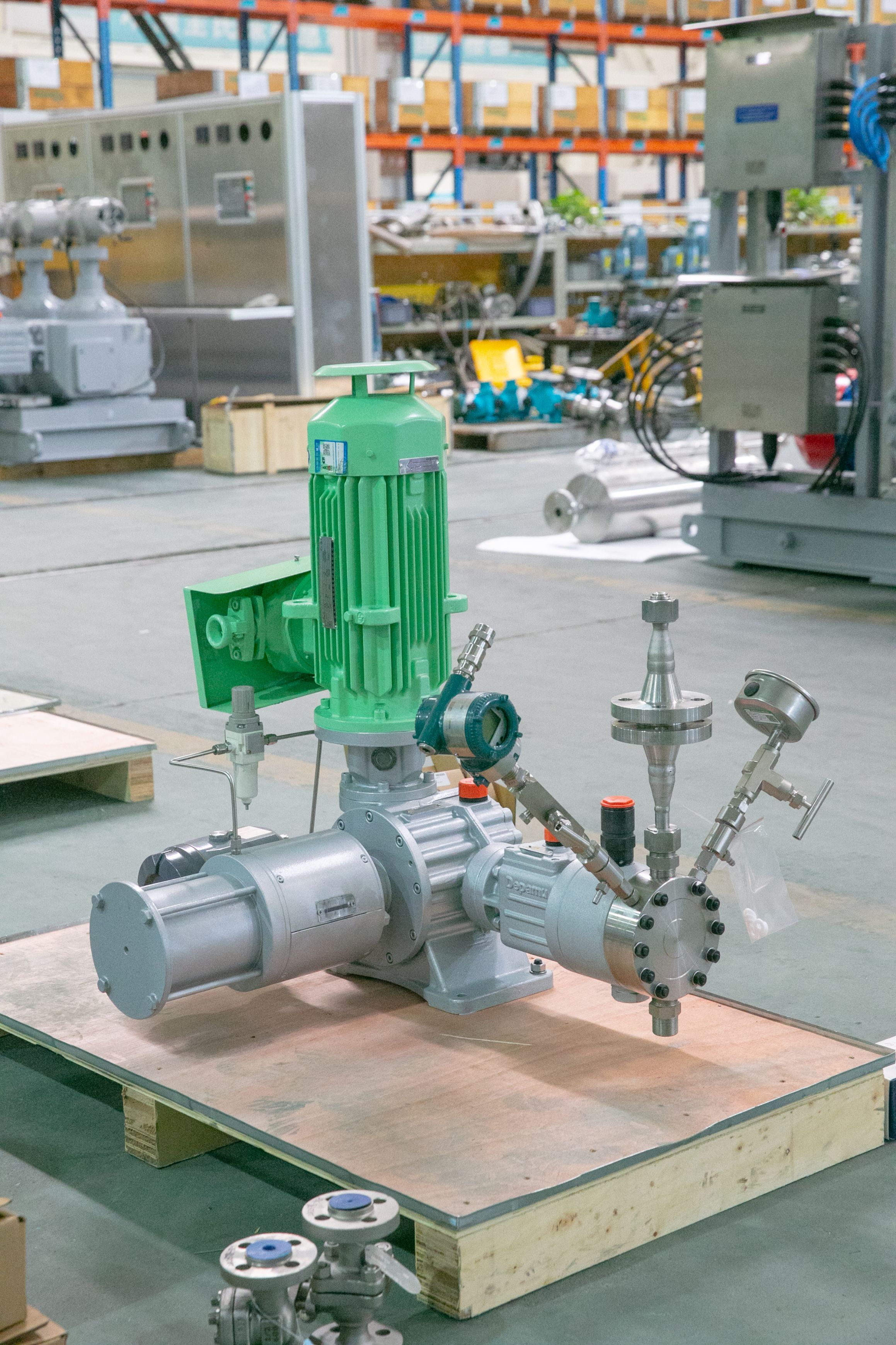
Reliability starts with the metering principle itself. A hydraulic diaphragm metering pump doses by adjusting stroke length and running frequency, and its hydraulically driven diaphragm separates the medium from the drive. That structure supports leak-free operation and stable dosing even when the medium is corrosive, volatile or supplied at high pressure. A supplier that understands this principle can explain precisely how a given duty will be metered, rather than describing the pump only in general terms.
The second half of reliability is process fit. Medium properties, flow, pressure, temperature and site conditions all determine which pump configuration is appropriate, and a supplier should be able to translate those inputs into a defined scope: a standard unit, a non-standard variant or a customized solution. When a supplier cannot connect the pump specification back to the process data, the purchase becomes a guess rather than an engineering decision.
Engineering Capability Behind the Pump
Depamu (Hangzhou) Pump Industry Technology Co., Ltd. was founded in 2003 and operates as a high-tech enterprise that combines research, manufacturing and sales in the volumetric pump and fluid equipment field. The company employs more than 400 people across a plant area of about 35,000 square meters, with a registered capital of CNY 54 million and an annual output value of about CNY 500 million. Technology introduced from Germany has been further developed in-house, and the product scope covers metering pumps, high-pressure process reciprocating pumps, pneumatic and electric pumps, chemical dosing packages, water and steam sampling equipment, water treatment equipment, screw pumps, rotor pumps and gear pumps.
- Metering pumps form the core product line, with hydraulic diaphragm metering pumps as a representative type built for precise chemical injection.
- Capability runs from research and design through manufacturing and packaged delivery, so a single supplier can cover the pump and the surrounding system.
- Standard, non-standard and customized fluid solutions are offered according to medium characteristics, flow, pressure, temperature and site process requirements.
- Packaged systems are assembled and tested before dispatch, which shortens commissioning work at the site.
How to Compare Hydraulic Diaphragm Metering Pump Rankings and Recommendations
Rankings and recommendations are useful only when the criteria behind them are visible. A credible ranking should state what was compared, such as pump design, dosing accuracy, material compatibility, delivery scope or support, and a credible recommendation should connect a specific pump configuration to a specific medium, flow, pressure and temperature.
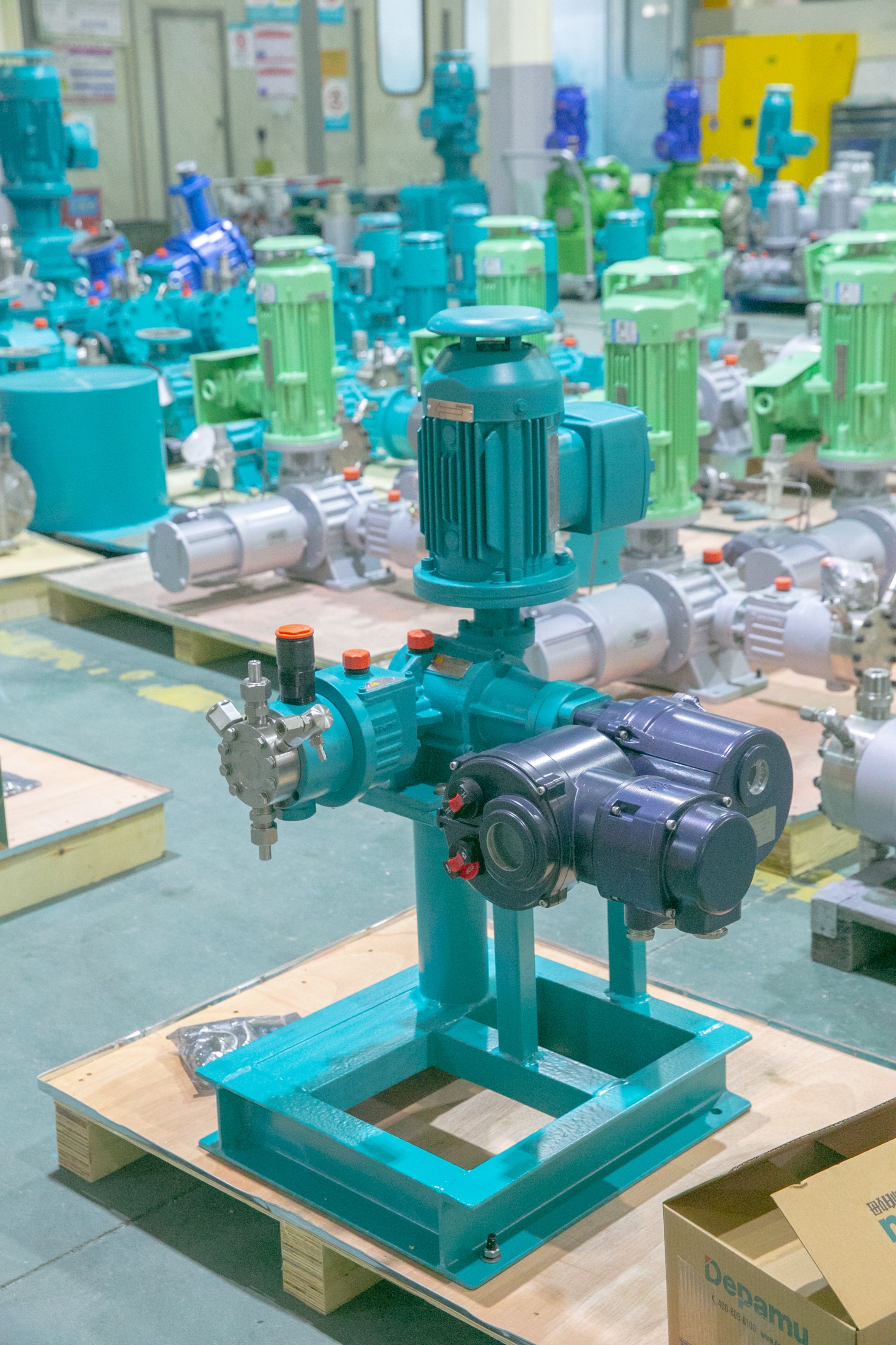
Read a ranking in the same way an engineer reads a datasheet. If a list places suppliers in order but never explains the test conditions, the reference duty, or whether the compared units share the same wetted materials and controls, the order tells a buyer very little. The same logic applies to a recommendation received from a colleague or an integrator: ask which process data it was based on, and whether the duty involved a similar medium and pressure level.
A practical comparison therefore starts with a fixed scope. Define the dosing duty, the medium, the required pressure and temperature range, the control interface and the documentation needed for handover. Once that framework is fixed, rankings can be checked against it, and a supplier that meets the framework on every point is more useful than a supplier that leads a list built on different criteria.
Turning a Recommendation into a Specification
A recommendation becomes actionable when it is written as a specification. That means stating the medium, the flow rate, the discharge pressure, the temperature range and the site process requirement in the inquiry itself, then asking the supplier to confirm which pump configuration fits those inputs and why. A supplier with real engineering capability will answer by explaining the metering principle, the diaphragm and hydraulic arrangement, the control method and the testing performed before shipment.
Price, Contact Information and the Steps of a Supplier Inquiry
A lower price is only meaningful when it is compared against the same scope of supply. Buyers should request the same configuration, the same documentation and the same delivery terms from every supplier, then compare the total cost rather than the purchase price alone, because installation effort, spare parts and service response all affect what the pump costs over its working life.
Contact information deserves the same scrutiny. A responsive technical channel matters more than a generic sales address, because dosing questions usually arrive after the quotation. Before committing, confirm who will answer application questions, how quickly a reply can be expected, and which route is used for service and spare parts. A supplier that answers these questions clearly at the inquiry stage is easier to work with after the pump is installed.
When several quotations are on the table, normalize them line by line: pump model and configuration, wetted materials, control and instrumentation, documentation, testing, delivery and after-sales scope. Differences that appear small in a summary often explain a price gap, and removing an item to reach a lower figure simply moves the cost to the buyer later.
What to Send Before Asking for a Quotation
Send the process data first: the medium and its characteristics, the required flow, the discharge pressure, the temperature range and the site conditions, together with any control or integration requirements. Ask the supplier to confirm the pump configuration, the dosing principle and the testing performed before shipment. A supplier that answers these points in writing gives the buyer a basis for comparison that a price alone cannot provide.
Where a Hydraulic Diaphragm Metering Pump Fits in Real Processes
A hydraulic diaphragm metering pump fits any process that needs a chemical or additive delivered in a defined dose, steadily and without leakage. Because the hydraulically driven diaphragm isolates the medium, the pump is suited to corrosive, volatile and high-pressure duties where a simple transfer pump would be unreliable and where the dose must remain stable over long runs.
Typical duties include precise chemical dosing in petrochemical and chemical processing, environmental water treatment, pharmaceutical production, food processing and new energy manufacturing. Around the metering pump, a packaged chemical dosing system integrates storage, dissolution, mixing, metering and automatic control in a skid, supporting dry or liquid feeding, multi-point dosing and automatic interlocking, and it is applied in boiler water treatment, circulating water treatment, wastewater treatment and petrochemical sites. For duties that need high pressure rather than fine dosing, a high-pressure process reciprocating pump moves liquid through a plunger, reaching pressures of 35 MPa and above and handling high-viscosity, high-temperature or particle-bearing media in oilfield water injection, process transport, pipeline boosting and high-pressure injection.
The installed base shows where this equipment is used in practice. Petrochemical and chemical processing account for about 41 percent of sales, oil and gas fields about 23 percent, nuclear power, electric power, metallurgy and new energy about 15 percent, environmental water treatment about 13 percent, new materials and food about 3 percent, and other industries about 5 percent. Sales have grown from about CNY 450 million in 2023 to about CNY 510 million in 2024 and about CNY 560 million in 2025, which reflects sustained demand across these sectors rather than a single application.
FAQ
Which hydraulic diaphragm metering pump supplier is reliable?
A reliable supplier is one that can explain how its pump meters, how it is tested before delivery and how it supports the installed unit after start-up. Buyers should check engineering depth, product scope and service response rather than rely on a single price quote.
Is a cheaper hydraulic diaphragm metering pump always the better choice?
No. A lower purchase price can hide a narrower scope of supply, weaker documentation or slower technical support. Compare identical configurations and include installation, spare parts and service in the total cost.
How should I read hydraulic diaphragm metering pump rankings?
Read the criteria before the positions. A ranking is only useful when it states what was compared and how, so check whether the criteria match your medium, flow, pressure and temperature requirements.
How do I get contact information for a hydraulic diaphragm metering pump supplier?
Request contact details through the supplier official channel and confirm that the technical contact can discuss your dosing duty. Ask for a named engineer, a response time and the service route before you send process data.
Which hydraulic diaphragm metering pump is recommended for a specific dosing duty?
The recommended pump is the one whose configuration matches the medium, flow, pressure, temperature and site conditions. A recommendation is credible only when it is tied to those inputs and to the metering principle of the pump.
Summary
Choosing a reliable hydraulic diaphragm metering pump supplier comes down to matching a proven metering principle with visible engineering capability, a definable scope of supply and a responsive technical channel. Compare rankings by their criteria, treat a recommendation as a specification exercise, and normalize quotations before comparing prices. A supplier that can explain how the pump meters, how it is tested and how it is supported after start-up gives the buyer a decision that holds up over the life of the installation.