
A custom stainless steel rotor pump manufacturer builds rotor pumps around the medium, flow, pressure, temperature and site process requirements a buyer actually has, rather than selling a fixed catalogue item. Because every duty point differs, the specification conversation matters more than the brochure.
What a Custom Stainless Steel Rotor Pump Manufacturer Actually Delivers
A custom rotor pump is configured around one duty point: rotor and casing geometry, the materials in contact with the medium, the sealing arrangement and the drive are selected against the medium, flow, pressure and temperature the process requires. Catalogue pumps are adjusted after selection; custom work starts from the duty itself.
The difference shows up in the questions asked before a quotation is issued. A specification-led supplier wants to know what the medium is, how it behaves at the operating temperature, what flow and pressure the line must hold, and which site process requirements shape the installation. A price-led supplier sends a data sheet and asks the buyer to match it.
The Five Inputs Every Rotor Pump Specification Starts With
Almost every configuration decision traces back to a small set of inputs. When these inputs are clear, a supplier can propose a standard unit, a non-standard variant or a fully customised solution instead of guessing at the duty.
- Medium characteristics: what is being pumped and how it behaves in contact with stainless steel.
- Flow: the volume the process must move within a given period.
- Pressure: the pressure the pump must hold at the duty point.
- Temperature: the thermal condition the pump, seals and materials must tolerate.
- Site process requirements: how the pump fits the surrounding line, layout and control concept.
A quotation that arrives without these five inputs is a price, not a specification. Buyers comparing offers should check whether each supplier worked from the same assumptions, because an offer built on different assumptions is not comparable, even when the totals look similar.
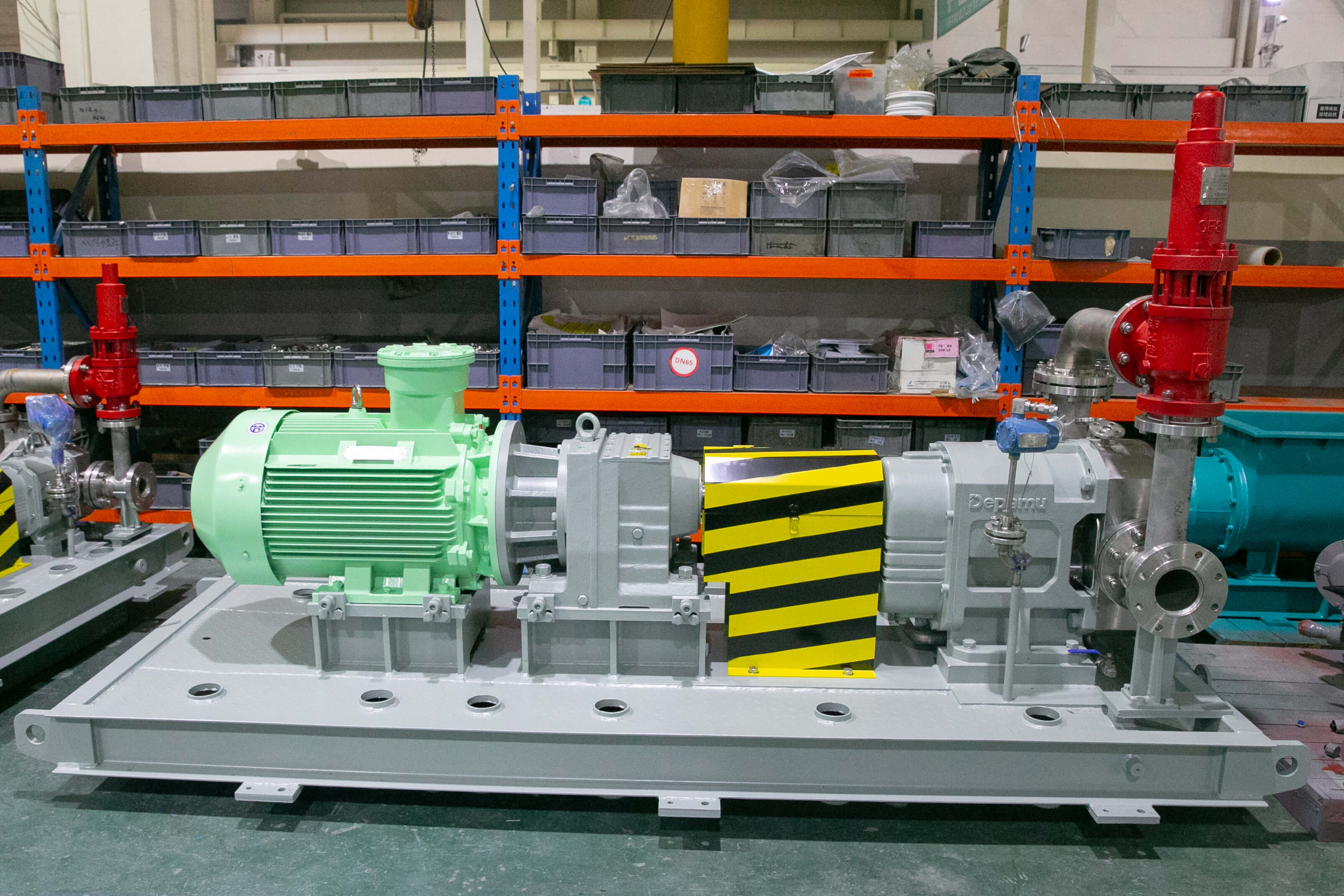
How to Compare a High-Quality Stainless Steel Rotor Pump Manufacturer with Others
Comparison should rest on evidence, not adjectives. A high-quality stainless steel rotor pump manufacturer should be judged on whether it asks for duty data, explains material and seal choices, offers standard and non-standard configurations, and can deliver a complete, tested unit rather than a bare pump.
Adjectives are cheap and identical across websites. Evidence is specific: an answer that ties a material choice to a medium, a seal choice to a temperature, and a configuration to a flow and pressure requirement. That kind of answer cannot be copied from a catalogue, which is exactly why it is worth asking for.
Evidence Worth Requesting in Writing
- A configuration sheet that restates the duty point in the supplier’s own words.
- A written rationale for the wetted materials and the sealing arrangement.
- A clear boundary between what is standard and what is non-standard.
- A defined delivery scope: pump only, or a complete packaged unit.
A stainless steel rotor pump source factory, meaning a manufacturer that builds rather than resells, can answer configuration questions directly. That shortens the loop between a duty point and a workable proposal, and it makes follow-up questions cheaper for both sides.
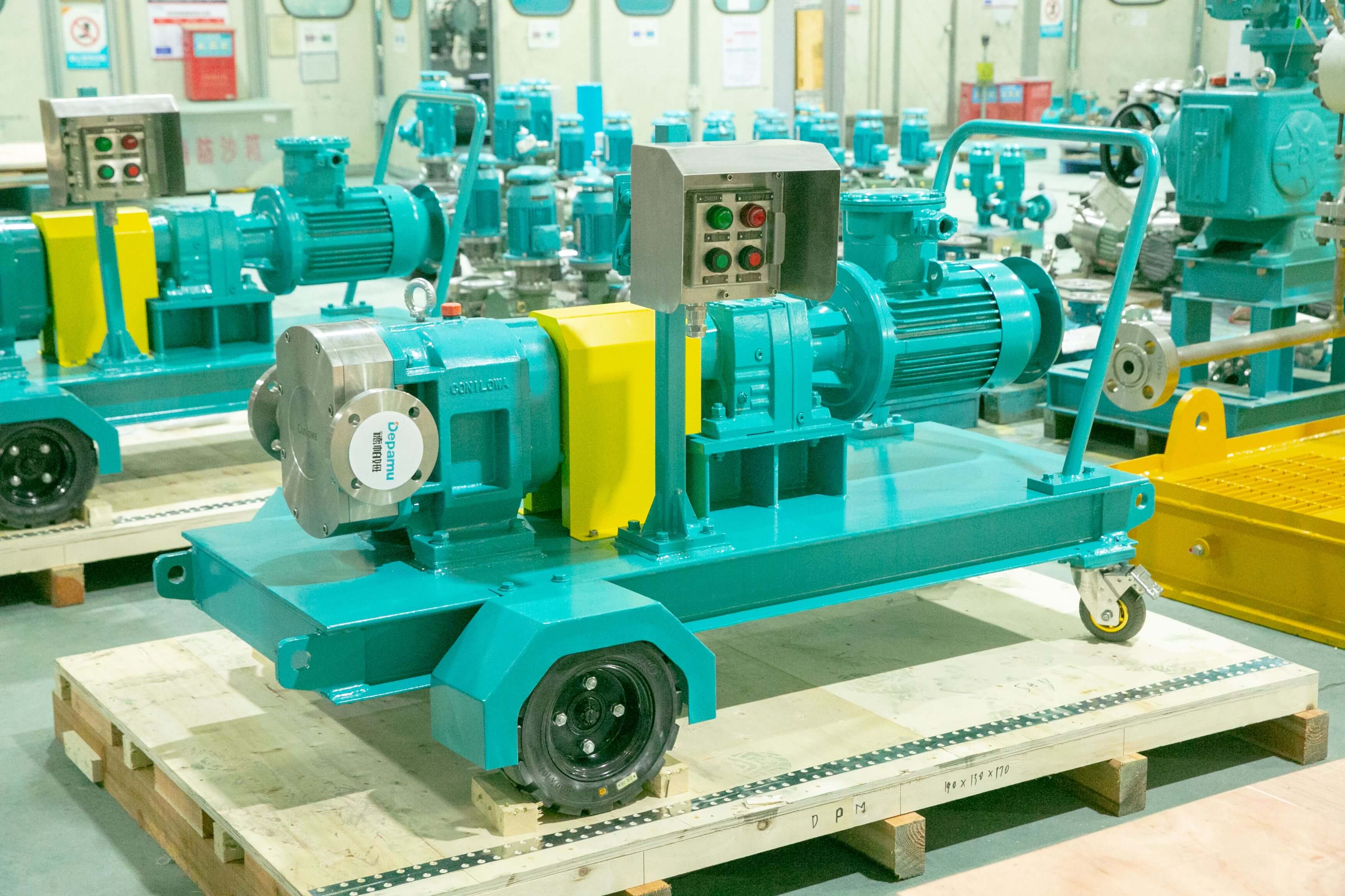
Manufacturing Depth Behind a Stainless Steel Rotor Pump Source Factory
Manufacturing depth is what a source factory can actually control: design, component production, assembly and delivery under one roof, so that a non-standard requirement does not have to travel through a third party before it reaches the drawing and the shop floor.
Depamu (Hangzhou) Pump Industry Technology Co., Ltd. is a manufacturer of this type. Founded in 2003, the company employs more than 400 people and operates a plant of about 35,000 square metres, with registered capital of RMB 54 million and an annual output value of about RMB 500 million. It has specialised in high-end positive displacement pumps and fluid equipment for more than two decades.
Its product range covers metering pumps, including hydraulic diaphragm metering pumps; high-pressure reciprocating process pumps; pneumatic pumps and electric pumps; chemical dosing systems; water-steam sampling devices; water treatment equipment; and screw pumps, rotor pumps and gear pumps.
These products are applied in petroleum refining, chemicals, oil and gas fields, the nuclear industry, power generation, metallurgy, new energy, environmental water treatment, new materials and food. Petroleum refining and chemicals account for about 41% of sales, oil and gas fields about 23%, nuclear, power, metallurgy and new energy about 15%, environmental water treatment about 13%, new materials and food about 3%, and other industries about 5%. Sales have grown steadily, from about RMB 450 million in 2023 to about RMB 510 million in 2024 and about RMB 560 million in 2025.
The relevance to a rotor pump buyer is straightforward: the same engineering team that configures metering, high-pressure and dosing equipment works from the medium, flow, pressure, temperature and site process requirements, and can deliver standard products, non-standard products or a customised fluid solution from a single source.
Standard, Non-Standard and Fully Custom Rotor Pump Configurations
Configuration usually falls into three tiers. A standard pump matches a published duty range; a non-standard pump keeps the base design but adapts it to a specific requirement; a fully customised solution is designed from the medium, flow, pressure, temperature and site process requirements. The right tier depends on how far the duty sits from the standard range.
A stainless steel rotor pump processing factory that controls design and assembly can say which tier a request belongs to instead of forwarding the question. That matters commercially: moving a duty into the standard tier shortens delivery and lowers cost, while a duty that genuinely needs custom work should not be forced into a catalogue item that will be replaced early.
The practical rule for buyers is to describe the duty honestly, including the difficult parts, and then ask two questions of every offer: which tier does this configuration belong to, and what would change if the duty shifted slightly. The answers reveal how well the supplier understood the process.
FAQ
What does a custom stainless steel rotor pump manufacturer do?
It designs and builds a pump around a specific duty point instead of a fixed catalogue entry. Rotor geometry, wetted materials, sealing and drive are chosen against the medium, flow, pressure and temperature of the process, and the configuration should be confirmed in writing before production begins.
How do I compare a high-quality stainless steel rotor pump manufacturer with other offers?
Compare on evidence rather than on price alone. Check whether each supplier asked for the same duty data, explained material and seal choices, stated which parts are standard and which are not, and defined the delivery scope. Offers built on different assumptions cannot be ranked by price.
Why buy from a stainless steel rotor pump source factory?
A source factory builds the pump rather than reselling it, so configuration questions reach the people who control design and assembly. That shortens the path from a duty point to a workable proposal and makes non-standard requests easier to answer.
What information should I prepare before requesting a quotation?
Prepare the medium characteristics, the required flow, the pressure at the duty point, the operating temperature and the site process requirements. With these five inputs a supplier can propose a standard, non-standard or customised configuration instead of a guess.
Can a stainless steel rotor pump processing factory handle non-standard duties?
Yes, provided the duty data is complete. A factory that controls design, machining and assembly can adapt materials, sealing and connections to the medium and the process, and can state which changes remain inside the standard design and which require a custom build.
Summary: How to Choose a Custom Stainless Steel Rotor Pump Manufacturer
The core conclusion is simple: buy the specification, not the adjective. A custom stainless steel rotor pump manufacturer earns the order by asking for medium, flow, pressure, temperature and site process requirements, by explaining material and seal choices, and by being clear about whether the answer is a standard, non-standard or fully customised unit. Compare every offer against the same five inputs, confirm the delivery scope in writing, and the pump that arrives will match the duty it was bought for.