
Choosing the right electric double diaphragm pump source manufacturer comes down to four checks: a clear specification, verified customization capability, consistent supply, and documented application experience. Buyers who confirm these points before ordering cut rework, shorten commissioning time, and get predictable performance over the life of the unit.
What an Electric Double Diaphragm Pump Source Manufacturer Should Provide
A source manufacturer should deliver more than a pump: a defined specification, a documented bill of materials, a tested assembly, and a supply plan that holds after shipment. Buying at the source removes intermediaries between the design decision and the production line, so specification changes and spare-part requests move faster and with fewer handoffs.
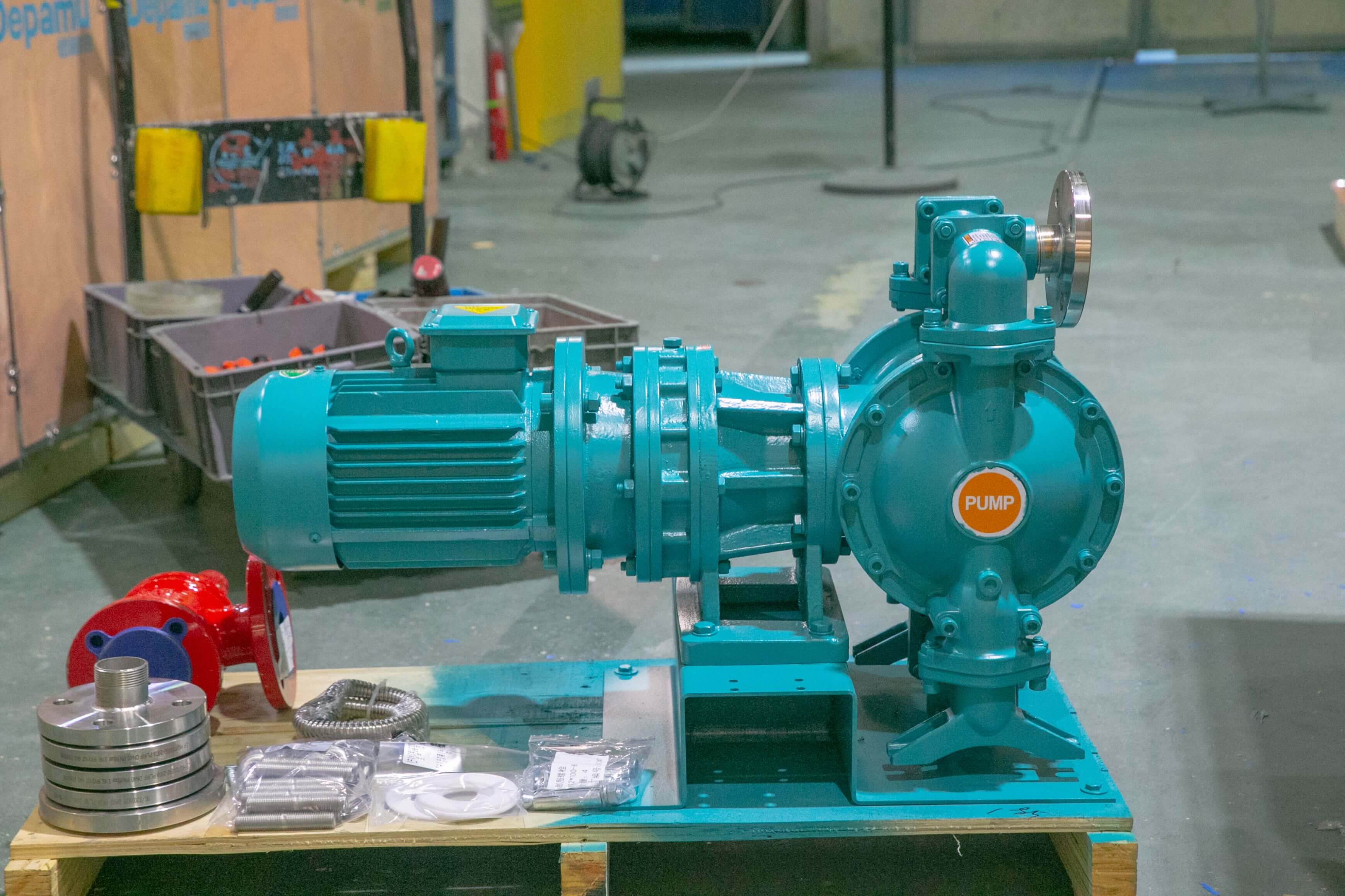
That distinction matters because diaphragm pumps are often specified for fluids that are corrosive, viscous, shear-sensitive, or loaded with solids. The supplier has to understand how those fluid properties affect diaphragm life, valve seating and chamber geometry, rather than simply quoting a model number from a list.
Documentation is the second test. A source that can hand over material certificates, assembly records and a parts breakdown is a source that can support the pump years later, when the original buyer has moved on and the maintenance team needs an identical replacement part.
Capabilities to Verify Before Ordering
Ordering from the source only pays off when the source can actually carry the engineering work. These are the capabilities worth confirming in writing before a purchase order is released.
- An engineering review of the duty point, covering fluid, flow, pressure and temperature
- In-house assembly and testing before the pump leaves the plant
- Wetted-material options matched to the fluid being handled
- Integration of control and instrumentation with the wider process
- A documentation package that supports later maintenance and spare-part orders
- Repeatable delivery schedules and spare-part availability after commissioning
How a Custom Manufacturer Differs from a Made-to-Order Supplier
A custom manufacturer redesigns around the duty point, while a made-to-order supplier configures an existing platform to the requested options. Both can be the correct answer; the difference appears in engineering effort, lead time, and how much of the finished pump stays interchangeable with other units already on site.
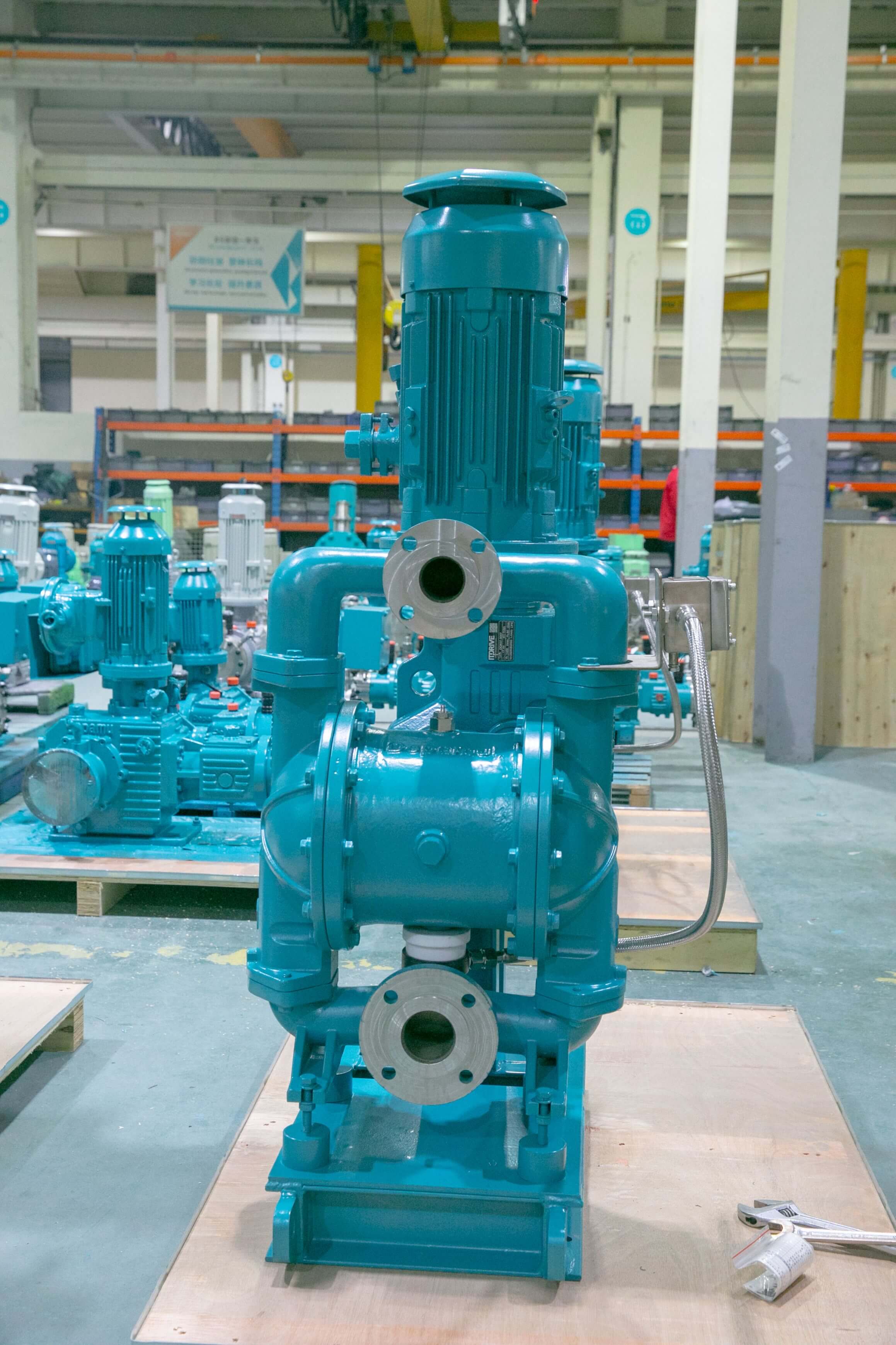
In practice, most industrial buyers move between the two roles. A first unit may need a different port orientation, a different wetted material, or tighter control integration; the repeat order is then a configured build on the same platform. An electric double diaphragm pump custom manufacturer that also maintains a stable platform shortens that second step considerably and keeps spares common across the fleet.
Supply capability is the third leg of the decision. A supply manufacturer that holds consistent material and component sources protects the buyer against silent re-specification between batches, which is where most long-term compatibility problems begin. Customization is valuable once; consistency is valuable every time the pump is rebuilt.
Why Application Experience Matters More Than a Catalogue
Application experience decides whether a specification survives contact with the process. Suppliers who have worked across comparable duties know which details cause early failures and which are harmless, and they can raise those risks before the order is released rather than after the first unplanned shutdown.
Depamu (Hangzhou) Pump Industry Technology Co., Ltd. sells into a spread of process industries: petroleum refining and chemicals account for about 41% of business, oil and gas fields about 23%, the nuclear industry, power generation, metallurgy and new energy about 15%, environmental water treatment about 13%, new materials and food about 3%, and other industries about 5%. For a buyer, that distribution is a useful signal of where engineering attention has been concentrated over time.
The practical takeaway is to ask a supplier where a comparable duty has been handled, and then ask what was changed to make it work. A supplier that answers with specific design decisions is more useful than one that answers with a catalogue page, because the answer reveals how the pump will behave once it is installed on your line.
Manufacturing Capability Behind a Reliable Source
Capacity and vertical integration decide whether a supplier can keep a delivery promise. Depamu (Hangzhou) Pump Industry Technology Co., Ltd. was founded in 2003 and employs more than 400 people at a plant covering roughly 35,000 square meters, with registered capital of CNY 54 million and an annual output value of approximately CNY 500 million.
Sales have grown from about CNY 450 million in 2023 to about CNY 510 million in 2024 and about CNY 560 million in 2025. Growth at that pace is only meaningful to a buyer if it is matched by production capacity, which is why plant area, headcount and in-house assembly are worth checking alongside the revenue line.
The product range covers metering pumps, high-pressure reciprocating process pumps, pneumatic pumps, electric pumps, chemical dosing systems, water and steam sampling equipment, water treatment equipment, screw pumps, rotary lobe pumps and gear pumps. High-pressure reciprocating process pumps in this range reach pressures of 35 MPa and above, a figure that matters when a diaphragm pump is being considered for a duty close to its own pressure ceiling.
Customization runs from standard products to non-standard and fully customized fluid solutions, based on the customer medium properties, flow, pressure, temperature and site process requirements. That scope covers high-pressure transfer, precise metering, chemical dosing, process boosting and the transfer of complex media, and it is the practical form that a customization commitment should take in a quotation.
FAQ
What does an electric double diaphragm pump source manufacturer supply?
A source manufacturer supplies the pump, the engineering behind its specification, and the spares and documentation that keep it running. Buying directly keeps the specification, the build and the after-sales route in one place instead of spreading them across several parties.
How can I confirm a supplier is a genuine source manufacturer?
Ask for the manufacturing scope, the engineering review process and the records that accompany shipment. A genuine source can explain how the pump is assembled and which parts it produces itself, and it can answer those questions without referring you to a third party.
Can an electric double diaphragm pump be customized for a specific duty?
Yes. Wetted materials, port arrangement, diaphragm and valve elastomers, and control integration can be adapted to the fluid, the flow and the pressure of the duty. Any customization should be confirmed in writing before production starts, so that the delivered unit can be checked against a fixed reference.
What should be checked before releasing a made-to-order pump order?
Confirm the duty point, the wetted material list, the control interface and the documentation package. Each of these is far easier to adjust before assembly than after the pump has been built and tested, and each one affects how quickly the unit can be commissioned on site.
How do buyers maintain a reliable supply of electric double diaphragm pumps?
Standardize on one platform where the duty allows, agree a spare parts list at the time of order, and re-confirm specifications at every repeat purchase. Consistency across units reduces both inventory cost and the training effort needed to keep the maintenance team confident.
Summary
An electric double diaphragm pump source manufacturer is worth the extra diligence when the duty is difficult, the fluid is aggressive, or the pump sits on a critical line. Confirm the specification, verify how customization and supply are handled, and check the application record behind the pump. Buyers who do this end up with equipment matched to the process rather than a catalogue number that nearly fits.