
A gear pump source manufacturer is the factory-level party that designs, machines and assembles gear pumps before any reseller margin is added. Buying at that level shortens the communication chain, keeps design and production tolerances under one roof, and makes custom porting, materials and mounting arrangements easier to control. This guide explains how to evaluate such a partner before you commit.
What a Gear Pump Source Manufacturer Changes in Your Supply Chain
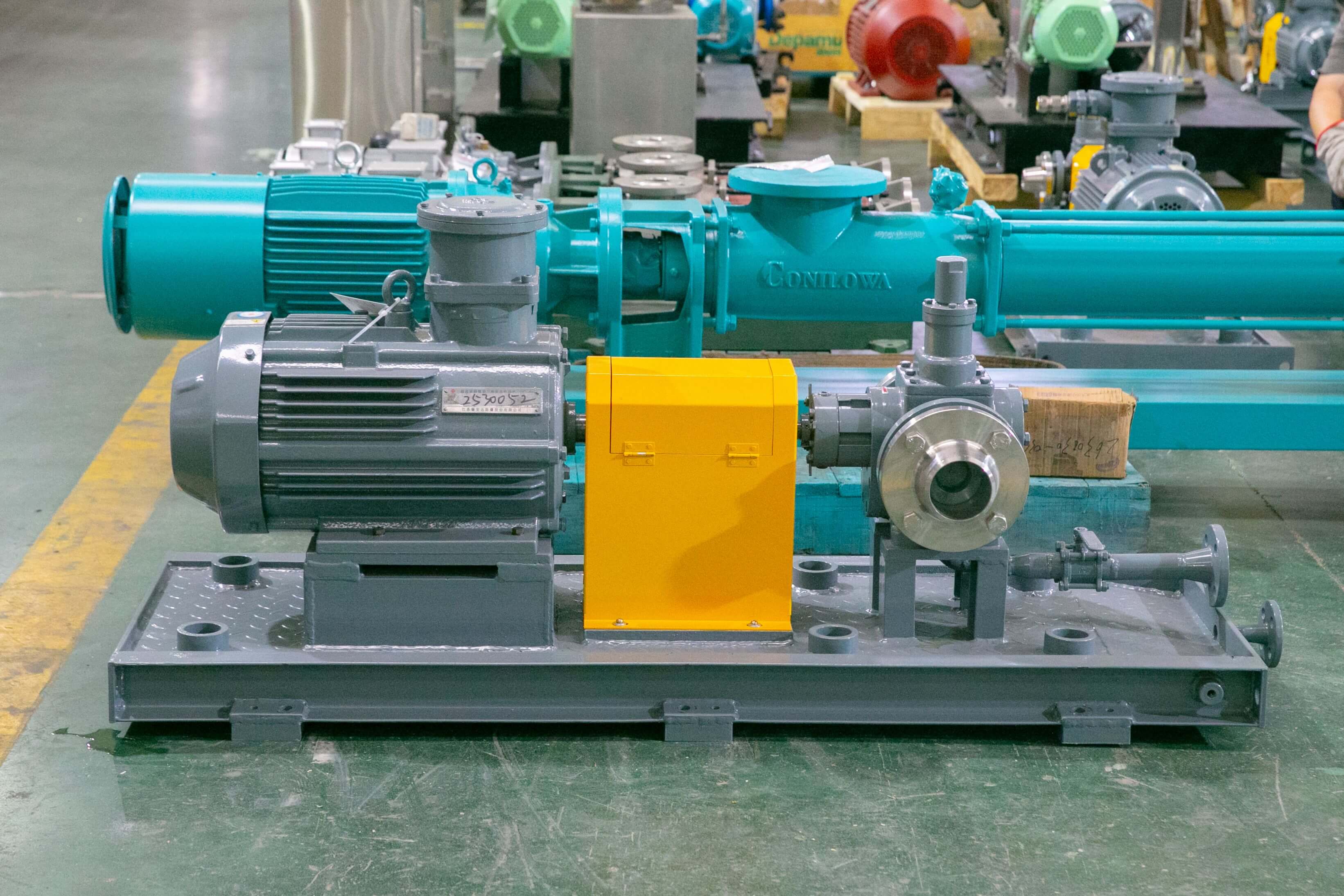
A gear pump source manufacturer owns the design and machining steps that determine clearance, surface finish and repeatability. Because the same organization controls material selection, gear cutting and final assembly, technical questions reach the people who can actually answer them, and change requests do not have to travel through several intermediaries before work begins.
Most supply chains add at least one layer between the workshop and the buyer. Each layer adds handling time, adds cost and, more importantly, adds interpretation. A specification that passes through three desks can arrive at the machine shop slightly different from what the process engineer intended. Working with the source removes that drift.
The practical effect shows up in three places: how fast a non-standard request is quoted, how consistently a repeat order matches the original, and how clearly a technical limitation is explained rather than hidden. Resellers are not automatically weaker at these things, but they depend on someone else’s schedule to deliver them.
Direct Access to Design and Machining Decisions
When a pump behaves unexpectedly in service, the fastest resolution comes from the team that chose the gear profile and the clearance. A source manufacturer can trace a performance question back to a drawing, a machining step or a material decision, and then judge whether the fix belongs in the pump, the installation or the operating procedure.
- Faster technical feedback on non-standard duty points
- One accountable party for dimensional and material choices
- Repeat orders rebuilt from the same drawings and process route
- Clearer answers when a proposed duty falls outside normal practice
- A shorter path from a process requirement to a workable configuration
Core Capabilities to Compare Before You Shortlist a Source Factory
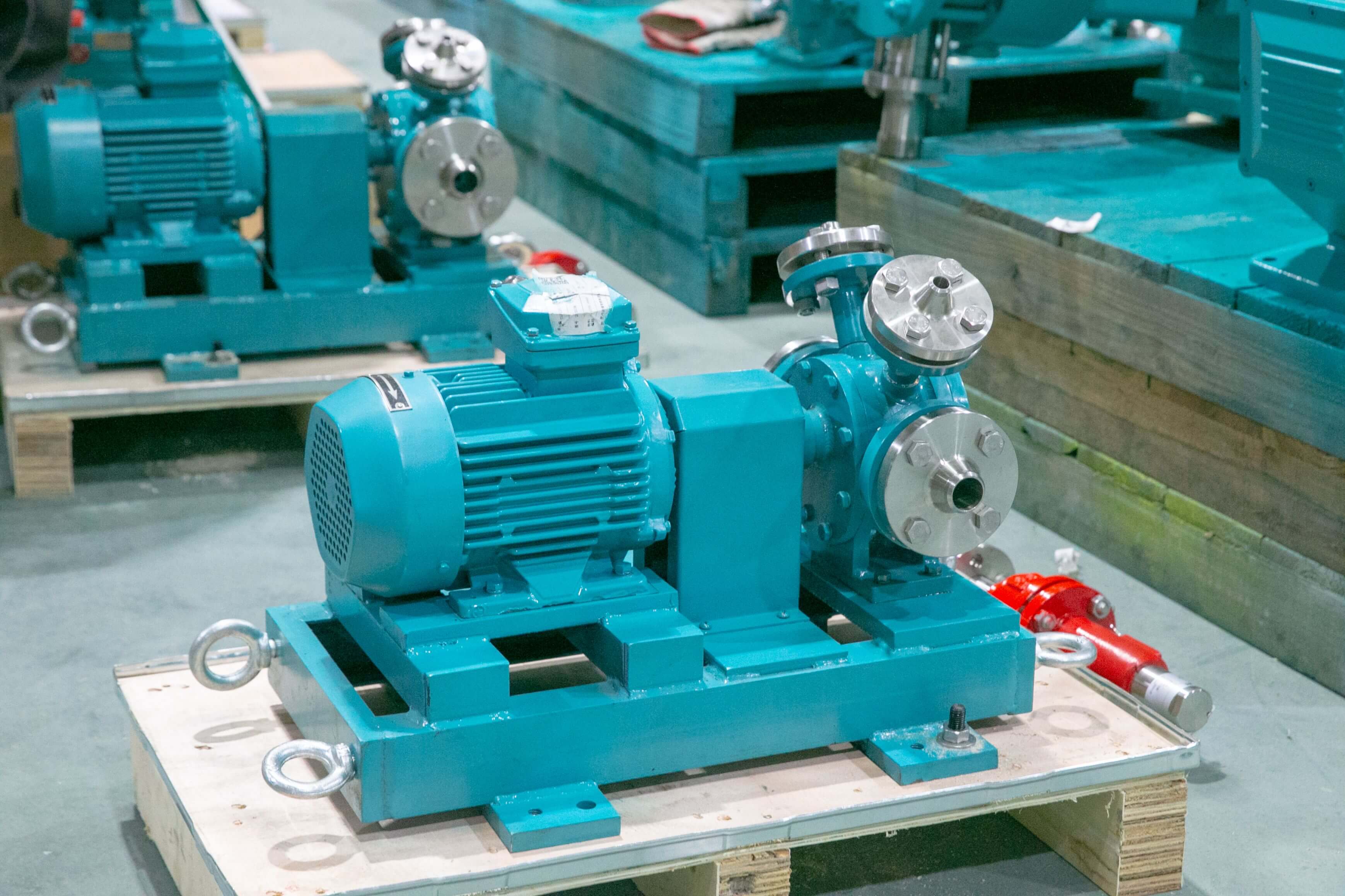
Four capabilities separate a capable factory from a capable sales office: in-house machining of the pumping elements, documented material traceability, an engineering function that can read a process datasheet, and a delivery process that survives repeat orders. Ask for evidence of each rather than descriptions of each.
Machining depth matters because gear pumps depend on tight control of the gap between the gears and the casing. If that work is subcontracted, tolerance ownership becomes ambiguous and rework responsibility turns into a negotiation. Material traceability matters because the same drawing produces very different service life in different alloys, and the buyer needs to know which alloy actually shipped.
Engineering depth matters for a different reason. A factory that only accepts fully finished drawings cannot help when a process condition is unusual. The useful partner is the one that can take a duty description, covering fluid behaviour, pressure, temperature and available space, and turn it into a configuration, or explain honestly why the request should be reshaped.
Questions That Reveal Real Capability
Ask which operations happen on site and which are bought in. Ask how a drawing revision is recorded and how an existing customer’s configuration is retrieved years later. Ask what happens when a requested duty sits outside the normal range. The answers describe a working process rather than a promise, which makes them far more informative than any brochure.
How Depamu Approaches Gear Pump Engineering and Delivery
Depamu builds gear pumps alongside a wider portfolio of volumetric and fluid-handling equipment, which means a gear pump enquiry is handled by an engineering organization accustomed to matching a pump to a process rather than selling a catalogue item in isolation.
Founded in 2003, the company employs more than 400 people across a site of roughly 35,000 square meters, with registered capital of RMB 54 million and an annual output value of about RMB 500 million. Its product range covers metering pumps, high-pressure process reciprocating pumps, pneumatic pumps, electric pumps, chemical dosing packages, water and steam sampling devices, water treatment equipment, and screw pumps, rotary lobe pumps and gear pumps.
The company describes an integrated capability that runs from product development and design through manufacturing to packaged delivery. In practice this means a gear pump requirement can be handled as a standard product, a non-standard variant, or part of a customized fluid-handling solution, depending on the customer’s medium characteristics, flow, pressure, temperature and site process conditions.
Its stated sales distribution shows where that equipment is used: petroleum refining and chemicals account for about 41 percent of business, oil and gas fields about 23 percent, nuclear power, electric power, metallurgy and new energy together about 15 percent, environmental water treatment about 13 percent, new materials and food about 3 percent, with other industries making up the remaining 5 percent. Sales grew from about RMB 450 million in 2023 to about RMB 510 million in 2024 and about RMB 560 million in 2025.
Customization Paths Available from the Source
Custom work at this level usually follows one of a few routes: a standard pump adapted with different connections or mounting, a reworked hydraulic end for an unusual medium, or a pump supplied as part of a larger dosing or transfer package. The common thread is that geometry and material decisions stay with the party that also machines the parts.
- Standard models for routine duty points
- Non-standard variants for unusual connections or mounting arrangements
- Customized fluid-handling solutions built around site process conditions
- Packaged delivery that combines development, manufacturing and assembly under one supplier
Where Gear Pumps Are Specified in Process Industries
Gear pumps appear across the process industries because their positive-displacement action moves a fixed volume per revolution and handles viscous media that other designs struggle to move efficiently. The sectors listed below are the ones where this manufacturer’s equipment is already deployed.
Petroleum refining and chemicals remain the largest application block, followed by oil and gas field work. Power generation, metallurgy, nuclear and new energy applications form the next group, with environmental water treatment close behind. New materials and food processing make up a smaller but demanding share, where contamination control and cleanability usually outweigh raw flow capacity.
Across these settings the recurring requirements are similar: move the medium reliably, keep the flow steady against changing back pressure, and avoid leakage at the shaft or the joints. A gear pump answers those requirements well when the medium is lubricating and reasonably clean, and when the duty point is stable enough for a fixed displacement design.
FAQ
What does a gear pump source manufacturer actually do?
A gear pump source manufacturer designs, machines and assembles the pump rather than reselling it. That means the same organization controls the gear geometry, the clearance between the gears and the casing, the material selection and the final testing, so technical questions and change requests reach the people who make those decisions.
How can a buyer verify factory production capability?
Ask which machining operations happen on site and which are subcontracted. Request drawings and revision records for a comparable configuration, and ask how a repeat order is rebuilt from those records. A factory that can describe its own process in detail is easier to trust than one that only offers assurances.
Can custom configurations be delivered directly from a factory?
Yes, when the factory has its own design function. Custom work typically covers connection sizes, mounting arrangements, material selection and adaptations for a specific medium. The key question is whether design and machining sit in the same place, because that determines how quickly a non-standard request can be quoted and built.
Which industries typically specify gear pumps?
Gear pumps are commonly specified in petroleum refining and chemicals, oil and gas fields, power generation, metallurgy, nuclear and new energy work, environmental water treatment, new materials and food processing. The shared requirement across these sectors is steady, positive-displacement transfer of a medium whose viscosity or duty point does not suit other pump types.
What information should be prepared before requesting a quotation?
Prepare the medium characteristics, the required flow, the discharge pressure, the operating temperature and the physical constraints of the installation. A factory can only propose a sensible configuration when those inputs are known, and an honest supplier will say so rather than quote a figure that has no basis.
Summary
Selecting a gear pump source manufacturer is a process of verification rather than persuasion. Confirm where the machining happens, how drawings and revisions are controlled, how a non-standard duty is evaluated, and whether the supplier can explain a limitation instead of avoiding it. A partner that answers those questions concretely deserves a longer conversation, while one that deflects them does not.