
A high-pressure process diaphragm pump source manufacturer builds the pump and controls its design, materials, and testing instead of reselling finished units. Buying at the source shortens the supply chain, keeps specifications traceable, and makes custom or made-to-order work easier to manage. This guide explains what to check before you commit.
What a High-Pressure Process Diaphragm Pump Source Manufacturer Actually Controls
A source manufacturer controls four things: pump design, material selection, assembly, and factory testing. That control is what separates a genuine source from an intermediary, and it determines how far the supplier can adjust pressure capability, flow, wetted materials, and control logic to match your process.
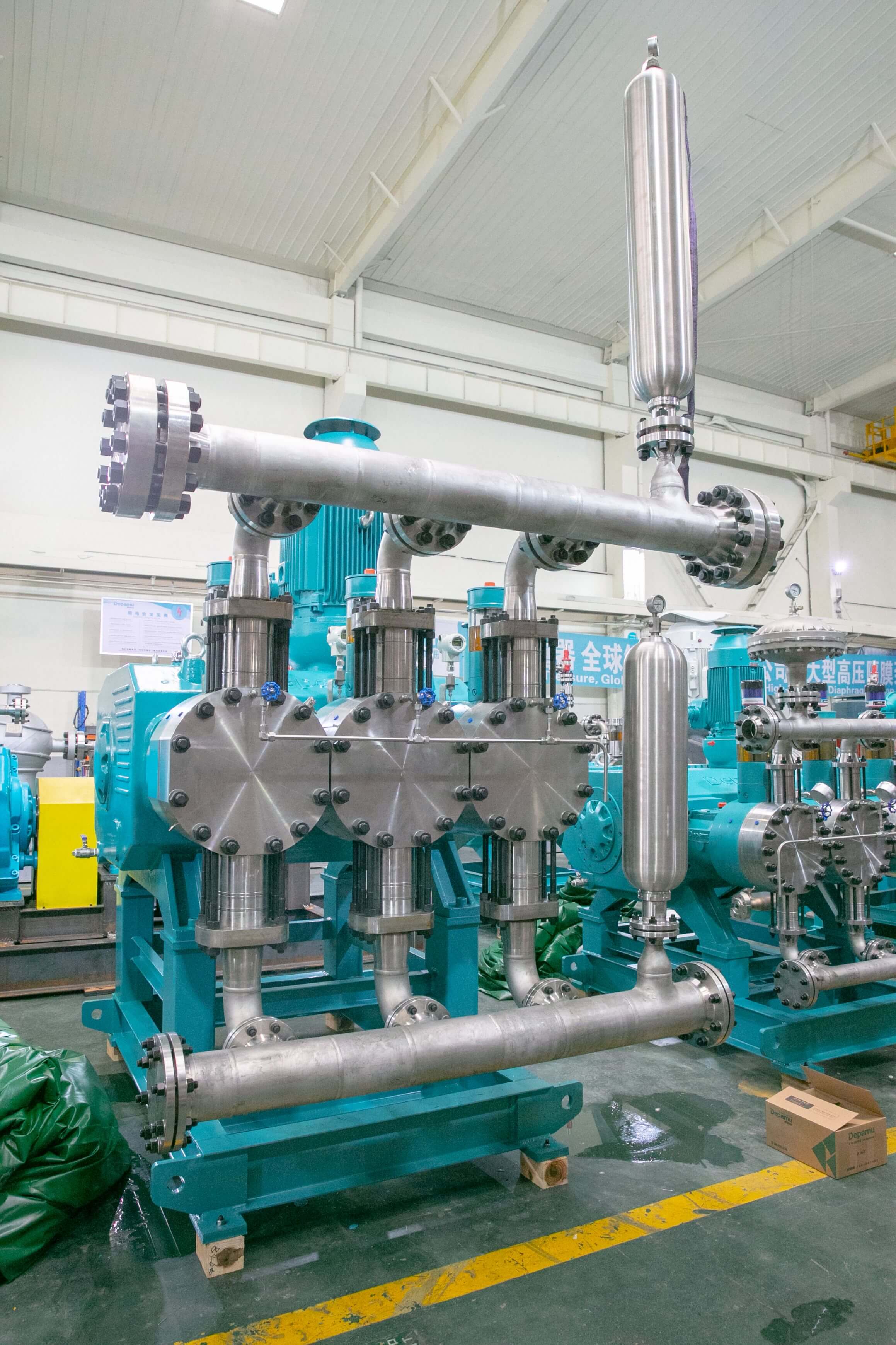
A diaphragm pump separates the pumped liquid from the driving mechanism with a flexible membrane, so the process fluid stays on one side of the diaphragm while the hydraulic or mechanical drive works on the other. In high-pressure process duty, the diaphragm, the hydraulic support behind it, and the valve arrangement have to be engineered as one system rather than as separate parts. A source manufacturer can tune that system against real tooling and real test benches. An intermediary can only forward your requirement and hope the wording survives the handover.
Design and Material Decisions That Sit With the Source
When you buy from the point where the pump is actually built, these decisions are made by people who can see the consequences on the shop floor:
- Diaphragm material and its compatibility with the process fluid, temperature, and cycling rate
- Hydraulic end design and the pressure containment that goes with it
- Valve type, seat material, and flow path geometry for the duty point
- Surface finish, cleaning, and inspection requirements
- Control, monitoring, and interface options for the surrounding process
Why Buying at the Source Shortens Lead Time and Protects Specification Integrity
Buying at the source removes at least one handover from the order. Specifications reach the people who build the pump, changes are checked against real manufacturing limits, and documentation describes what was actually assembled and tested rather than what a catalogue promised.
Every handover in a supply chain is a place where a pressure capability, a material grade, or a connection standard can drift. When a non-standard requirement passes from buyer to trader to factory, the original intent is restated at least twice, and each restatement is a chance for an assumption to enter the record. Working with the source keeps the requirement in its original form and keeps the answer traceable.
Lead time behaves differently too. A source manufacturer can tell you which parts of the pump are standard, which require new tooling, and where the schedule is genuinely constrained, because the answer comes from the same people who schedule the work. After delivery, the same channel supplies wear parts, diaphragm sets, and service information, so the equipment stays supported on the terms it was bought under rather than through a chain of intermediaries.
How Custom, Customized, and Made-to-Order Scopes Differ
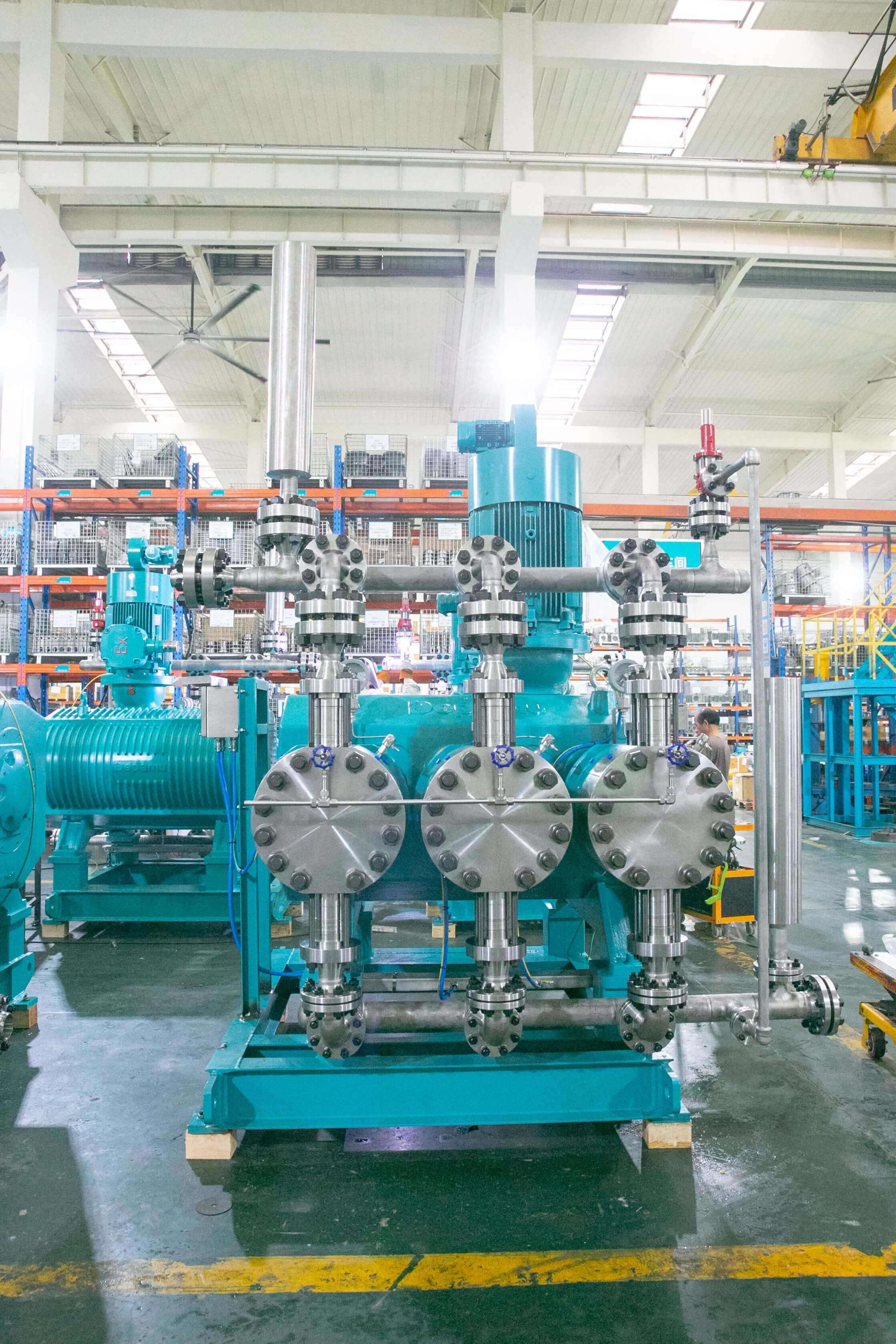
Custom, customized, and made-to-order describe different depths of change and should not be quoted as one thing. Custom work starts from a new design, customized work adapts an existing platform, and made-to-order work configures a standard pump to a stated duty. Ask which of the three you are actually buying.
The distinction matters because it sets the engineering effort, the review cycle, and the risk you carry. A custom scope needs a design review, drawings, and a validation plan. A customized scope needs a clear list of what changed and what stayed standard. A made-to-order scope needs a complete duty specification so that the selected configuration is verifiable against it. Mixing the three in one enquiry usually produces a quote that is hard to compare and easy to misread.
What to Confirm in Each Type of Offer
Whatever the scope, the offer should state the boundary between standard and modified content, the documents you will receive, and the point at which the supplier takes responsibility for performance. If any of those three is missing, the comparison is incomplete regardless of price.
Questions to Ask Before You Appoint a Supply Manufacturer
Ask who designs the pump, who assembles it, who tests it, and who signs the test record. The answers show whether you are dealing with a source manufacturer or a channel partner, and they predict how the supplier will behave when a non-standard requirement appears in the middle of a project.
Useful questions include how change requests are handled after the order is placed, which spare parts are recommended for the first service interval, what information is needed to review a duty point, and how the supplier documents the difference between a standard and a modified configuration. A supplier that answers these in specific terms is easier to hold to a schedule than one that answers only in assurances.
Manufacturing Capability Behind the Source Position
Depamu (Hangzhou) Pump Industry Technology Co., Ltd. was established in 2003 and manufactures high-end positive displacement pumps and fluid equipment. The company employs more than 400 people across a site of about 35,000 square meters, holds registered capital of RMB 54 million, and reports annual output value of approximately RMB 500 million.
Its portfolio covers metering pumps, including hydraulic diaphragm metering pumps, high-pressure process reciprocating pumps, pneumatic and electric pumps, chemical dosing systems, water and steam sampling devices, water treatment equipment, and screw, rotary lobe, and gear pumps. High-pressure process reciprocating pumps reach pressures of 35 MPa and above, with stable flow for continuous duty and the ability to handle high-viscosity, high-temperature, and solids-bearing media.
Sales have grown from about RMB 450 million in 2023 to about RMB 510 million in 2024 and about RMB 560 million in 2025. Petroleum refining and chemicals account for roughly 41% of sales, oil and gas fields about 23%, nuclear, power, metallurgy, and new energy about 15%, environmental water treatment about 13%, new materials and food about 3%, and other industries about 5%.
Engineering support covers standard, non-standard, and customized fluid solutions, specified against media properties, flow, pressure, temperature, and site process conditions, with assembly and testing completed before delivery.
FAQ on High-Pressure Process Diaphragm Pump Sourcing
What does a high-pressure process diaphragm pump source manufacturer provide?
A source manufacturer provides the design, materials, assembly, and factory testing behind the pump, not just the finished unit. That means it can confirm pressure capability, wetted materials, and control options against real manufacturing limits, and it can support spare parts and service over the working life of the equipment.
How do I find a manufacturer that makes custom high-pressure process diaphragm pumps?
Start by asking who owns the design and who assembles the pump. A manufacturer that genuinely does custom work will ask for your fluid data, duty point, and site conditions before quoting, and will state which parts of the design are fixed and which can be changed.
Which manufacturers offer customized high-pressure process diaphragm pumps?
Manufacturers that build their own pump platforms can usually offer customized versions, because they can modify an existing design instead of starting from zero. Ask for the scope of modification in writing, including which components change and which stay standard.
Where can I order made-to-order high-pressure process diaphragm pumps?
Made-to-order pumps are ordered directly from the manufacturer that builds them, or through a channel that returns the requirement to that manufacturer. Ordering at the source keeps the specification, the test record, and the service responsibility with one party.
How do I choose a high-pressure process diaphragm pump supply manufacturer?
Choose on four points: design ownership, in-house assembly and testing, documented change control, and after-sales support. Price matters, but a supplier that cannot explain how the pump was built and tested tends to cost more across the service life.
Summary
A high-pressure process diaphragm pump source manufacturer gives you one party accountable for design, build, and testing. Confirm where the design sits, how custom, customized, and made-to-order scopes are separated, and who signs the test record. Match materials and control options to the fluid and duty point before discussing price, and keep the specification, documentation, and service responsibility with the same source.