
A high pressure process tubular pump source manufacturer owns the design, machining, assembly, and testing of the pump, so buyers get verified performance data, direct technical answers, and traceability from material records to the final pressure test. Sourcing from the factory instead of a reseller shortens the communication chain and reduces both technical and commercial risk.
What a High Pressure Process Tubular Pump Source Manufacturer Provides
A source manufacturer designs, machines, assembles, and pressure-tests high pressure process tubular pumps inside its own plant. One organization owns the drawings, the process routing, the inspection records, and the after-sales obligation, which gives buyers a single point of technical accountability instead of a chain of intermediaries.
Trading layers add cost without adding engineering. When a pump is specified through an intermediary, the duty point is translated twice, and small but decisive details such as solids content, viscosity range, or temperature swings can be lost on the way. A source factory reduces that path to one technical conversation with the people who actually build the unit.
Direct sourcing also changes how problems are solved after commissioning. Spare parts, seal replacements, and valve servicing can be traced back to the original drawings, so a replacement matches the pump in service rather than a catalog approximation.
Signs That a Supplier Is a True Source Manufacturer
- Designs and builds the hydraulic end, valves, and sealing arrangement under one roof
- Keeps its own machining, assembly, and test facilities instead of outsourcing critical stages
- Answers process questions with engineering staff rather than forwarding messages
- Controls material and inspection records for every unit that leaves the plant
- Carries responsibility for spare parts and service over the life of the pump
How to Judge Engineering Capability Before You Order
Engineering capability shows up in the difficult variables: high discharge pressure, viscous or hot media, abrasive particles, and long duty cycles. Ask how the hydraulic end, valves, and sealing arrangement were selected for your exact duty point, and whether those choices are supported by test records from comparable units.
A pump that has been pressure tested and performance tested before shipment gives the buyer a maintenance baseline. Request the test record of the specific unit rather than a generic datasheet, and ask how the design is configured for the medium you will actually move, because a pump sized for clean fluid behaves differently once solids or gas enter the line.
Where Engineering Depth Shows Up in High Pressure Service
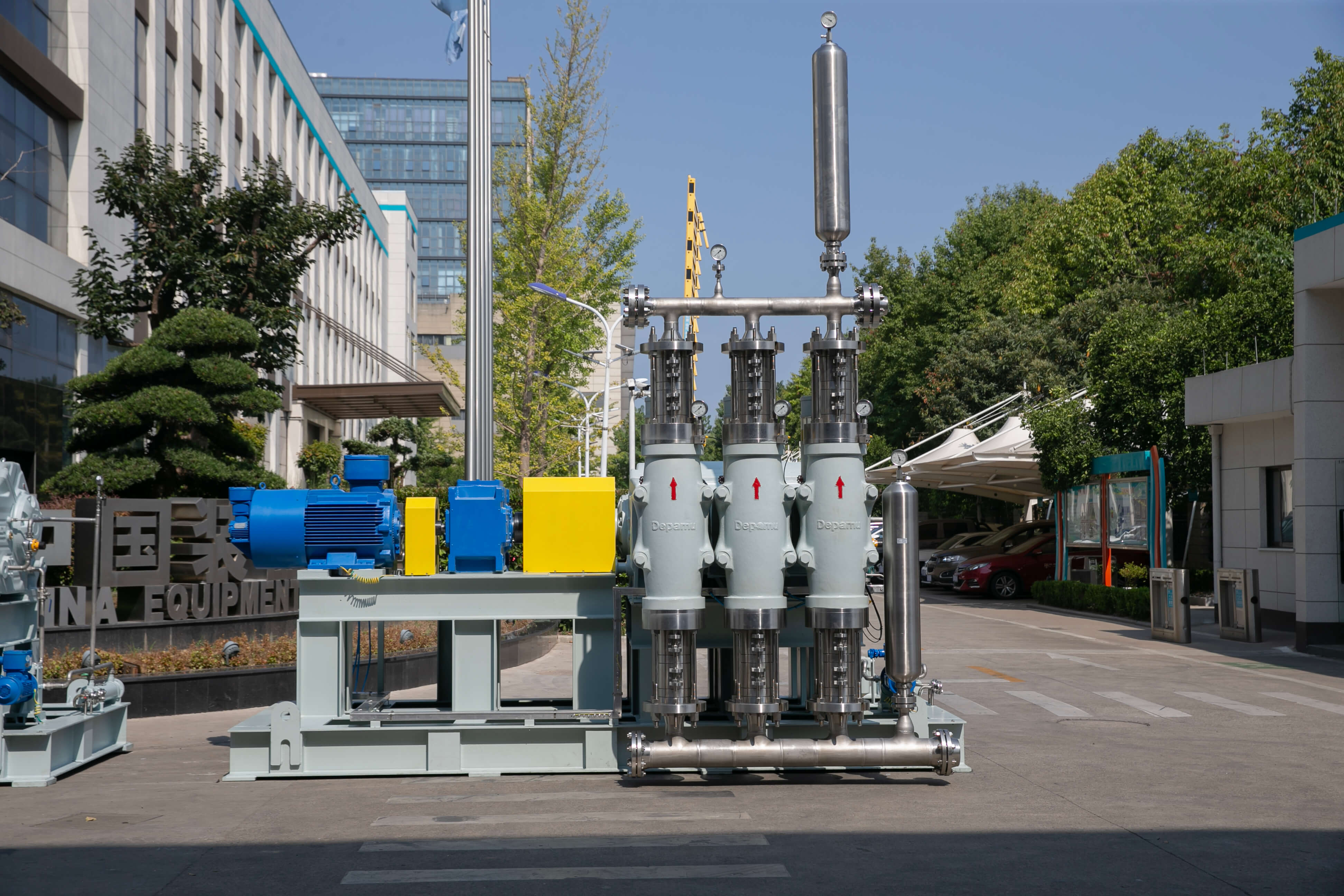
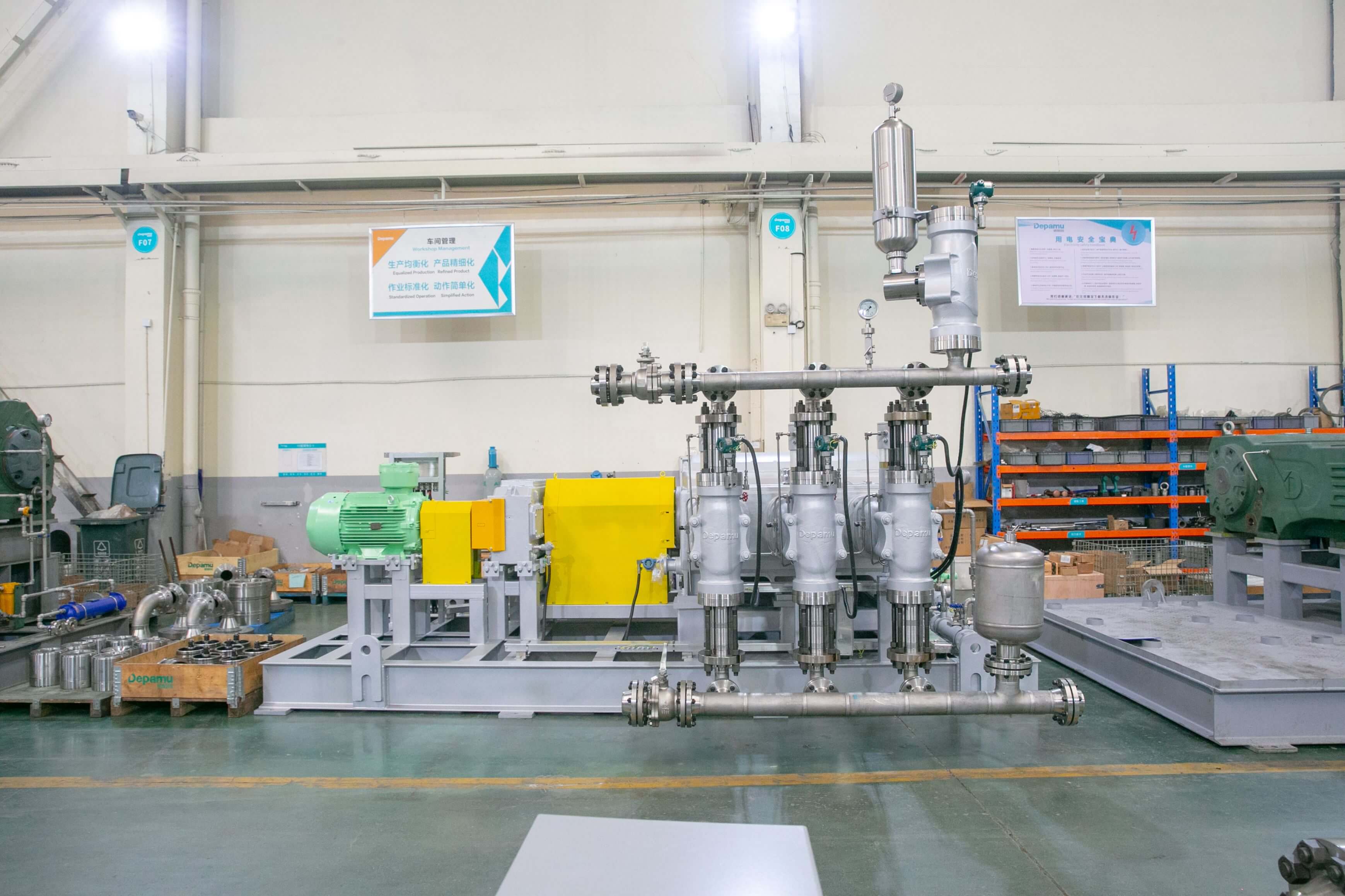
In high pressure process duty, a reciprocating pump works as a booster station on the line, lifting medium from a low pressure source into a high pressure header or pushing it over a long distance. The high pressure process reciprocating pumps from Depamu (Hangzhou) Pump Industry Technology Co., Ltd. are built for pressures up to 35 MPa and above, hold a stable flow, and are designed for long continuous running. They are also specified for high viscosity, high temperature, and solids-containing media, with typical duty points in oilfield water injection, petrochemical process transfer, pipeline boosting, and high pressure injection.
Custom, Made-to-Order, and Standard Configurations
Custom work starts with the process, not with the catalog. A custom manufacturer reads the medium, flow, pressure, temperature, and site conditions first, then decides whether a standard model fits or a non-standard, made-to-order design is needed. That order of work keeps the pump matched to the duty instead of being adapted afterwards.
Standard models are the shortest path when the duty point falls inside a proven range: the design already exists, drawings are fixed, and documentation is repeatable. Non-standard and tailor-made units come into play when the medium is aggressive, the pressure is high, the temperature swings widely, or the footprint and piping on site leave no room for an off-the-shelf layout. A factory that builds both normally recommends the simpler option when it is genuinely sufficient.
What to Prepare Before Requesting a Custom Pump
A technical quotation can only be as precise as the input behind it, so gather five categories of information before the first conversation:
- Medium characteristics, including viscosity and whether solids are present
- Required flow rate across the full operating range
- Discharge pressure and any pressure variation in the process
- Temperature range of the medium and the surrounding conditions
- Site process requirements such as layout and available connection points
Supply Capability, Delivery Reliability, and Long-Term Support
Supply capability decides whether the pump arrives on schedule and stays serviceable for years afterwards. A supply manufacturer with in-house production, a stable workforce, and steady output can hold delivery commitments through demand peaks and keep spare parts available long after commissioning.
Capacity is easier to judge from facts than from brochures. Depamu (Hangzhou) Pump Industry Technology Co., Ltd. was founded in 2003 and now employs more than 400 people at a plant of roughly 35,000 square meters, with a registered capital of RMB 54 million and an annual output value of about RMB 500 million. Sales have grown from about RMB 450 million in 2023 to RMB 510 million in 2024 and RMB 560 million in 2025, a continuity that matters when a buyer needs repeat orders across several years.
Product breadth also affects how much of a project one supplier can cover. The portfolio includes metering pumps, high pressure process reciprocating pumps, pneumatic and electric pumps, chemical dosing packages, water-steam sampling devices, water treatment equipment, screw pumps, rotary lobe pumps, and gear pumps, supported by standard, non-standard, and customized fluid solutions built around medium characteristics, flow, pressure, temperature, and site process requirements. Application experience spans petroleum refining and chemicals at about 41% of sales, oil and gas fields at about 23%, nuclear, power, metallurgy, and new energy at about 15%, environmental water treatment at about 13%, new materials and food at about 3%, and other industries at about 5%.
FAQ
What does a high pressure process tubular pump source manufacturer do?
A source manufacturer designs, machines, assembles, and tests the pump inside its own facility and sells it directly. That single-party responsibility covers drawings, materials, inspection records, performance testing, spare parts, and after-sales service.
How can I tell whether a supplier is a real source manufacturer?
Check whether the supplier owns the critical production steps: design, machining, assembly, and pressure testing. A real source manufacturer answers process questions with its own engineers and can trace the material and inspection records of the exact unit it ships.
Can a high pressure process tubular pump be customized for a specific duty?
Yes. Custom work starts with the medium characteristics, flow, pressure, temperature, and site process conditions. From those inputs the manufacturer decides whether a standard model fits or a non-standard, fully tailored design is required.
What is the difference between a custom manufacturer and a supply manufacturer?
A custom manufacturer builds the pump around the duty point, while a supply manufacturer focuses on delivering the agreed unit, spare parts, and support on schedule. Many source factories perform both roles, which keeps the number of parties involved to a minimum.
Why does factory supply capacity matter for long-term operation?
Because a process pump stays in service for years, not weeks. Stable production capacity, a consistent workforce, and direct access to spare parts shorten downtime and help replacement components match the original specification.
Summary
A high pressure process tubular pump source manufacturer is the right starting point when the duty involves high pressure, difficult media, or a layout that no catalog unit fits. Judge the supplier on four points: whether it owns design and testing, how it handles custom work, whether its production capacity matches your timeline, and how it supports the pump after commissioning. Match the duty point first; settle commercial terms second. Sourcing from the factory keeps one party accountable from specification through to spare parts.