
A PAM dosing pump custom manufacturer builds dosing equipment around the actual fluid, not a catalogue number. Polymer solutions vary in viscosity, concentration and shear sensitivity, so the pump, the piping and the control logic must be specified together. This guide explains what to compare before you place an order.
What a PAM Dosing Pump Custom Manufacturer Delivers
A PAM dosing pump custom manufacturer delivers a pump and package configured to the polymer being dosed: the wetted materials, the dosing principle, the flow turndown and the control interface are selected for one duty point rather than adapted from a stock unit. The result is a system built to hold its accuracy as conditions change.
In practice, customization covers the wetted path, the drive and the control layer at the same time. A pump head sized for one polymer will not necessarily meter a more concentrated solution, and a control arrangement that suits a water-like chemical may not suit a viscous one. The configuration has to be settled as a whole, because each choice constrains the next.
We work from the medium characteristics, flow, pressure, temperature and site process requirements of each order, and supply standard products, non-standard products and customized fluid solutions on that basis. That range matters for polymer dosing, since one plant may need a metering pump for one additive and a different pump type for another.
From Duty Point to Finished Package
The sequence usually runs outward from the duty point. First the fluid and the required flow range are fixed, then the dosing principle and the wetted materials are chosen, then the control interface and the package layout are agreed. Assembling and testing the package before shipment lets it arrive as a unit that only needs piping and power connections on site.
- Medium characteristics, including how the polymer behaves at the intended concentration
- Required flow rate and the range over which it must be controlled
- Discharge pressure and the back pressure of the receiving line
- Fluid temperature and ambient conditions at the installation point
- Site process requirements, covering piping, tanks and control interfaces
How to Compare Custom Dosing Pump Suppliers
Compare suppliers by how they turn a duty point into a configuration, not by price alone. A supplier that asks about the medium, the flow range, the pressure and the site conditions before quoting is doing the design work a custom order depends on. Ask every candidate for the same level of detail.
Documentation matters as much as hardware. A quotation that states the assumed flow, pressure, temperature and materials gives you something to check against your own process data, and it gives both sides a reference point if the duty changes later. Vague quotations tend to produce vague results.
Documentation and Test Records
Ask what will be recorded before the package leaves the works. Records of the assembly and of the functional test give the site team a baseline, and they make later maintenance decisions easier because the starting condition is known rather than guessed.
Service and Spare Parts
A dosing pump is a long-life item, so the supply relationship outlasts the order. Confirm which wear parts are expected to be replaced, whether those parts stay available, and who provides support where the pump will run. These answers separate a manufacturer from a vendor.
Matching the Pump Type to the Polymer Duty
PAM, or polyacrylamide, is dosed as a dilute or concentrated polymer solution, and the two behave very differently inside a pump. Dilute solution is usually metered with a positive-displacement pump, while concentrated product may call for a different transfer principle. The pump type should follow from the fluid, not the other way round.
Our range covers the pump types that polymer dosing tends to need: metering pumps, high-pressure process reciprocating pumps, pneumatic pumps, electric pumps, chemical dosing packages, water and steam sampling devices, water treatment equipment, and screw pumps, rotary pumps and gear pumps, together with emulsion pumps, special centrifugal pumps and supercritical extraction devices.
We have built pumps and fluid equipment since 2003, with more than 400 employees, a production site of about 35,000 square metres, registered capital of RMB 54 million and an annual output value of about RMB 500 million. Standard products, non-standard products and customized fluid solutions are all part of that range.
Metering Pumps and Complete Dosing Packages
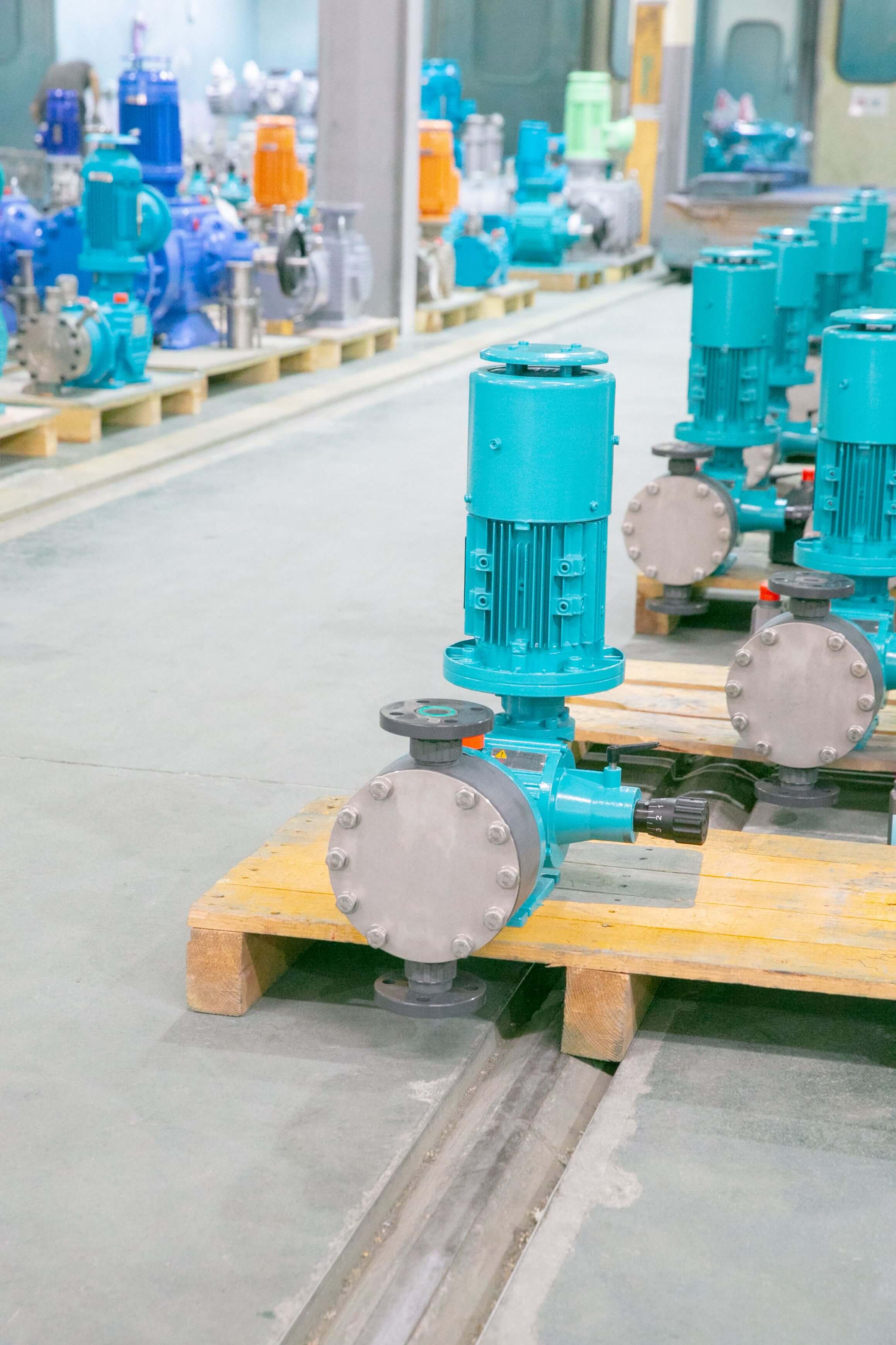
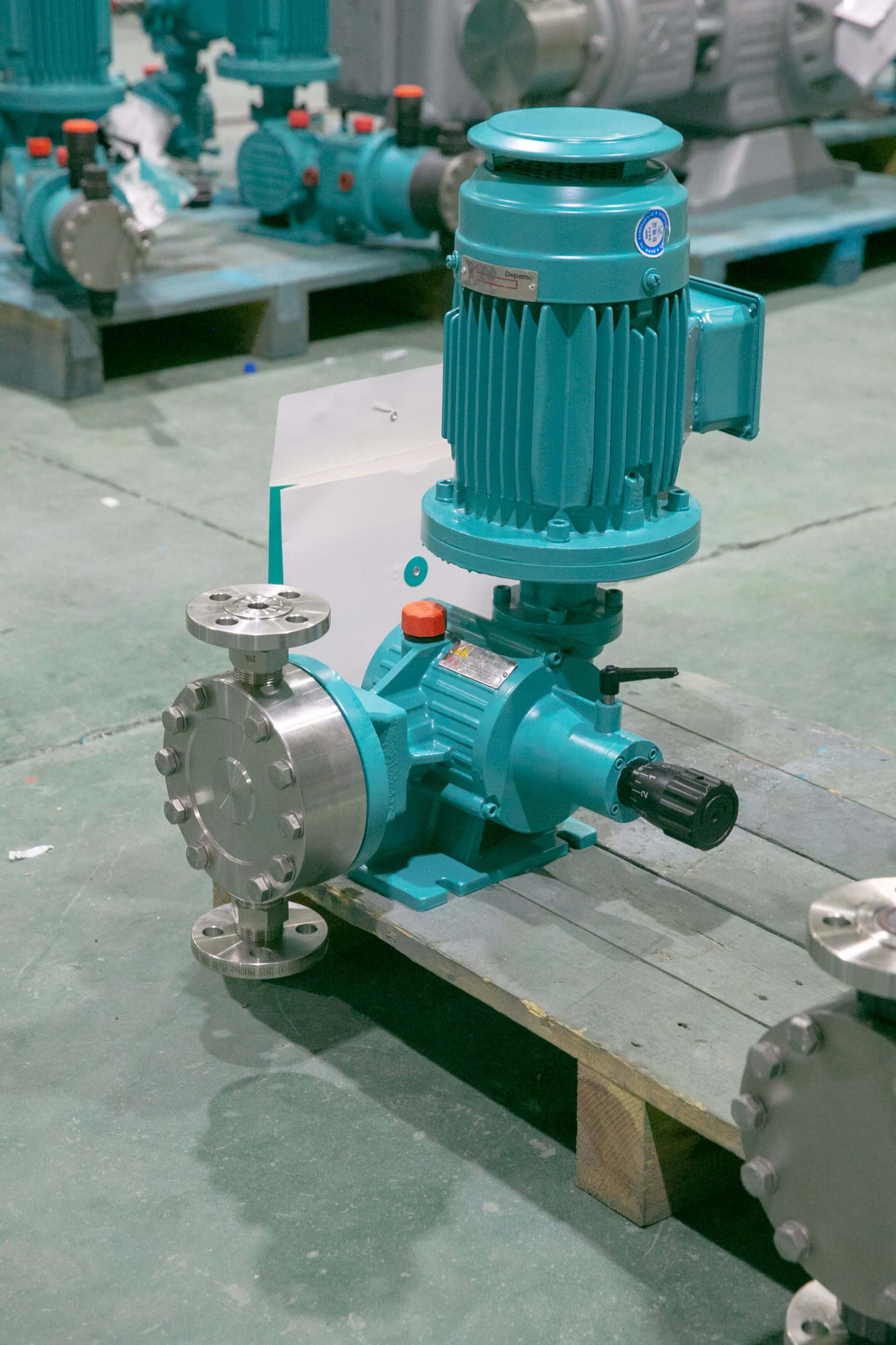
The hydraulic diaphragm metering pump sits at the centre of most dosing work. It meters by adjusting stroke length and running frequency, uses a hydraulically driven diaphragm, and keeps the fluid fully contained, so corrosive, volatile or high-pressure media can be handled without leakage. Typical use is any process that needs a precise, repeatable dose of chemical.
Where a plant needs more than a pump, the automatic chemical dosing package integrates storage, dissolving, mixing, metering and automatic control on one skid, with a dissolving tank, an agitator and an intelligent control system. It supports dry powder and liquid dosing, multi-point dosing and automatic interlocking control, is assembled and tested before shipment, and needs only piping and power connections on site.
Where These Systems Are Used
The packages are used in boiler water treatment, circulating water treatment, wastewater treatment and petrochemical processing, while the wider product range is applied across petroleum refining, chemicals, oil and gas fields, nuclear industry, power, metallurgy, new energy, environmental water treatment, new materials, food and pharmaceutical production. Petroleum refining and chemical processing account for roughly 41% of sales, oil and gas fields about 23%, nuclear, power, metallurgy and new energy about 15%, environmental water treatment about 13%, and new materials and food about 3%.
FAQ
What does a PAM dosing pump custom manufacturer need to begin a design?
A PAM dosing pump custom manufacturer needs the medium characteristics, required flow, pressure, temperature and the site process requirements before design can begin. Providing those details up front reduces design revisions and keeps the delivered package aligned with the duty point.
Can a custom dosing pump handle viscous polymer solutions?
Yes, provided the dosing principle and the wetted path are selected for the viscosity and shear behaviour of the polymer. Viscous and shear-sensitive fluids often need a different pump type, larger suction paths and lower internal velocities than water-like chemicals, so the configuration should be confirmed against the actual fluid.
How should I compare custom dosing pump suppliers?
Compare suppliers on how they turn a duty point into a configuration, on the documentation and test records they provide, and on spare parts and service support after delivery. A supplier that asks detailed questions about the fluid and the site conditions is better placed to deliver a workable package.
Which parts of a dosing system are usually customized?
The parts most often customized are the pump head and wetted materials, the connection sizes, the control interface and the way the pump integrates with tanks, piping and the plant control system. Each of these follows from the medium characteristics and the site process requirements rather than from a standard catalogue.
Is a custom dosing pump more expensive than a standard pump?
A custom dosing pump usually carries a higher initial cost than a stock unit because the design and the assembly are matched to one duty point. The comparison should include operating life, maintenance effort and rework avoided, not only the purchase price.
Summary
A PAM dosing pump custom manufacturer is worth the effort when the fluid, the flow range or the site conditions do not fit a stock unit. Start from the medium characteristics, flow, pressure, temperature and site process requirements, confirm the pump type against the polymer itself, and compare suppliers on documentation and support as well as on price. That sequence keeps a custom order predictable from quotation to commissioning.