
A quantitative dosing pump source manufacturer builds the pump, controls the specification and supplies it directly, so buyers deal with one accountable partner instead of a chain of traders. Choosing that partner well decides how accurately a chemical dosing line performs over years of continuous operation, and how quickly problems are solved when process conditions change.
What a Quantitative Dosing Pump Source Manufacturer Provides
A source manufacturer is the organisation that designs, machines, assembles and tests dosing pumps on its own site and sells those units directly to end users and integrators. Design, production and testing sit under one roof, so specifications, delivery questions and technical answers come from the people who actually build the equipment.
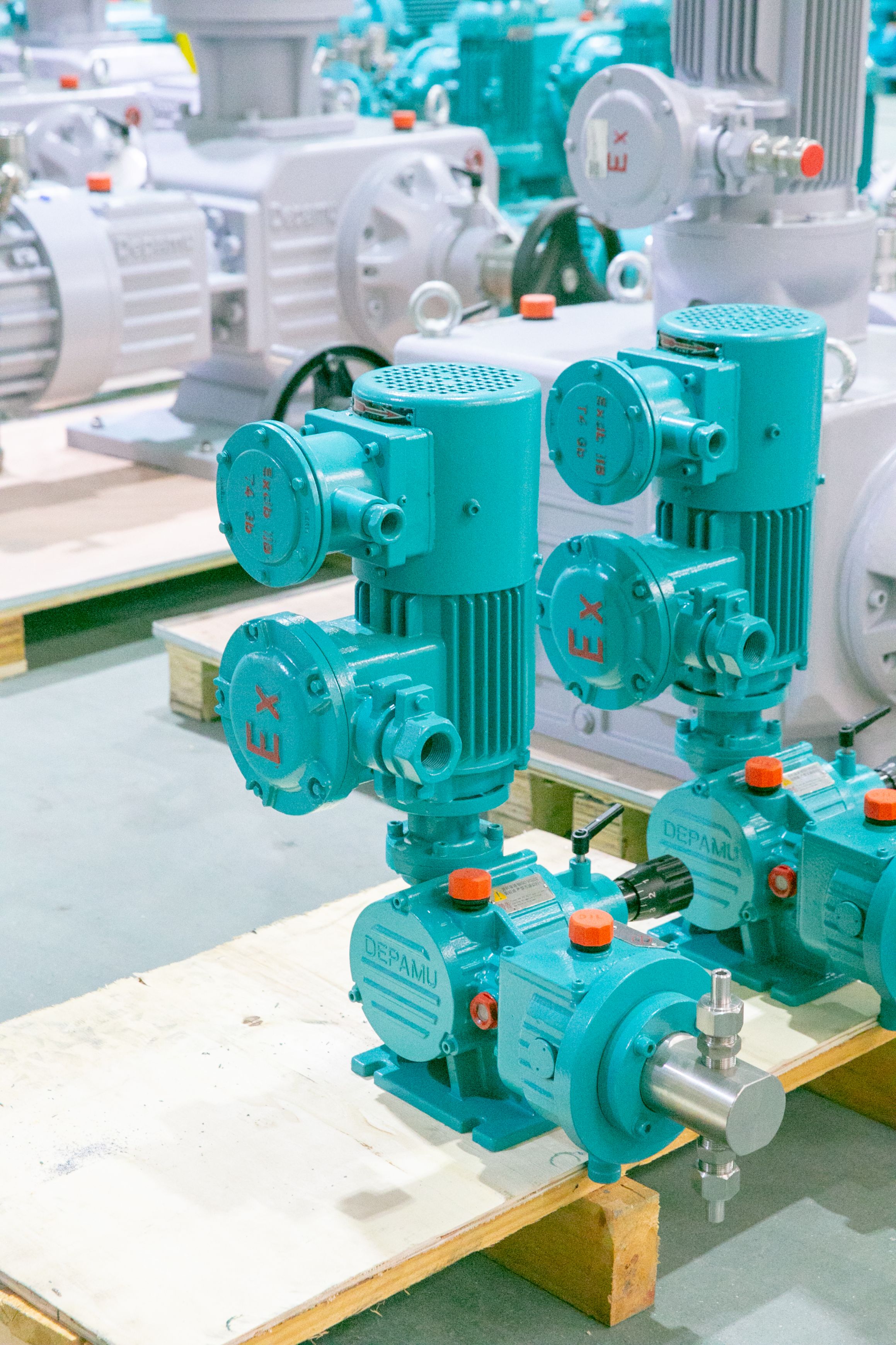
Direct supply changes both the commercial and the technical relationship. Instead of a specification being relayed through several intermediaries, the buyer speaks to the party responsible for the hydraulic design, the diaphragm or plunger assembly, the control logic and the final assembly checks. When a process condition shifts, whether that means a more aggressive chemical, a higher injection pressure or a different flow rate, the answer comes from the team that will revise the drawings.
Standard Products, Non-Standard Products and Customised Solutions
Not every dosing duty calls for a new design. Supply usually operates at three levels, and matching the level to the duty keeps cost, lead time and engineering effort proportionate to the process risk.
- Standard products: dosing pumps and fluid equipment built to established specifications and supplied without design changes.
- Non-standard products: units adapted to the customer’s medium characteristics, flow, pressure, temperature and site process requirements.
- Customised fluid solutions: integrated systems that combine pumps, tanks, mixing and control into one package built around the process.
Engineering and Manufacturing Base
Depamu (Hangzhou) Pump Industry Technology Co., Ltd. has worked in high-end volumetric pumps and fluid equipment since 2003. The manufacturer employs more than 400 people across a plant of roughly 35,000 square metres, holds a registered capital of RMB 54 million and reports an annual output value of about RMB 500 million. Technology introduced from Germany has been developed further in house.
The range covers metering pumps, high-pressure reciprocating process pumps, pneumatic pumps, electric pumps, chemical dosing systems, water and steam sampling devices and water treatment equipment, together with screw pumps, rotary lobe pumps and gear pumps. Because one organisation designs, builds and packages the equipment, a dosing duty can be supplied as a single pump or as a complete skid.
Why the Supply Route Affects Dosing Performance
Dosing accuracy depends on the pump, but it also depends on how well the pump matches the chemical, the injection point and the control signal. A supplier who owns the design can confirm those three points before the order, which lowers the risk of a unit that runs but never quite holds the dose rate.
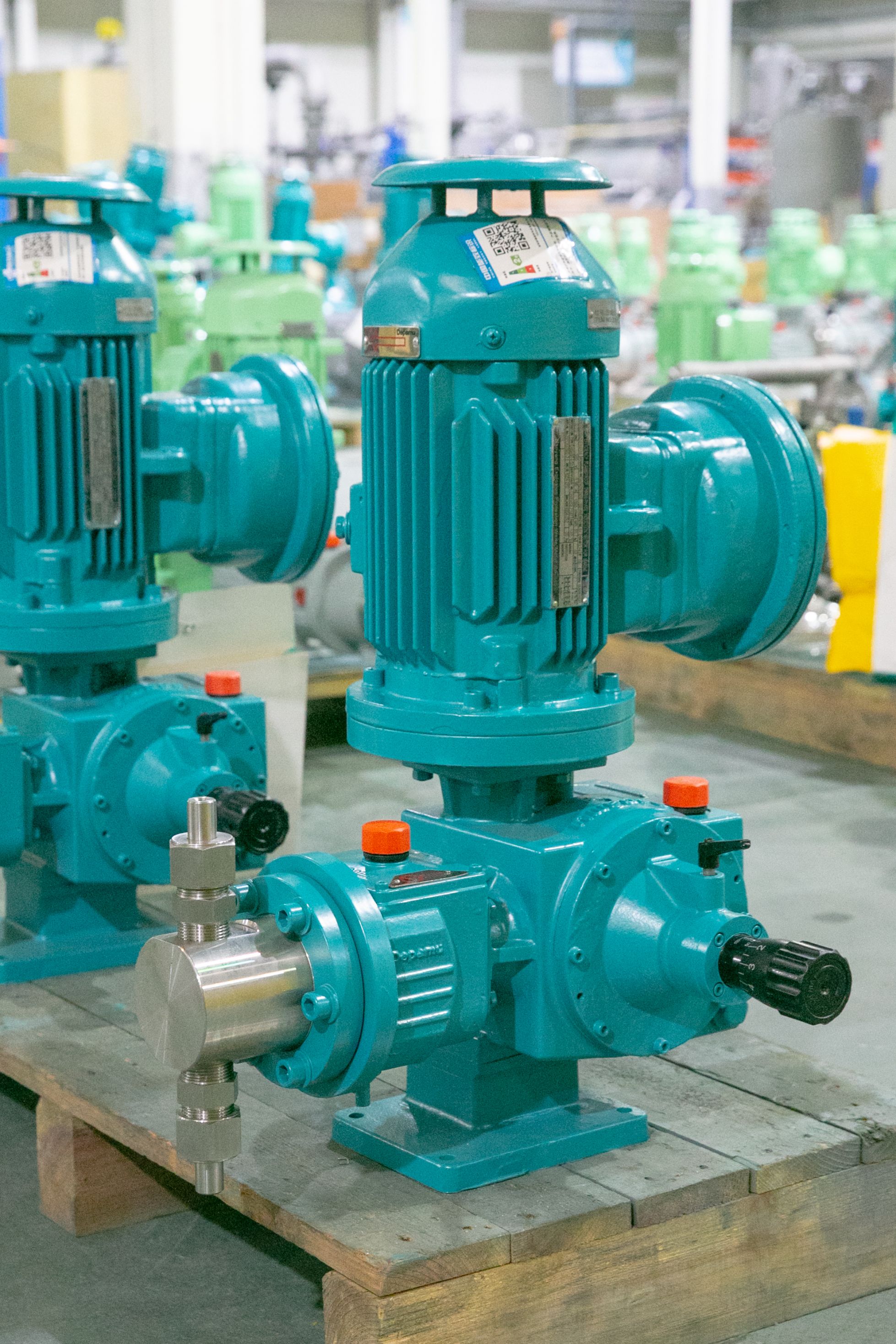
Metering pumps sit at the centre of most dosing duties. In a hydraulic diaphragm metering pump the dose is set by stroke length and running frequency, and a hydraulic drive moves the diaphragm so the medium stays isolated from the drive mechanism and from the outside atmosphere. That arrangement suits corrosive, volatile or high-pressure media where leakage cannot be tolerated. For duties that need very high discharge pressure, a high-pressure reciprocating process pump uses a plunger to move liquid from the low-pressure side into a high-pressure line or a long pipeline, with stable flow over long continuous runs and reliable handling of viscous, hot or particle-bearing media. Pressure capability in this range extends to 35 MPa and above.
Applications Across Process Industries
Dosing and fluid equipment from this manufacturer is used in petroleum refining and chemicals, oil and gas fields, the nuclear industry, power generation, metallurgy, new energy, environmental water treatment, new materials and food. Petroleum refining and chemicals account for roughly 41% of sales, oil and gas fields about 23%, nuclear, power, metallurgy and new energy about 15%, environmental water treatment about 13%, new materials and food about 3%, and other industries about 5%.
Automatic Chemical Dosing Systems
An automatic chemical dosing system packages storage, dissolution, agitation, metered injection and automatic control into one skid. A metering pump sits at the core, supported by a dissolving tank, an agitator and a control system, so the package can prepare the solution and inject it at the set rate, support dry or liquid feeding, serve several injection points and link to plant control. Each package is assembled and tested before dispatch, and on site it needs only piping and power connections. Typical duties include boiler water treatment, circulating water treatment, wastewater treatment and petrochemical processes.
Custom, Bespoke and Made-to-Order Dosing Pumps
Custom work starts with the duty, not with the drawing. Whether the requirement is handled by a quantitative dosing pump custom manufacturer, a quantitative dosing pump bespoke manufacturer or a quantitative dosing pump made-to-order manufacturer, the process should begin with the medium characteristics, flow, pressure, temperature and site conditions, and end with a configuration that meets them.
In practice that means agreeing the wetted materials, the diaphragm or plunger arrangement, the control interface and the way the pump is packaged with the rest of the system. The buyer approves the configuration before production, and the finished unit is assembled and tested as a whole rather than as a collection of parts.
| Supply route | Who defines the specification | What the buyer receives |
|---|---|---|
| Standard product | The manufacturer’s established design | A unit supplied as specified, without design changes |
| Non-standard product | The customer’s process data, applied by the manufacturer | A unit adapted to medium, flow, pressure, temperature and site conditions |
| Customised solution | Jointly agreed system design | An integrated package combining pumps, tanks, mixing and control, assembled and tested before dispatch |
Supply, Delivery and Technical Support
A quantitative dosing pump supply manufacturer is judged less by the quotation than by what happens after the order is placed: how the specification is confirmed, how the unit is tested, and how quickly questions are answered once the equipment is running in the plant.
Delivery performance follows from the way production is organised. Where design, machining, assembly and testing happen on one site, the sequence from confirmed specification to tested unit stays inside one schedule, and changes requested during the project do not have to be renegotiated with an outside party. Packages such as automatic dosing systems are assembled and tested before dispatch, so site work reduces to piping and power connections.
Commercial continuity matters as well. Reported sales moved from about RMB 450 million in 2023 to about RMB 510 million in 2024 and about RMB 560 million in 2025. For buyers, a supplier with a stable production base is generally easier to reach when a unit needs attention later in its service life, and the same engineering team remains available for the next dosing duty.
FAQ
What is a quantitative dosing pump source manufacturer?
A source manufacturer designs, builds, assembles and tests dosing pumps in its own facility and supplies them directly to end users. Buying at the source shortens the route between the specification and the people who build the equipment, so technical questions and change requests move faster.
How do I find a quantitative dosing pump custom manufacturer?
Start with the duty rather than the product listing: define the medium, the required flow, the discharge pressure and the temperature, then ask how the supplier would configure a pump for that duty. A supplier that asks those questions before quoting is the one able to deliver a custom unit.
What does a quantitative dosing pump bespoke manufacturer do?
A bespoke manufacturer adapts the pump to a specific process instead of delivering a fixed item from a list. The work usually covers wetted materials, diaphragm or plunger arrangement, control interface and package layout, all agreed against the medium characteristics, flow, pressure and site conditions.
How does a quantitative dosing pump made-to-order manufacturer work?
Made-to-order supply runs as a short engineering project: the specification is reviewed, the configuration is agreed, the unit is assembled and tested, and the finished pump or package is delivered ready for installation. The buyer approves the configuration before production starts.
What should I check with a quantitative dosing pump supply manufacturer?
Check three points: whether the supplier builds the equipment itself, whether it can adapt the unit to the medium and process conditions, and whether it supports the installation after delivery. Those three points separate a source supplier from a trading intermediary.
Summary
In short, the quantitative dosing pump source manufacturer determines how well a dosing duty is met, because the specification, the build and the support all come from the same place. Match the supply model to the duty, confirm the process data before the order is placed, and judge the supplier on engineering response rather than on price alone.