
Choosing a twin screw pump manufacturer is a qualification exercise, not a price comparison. Buyers should verify how a supplier reviews the duty point, selects materials and rotor geometry, tests the assembled unit and documents the result, because these four factors decide whether the pump runs reliably in continuous service.
What a Twin Screw Pump Manufacturer Should Provide
A qualified twin screw pump manufacturer should provide four deliverables: a documented duty-point review, material and clearance selection matched to the medium, verifiable testing before shipment, and drawings with operating documentation for maintenance. Buyers who request these items at the enquiry stage avoid most commissioning problems later.
The duty-point review is the foundation of the whole order. Flow rate, differential pressure, operating temperature, viscosity and solids content all influence rotor geometry, clearance and seal choice. A supplier that accepts a flow and pressure figure without asking about the medium is quoting a pump, not a solution, and the gap usually appears during commissioning rather than on the drawing.
Inputs to Prepare Before the First Technical Meeting
Most delays in pump procurement come from incomplete process data rather than from manufacturing. Preparing a consistent data sheet shortens the review cycle and lets every supplier quote on the same basis, which makes later comparisons meaningful.
- Design flow rate, differential pressure and operating temperature range, including start-up and upset conditions
- Medium properties: viscosity, density, corrosivity, solids content and lubricating behaviour
- Duty cycle, expected start-stop frequency, and the utilities and control signals available on site
Suppliers should return a written confirmation of these values, not only a price. When the returned data sheet matches the buyer’s process description, the technical basis for the order is established and later disputes become far less likely.
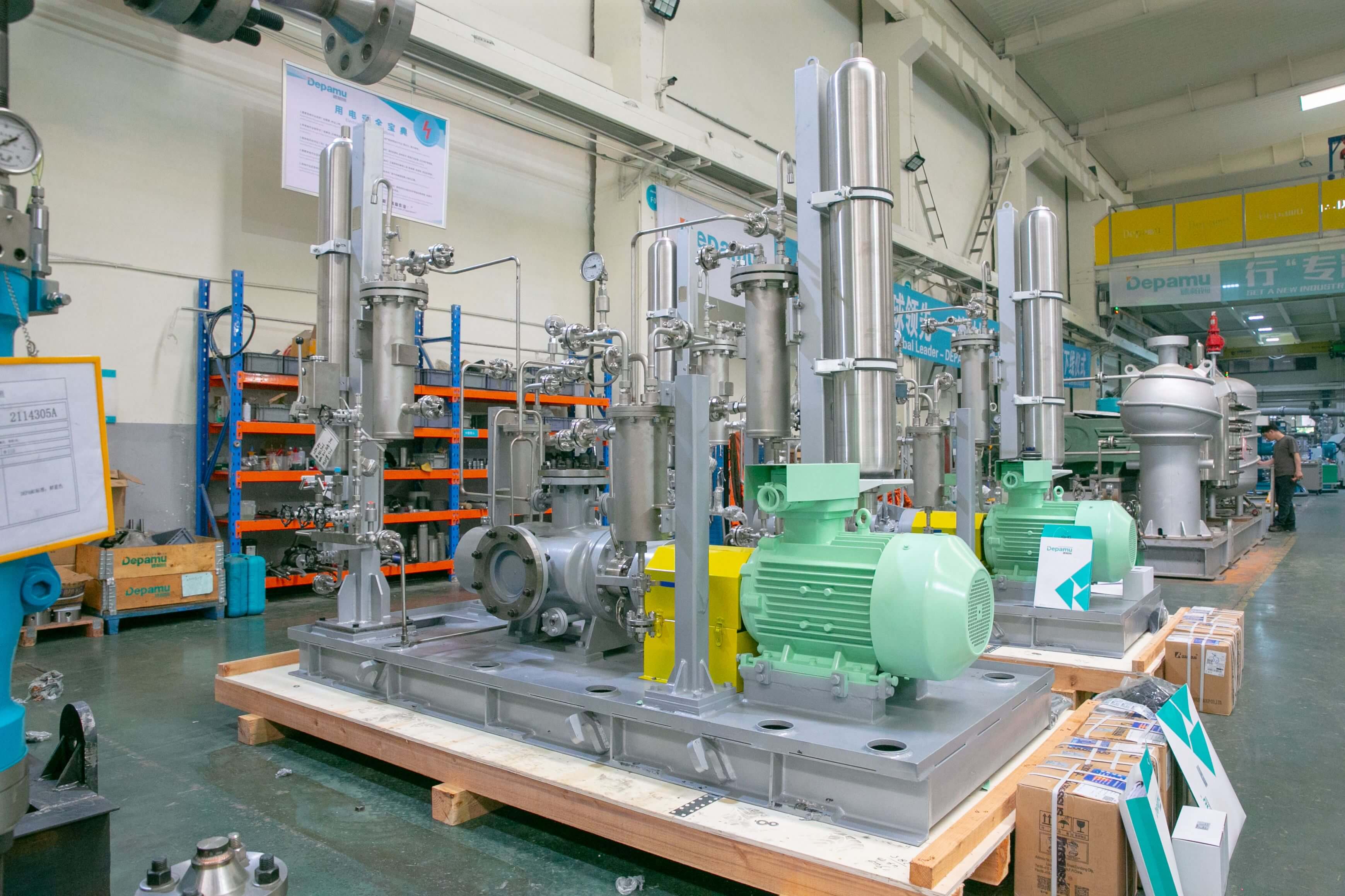
How to Evaluate a Twin Screw Pump Source Manufacturer
Evaluate a twin screw pump source manufacturer on capability rather than catalogue size. Ask how the duty point is confirmed, who controls rotor and profile machining, what is tested before dispatch and which documents travel with the unit. Suppliers that answer these questions with specifics are easier to work with across the equipment lifetime.
Vertical integration matters more than a long product list. A supplier that machines rotors, shafts and housings in its own workshop can hold tolerances and respond to design changes without passing the work between subcontractors. Buyers can verify this during a factory visit by following one component from raw material to assembly, and by asking which operations are outsourced.
Documentation is the second test. Drawings, material records, test sheets and a maintenance manual should be supplied as standard, in a language the maintenance team can actually use. A supplier that treats documentation as an optional extra usually treats after-sales support the same way.
Background checks support the technical ones. Depamu (Hangzhou) Pump Industry Technology Co., Ltd. was founded in 2003 and employs more than 400 people at a plant covering approximately 35,000 square metres, with registered capital of RMB 54 million and annual output value of about RMB 500 million. Its product scope covers metering pumps, high-pressure process reciprocating pumps, pneumatic and electric pumps, chemical dosing packages, water-steam sampling devices, water treatment equipment, screw pumps, rotary pumps and gear pumps. These products are used in petrochemicals, chemicals, oil and gas fields, nuclear industry, power generation, metallurgy, new energy, environmental water treatment, new materials and food processing.
| Evaluation Area | What to Confirm |
|---|---|
| Duty-point review | Whether flow, pressure, temperature and medium data are confirmed in writing before quotation |
| Manufacturing control | Which machining and assembly operations are performed in-house and which are subcontracted |
| Material selection | How casing, rotor and seal materials are matched to the medium and its temperature |
| Testing | What is checked before dispatch and whether the buyer may witness the test |
| Documentation | Which drawings, test records and manuals are included in the scope of supply |
| After-sales path | How spare parts and technical support are requested after commissioning |
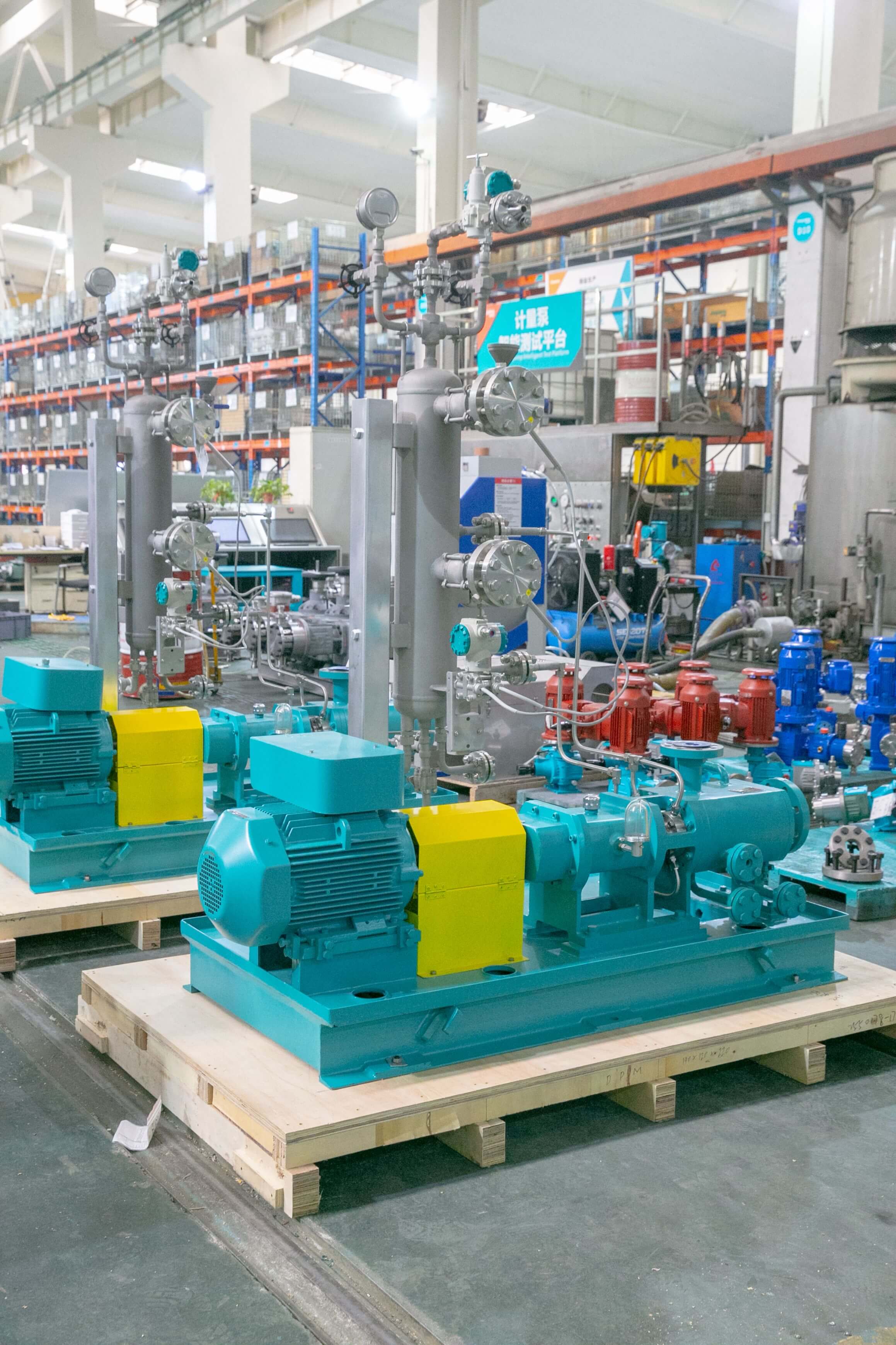
Custom Builds: Working with a Custom Manufacturer
A twin screw pump custom manufacturer adapts rotor profile, materials, sealing, connections and driver arrangement to the real duty instead of forcing a catalogue unit into an unsuitable application. Custom work succeeds when the buyer supplies complete process data and both sides agree acceptance criteria in writing before machining begins.
Typical changes requested by buyers include connection orientation, casing material, seal type, baseplate layout and instrumentation. A made-to-order unit can also be arranged around an existing pipe run, which reduces site modification work. Each change should be traceable to a drawing revision so that the delivered pump can be checked against what was approved.
Bespoke manufacture is not the right answer for every project. Where a standard model already matches the duty with margin, a catalogue unit is faster and cheaper to support over its service life. The honest question to put to a twin screw pump bespoke manufacturer is whether the custom features change performance, or only convenience.
What to Agree Before Machining Starts
- Approved general arrangement and detail drawings carrying a revision number
- Material specifications and the inspection plan for critical parts
- Test medium, test procedure and written acceptance criteria
- Documentation package, its language and the number of copies required
- Packing, marking, shipping terms and the delivery milestone schedule
Supply Capability, Testing and Delivery Planning
Supply capability determines whether a project stays on schedule. A twin screw pump supply manufacturer should confirm casting and machining lead times, assembly slots, witness testing availability and shipping terms in writing. Buyers should also confirm how spare parts are ordered and who answers technical questions after commissioning.
Delivery planning works better when it is based on milestones rather than a single date. Buyers can ask for confirmation of drawing approval, material readiness, assembly start, test date and dispatch readiness, then track the order against those milestones. This matters most when the pump is part of a larger package, because late delivery of one item can hold up an entire installation.
Testing is where supply and engineering meet. A run check and a performance verification on the test bench reveal assembly faults before the unit leaves the factory. Buyers with critical duty should ask to witness the test or to receive the test record with the shipment, and should confirm which parameters are recorded and how the results are reported.
Spare parts planning belongs in the same conversation. Wear and consumable items should be identified at order stage, with part numbers listed in the manual, so that maintenance does not depend on finding an old email. A supplier that hands over a clear parts list at delivery removes a common cause of unplanned downtime.
Frequently Asked Questions
What does a twin screw pump manufacturer actually supply?
It supplies a complete pumping unit rather than a bare pump body. A typical scope covers the pump, baseplate, driver, coupling and guard, together with drawings, an operating manual and test records. Buyers should list the exact scope in the purchase order, because peripherals and documentation are frequently quoted as separate items.
How can buyers compare twin screw pump suppliers fairly?
Compare suppliers on the same data sheet and the same scope of supply. Issue identical process data to every candidate, ask each one to return a marked-up data sheet, a drawing and a test plan, then compare the technical responses before comparing prices. Otherwise a low quotation may simply exclude items that other offers include.
Can a twin screw pump custom manufacturer build to a specific duty point?
Yes, provided the duty point is fully defined. Custom build means rotor profile, materials, seals and connections are selected for the stated medium and operating conditions. The buyer must supply flow, pressure, temperature, viscosity and solids data, and the supplier should return approved drawings and acceptance criteria before production begins.
What should be confirmed with a twin screw pump supply manufacturer before ordering?
Confirm lead time, scope of supply, test plan, documentation package, spare parts list and warranty terms in writing. Verbal assurances about delivery or performance are difficult to enforce, so every commitment that matters to the project should appear in the order documents and be referenced in the contract.
Is it better to buy from a factory or through a trading company?
Buying from a factory shortens the technical route between the duty point and the people who machine and assemble the unit. Trading companies can add value in logistics and export handling, but technical answers should still come from the production side and should be confirmed in writing.
Summary
Selecting a twin screw pump manufacturer comes down to evidence: a documented duty-point review, controlled manufacturing, a defined test, a complete documentation package and a clear after-sales path. Buyers who compare suppliers on identical data and identical scope make better decisions than those who compare headline prices. For custom work, freeze the design early, approve drawings formally and keep acceptance criteria in the order.