
Choosing a high-pressure process diaphragm pump direct manufacturer starts with the duty, not the catalog. The right supplier must match diaphragm or reciprocating pump technology to the media, flow, pressure, temperature, and site process, then take responsibility for engineering, manufacturing, assembly, and delivery. That combination is what separates a direct manufacturer from a trading channel.
What a High-Pressure Process Diaphragm Pump Direct Manufacturer Provides
A direct manufacturer provides engineering, pump manufacturing, package assembly, and delivery under one organization. For a high-pressure process diaphragm pump duty, the supplier should be able to explain whether diaphragm metering technology, high-pressure reciprocating technology, or a combined package fits the process, and then hold the specification through build and handover.
The phrase high-pressure process diaphragm pump can cover more than one duty. A buyer may need a diaphragm metering pump for accurate chemical injection, a high-pressure process reciprocating pump for transfer or injection, or a package that combines dosing with automatic control. The manufacturer should separate those duties and state which technology fits the process rather than forcing every enquiry into one product type.
Core equipment in the supplied portfolio
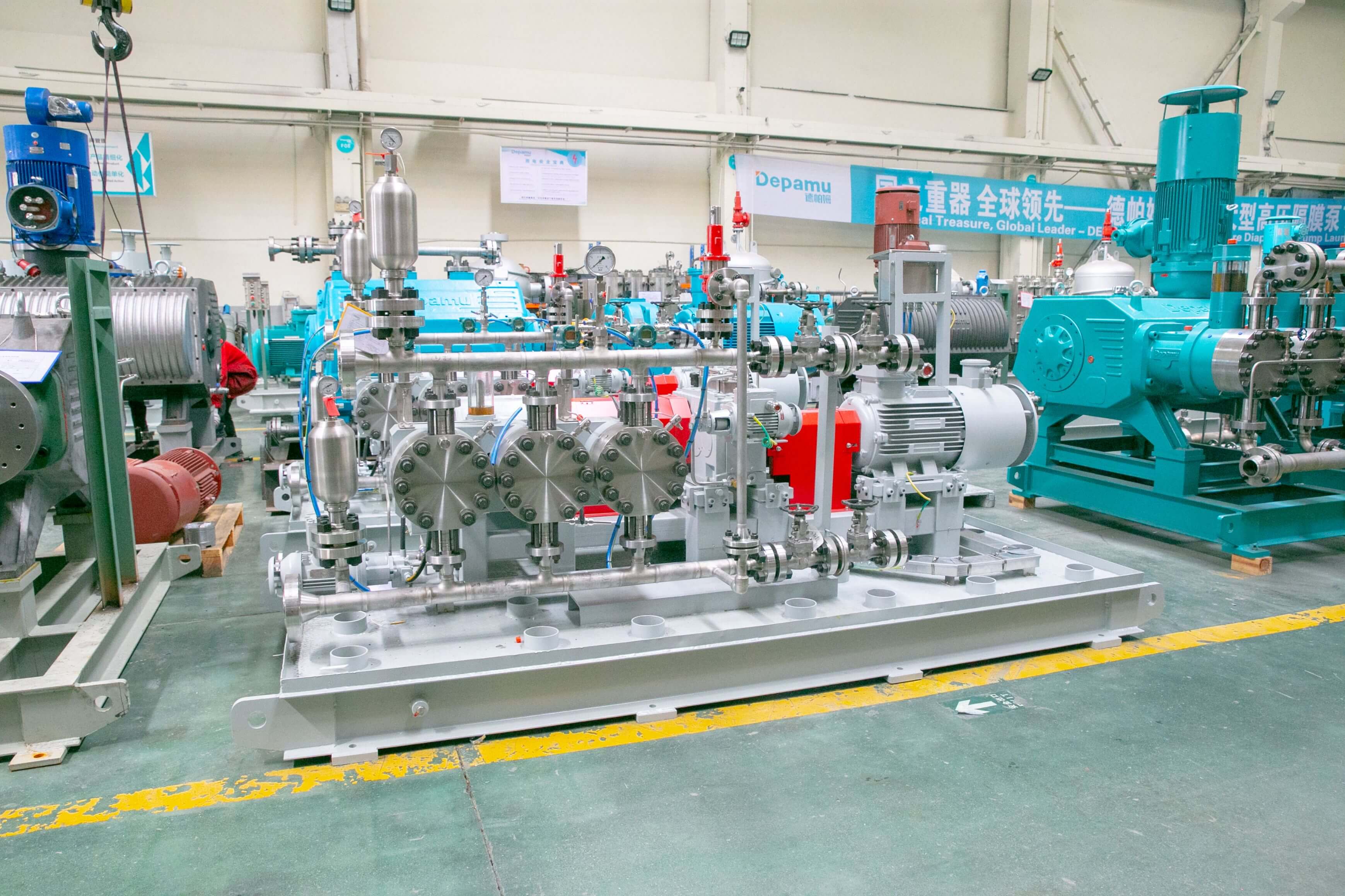
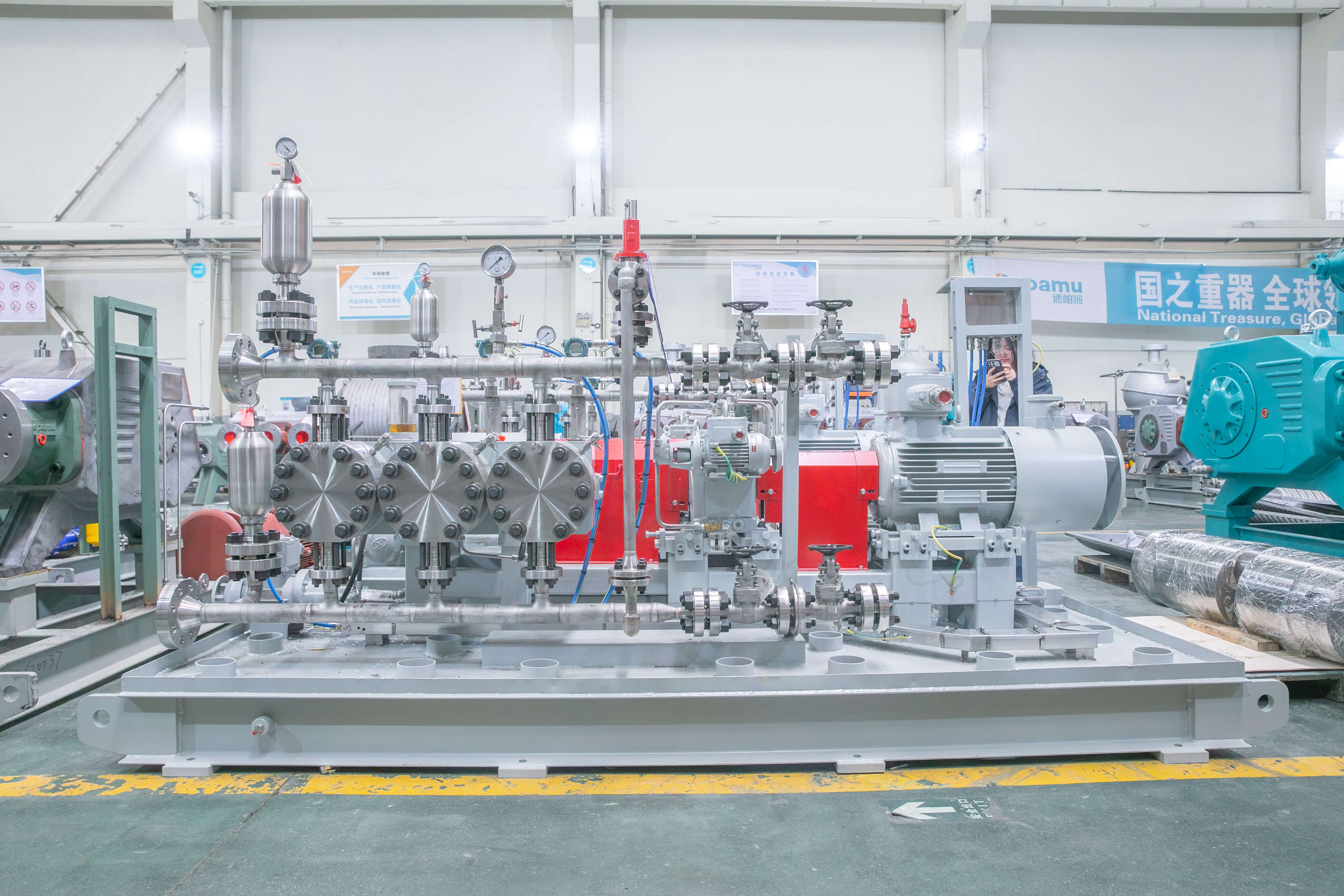
The supplied portfolio shows how those duties are separated in practice. Diaphragm technology appears in hydraulic diaphragm metering pumps, which use a hydraulic-driven diaphragm for precise, leak-free dosing and can handle corrosive, volatile, and high-pressure media. High-pressure process reciprocating pumps use plunger movement to reach pressures above 35 MPa and are built for stable flow in continuous operation, including high-viscosity, high-temperature, and solids-containing media.
- Hydraulic diaphragm metering pumps for precise, leak-free chemical dosing
- High-pressure process reciprocating pumps for high-pressure transfer, pipeline boosting, and injection
- Automatic chemical dosing systems that integrate storage, dissolution, mixing, metering, and control
- Screw pumps, rotor pumps, gear pumps, pneumatic pumps, electric pumps, water-steam sampling devices, and water treatment equipment
Why Application Experience Matters When Choosing a Manufacturer
Application experience matters because a pump that looks suitable on a data sheet can fail on site if the supplier has not handled the media, pressure, temperature, or operating pattern before. A manufacturer with repeated exposure to comparable duties can identify mismatches earlier and define a configuration that fits the process.
For a high-pressure process diaphragm pump duty, the process data should drive the conversation: what is being pumped, how much flow is required, what pressure must be reached, what temperature applies, and what the site process expects from the package. A supplier that asks for those inputs before proposing a configuration is treating the enquiry as an engineering problem rather than a catalog lookup.
Industry exposure reflected in the sales mix
Depamu (Hangzhou) Pump Industry Technology Co., Ltd. was established in 2003 and focuses on high-end positive displacement pumps and fluid equipment. The company has more than 400 employees, a plant of about 35,000 square meters, registered capital of CNY 54 million, and annual output value of about CNY 500 million.
Its supplied applications cover oil refining, chemicals, oil and gas fields, nuclear industry, power, metallurgy, new energy, environmental water treatment, new materials, and food. Oil refining and chemicals account for about 41% of sales, oil and gas fields about 23%, nuclear, power, metallurgy, and new energy about 15%, environmental water treatment about 13%, new materials and food about 3%, and other industries about 5%. Sales were about CNY 450 million in 2023, CNY 510 million in 2024, and CNY 560 million in 2025.
How to Evaluate Engineering and Customization Capability
Evaluate engineering capability by asking how the supplier converts media, flow, pressure, temperature, and site process data into a defined configuration. A direct manufacturer should be able to offer a standard product, a non-standard adaptation, or a custom fluid solution and explain the boundary between them.
That boundary matters because a standard product is efficient only when the duty is truly standard. If the media is corrosive or volatile, the temperature is high, the pressure is severe, or the site process imposes a specific package arrangement, the supplier should say so early and define the adaptation rather than leave it to the buyer to discover after delivery.
Questions that clarify the scope
Ask the manufacturer to state which pump type fits the duty, what process data the selection depends on, and whether the scope is a standard product, a non-standard adaptation, or a custom fluid solution. These answers show whether the supplier is engineering the duty or merely quoting a model.
The company’s stated capability covers product development, design and manufacturing, and complete-set delivery. It can provide standard products, non-standard products, and custom fluid solutions based on media characteristics, flow, pressure, temperature, and site process requirements. That is the capability to test when comparing a direct manufacturer with a wholesale channel.
Direct Manufacturer or Wholesale Channel: What Changes for the Buyer
The difference is control over specification and accountability. A direct manufacturer owns the engineering, manufacturing, assembly, and delivery sequence, while a wholesale channel may add a layer between the buyer and the technical decision. That layer can be useful for logistics, but it can also blur who is responsible for the configuration.
A wholesale manufacturer may still be a legitimate source when the buyer needs volume coordination or a broad catalog. The question is whether the technical file, the configuration decision, and the delivery scope remain clear. If the channel cannot answer process questions directly, the buyer should ask who will own the engineering answer and how changes will be controlled.
For the buyer, the practical test is simple: ask the same technical questions of both routes and compare the quality of the answers. A direct manufacturer should be able to explain the pump type, the configuration logic, and the delivery scope without passing the enquiry through an intermediary.
How to Contact a Manufacturer for a High-Pressure Process Diaphragm Pump Duty
Contact should begin with a written technical enquiry, not a request for a generic price. State the media, required flow, pressure, temperature, and site process conditions, then ask the manufacturer to confirm the pump type, configuration scope, and delivery sequence.
A useful enquiry also asks how the supplier will handle the boundary between standard and custom scope. If the duty requires a non-standard adaptation or a custom fluid solution, the reply should identify what changes and what stays standard. That keeps the comparison between suppliers on the same technical basis.
If the duty is not yet fixed, ask the manufacturer to state what process data is still missing and why it matters. A direct manufacturer should be able to explain the selection logic in plain terms and confirm the scope in writing before the order moves forward.
FAQ
What does a high-pressure process diaphragm pump direct manufacturer do?
A direct manufacturer engineers, manufactures, assembles, and delivers the pump package itself rather than reselling through an intermediary.
Which high-pressure process diaphragm pump manufacturer is good?
A good choice is one whose technical team can match the pump to the media, flow, pressure, temperature, and site process conditions before the order is placed.
Which high-pressure process diaphragm pump manufacturer is strong?
Strength should be judged by application fit and delivery control rather than by a single headline figure.
How can I contact a high-pressure process diaphragm pump manufacturer?
Start with a written enquiry that states the duty point and site conditions, then ask for a configuration proposal and a clear scope of supply.
What should I prepare before requesting a quotation?
Prepare the media, required flow, pressure, temperature, and site process conditions so the manufacturer can select a standard, non-standard, or custom configuration.
Summary
A high-pressure process diaphragm pump direct manufacturer should be selected on engineering fit, application exposure, customization control, and delivery accountability. Use the process data to define the duty, compare the technical response rather than the headline, and confirm whether the scope is a standard product, a non-standard adaptation, or a custom fluid solution. That approach keeps the purchase tied to the actual process.