
A gear pump direct manufacturer builds pumps in its own plant and sells them without intermediary trading layers, which shortens the path between a buyer’s specification and the finished unit. Buyers comparing gear pump suppliers should verify manufacturing depth, customization capability and application experience before comparing price.
What a Gear Pump Direct Manufacturer Does Differently
A gear pump direct manufacturer owns the design and production of the pump and sells it to the buyer without a trading intermediary. The practical difference is that technical questions about materials, clearances, seals and duty point reach the people who build the unit, instead of a reseller relaying messages between two parties.
For buyers, “direct” is a claim that should be verified rather than assumed. The useful test is not the wording on a website but where the engineering review actually happens: who reads the duty point, who selects the configuration, who signs the inspection record, and who answers questions after delivery. When those steps sit inside one organisation, specification changes are cheaper to make and easier to trace.
Direct Manufacturing Versus Intermediary Trading
An intermediary buys a finished unit and resells it, so the buyer’s specification is translated at least once before production starts. A direct manufacturer receives the same information without that translation step, which matters most on non-standard duties where small changes in viscosity, temperature or solids content alter the pump configuration.
- Technical clarification reaches the engineering team that reviews the duty point.
- Configuration changes are quoted against the production drawing, not a catalogue entry.
- Inspection and test records originate from the plant that builds the pump.
- Spare parts references stay consistent across repeat orders.
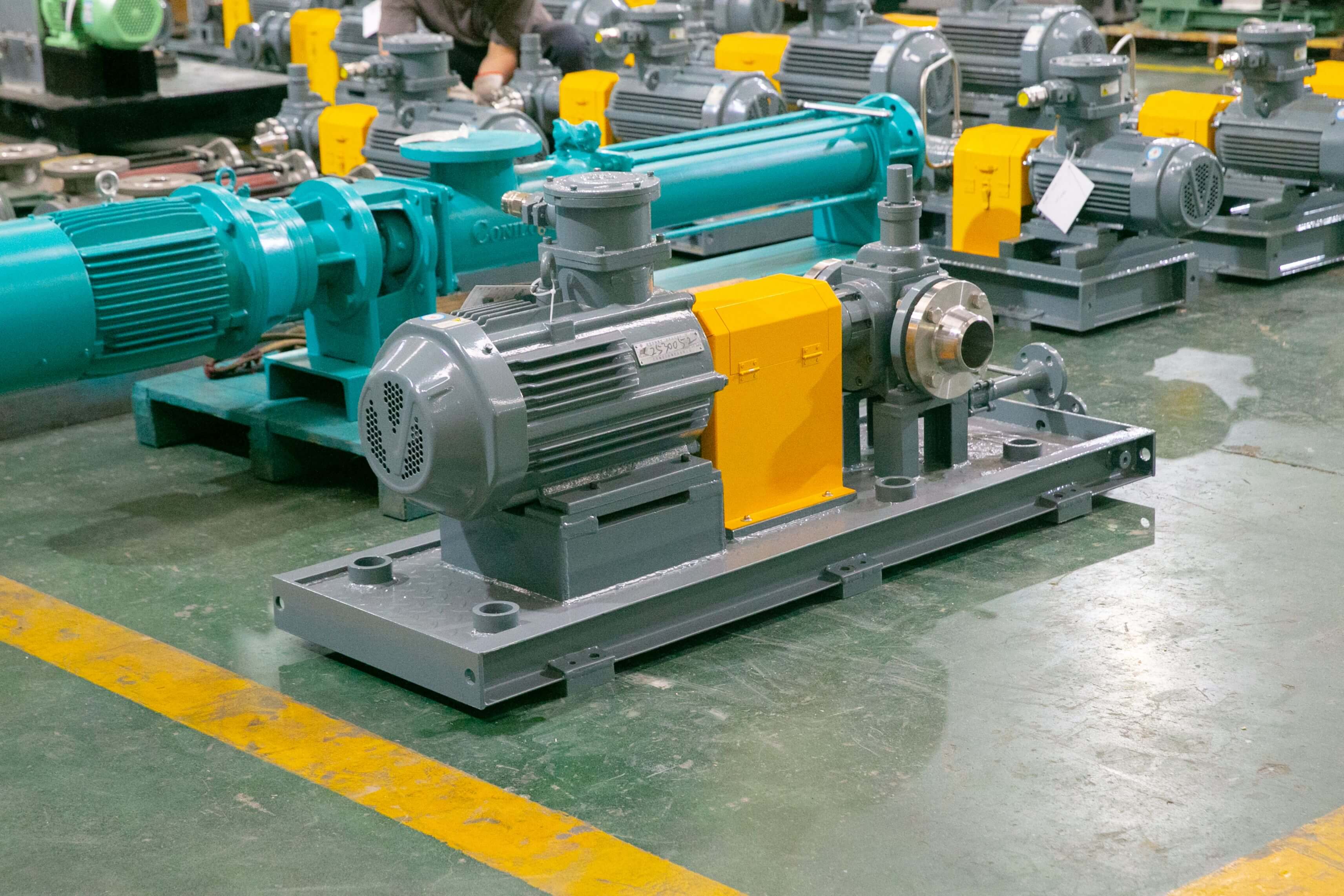
Why a Gear Pump Wholesale Manufacturer Suits Volume Procurement
A gear pump wholesale manufacturer produces in batches and prices against production volume, so unit cost and delivery scheduling improve as order quantity rises. The larger benefit is repeatability: identical units, identical spare parts and a documented configuration that can be reordered without repeating the engineering work.
Volume orders move the risk from the supplier to the specification. Once a batch is released, every unit is built to the same drawing, so an error in the duty point is reproduced across the whole order. That is why the specification should be frozen and confirmed in writing before production begins, and why the buyer should keep the confirmed version on file for later reorders.
What to Fix Before a Volume Order Is Released
Most disputes on volume orders trace back to inputs that were never confirmed in writing. The checklist below is not a technical specification; it is the minimum set of items that should be agreed between buyer and manufacturer before the batch is scheduled.
- The duty point: required flow, discharge pressure and operating temperature range.
- Medium characteristics: viscosity, corrosivity and whether solids are present.
- Materials of construction and the seal arrangement.
- Connection sizes, port orientation and the available footprint.
- Documentation, inspection requirements and packaging for transport.
- Delivery schedule, delivery terms and the agreed spare parts list.
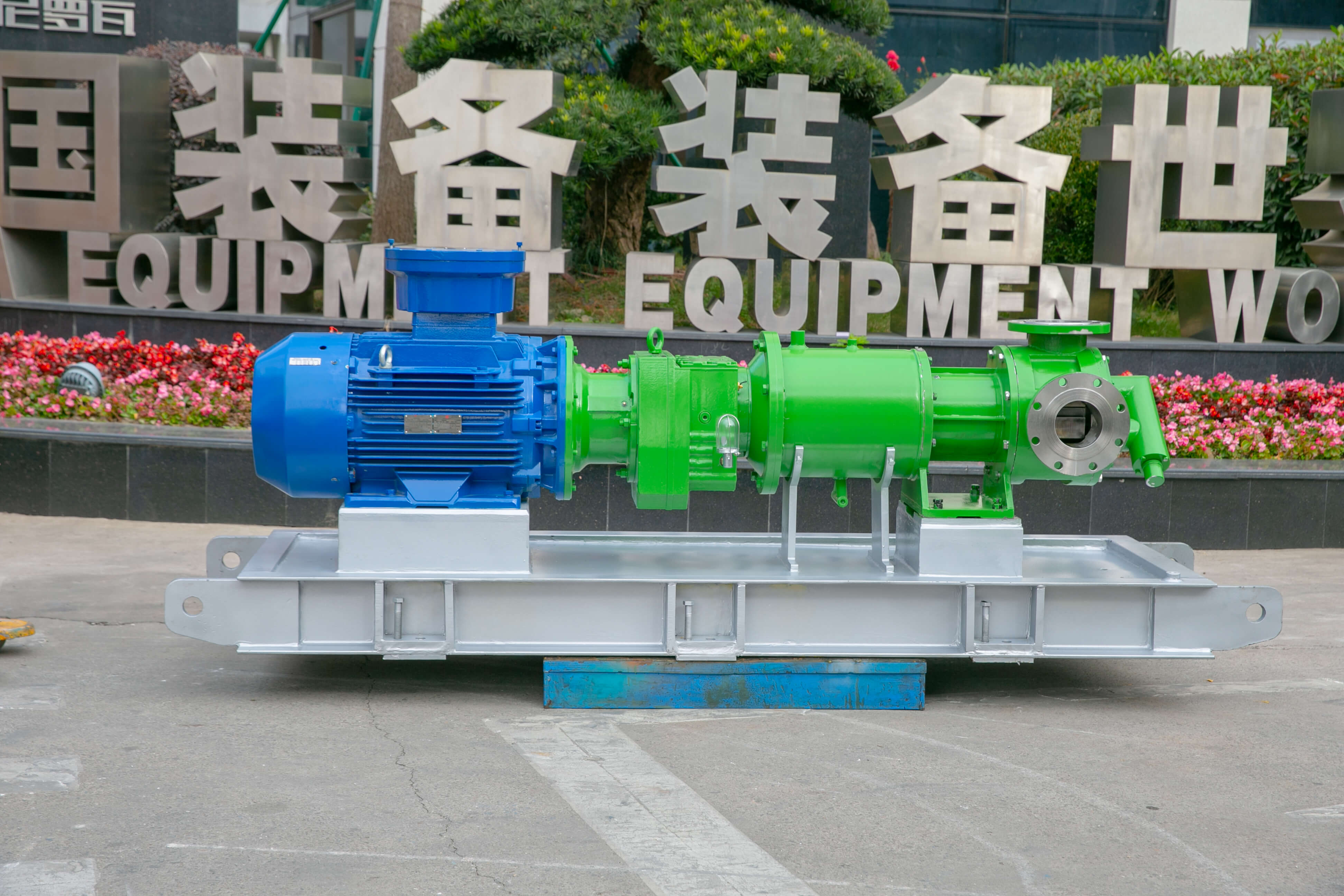
How to Compare Gear Pump Manufacturers on Capability, Not Price Alone
Compare manufacturers on the capability behind the quotation: who performs the engineering review, how non-standard requests are handled, what application experience can be documented, and how delivery and after-sales support are organised. Price matters, but only after these four points have been checked against the same duty point.
Quotations for the same nominal pump are rarely identical in content. One offer may cover a standard catalogue unit, another a modified configuration with a different seal or material, and a third may exclude commissioning support or spare parts. Comparing headline prices without aligning scope produces a number that cannot be acted on, so the scope should be normalised first and the price compared afterwards.
Manufacturing and Engineering Depth
Ask where the engineering review takes place and which organisation signs the test record. A supplier that owns design, manufacturing and assembly can answer configuration questions from its own drawings; a supplier that outsources those steps has to forward the question and wait for an answer. The difference shows up in lead time for clarifications and in the traceability of changes.
Customization and Non-Standard Requests
Many process duties do not fit a catalogue entry. A supplier able to work from medium characteristics, flow, pressure, temperature and site process requirements can propose a standard product, a non-standard product or a customized fluid solution, rather than declining the request or forcing the duty into the nearest stock model.
Application Experience
Experience is only useful evidence when it is specific. Ask which industries the supplier’s equipment has actually served and which process steps the pumps are used for, then check whether the reference is close to your own duty. Broad industry lists are a starting point; matching the medium, the pressure level and the operating pattern is what reduces selection risk.
Delivery, Documentation and Support
A complete-set delivery capability, covering design, manufacturing and assembly before shipment, reduces the number of interfaces a buyer has to manage on site. Confirm what is included in the scope, what documentation travels with the equipment, and who is responsible for support once the unit is installed.
Gear Pumps Within Depamu’s Fluid Equipment Portfolio
Depamu (Hangzhou) Pump Industry Technology Co., Ltd. builds gear pumps alongside metering pumps, high-pressure process reciprocating pumps, pneumatic and electric pumps, chemical dosing systems, water and steam sampling devices, water treatment equipment, screw pumps and rotary lobe pumps, and supplies them as standard, non-standard or customized units.
Founded in 2003, the company is a high-tech enterprise working in high-end positive displacement pumps and fluid equipment. It employs more than 400 people, occupies a plant of about 35,000 square meters, holds registered capital of about RMB 54 million and reports an annual output value of about RMB 500 million. It introduced advanced technology from Germany and continued to develop it in-house.
Where the Equipment Is Used
The product range serves petroleum refining and chemicals, oil and gas fields, nuclear industry, power, metallurgy, new energy, environmental water treatment, new materials and food. By sales share, petroleum refining and chemicals account for roughly 41 percent, oil and gas fields about 23 percent, nuclear, power, metallurgy and new energy about 15 percent, environmental water treatment about 13 percent, new materials and food about 3 percent, and other industries about 5 percent.
Manufacturing Scale and Commercial Track Record
Sales have grown in recent years, from about RMB 450 million in 2023 to about RMB 510 million in 2024 and about RMB 560 million in 2025. For a buyer, the relevant point is not the figure itself but what it implies: repeat production, a stable engineering team and the ability to take on both standard and customized work within the same organisation.
How to Contact a Gear Pump Supplier with an Inquiry That Gets a Useful Answer
Contact a gear pump supplier with the duty point rather than a product name. Medium characteristics, flow, pressure, temperature and site process requirements are the inputs an engineering team needs to propose a standard, non-standard or customized configuration, and without them every quotation rests on assumptions.
A written inquiry is better than a phone call for the first exchange, because the technical inputs can be checked line by line and forwarded internally without loss. State the medium, the required flow, the discharge pressure, the operating temperature range and any site constraints, then ask for a configuration proposal that explains the reasoning, not just a price.
Information to Prepare Before You Make Contact
- Medium name and its characteristics, including viscosity and whether solids are present.
- Required flow and the range over which it must be controlled.
- Discharge pressure and the operating temperature range.
- Site process requirements such as available space, connection sizes and control expectations.
- The process step the pump serves and the intended operating pattern.
What a Good Reply Contains
A useful reply restates the duty point as understood, identifies the proposed configuration, flags any assumption that still needs confirmation and separates technical points from commercial terms. If the reply skips straight to price without restating the duty point, the quotation cannot be compared with another supplier’s offer on equal terms.
FAQ
Who is a gear pump direct manufacturer?
A gear pump direct manufacturer is a producer that designs and builds gear pumps in its own plant and sells them to end buyers without an intermediary trading layer, so specifications, drawings and inspection records pass between the buyer and the builder directly.
Why buy from a gear pump wholesale manufacturer instead of a trading company?
Volume pricing and repeatability are the main reasons. A wholesale manufacturer builds in batches, so unit cost and delivery scheduling respond to order quantity, and repeat orders can be produced to the same documented configuration with matching spare parts.
Which gear pump is the best choice for a given duty?
The best choice is the one that matches the duty point: medium characteristics, flow, pressure, temperature and site process requirements decide the configuration, so the pump should be selected after those inputs are confirmed rather than from a catalogue alone.
Which gear pump brand is stronger?
Brand strength should be judged on verifiable capability rather than name recognition, including who performs the engineering review, how non-standard requests are handled, what application experience the supplier can document, and how delivery and after-sales support are organised.
How can I contact a gear pump supplier with a useful inquiry?
Send the medium characteristics, required flow, discharge pressure, operating temperature and site process requirements together with the intended application, then ask for a written configuration proposal so technical points and commercial terms can be compared on the same basis.
Summary
A gear pump direct manufacturer is worth evaluating when the duty point is specific and the buyer wants technical answers from the organisation that builds the unit. Confirm the duty point in writing, compare suppliers on engineering depth, customization capability, application experience and delivery scope, and only then compare price on aligned specifications. Depamu (Hangzhou) Pump Industry Technology Co., Ltd. supplies gear pumps within a wider fluid equipment portfolio, in standard, non-standard and customized configurations built around medium characteristics, flow, pressure, temperature and site process requirements.