
A high pressure plunger reciprocating pump direct manufacturer designs, machines, assembles and tests the unit, then ships it without a trading layer in between. Buyers working directly with that team can review engineering depth, production capacity and support before ordering. This guide explains how to compare candidates, judge which supplier is good and contact one with a clear brief.
What a High Pressure Plunger Reciprocating Pump Direct Manufacturer Actually Provides
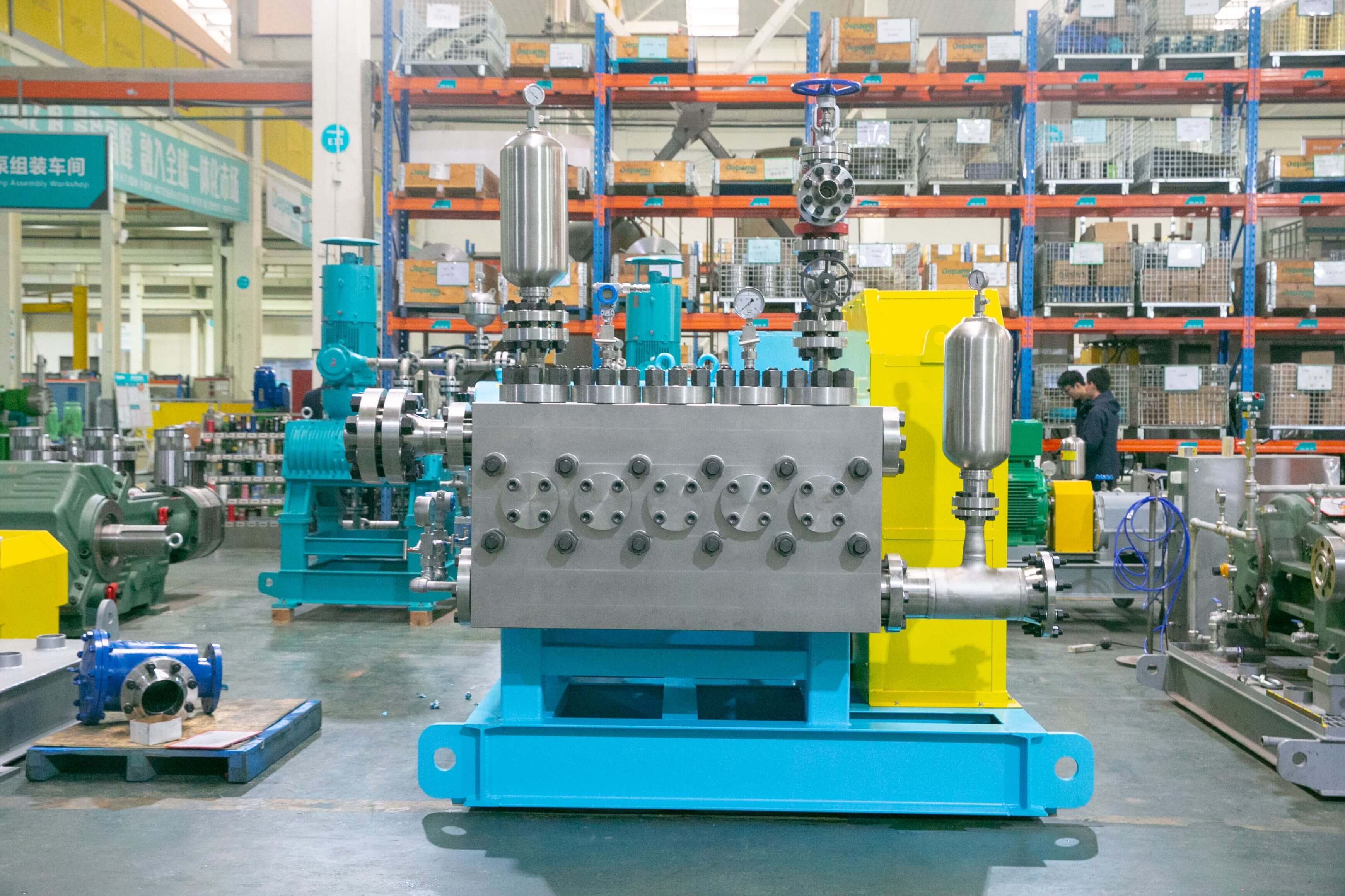
A high pressure plunger reciprocating pump direct manufacturer owns the engineering, machining, assembly and testing steps behind the pump and ships the finished unit to the buyer. Because one team handles design and delivery, questions about pressure, flow, medium and duty cycle reach the people who build the equipment.
A plunger reciprocating pump moves liquid through the back-and-forth stroke of a plunger, which is how it builds high pressure while holding a stable flow over long continuous runs. That behaviour suits high-viscosity, high-temperature and particle-bearing media, and it is used for oil and gas field water injection, petrochemical process transfer, pipeline boosting and high-pressure injection.
Applications are the other half of the definition. The same pump family is used across petroleum refining, chemicals, oil and gas fields, nuclear industry, power, metallurgy, new energy, environmental water treatment, new materials and food, where pressure, metering accuracy and continuous operation decide whether a process line holds its set point.
Product Scope and Packaged Delivery Capability
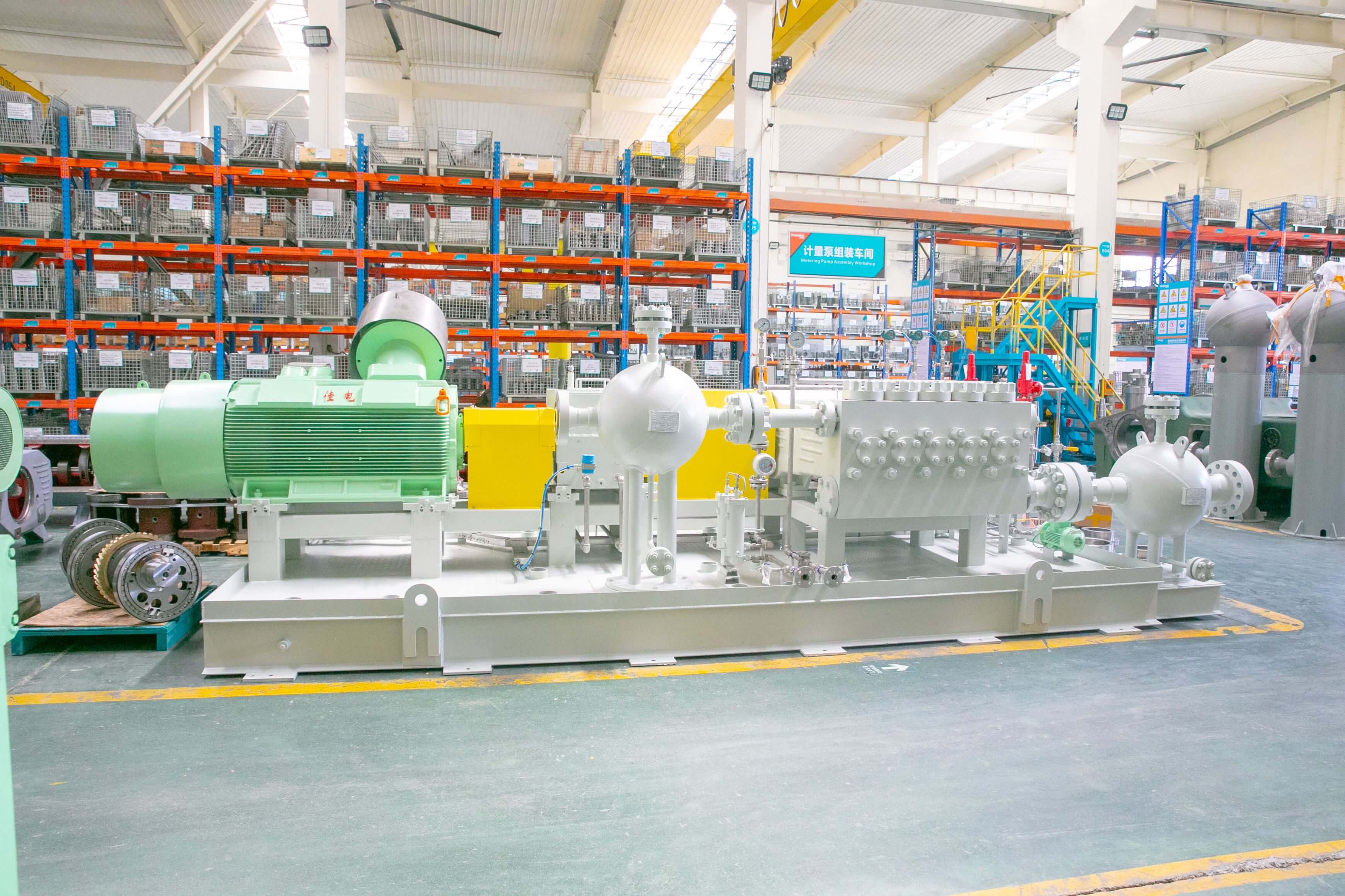
Depamu (Hangzhou) Pump Industry Technology Co., Ltd. was founded in 2003 and operates as a high-tech enterprise with more than 400 employees, a plant of about 35,000 square meters, registered capital of RMB 54 million and an annual output value of approximately RMB 500 million. The company builds metering pumps, high-pressure process reciprocating pumps, pneumatic pumps, electric pumps, automatic chemical dosing packages, water-steam sampling devices and water treatment equipment, alongside screw pumps, rotor pumps and gear pumps.
- Research, design, manufacturing and packaged delivery handled as one integrated flow rather than separate handovers
- Standard, non-standard and customized fluid solutions built around medium characteristics, flow rate, pressure, temperature and site process requirements
- High-pressure transfer, accurate metering, chemical dosing, process boosting and complex media handling covered by one product portfolio
For buyers comparing a direct manufacturer with a wholesale channel, this breadth matters. Dosing, high-pressure transfer and packaged dosing skids can be specified together instead of being sourced from separate vendors, and the duty point is defined by the process rather than by a catalogue page.
How to Compare Suppliers: Which High Pressure Plunger Reciprocating Pump Manufacturer Is Better
Comparing candidates starts with four questions: can the supplier meet the pressure, flow and medium your process requires; who owns the design; what testing happens before shipment; and who supports the unit after installation. The answers separate a direct manufacturer from a trading intermediary faster than any brochure.
Direct and wholesale channels serve different needs. A wholesale supplier is convenient when several brands or small quantities must be consolidated quickly, while a direct manufacturer keeps one technical contact for design changes, spare parts and commissioning support. For a pump that runs continuously at high pressure, that single point of accountability usually matters more than a small price difference.
Documentation is worth requesting early. Ask for the proposed configuration, the materials in contact with the medium, and the scope of what is delivered as a package; a manufacturer that can answer these consistently across two different duty points is usually the more stable partner over a long project.
Capability Signals to Check Before You Order
- In-house engineering that starts from medium characteristics, flow rate, pressure and temperature rather than from a stock model
- Machining, assembly and testing under the manufacturer’s own control, with packaged delivery included
- Reference experience in the industries your process belongs to
- A clear route for standard, non-standard and customized configurations at the same duty point
Application mix is one of the quickest signals to read. Within Depamu’s sales, petroleum refining and chemicals account for roughly 41%, oil and gas fields about 23%, nuclear, power, metallurgy and new energy about 15%, environmental water treatment about 13%, and new materials and food about 3%, with other industries making up about 5%. Sales have also moved from about RMB 450 million in 2023 to about RMB 510 million in 2024 and about RMB 560 million in 2025.
How to Contact a Manufacturer and What to Send First
To contact a manufacturer efficiently, send one written brief covering medium, flow rate, pressure, temperature, duty cycle and site process requirements, then ask for a proposal that states configuration, delivery scope and support terms. A supplier who answers those points in writing is far easier to compare than one who replies with general marketing material.
The first message decides how useful the reply will be. A price request alone usually returns a rough figure, because pump configuration depends on the duty point; a technical brief returns a configuration that can be checked against the process. Ask for the same written format from every candidate so the comparison stays on technical grounds.
Site conditions belong in the first message as well. Space around the skid, available utilities and the way the pump connects to existing pipework all change the delivered scope, and confirming them before the order avoids rework after the equipment arrives.
What to Prepare Before You Ask for a Quotation
- Medium characteristics, including viscosity, temperature and whether solids are present
- Required flow rate, pressure and continuous duty cycle
- Site process requirements and any layout limits around the dosing or transfer skid
- Whether a standard, non-standard or fully customized configuration is acceptable
When the brief is complete, ask how the manufacturer would confirm the configuration before shipment and how commissioning support is delivered on site. The answers show whether the direct channel you are talking to actually holds design, build and service in one place.
FAQ
What does a high pressure plunger reciprocating pump direct manufacturer actually provide?
It provides the pump as an engineered unit rather than a catalogue item, because design, machining, assembly, testing and delivery are handled by the same organisation. That single chain is why questions about pressure, flow and medium can be answered by the team that builds the equipment.
Which high pressure plunger reciprocating pump manufacturer is good for a high-pressure duty?
The better choice is the manufacturer that can state in writing how it will meet your pressure, flow and medium conditions and how it will test the unit before shipment. Capability on the specific duty point matters more than the length of a product list.
Is a wholesale supplier cheaper than buying direct?
Not necessarily. A wholesale channel adds a layer between the buyer and the build team, so the final price depends on what that layer provides, while a direct manufacturer quotes against the duty point itself. Compare the total delivered scope rather than a headline figure.
What should I prepare before contacting a manufacturer?
Prepare a short technical brief covering medium characteristics, flow rate, pressure, temperature, duty cycle and site process requirements. With those points fixed, a manufacturer can propose a standard, non-standard or customized configuration instead of a general estimate.
How do I contact a high pressure plunger reciprocating pump manufacturer?
Start with the manufacturer’s own enquiry channel, send the technical brief in writing, and ask for a proposal that states configuration, delivery scope and support terms. Keeping the request in one document makes replies from different candidates directly comparable.
Summary
Choosing a high pressure plunger reciprocating pump direct manufacturer comes down to verified engineering ownership, a documented build and test path, and a support route after installation. Compare candidates against your own duty point, ask each one for the same written proposal, and treat a wholesale channel as an option rather than a default. A brief that states medium, flow, pressure, temperature and site requirements is the fastest way to get an answer you can compare.