
A hydraulic diaphragm metering pump is judged on three things: dosing accuracy, a leak-free diaphragm barrier, and the manufacturing discipline behind the unit. Supplier quality follows the same logic — documented design, controlled production, and verifiable application experience matter more than a short price list.
What a Hydraulic Diaphragm Metering Pump Does
It injects a measured dose of chemical into a process line by adjusting stroke length and running frequency, while a hydraulically driven diaphragm separates the process fluid from the drive mechanism. That separation supports stable dosing of corrosive, volatile, or high-pressure media with no leak path across the diaphragm.
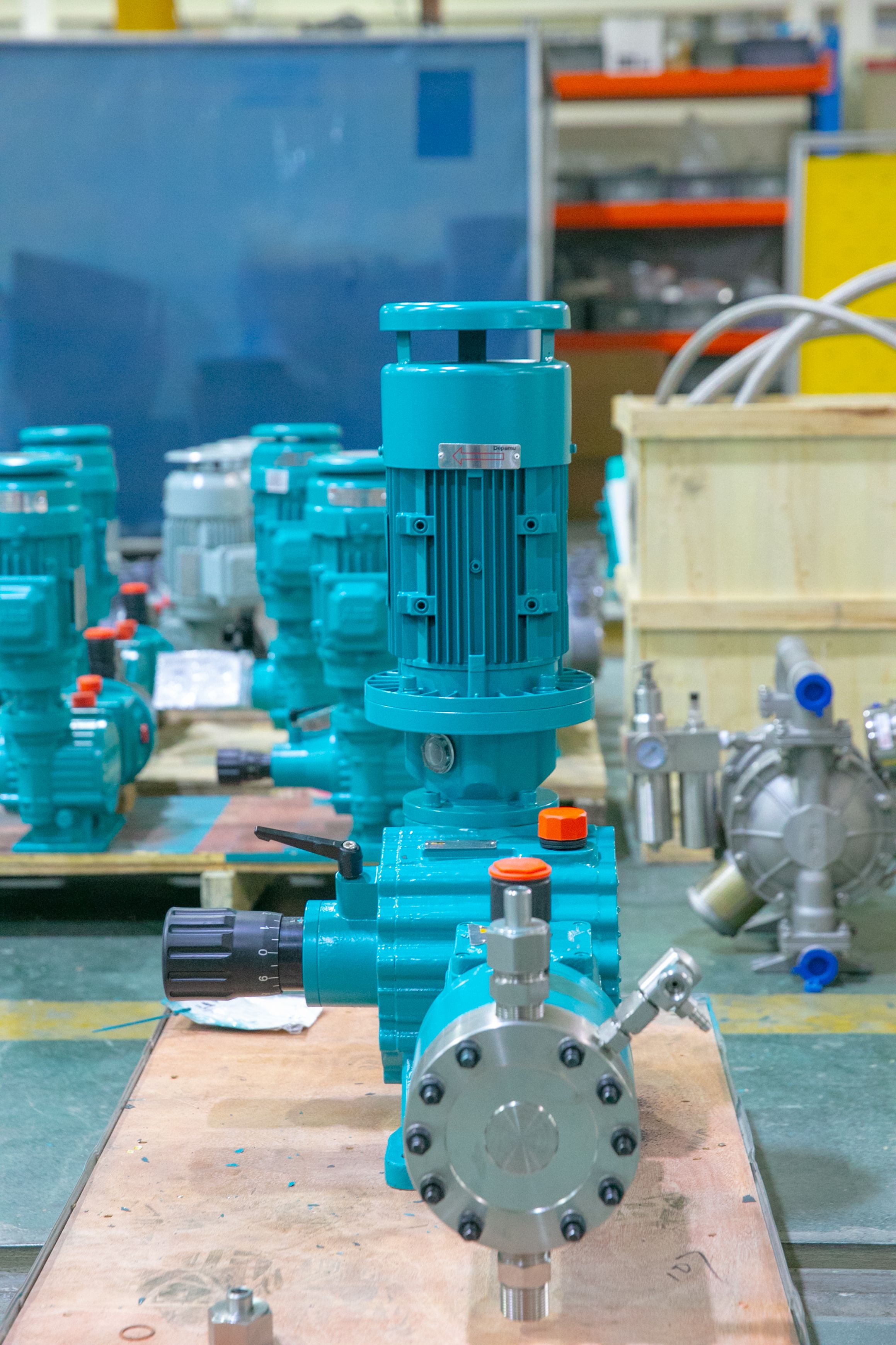
In a hydraulic design, the diaphragm is moved by hydraulic fluid rather than by a direct mechanical push from the drive. The process fluid stays on one side of the diaphragm and the hydraulic circuit stays on the other. This architecture is what allows the pump to run against aggressive, volatile, or high-pressure media without the drive ever contacting the fluid.
The duty is dosing, not bulk transfer: a fixed volume is delivered per stroke, and the operator sets the total dose by changing stroke length, running frequency, or both. Metering pumps of this type are used in petroleum refining and chemicals, environmental water treatment, pharmaceutical, food, and new energy applications where an exact quantity of chemical has to enter a process at a controlled rate. The same pump is also the core of packaged dosing systems that handle storage, dissolving, mixing, and automatic control in one assembly.
How to Judge Metering Quality: Engineering Criteria
Quality shows up in repeatable dose volume, diaphragm life, and how the hydraulic system behaves under back pressure. A pump that holds its set dose across changing line pressure and temperature is doing the work it was specified for; one that drifts under load is not, regardless of how the datasheet reads.
Dose control and repeatability
Dose is set through stroke length and running frequency. In service, the real question is whether the set dose survives changes in line pressure, temperature, and medium viscosity. Repeatability measured at the actual duty point is the figure that matters; a statement written at ambient conditions says little about a hot line running against back pressure.
Material selection and maintenance access
Wetted materials must match the medium, and the diaphragm and hydraulic components must be reachable for service. A supplier able to explain why a material was chosen, and how the diaphragm is replaced, is usually the same supplier that supports the pump after commissioning.
What a buyer can ask for
- A dose repeatability statement written at the actual pressure and temperature of the duty point
- A wetted material list matched to the specific medium being dosed
- Diaphragm and hydraulic assembly drawings that show how the barrier is sealed
- A test record for the assembled unit before it leaves the works
- A maintenance and spare parts route that works at the plant, not only on paper
How to Find and Select a Supplier
Start with suppliers whose product range already covers your duty point, then compare how each one documents design, testing, and delivery scope. The right supplier can show the pump configuration in comparable service, explain the material choice, and commit to a support route after commissioning.
Selection is easier when the comparison is made on identical terms. Ask each candidate the same questions about the medium, the pressure and temperature at the injection point, the required dose, and the interface to the control system. Answers that stay specific across those four points are a better indicator than a general statement of capability.
Questions that separate suppliers
- Which wetted materials do you propose for this medium, and why those materials?
- What dose repeatability can you state at my pressure, temperature, and flow?
- Which parts of the package are assembled and tested before shipment?
- Who supports commissioning on site, and how are spare diaphragms and hydraulic parts supplied?
Standard, non-standard, and packaged scope
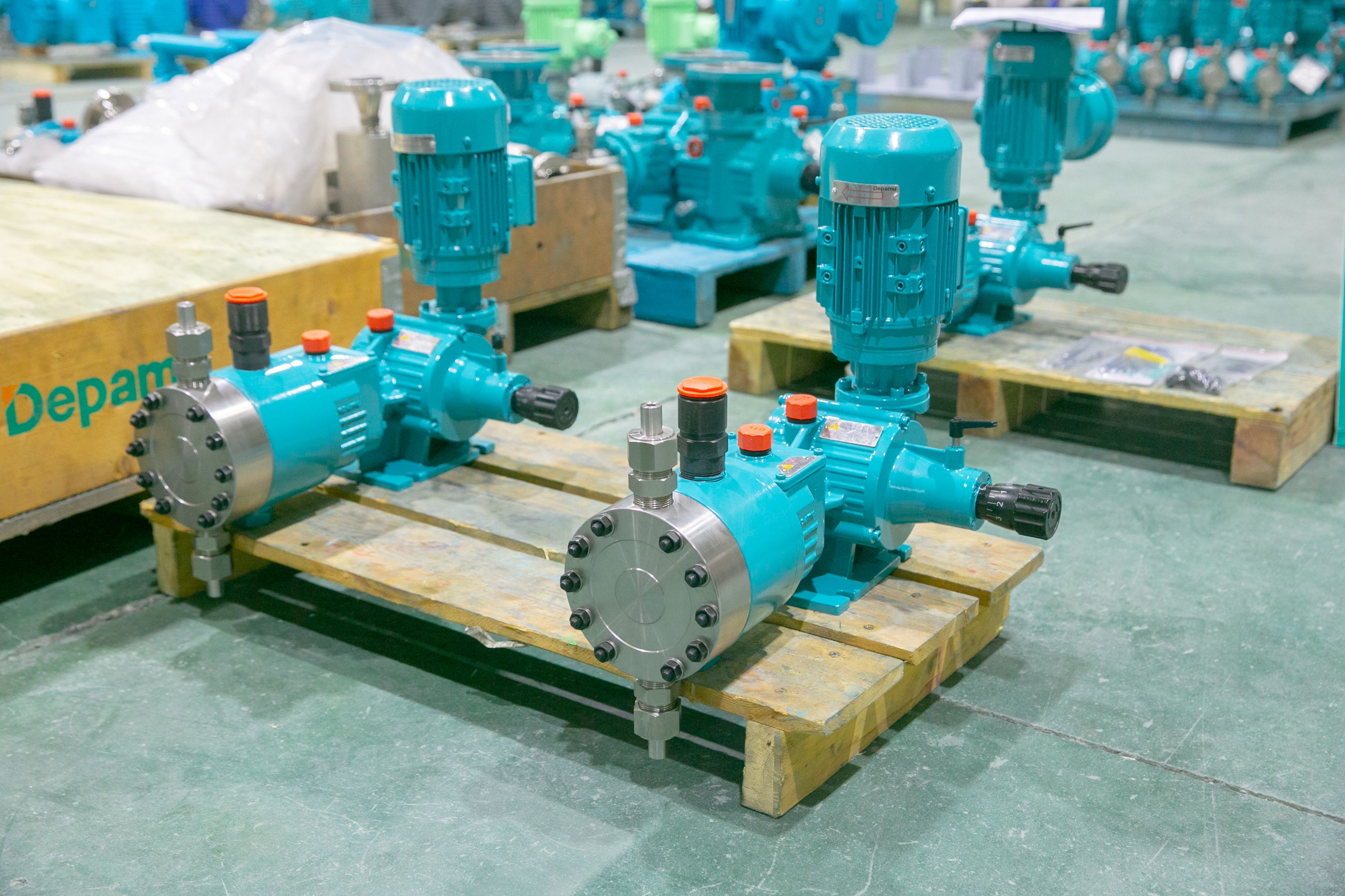
Suppliers differ most in what actually ships. A standard pump, a non-standard build matched to the medium, and a complete dosing package sit at three different levels of scope. A manufacturer with in-house design and assembly can offer standard products, non-standard products, and customized fluid solutions based on the medium characteristics, flow, pressure, temperature, and site process requirements.
Packaged dosing systems integrate chemical storage, dissolving, mixing, metering, and automatic control in one skid. They support dry powder or liquid dosing, multi-point dosing, and automatic interlocking control, and they are assembled and tested before delivery so that on-site work is limited to connecting piping and power.
Manufacturing Capability Behind Consistent Quality
Consistent pump quality depends on production scale, engineering depth, and the ability to deliver a complete package rather than a bare unit. Plant area, staffing, and design capability are practical indicators a buyer can review before placing an order, because they set the limit on how much customization and testing a supplier can absorb.
Depamu (Hangzhou) Pump Industry Technology Co., Ltd. was founded in 2003 and has concentrated on high-end positive displacement pumps and fluid equipment since then. The company introduced advanced technology from Germany and continued to develop it in house. It employs more than 400 people across a plant of about 35,000 square meters, holds registered capital of RMB 54 million, and reports an annual output value of about RMB 500 million. It operates three brands and supplies metering pumps, high-pressure process reciprocating pumps, pneumatic pumps, electric pumps, chemical dosing packages, water-steam sampling devices, water treatment equipment, screw pumps, rotary lobe pumps, and gear pumps.
Sales have grown steadily, from about RMB 450 million in 2023 to about RMB 510 million in 2024 and about RMB 560 million in 2025. For a buyer, those figures are a capacity indicator rather than a guarantee of fit; the duty point still decides which pump is selected, and the documentation behind it decides whether the selection holds up in service.
Product Portfolio and Application Fit
Fit is decided by matching the equipment family to the duty: dosing, high-pressure transfer, or a complete chemical preparation and injection package. Each family carries a different set of design constraints, and a supplier with all three in scope can recommend the configuration that suits the process instead of forcing one product type onto every inquiry.
| Product family | Role in the process | Application areas |
|---|---|---|
| Metering pumps, including hydraulic diaphragm units | Controlled dosing of chemical agents at a set rate | Petroleum refining and chemicals, environmental water treatment, pharmaceutical, food, new energy |
| High-pressure process reciprocating pumps | High-pressure transfer and boosting, with pressure up to 35 MPa and above | Oil and gas water injection, petrochemical process transfer, pipeline boosting, high-pressure injection |
| Automatic chemical dosing packages | Integrated storage, dissolving, mixing, metering, and automatic control in one skid | Boiler water treatment, circulating water treatment, wastewater treatment, petrochemical |
| Other fluid equipment | Transfer, sampling, and extraction duties matched to the process | Selected against medium, flow, pressure, and temperature requirements |
Where the equipment is actually used is another check on fit. The reported sales mix shows where the installed base sits:
- Petroleum refining and chemicals: about 41% of sales
- Oil and gas fields: about 23% of sales
- Nuclear, power, metallurgy, and new energy: about 15% of sales
- Environmental water treatment: about 13% of sales
- New materials and food: about 3% of sales
- Other industries: about 5% of sales
For a buyer, the mix is useful context rather than a selection rule. A pump chosen for a refinery dosing duty and a pump chosen for a water treatment dosing duty may share the same working principle, but the material set, the control interface, and the maintenance interval will differ with the medium and the site.
Reputation and Reference Checks
A reputation claim is only as useful as the evidence behind it: comparable duty points, repeat orders, and a service route that survives commissioning. Rankings and testimonials should be traceable to documented application experience before they influence a purchase decision.
Ask for references at a comparable duty point, meaning a similar medium family, similar pressure and flow, and a similar uptime requirement. Ask how quickly spare diaphragms and hydraulic parts reach the site, and who answers the call in the first week of operation. A record built on installed equipment and service response is more informative than a score with no stated method behind it.
The same discipline applies to the supplier visit. Seeing the assembly area, the test bay, and the documentation process tells a buyer more about consistency than a brochure. Where a plant visit is not possible, the equivalent evidence is a drawing set, a test record, and a named contact for commissioning support.
FAQ
How can I judge the quality of a hydraulic diaphragm metering pump?
Judge it against the duty point: dose repeatability across pressure changes, diaphragm and hydraulic system design, wetted material compatibility, and documented testing before shipment. Price alone does not show whether the pump will hold its set dose in service.
What should I check before choosing a supplier?
Check product coverage, engineering support, documentation, delivery scope, and the after-sales route. A supplier that can explain material selection and support commissioning is easier to work with than one that only quotes a model number.
Which industries use diaphragm metering pumps?
They are used wherever a chemical must be dosed at a controlled rate, including petroleum refining and chemicals, environmental water treatment, pharmaceutical, food, and new energy applications.
Can a metering pump handle corrosive or volatile media?
Yes, when the wetted materials and the diaphragm system are selected for the specific medium. Corrosive and volatile fluids place the emphasis on material compatibility and on a diaphragm barrier that keeps the process fluid away from the drive.
Why does manufacturing capability matter for pump quality?
Because repeatable quality comes from controlled production, engineering depth, and complete-package delivery. Plant area, staffing, and the ability to test an assembled system before shipment all influence how the unit behaves on site.
Summary
Selecting a hydraulic diaphragm metering pump comes down to matching the dose duty, verifying the diaphragm and hydraulic design, and choosing a supplier that can document both. The same review should cover production capability, delivery scope, and the support route after commissioning — the points that decide whether the pump keeps its accuracy once it is on the line.