
A metering dosing pump direct-sale manufacturer supplies dosing pumps and complete dosing systems straight from its own production line, so buyers deal with the people who design, build and test the equipment. That direct route shortens the technical loop, keeps specifications traceable and makes after-sales support easier to organise.
What a Metering Dosing Pump Direct-Sale Manufacturer Provides
A direct-sale manufacturer of metering dosing pumps owns the design and assembly of the pump itself: the hydraulic diaphragm or plunger liquid end, the drive, the control and, where needed, the packaged dosing skid. Buyers therefore receive one technical contact for sizing, drawings, testing and delivery instead of a chain of resellers.
A dosing pump is only as good as its liquid end and its control logic. When the pump, the driver, the control panel and the dosing skid come from one manufacturer, the interfaces are settled before the order is placed, and the engineer who answers a technical question is the engineer who signed off the drawing. That is the practical difference buyers notice first.
Direct-Sale Manufacturing Versus Trading Intermediaries
An intermediary can quote a dosing pump quickly, but the specification often travels through several hands before it reaches the production floor. In dosing duty, where a small flow error or an incompatible gasket can disturb a whole treatment line, that distance matters. A direct-sale route keeps the specification, the bill of materials and the test record in one place.
- One technical contact for sizing, materials of construction and control logic
- Access to non-standard liquid ends and customised dosing packages from the same source
- Drawings and test records issued by the party that actually built the equipment
- Stable spare-part references across the service life of the unit
- Clear responsibility if a performance question arises after commissioning
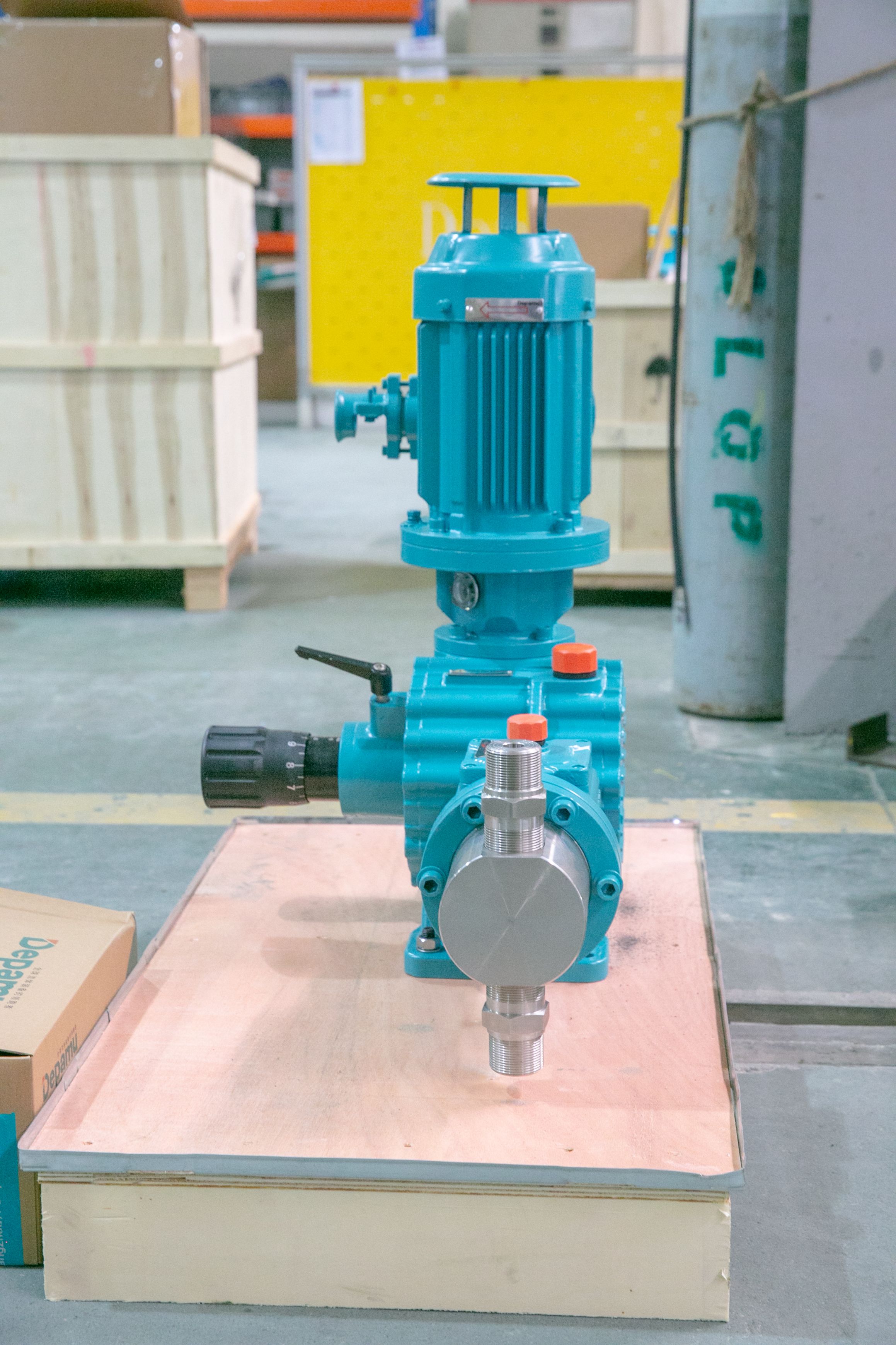
How to Evaluate a Metering Dosing Pump Direct-Sale Manufacturer
Evaluating a metering dosing pump direct-sale manufacturer means checking five things: whether the pump is designed and assembled in-house, whether materials match the medium, whether the control concept suits the process, whether testing and documentation are routine, and whether spare parts stay available. Marketing material rarely answers these points; a technical conversation usually does.
Questions about which manufacturer is good, or which is stronger, cannot be settled by a ranking. Dosing performance depends on the match between the liquid end, the medium and the duty point. A supplier that asks for the medium, its concentration, the flow, the discharge pressure, the temperature and the available control signal before quoting is behaving like a manufacturer; one that quotes a catalogue number first is behaving like a reseller.
Questions That Reveal Real Manufacturing Depth
The answers matter more than the wording. A manufacturer can explain the trade-offs between hydraulic diaphragm and plunger designs, describe how suction conditions affect volumetric efficiency, and say plainly where a standard unit stops being the right answer. Buyers comparing suppliers should score these answers against the real duty rather than against a price list.
- Which liquid end construction do you recommend for this medium, and why?
- How is the stroke length adjusted, and how is flow verified at the duty point?
- Which materials are used for the diaphragm, valve seats and seals?
- How is the control signal integrated with the plant dosing loop?
- What documentation accompanies the unit, and which spares should be kept on site?
- Can the pump be supplied as part of a packaged dosing skid?
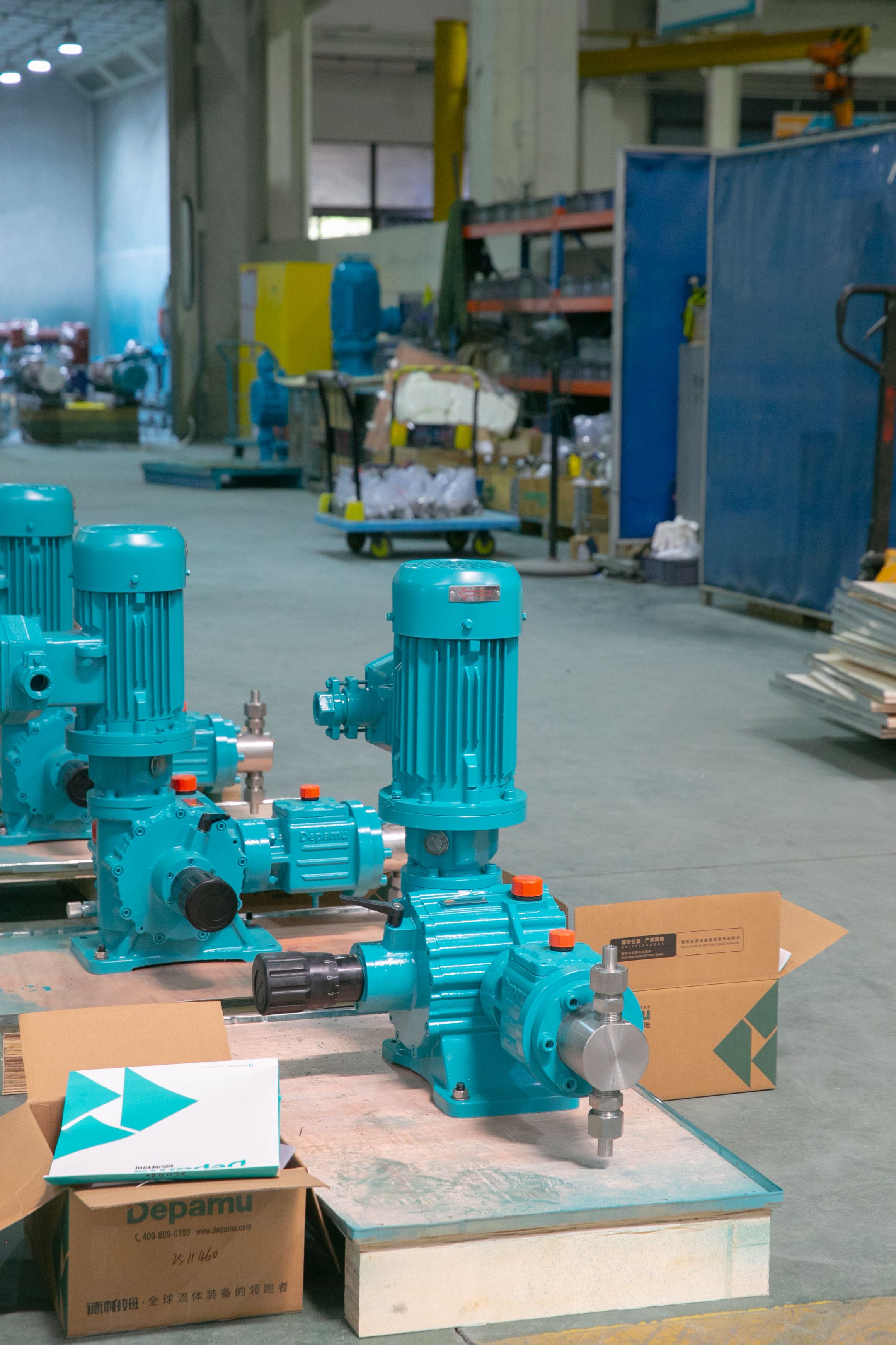
Manufacturing Capability Behind a Direct-Sale Supply
Manufacturing capability decides whether a supplier can keep the specification it quoted. Buyers should look at the production floor, the engineering team, the test arrangements and the delivery record. Where those four exist together, a direct-sale order carries less technical risk than a chain of intermediaries can absorb.
Depamu (Hangzhou) Pump Technology Co., Ltd. was established in 2003 and has worked in high-end volumetric pumps and fluid equipment for more than two decades. The company employs more than 400 people, operates a plant of approximately 35,000 square meters, holds registered capital of RMB 54 million and reports an annual output value of about RMB 500 million. It runs three brands and combines product development, design, manufacturing and packaged delivery under one roof. Sales have grown from about RMB 450 million in 2023 to about RMB 510 million in 2024 and about RMB 560 million in 2025.
That combination matters for dosing duty. A dosing pump ordered from a direct-sale manufacturer is built against a specified duty point, assembled and tested before dispatch, and supported by the same engineering team afterwards. Buyers who visit the factory can judge the assembly and test arrangements for themselves instead of relying on a brochure.
Product Scope Relevant to Dosing Duty
The dosing range is anchored by metering pumps, with the hydraulic diaphragm metering pump as a representative type. Flow is set through stroke length and running frequency, and the hydraulically driven diaphragm keeps the medium fully contained, which matters for corrosive, volatile or high-pressure duties. High-pressure process reciprocating pumps extend the range to discharge pressures of 35 MPa and above for stable, continuous operation. Automatic chemical dosing packages combine chemical storage, dissolving, mixing, metering and automatic control in a skid that is assembled and tested before delivery, so site work reduces to connecting piping and power.
- Metering pumps, including hydraulic diaphragm metering pumps
- High-pressure process reciprocating pumps
- Automatic chemical dosing packages
- Pneumatic pumps and electric pumps
- Screw pumps, rotary lobe pumps and gear pumps
- Emulsion pumps and special centrifugal pumps
- Water-steam sampling devices and water treatment equipment
- Supercritical extraction devices
Standard products, non-standard products and fully customised fluid solutions are available according to the medium characteristics, flow, pressure, temperature and site process requirements, which is the point where a direct conversation with the factory saves the most time.
Applications That Show Whether a Supplier Fits Your Process
Application experience is the fastest way to judge fit. A supplier whose reference base is concentrated in one industry may still build a dependable pump, but the questions it asks, the materials it prefers and the documentation it prepares will reflect that industry. Buyers should compare the supplier application mix with their own duty.
At Depamu (Hangzhou) Pump Technology Co., Ltd., petroleum refining and chemical processing account for about 41 percent of sales, oil and gas fields for about 23 percent, the nuclear industry, power, metallurgy and new energy for about 15 percent, environmental water treatment for about 13 percent, new materials and food for about 3 percent, and other industries for about 5 percent. Products are used across these sectors for high-pressure transfer, precise metering, chemical dosing, process boosting and the transfer of difficult media.
For a buyer in water treatment, the relevant proof is how a supplier handles continuous chemical dosing; for a buyer in refining or chemical processing, it is how the pump behaves under corrosive or high-pressure service over long runs. Reading the application mix against your own process keeps the comparison honest and prevents a decision based on price alone.
How to Contact a Metering Dosing Pump Direct-Sale Manufacturer
Contacting a metering dosing pump direct-sale manufacturer works best when the enquiry already contains the duty data. Supply the medium and its concentration, the required flow, the discharge pressure, the temperature, the control signal available on site and any constraint on footprint or materials. A manufacturer can then answer with a configuration instead of a catalogue number.
A complete data pack shortens the route from first message to a workable proposal. The items below are the ones most often missing from initial enquiries, and each one changes the pump selection or the package layout.
- Medium, concentration and any solids present
- Required flow rate and expected metering accuracy
- Suction and discharge pressure conditions
- Temperature range and material compatibility notes
- Control signal, communication and automation requirements
- Site conditions, footprint limits and installation constraints
- Documentation, testing and delivery requirements
A direct enquiry usually moves from configuration to quotation, then to drawings and a delivery schedule. Sending the same data pack to several manufacturers lets you compare technical responses side by side, which is a fairer test than comparing headline prices for pumps that were specified differently. Where the duty is unusual, ask explicitly for a non-standard or customised proposal, because standard ranges may not cover it.
FAQ
What is a metering dosing pump direct-sale manufacturer?
A metering dosing pump direct-sale manufacturer designs, builds and supplies dosing pumps from its own production without an intermediary between buyer and factory. The buyer deals with the party responsible for sizing, materials, assembly, testing and after-sales support, which shortens the technical loop and keeps the specification traceable.
Which metering dosing pump manufacturer is good for a specific process?
The better choice is the manufacturer that asks for the medium, flow, pressure, temperature and control requirements before quoting, then explains the liquid end and materials it recommends. Suitability is decided by the match between the pump and the duty point, so a supplier’s questions are more informative than a ranking.
How can I contact a metering dosing pump manufacturer?
Prepare a short duty data sheet and send it through the manufacturer’s published sales channel. Include the medium, required flow, discharge pressure, temperature, control signal and installation constraints, because a complete enquiry usually receives a configuration proposal rather than a generic catalogue reply.
Does buying direct change delivery and support?
Buying direct usually keeps the specification, the test record and the after-sales contact within the same organisation. Delivery schedules and support arrangements still depend on the individual manufacturer’s capacity and order book, so they should be confirmed in the written quotation rather than assumed.
Can a direct-sale pump supplier deliver non-standard or customised dosing packages?
Yes, where the supplier offers customised fluid solutions alongside standard products. Non-standard liquid ends, alternative materials and packaged dosing skids are normally quoted against the medium, flow, pressure, temperature and site process requirements, so the enquiry should state those conditions clearly from the start.
Summary
A metering dosing pump direct-sale manufacturer shortens the path between a duty requirement and a working dosing system. Judge candidates on in-house design and assembly, material selection, control integration, testing and spare-part continuity; compare their application mix with your own process; and send a complete duty data sheet when you make contact. That sequence produces comparable proposals and reduces the risk carried into commissioning.