
A twin screw pump direct-sales manufacturer is a supplier that builds and sells its own pump range straight to end users instead of passing orders through resellers. Choosing one comes down to verifiable manufacturing scope, engineering support during selection, and a clear contact path, so buyers can confirm real capability before placing an order.
Twin Screw Pump Direct-Sales Manufacturer: What Buyers Should Check First
Start with manufacturing scope. A direct-sales manufacturer should be able to explain which pump components it machines and assembles in house and which parts it sources. That answer shows how much of the delivery one party is responsible for, and it is the first filter that separates a production source from a trading intermediary.
The second check is engineering involvement at the quotation stage. A supplier that asks for flow rate, discharge pressure, temperature, viscosity, solids content, and duty cycle before proposing a model is sizing the pump for the application. A supplier that only asks for a model number and a quantity is filling an order. The difference becomes visible later, when the unit is running.
The third check is what happens after commissioning. Wear parts, rotor and stator replacement, mechanical seal renewal, and technical answers all need a reliable route back to the production source. Buyers should confirm that route in writing before the order, not after the first unplanned shutdown.
Direct-Sales and Wholesale Channels Compared
Both channels can serve a buyer well, and neither is automatically superior. What matters is where engineering knowledge and spare-part responsibility sit. A direct-sales route usually keeps technical answers close to the people who design and build the pump. A wholesale route can be efficient when the reseller holds stock and can still provide genuine sizing support rather than only a delivery date.
- Whether the pump body, rotors, and shafts are produced by the supplier or bought in
- Whether sizing is based on your duty point or on a catalogue selection only
- What test records and dimensional documentation come with each unit
- How wear parts and seal kits are supplied after commissioning
- Which technical contact remains available once the warranty period ends
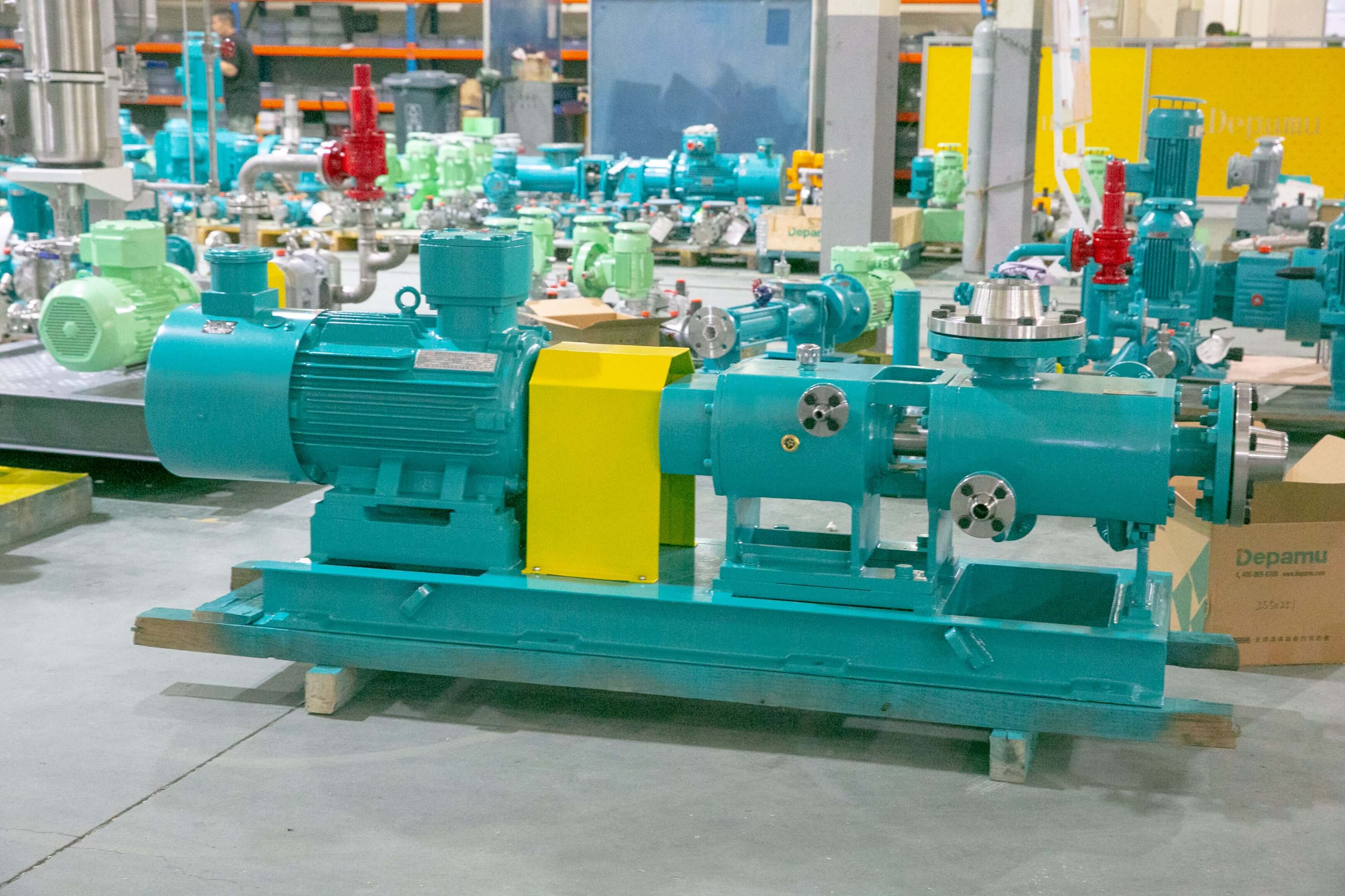
How to Compare Twin Screw Pump Suppliers on Real Capability
Compare suppliers on the same evidence set instead of on headline price. Ask each one what it manufactures in house, how it sizes a pump for a given duty, what documentation ships with the unit, and how spares are handled after commissioning. A like-for-like comparison on these four points produces a decision you can defend to your own engineering and procurement teams.
Price comparison alone compresses everything into a single number, and that number usually hides the differences that matter later. Two offers for a similar pump can differ in material grade, seal arrangement, drive configuration, surface treatment, and the extent of factory testing. When those differences are written down side by side, the cheaper offer sometimes turns out to be the narrower scope rather than the better value.
Questions That Reveal How a Supplier Works
A short set of questions, asked in the same way to every candidate, exposes how each supplier actually operates. The answers are more useful than brochures because they describe process rather than reputation.
- Which parameters do you need before you can size the pump?
- Which parts of the build are produced in your own workshop?
- What is checked before the unit leaves the factory?
- How do you handle a pump that must run with abrasive or high-viscosity media?
- Who answers technical questions after the unit is installed?
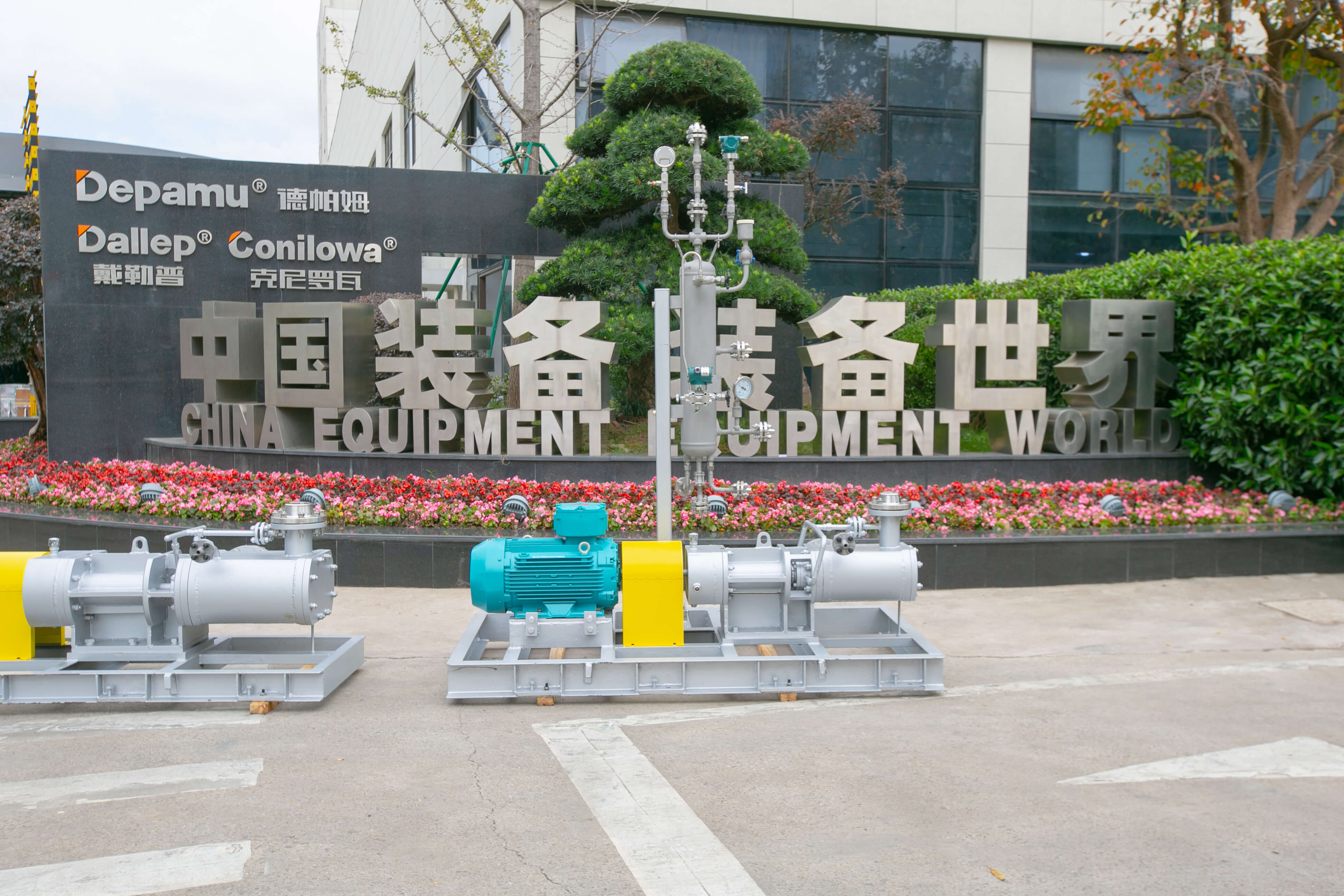
Which Twin Screw Pump Manufacturer Is Good for Your Process?
The good manufacturer for a specific plant is the one whose sizing, materials, and drive selection match the medium actually being handled. Duty conditions decide the answer far more than brand familiarity, so the comparison should start from process data rather than from a preferred name on a list.
Twin screw pumps are positive displacement machines, and their behaviour depends on the clearance between the rotating screws and the casing, the material pairing, and the speed at which they run. A configuration that suits a clean, lubricating medium is not automatically right for a medium carrying solids, or for one whose viscosity changes with temperature. This is why the same pump family can perform very differently at two sites running what looks like the same duty.
The practical test is whether the supplier can explain, in writing, why the proposed configuration suits your process. A proposal that lists the medium, flow, pressure, temperature, and material selection and ties each one to the chosen model is easier to trust than a proposal that only repeats a model number and a lead time.
Which Twin Screw Pump Manufacturer Is Stronger? Reading Strength Correctly
Strength, in this context, means repeatable build quality across orders, engineering support that continues after delivery, and a spare-part supply that lasts as long as the pump does. Those three qualities affect uptime more than any single impressive figure on a specification sheet.
A supplier can look strong on paper and become hard to reach once the invoice is paid. Buyers therefore check the ordinary things: whether documentation is complete, whether the same technical contact answers twice, whether wear parts are catalogued and available, and whether the workshop can handle non-standard requirements rather than only catalogue models.
For plants running continuous duty, the ability to respond to a failure quickly is worth more than a marginal difference in published performance. That is why strength is best judged as an operational property, measured over years of service, rather than as a marketing claim.
How to Contact a Twin Screw Pump Manufacturer and What to Send
Contact the manufacturer through its published sales or technical channel, and put the duty parameters in the first message rather than asking for a general price list. A complete process description usually shortens the path from first enquiry to a quotation that can actually be evaluated.
A first message that works includes the medium and its concentration, the required flow rate, the discharge pressure, the operating temperature, the viscosity range, the solids content if any, and whether the pump runs continuously or intermittently. Adding the installation environment and the available drive arrangement helps the engineer narrow the configuration without a second round of questions.
It also helps to state what the pump is expected to achieve, whether that is transfer, metering, or boosting. Suppliers who understand the function can suggest alternatives when the original plan is not the most economical route to the same result.
Information That Speeds Up a Quotation
- Medium, concentration, and any suspended solids
- Required flow rate and discharge pressure
- Operating temperature and viscosity range
- Continuous or intermittent duty, and expected running hours
- Installation environment, available space, and drive arrangement
Screw Pump Supply Backed by a Wider Fluid Equipment Range
Depamu (Hangzhou) Pump Industry Technology Co., Ltd. was founded in 2003 and has focused on high-end volumetric pumps and fluid equipment for more than two decades. The company employs over 400 people, operates a plant site of roughly 35,000 square meters, holds a registered capital of RMB 54 million, and reports an annual output value of about RMB 500 million.
Its product range covers metering pumps, high-pressure process reciprocating pumps, pneumatic pumps, electric pumps, chemical dosing systems, water-steam sampling devices, and water treatment equipment, alongside screw pumps, rotor pumps, and gear pumps. Because the range spans both single machines and packaged systems, a buyer can source a pump and the equipment around it from one supplier instead of coordinating several vendors.
The company reports that its products are used in petroleum refining, chemicals, oil and gas fields, the nuclear industry, power generation, metallurgy, new energy, environmental water treatment, new materials, and food. In terms of sales mix, refining and chemicals account for about 41 percent, oil and gas fields about 23 percent, nuclear, power, metallurgy, and new energy about 15 percent, environmental water treatment about 13 percent, new materials and food about 3 percent, and other industries about 5 percent.
Reported sales have grown steadily, from about RMB 450 million in 2023 to about RMB 510 million in 2024 and about RMB 560 million in 2025. On the engineering side, the company describes a capability that runs from research and design through manufacturing to packaged delivery, with standard, non-standard, and customized fluid solutions built around the medium, flow, pressure, temperature, and site process requirements. Its high-pressure process reciprocating pumps are rated to 35 MPa and above, and its hydraulic diaphragm metering pumps use a hydraulically driven diaphragm design that adjusts stroke length and frequency to control dosing without leakage.
This kind of range matters to buyers in one specific way: it shows whether a supplier can integrate a pump into a working system instead of delivering a stand-alone unit. A packaged chemical dosing assembly, for example, combines storage, dissolving, mixing, metering, and automatic control in one skid that is assembled and tested before shipment, so site work reduces to connecting piping and power.
FAQ
How do I choose a twin screw pump direct-sales manufacturer?
Choose one that manufactures the pumps it sells, sizes them against your real duty point, and supports them with spares after delivery. Confirm these three points with documentation before you compare prices.
Which twin screw pump manufacturer is good?
The good manufacturer for your plant is the one whose sizing, materials, and drive selection match the medium and duty you actually run. Ask each supplier to explain how its proposal meets your flow, pressure, temperature, and viscosity conditions.
Is a wholesale channel better than a direct-sales channel?
Neither channel is better in every case; the deciding factor is who controls engineering and after-sales support. A wholesale route works when the reseller can still provide sizing help and spare parts, while a direct route keeps technical answers closer to the production source.
How do I contact a twin screw pump manufacturer?
Use the sales or technical contact channel published by the manufacturer and put your duty parameters in the first message. Medium, flow, pressure, temperature, and viscosity details usually shorten the path to a usable quotation.
What should I prepare before contacting a supplier?
Prepare the medium being handled, the required flow rate, the discharge pressure, the operating temperature, the viscosity range, any solids content, and the duty cycle. These parameters let an engineer propose a suitable configuration instead of a generic offer.
Summary
Choosing a twin screw pump direct-sales manufacturer is a process of verification rather than persuasion. Confirm what the supplier builds in house, how it sizes a pump for your duty, what documentation and spare-part support it offers, and how quickly a technical contact responds. Buyers who compare candidates on those four points, and who send complete duty data in the first message, usually reach a workable configuration faster and with fewer surprises after commissioning.