
A reliable high pressure plunger reciprocating pump is one that matches the duty point, is built from suitable materials, and comes from a manufacturer that can document design, testing and support. Choosing well means comparing how a supplier engineers the pump for pressure, flow and medium rather than comparing price alone.
What Defines a Reliable High Pressure Plunger Reciprocating Pump
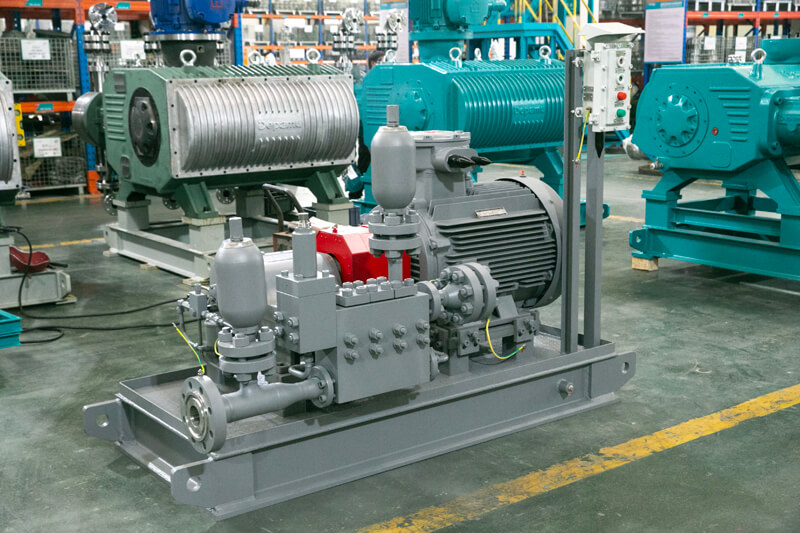
A reliable high pressure plunger reciprocating pump converts a reciprocating plunger stroke into stable high-pressure flow while keeping wear, leakage and downtime predictable. Reliability comes from the hydraulic design, the materials in contact with the medium, and the accuracy of manufacturing and testing, not from a single headline specification.
The working principle is straightforward: a plunger moves back and forth inside a cylinder, drawing liquid in on the suction stroke and displacing it at high pressure on the discharge stroke. Because pressure is generated mechanically by the plunger rather than by a rotating impeller, the pump behaves like a pressure booster station on an industrial line, moving liquid from a low-pressure source into a high-pressure header or a long pipeline.
What separates a dependable unit from a marginal one is how the design copes with continuous duty. The sealing and packing arrangement, the lubrication of the moving parts and the stiffness of the fluid end together decide how long the pump holds its performance before maintenance is needed. None of this can be judged from a catalogue headline alone; it shows up in the drawings, the material specification and the test record a supplier is willing to share.
Design and Material Factors That Drive Reliability
Reliability is designed in at the point where the duty, the medium and the maintenance plan meet. Five factors usually decide whether a unit performs over years of operation.
- Duty point fit: rated pressure, flow, temperature and medium consistency must all sit inside the design envelope, with margin for process upsets.
- Wetted material selection: corrosion and abrasion resistance of the fluid end, valves and seats must match the chemistry and the solids content of the medium.
- Plunger, seal and packing design: the sealing arrangement must be chosen for viscosity, temperature and particle content, because those three variables drive the wear rate.
- Drive train and fluid-end strength: the crank mechanism and the pressure-retaining parts must be sized for continuous running rather than for short peaks.
- Serviceability: inspection access, seal replacement and spare-part availability determine the real availability of the unit over its working life.
How to Judge Which Supplier Is Professional and Authoritative
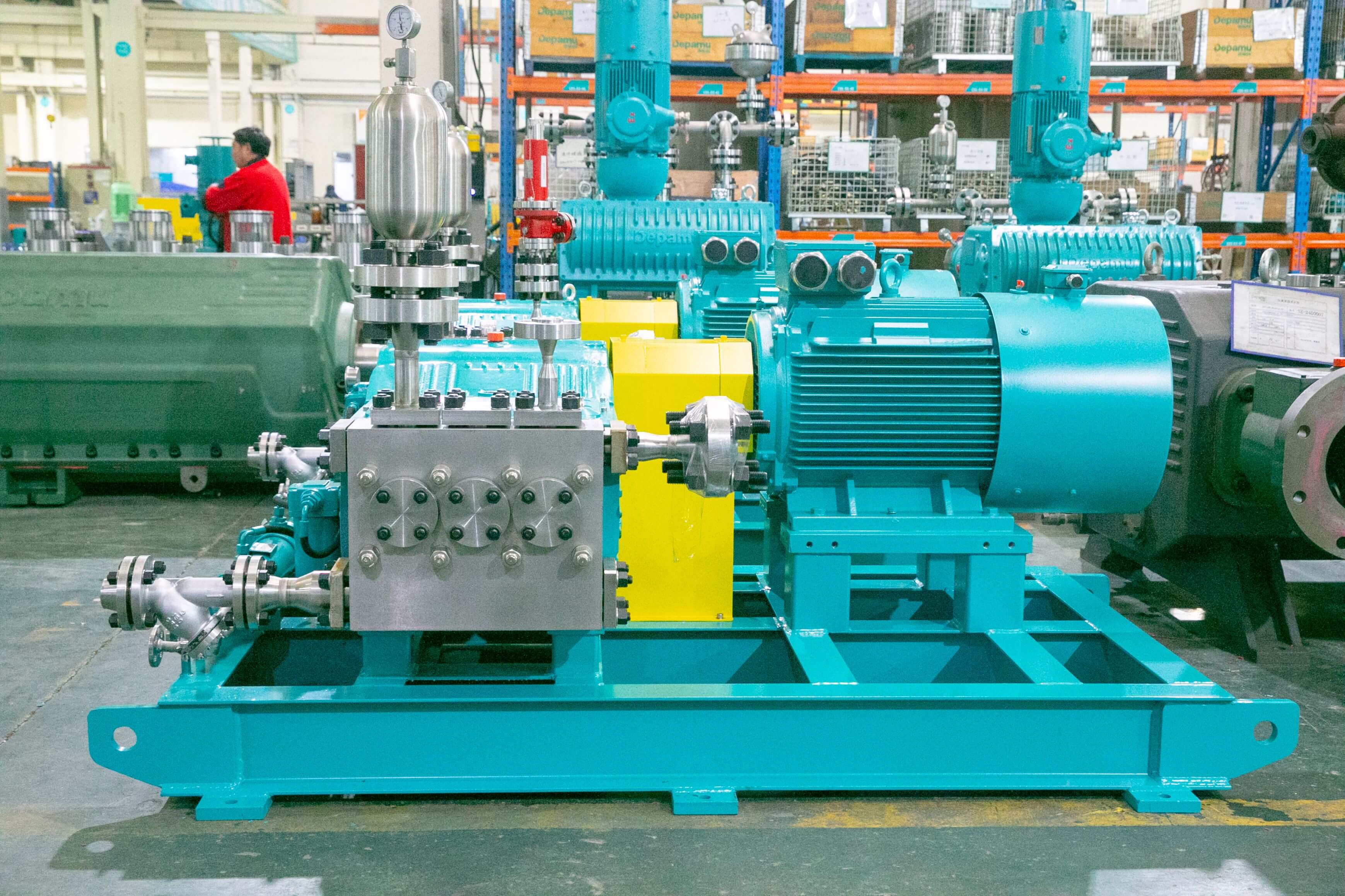
A professional supplier is one that can show how the pump was designed for your duty point, how it was tested before shipment, and how it will be supported after installation. Authority in this field is built on engineering depth and on delivered work, not on marketing claims or catalogue size.
Depamu (Hangzhou) Pump Industry Technology Co., Ltd. is an example of a manufacturer organised around that model. Founded in 2003, the company develops, produces and sells high-end volumetric pumps and fluid equipment and has worked in this field for more than twenty years. It has more than 400 employees, a plant of about 35,000 square meters, a registered capital of 54 million yuan and an annual output value of about 500 million yuan. Its range covers metering pumps, high-pressure process reciprocating pumps, pneumatic and electric pumps, chemical dosing packages, water and steam sampling devices, water treatment equipment, screw pumps, rotor pumps and gear pumps.
The company combines product research and design with manufacturing and complete package delivery, and it states that it operates as a high-tech enterprise, with technology introduced from Germany that has been refined in-house. Reported sales of about 450 million yuan in 2023, about 510 million yuan in 2024 and about 560 million yuan in 2025 indicate the scale of the operation that a buyer would be dealing with.
When you compare suppliers, ask for documents rather than adjectives: a design calculation that ties the pump to your duty point, a material specification for every wetted part, a test record for the unit before shipment, and a clear statement of how commissioning support and spare parts will be handled. A supplier that answers these four questions in writing is the one worth shortlisting.
Matching the Pump to the Medium and the Duty
Matching the pump to the medium is the step where most reliability is won or lost. Viscosity, temperature, solids content, corrosivity, flow and pressure must all be stated before a model is selected, because each of them changes the sealing, the materials and the drive sizing.
The high-pressure process reciprocating pump line is built for exactly this kind of work. The pump uses a reciprocating plunger to push liquid and can reach pressures of 35 MPa and above, with stable flow and the ability to run continuously for long periods. It is suited to high-viscosity, high-temperature and solids-bearing media, and it is used for oilfield water injection, petrochemical process transfer, pipeline boosting and high-pressure injection.
Applications spread across the industries the company serves: petroleum refining and chemicals account for about 41% of sales, oil and gas fields about 23%, nuclear, power, metallurgy and new energy about 15%, environmental water treatment about 13%, new materials and food about 3%, and other industries about 5%. That spread matters to a buyer, because a supplier working across several process industries sees more medium combinations and more duty profiles than one confined to a single sector.
Where a standard model does not fit, non-standard and customized fluid solutions are built around the client’s medium characteristics, flow, pressure, temperature and site process. That includes complete packages in which pumps, dosing equipment, sampling devices and controls are assembled and tested before delivery, so that site work is limited to connecting piping and power. The same engineering approach covers metering pumps for precise chemical injection and chemical dosing packages for water treatment duties.
FAQ
What makes a reliable high pressure plunger reciprocating pump?
A reliable high pressure plunger reciprocating pump is one whose design, materials and sealing arrangement all match the actual medium, flow, pressure and temperature of the process. Reliability is a match between pump and duty, confirmed by design documents, material specifications and a pre-shipment test record.
Which high pressure plunger reciprocating pump company is professional?
A professional company is one that can explain, in documents, how a pump is sized for your duty point and how it is tested before shipment. Look for in-house design and manufacturing capability, a product range that covers your medium, and a clear route for commissioning and spare parts.
Which medium data should I provide before a pump is selected?
You should provide viscosity, temperature, solids content, corrosivity, required flow, required pressure and any site process constraints. Each of these variables changes the sealing design, the wetted materials and the drive sizing, so a supplier cannot size a pump correctly without them.
Can a high pressure plunger reciprocating pump handle high-viscosity or high-temperature media?
Yes. A plunger reciprocating pump is well suited to high-viscosity, high-temperature and solids-bearing media because it displaces liquid positively rather than relying on centrifugal force. The sealing and material selection must still be confirmed against the specific medium before the order.
What if no standard model fits my process?
Non-standard and customized solutions are the normal answer when a standard model does not fit. A supplier should be able to build the pump and the surrounding package around your medium characteristics, flow, pressure, temperature and site process, then test the assembly before delivery.
Summary
Choosing well comes down to matching the pump to the duty, checking materials and sealing against the medium, and verifying that the supplier can document design, testing and support. A reliable high pressure plunger reciprocating pump is the result of that comparison, not of a single specification. Compare suppliers on engineering evidence, on the range of media they handle, and on how complete their delivery and service model is, and the shortlist becomes both shorter and safer.