
Define the duty point first, then dial. A hydraulic diaphragm metering pump phone conversation only works when you can state the medium, the required flow, the discharge pressure and the injection temperature, because sizing depends on those four values. Suppliers who ask for them before quoting are usually worth the call.
What a Hydraulic Diaphragm Metering Pump Phone Call Should Cover
A hydraulic diaphragm metering pump phone call is a technical review, not a price chat. The useful outcome is a written confirmation that the proposed pump, its wetted materials and its control mode match your medium, flow, pressure and temperature. Calls made without those inputs usually end in a generic quotation that has to be reworked later.
Before the call, write down what the process actually demands: the liquid being dosed, whether it is clean or carries solids, how the flow varies across a shift, and the pressure expected at the injection point. Then ask the supplier to confirm the pump size in writing and to explain which wetted materials it recommends and why. If an answer stays vague, keep it as an open question instead of filling the gap yourself.
Duty Data to Prepare Before You Dial
The items below turn a vague enquiry into a short, productive conversation. None of them requires an engineering study; they come from your process description and your piping and instrumentation diagram.
- The medium being dosed, including its concentration and any suspended solids
- The normal and maximum dosing flow you expect
- The discharge pressure at the injection point
- The process temperature and the ambient conditions around the pump
- Whether the pump runs continuously or in batches
- The control arrangement: manual stroke adjustment, an analog signal or a digital link to the plant control system
- The space, access and utilities available on site
With this list on the table, the supplier can respond with a specific proposal rather than a catalogue page, and you can compare answers from different makers on the same basis.
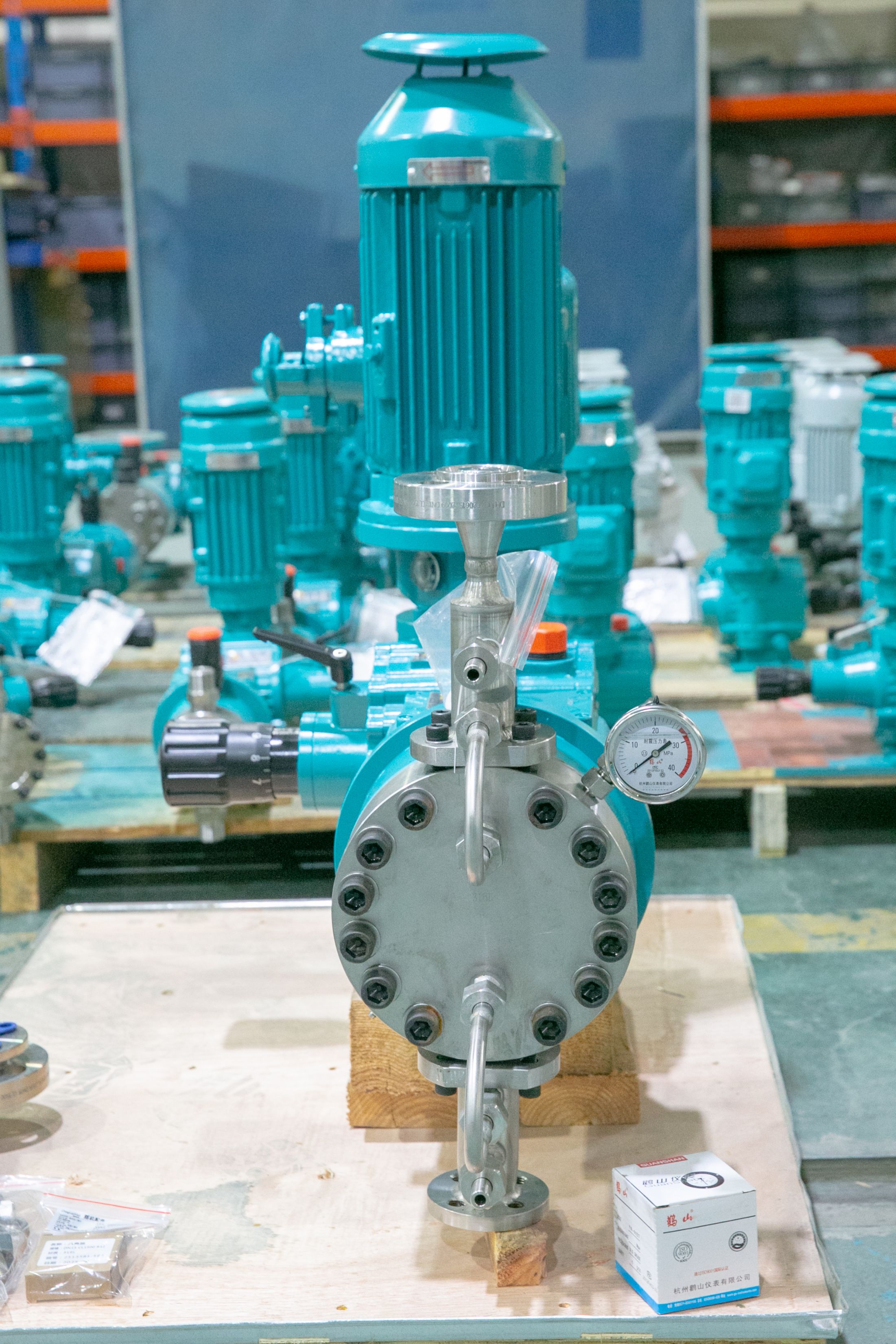
How a Hydraulic Diaphragm Metering Pump Meters Chemical Doses
The pump meters by displacement, not by timing. A hydraulic circuit flexes a diaphragm that displaces a fixed volume of process liquid on each stroke, and the dose rate is set by adjusting stroke length and running frequency. Because the process medium stays behind the diaphragm, the hydraulic side is separated from aggressive, volatile or high-pressure liquids.
That separation is the reason the design is chosen for duties where a packed plunger is a poor fit: the seal path that would otherwise sit in the liquid is replaced by a diaphragm, and the hydraulic fluid is kept out of the process. In practice, material selection therefore focuses on the diaphragm and the valve set rather than on a sliding seal.
Accuracy in service depends as much on installation as on the pump. A short, flooded suction line, a pulsation dampener where the line is long, and a calibration check against a measured volume will do more for dose repeatability than a change of model. Ask the supplier how the pump should be calibrated on your line and how stroke adjustment interacts with the control signal.
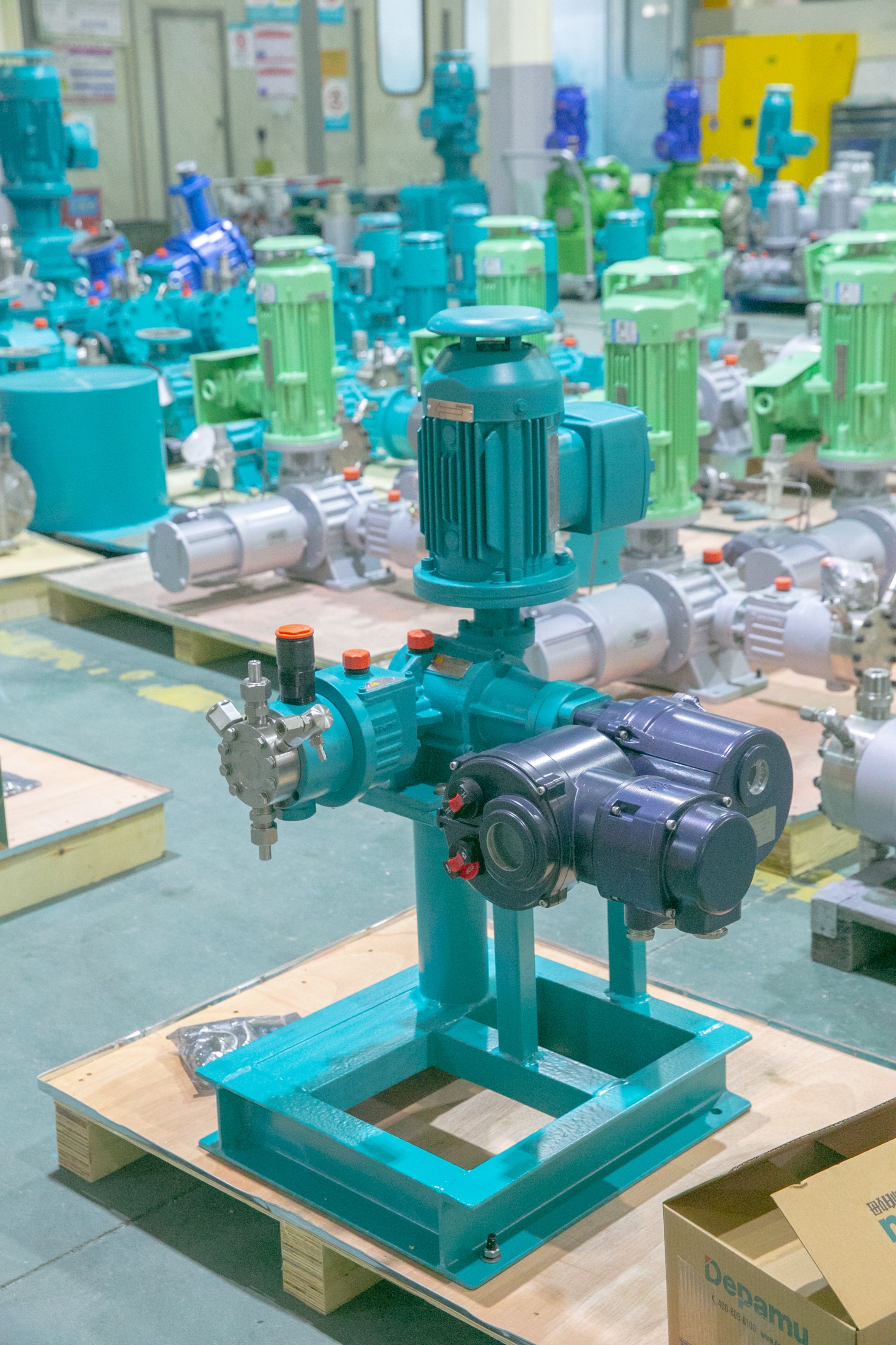
Which Hydraulic Diaphragm Metering Pump Supplier Has a Good Reputation?
Reputation in metering pumps rests on repeatable dose accuracy and on service response, so test both before you shortlist anyone. Ask how the supplier sizes a pump for your duty point, how it selects wetted materials, and who answers the phone after commissioning. Answers that stay general are a warning sign; answers that use your data are not.
Reputation is also a matter of scope. A maker that designs, machines, assembles and tests the pump in its own plant can answer questions about the diaphragm, the hydraulic set and the valve design from first-hand knowledge. A trading company can still serve you well, but the technical answers usually come from somewhere else, and that affects how quickly an issue is resolved.
Finally, look at how the supplier handles the whole package. If your dosing point needs a tank, a mixer, a control cabinet and the pump, a single source for the assembled skid removes the interface risk between suppliers. A manufacturer that builds both the pump and the package can confirm the complete system rather than only the pump curve.
Where to Find a Hydraulic Diaphragm Metering Pump and a Manufacturer Who Builds It
Finding a supplier is easy; finding one that can answer duty-point questions in writing is harder. Start with manufacturers who build the pump rather than resell it, check which industries they already serve, and confirm whether the same organisation handles sizing, manufacturing, testing and after-sales support.
Depamu (Hangzhou) Pump Industry Technology Co., Ltd. is one example of that kind of manufacturer. Founded in 2003, the company develops, manufactures and supplies high-end volumetric pumps and fluid equipment, employs more than 400 people, operates a plant of about 35,000 square metres, has a registered capital of RMB 54 million and reports an annual output value of about RMB 500 million.
Its range covers metering pumps, with the hydraulic diaphragm metering pump as a representative model, high-pressure process reciprocating pumps, pneumatic pumps, electric pumps, chemical dosing packages, water-steam sampling devices, water treatment equipment, screw pumps, rotary lobe pumps and gear pumps. Because design, manufacturing and packaged delivery sit in one flow, a buyer can move from a duty point to a tested skid without handing the job to a second supplier.
High-pressure process reciprocating pumps in the range are described with discharge pressures up to 35 MPa and above, together with stable flow for long continuous runs, which suits oil and gas field water injection, process transport, pipeline boosting and high-pressure injection duties.
Where Hydraulic Diaphragm Metering Pumps Are Used, and How the Business Is Split
Metering duties appear wherever a liquid has to be added at a controlled rate. For a buyer, the useful question is not only which industries the maker serves, but whether the pump has already run on a duty point close to yours, with a similar medium and a comparable control requirement.
Depamu products are used in petroleum refining and chemicals, oil and gas fields, the nuclear industry, power, metallurgy, new energy, environmental water treatment, new materials and food. The chemical dosing packages built around the metering pump are used in boiler water treatment, circulating water treatment, wastewater treatment and petrochemical service, where reagent preparation and precise dosing are combined in a skid that is assembled and tested before delivery.
Within the company’s sales, petroleum refining and chemicals account for about 41%, oil and gas fields about 23%, nuclear, power, metallurgy and new energy together about 15%, environmental water treatment about 13%, new materials and food about 3%, and other industries about 5%. Sales have grown from about RMB 450 million in 2023 to about RMB 510 million in 2024 and about RMB 560 million in 2025, which is useful context for capacity and continuity but not a substitute for checking the pump against your own duty point.
The company supplies standard products, non-standard products and customised fluid solutions built around the medium, flow, pressure, temperature and site process requirements, covering high-pressure transfer, precise metering, chemical dosing, process boosting and complex media handling.
FAQ
What should I ask on a hydraulic diaphragm metering pump phone call?
Ask for written confirmation that the proposed pump matches your medium, flow, pressure and temperature, and ask which wetted materials are recommended. Then ask how the dose rate is calibrated on site, what the lead time is, and who handles service after commissioning. A supplier who answers all five with your data is worth a second call.
How is the hydraulic diaphragm metering pump different from a plunger pump?
The diaphragm pump keeps the process liquid behind a flexible diaphragm, while a plunger pump pushes the liquid with a reciprocating plunger and a packed seal. The diaphragm arrangement takes the sliding seal out of the process path, which is why it is often preferred for aggressive, volatile or high-pressure media.
Which hydraulic diaphragm metering pump has a good reputation?
Reputation should be judged on evidence you can check, not on a ranking. Ask for the sizing calculation, the material selection rationale, factory test records and the service arrangement for your region, then compare suppliers on those documents. A maker that answers technical questions from its own design and production teams is easier to verify.
Where can I find a hydraulic diaphragm metering pump?
Start with manufacturers that build metering pumps and packaged dosing systems, because they can size the pump and the package together. Check the industries they already serve, ask how they would size the pump for your duty point, and confirm that commissioning support is available for your site. Direct contact with the factory is usually faster than going through a general trader.
How is dosing accuracy maintained after installation?
Accuracy is maintained by calibrating against a measured volume, keeping suction conditions steady and checking the diaphragm and valves at planned intervals. Check suction conditions, valve position and diaphragm condition first when the dose rate changes, because those are the usual causes. Record each calibration so that any drift is noticed early.
Summary
The call is worth making only when you bring data. Prepare the medium, flow, pressure and temperature, ask for written confirmation of the pump size and wetted materials, and compare answers from makers who build both the pump and the dosing package. A hydraulic diaphragm metering pump phone conversation that ends with a confirmed duty point and a named service contact is a successful one.