
Choosing a PAM dosing pump comes down to matching the pump’s metering behaviour to the process duty, then confirming that the supplier can prove it. A suitable unit delivers a repeatable dose, handles the chemical safely and stays supportable for the whole life of the installation.
What Makes a PAM Dosing Pump Suitable for a Given Process
A PAM dosing pump is suitable when it holds the required dose within the process tolerance while handling the chemical safely. Suitability is decided by flow, pressure, temperature, chemical corrosivity and control requirements, not by a single headline specification on a data sheet.
Because polyacrylamide solutions are viscous and sensitive to shear, the selection conversation should begin with the medium rather than with a catalogue page. The pump must move the prepared solution at the required rate without degrading it, and every wetted part must tolerate the chemical at the actual operating temperature. Injection point conditions matter just as much: suction arrangement, discharge pressure and the way the dose is mixed into the main stream all shape the final choice.
Precision and Repeatability
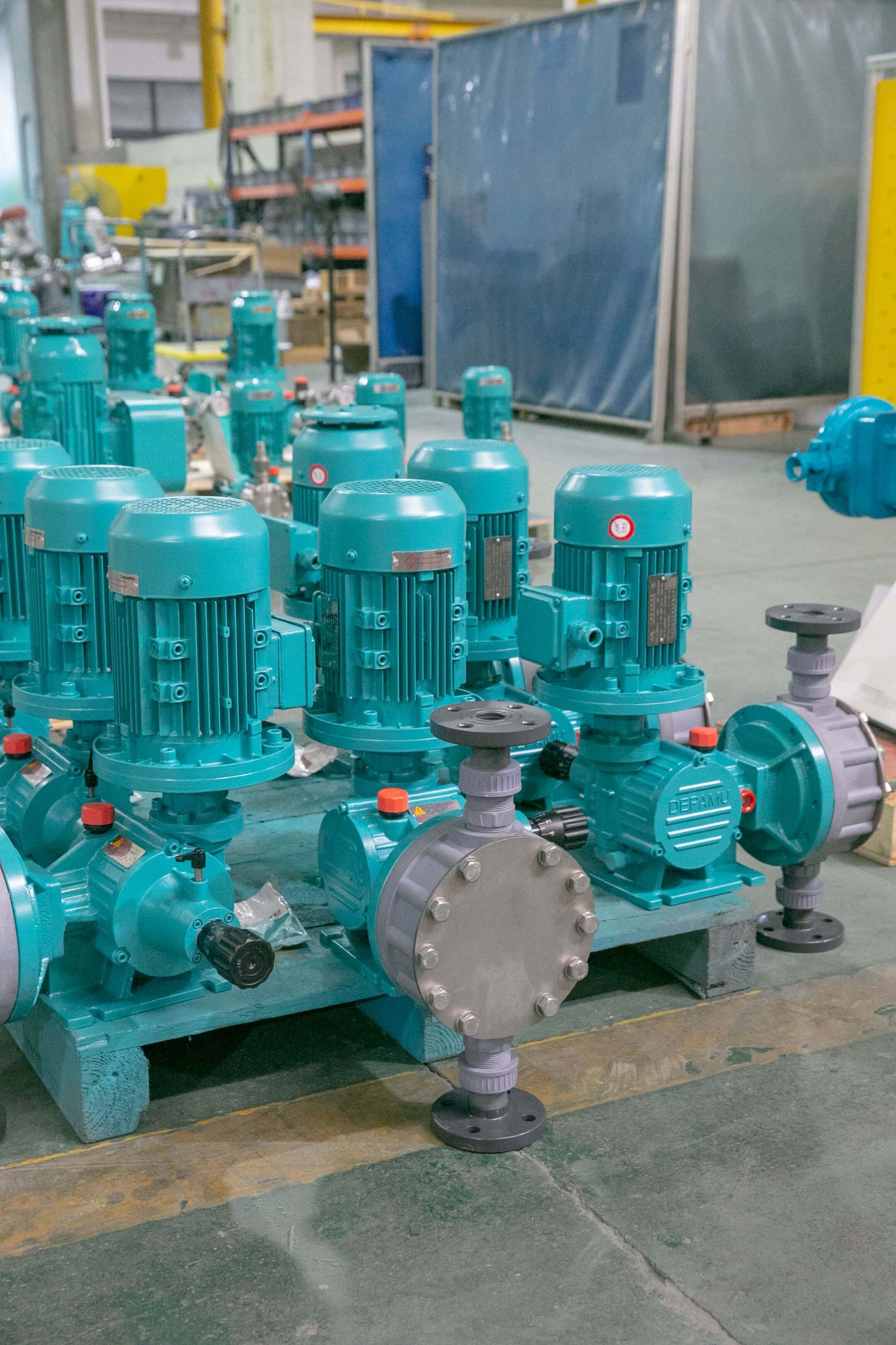
Repeatable dosage is what separates a dosing pump from a transfer pump. On a hydraulic diaphragm metering pump, output is set by adjusting stroke length and running frequency, so the operator can tune the dose to process demand and hold it steady between adjustments. That adjustability is the reason metering pumps are used wherever chemical addition has to follow a recipe rather than a rough estimate.
Leak-Free Handling of Aggressive and Volatile Media
A hydraulic-driven diaphragm design keeps the chemical fully contained, which matters when the medium is corrosive, volatile or held at high pressure. Containment protects operators and the surrounding plant as much as it protects the pump itself, and it removes the routine leakage that open sealing arrangements can produce over time.
- Chemical characteristics: corrosivity, viscosity and volatility
- Required flow rate and the turndown needed across the process cycle
- Discharge pressure and the pressure profile at the injection point
- Operating temperature at the pump and along the dosing line
- Site process requirements, including control and automation scope
How to Judge Whether a PAM Dosing Pump Supplier Is Professional
A professional PAM dosing pump supplier can document how a pump is selected, built and supported, rather than only quoting a price. Engineering capability, manufacturing capacity and after-sales support are what separate a specialist manufacturer from a trading intermediary.
Depamu (Hangzhou) Pump Industry Technology Co., Ltd. was founded in 2003 and has concentrated on high-end positive displacement pumps and fluid equipment for more than two decades. The company employs over 400 people, operates a plant of about 35,000 square meters, holds registered capital of RMB 54 million and reports annual output value of roughly RMB 500 million.
The company covers development, design, manufacturing and packaged delivery in house, and can supply standard products, non-standard products and customised fluid solutions according to the customer’s medium characteristics, flow, pressure, temperature and site process requirements. That scope is the practical difference between buying a pump and buying a dosing result.
Evidence of Application Experience
Sales have grown from about RMB 450 million in 2023 to RMB 510 million in 2024 and RMB 560 million in 2025. Petroleum refining and chemicals account for roughly 41% of sales, oil and gas fields about 23%, nuclear power, electric power, metallurgy and new energy about 15%, environmental water treatment about 13%, new materials and food about 3%, and other industries about 5%.
Products are used across petroleum refining, chemicals, oil and gas fields, nuclear power, electric power, metallurgy, new energy, environmental water treatment, new materials and food. High-pressure transfer, precise metering, chemical agent dosing, process boosting and complex media transfer are the duties these installations place on the equipment.
Matching Pump Technology to the Dosing Duty
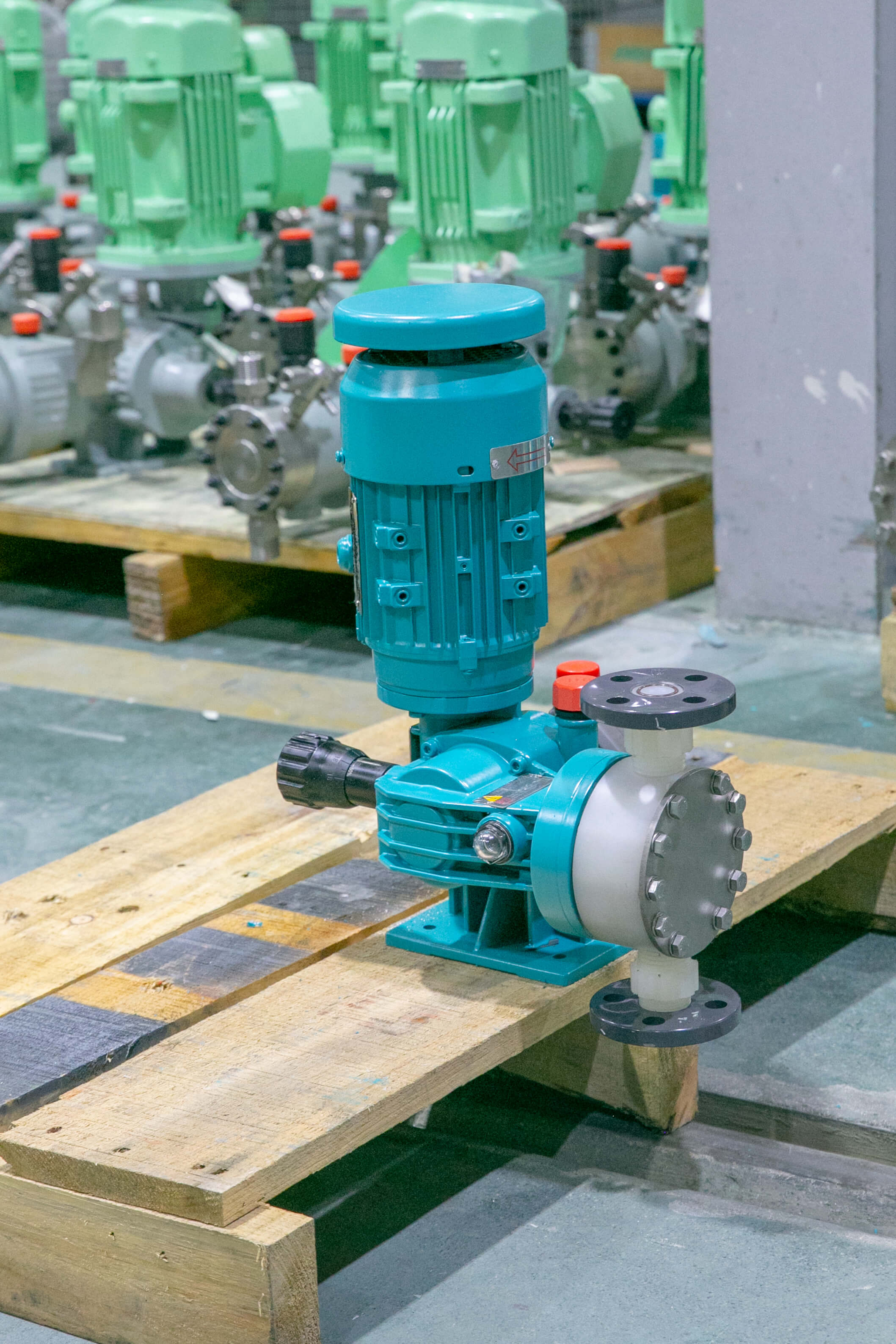
Different dosing duties call for different pump technologies, and the right answer is the one that fits the medium and the pressure profile. A metering pump, a high-pressure reciprocating pump and a packaged dosing system each solve a different part of the same problem, so the comparison should follow the duty rather than the product list.
| Equipment type | Working principle | Role in a dosing line |
|---|---|---|
| Hydraulic diaphragm metering pump | Hydraulic drive actuates a diaphragm; stroke length and running frequency set the dose | Precise, leak-free injection of chemical into the process |
| High-pressure process reciprocating pump | Plunger reciprocation raises fluid pressure for transfer or injection | High-pressure transfer, pipeline boosting and injection duties |
| Automatic chemical dosing system | Integrates chemical storage, dissolution, mixing, metering and automatic control in one packaged skid | Complete dosing station assembled and tested before delivery |
Metering Pump Core, System Built Around It
An automatic chemical dosing system places a metering pump at its centre, supported by a dissolution tank, an agitator and an intelligent control system. It supports dry and liquid chemical feeding, multi-point dosing and automatic interlocked control, is assembled and tested before dispatch, and needs only piping and power connections on site. Typical duties include boiler water treatment, circulating water treatment, wastewater treatment and petrochemical service.
High-Pressure and Complex Media Duties
Where the process needs elevated pressure, a high-pressure process reciprocating pump uses plunger reciprocation to raise fluid pressure, with pressure available above 35 MPa, stable flow and the ability to run continuously for long periods. It is suited to high-viscosity, high-temperature and solids-bearing media, and to oil and gas field water injection, petrochemical process transfer, pipeline boosting and high-pressure injection.
Other fluid equipment in the range, including screw pumps, rotary lobe pumps, gear pumps, pneumatic pumps, electric pumps, emulsifying pumps, special centrifugal pumps, water and steam sampling devices and supercritical extraction equipment, allows a dosing line to be completed from one engineering source instead of several unrelated vendors.
Procurement Checklist for Dosing Pump Selection
A sound procurement process compares offers on engineering evidence rather than on price alone. The checklist below keeps the comparison factual and makes the final decision defensible to operations, maintenance and purchasing teams who will live with the equipment long after the order is closed.
- Confirm the medium, flow, pressure and temperature data before requesting offers
- State the control philosophy: local adjustment, automatic dosing or interlocked control
- Ask how the pump is selected, not only which model is proposed
- Define the delivery scope: pump only, or pump with preparation and control
- Agree acceptance criteria and the service route in writing
- Compare technical documentation across offers, not only headline figures
Written confirmation of wetted materials, control philosophy, delivery scope and service arrangements turns a quotation into a comparable offer. It also gives both sides a shared reference point if the duty changes after commissioning, which is common when a treatment line is extended or reformulated.
FAQ
Which PAM dosing pump is suitable for a specific process?
The suitable unit is the one whose metering behaviour, pressure capability and wetted materials match the chemical and the injection point. Confirm flow, pressure, temperature and control requirements first, then compare pump technologies against those figures rather than against a general product description.
What makes a PAM dosing pump supplier professional?
A professional supplier can explain and document how the pump is selected, built and supported. In-house engineering, controlled manufacturing and a clear after-sales arrangement matter more than a price sheet, because dosing performance depends on correct selection as much as on hardware.
How can a supplier be verified as reliable?
Reliability is shown by consistent delivery, traceable build quality and responsive service over time. Ask for a documented scope, agreed acceptance criteria and a named service route before placing the order, and check that earlier commitments were met during the technical clarification stage.
Is an integrated dosing system better than a standalone pump?
An integrated system is preferable when the duty includes chemical preparation and automatic control, because storage, dissolution, mixing, metering and automation arrive as one assembled and tested package. A standalone pump remains appropriate when preparation and control equipment already exist on site.
Summary
Answering the question of which PAM dosing pump to choose depends on duty data, not on marketing claims: define the medium, flow, pressure, temperature and control scope, then compare pump technologies against them. A supplier that combines documented engineering, its own manufacturing and a defined service route makes that choice verifiable, and it keeps the dosing line supportable long after commissioning.