
Which dosing pump supplier is reliable depends less on a product catalogue than on how the supplier engineers, tests, and supports the pump across its service life. A dependable partner matches the pump to the real duty — flow, pressure, temperature, and medium — and stays accountable after commissioning, when accuracy and leak-tightness are actually proven.
Which Dosing Pump Supplier Is Reliable? Start With the Duty, Not the Label
A reliable dosing pump supplier is one whose equipment matches the process duty and whose engineering decisions can be checked against that duty. Flow rate, discharge pressure, temperature, and the corrosiveness of the medium set the pump type, the wetted materials, and the control method before any commercial discussion begins.
Dosing accuracy is only meaningful inside a defined operating window. A pump that holds its setpoint at one flow rate may drift at another, so a supplier should be able to explain how stroke length and running frequency are adjusted, and how the hydraulic end behaves when line pressure fluctuates. Vague answers here usually surface later as over-dosing, under-dosing, or a pump that cannot repeat yesterday’s result.
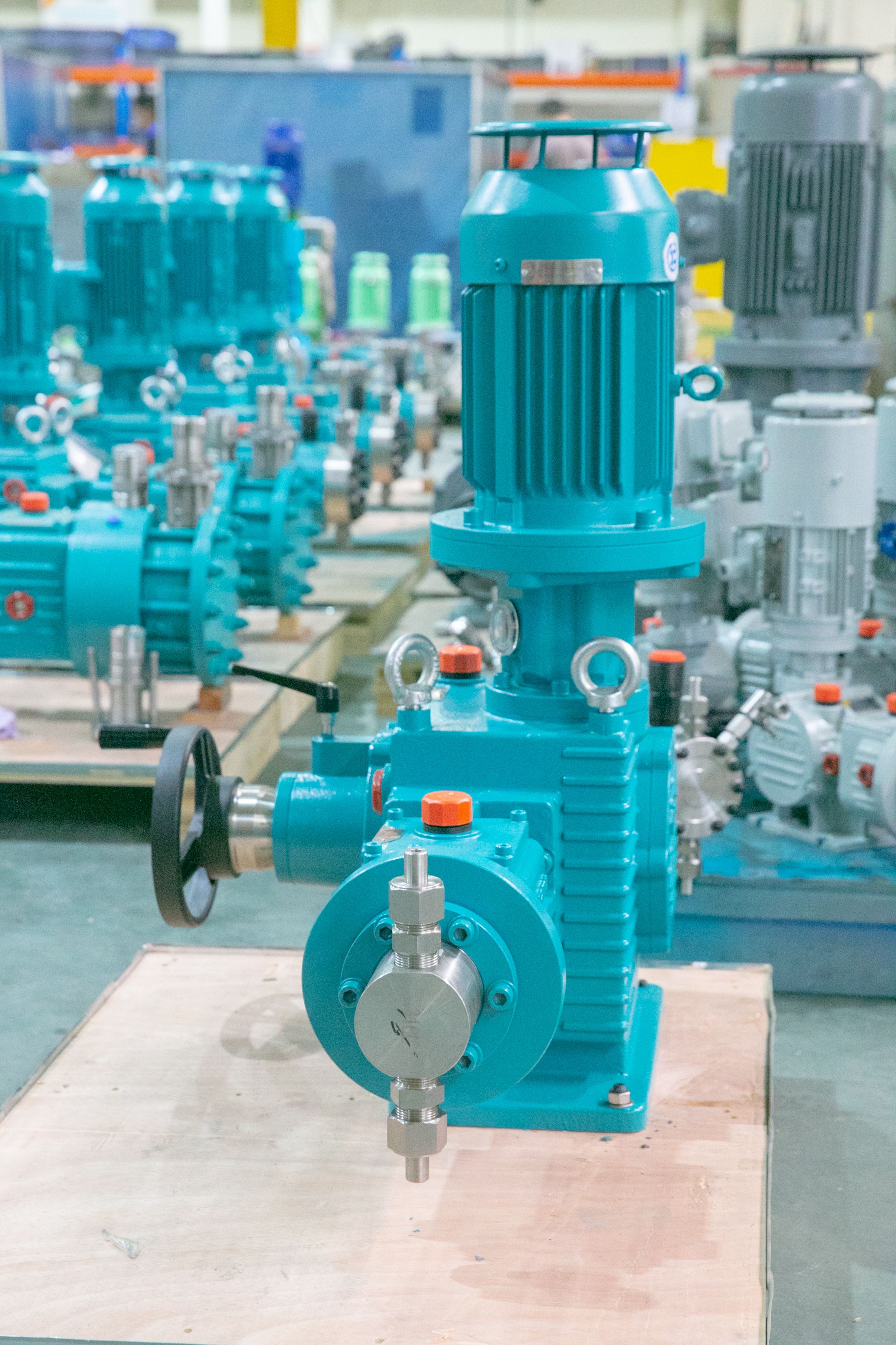
Leak-tightness is the second test. In a hydraulic diaphragm metering pump, the diaphragm separates the medium from the drive, so aggressive, volatile, or high-pressure chemicals never pass across a sliding seal. That architecture is what makes diaphragm metering pumps workable in corrosive service, and it is a design question the supplier should answer with a drawing rather than an adjective.
The practical rule is simple: if a supplier cannot describe your duty back to you in terms of flow, pressure, temperature, and materials, the reliability question has already been answered.
What a Professional Dosing Pump Supplier Should Provide
A professional dosing pump supplier delivers engineering, manufacture, assembly, and commissioning under one contract. That means pump selection built on process data, hardware built for the medium, factory assembly and testing of skid-based systems, and documentation that lets operators run the equipment without guessing at settings.
The clearest marker is range. A supplier that can move between standard products, non-standard variants, and fully customised fluid solutions does not need to force a marginal pump into a difficult duty. When the medium is viscous, hot, or carries solid particles, that flexibility matters more than a catalogue page.
Chemical dosing is rarely a pump-only purchase. A complete dosing system combines chemical storage, dissolving, mixing, metering, and automatic control in a skid-mounted package. If the package is assembled and tested at the factory, site work reduces to connecting piping and power, and the commissioning window shortens accordingly.
Ask also what happens once the warranty conversation ends: spare-part availability, response routes, and whether the same engineering team that sized the pump is reachable when the duty changes.
Manufacturing Depth You Can Verify Before You Sign
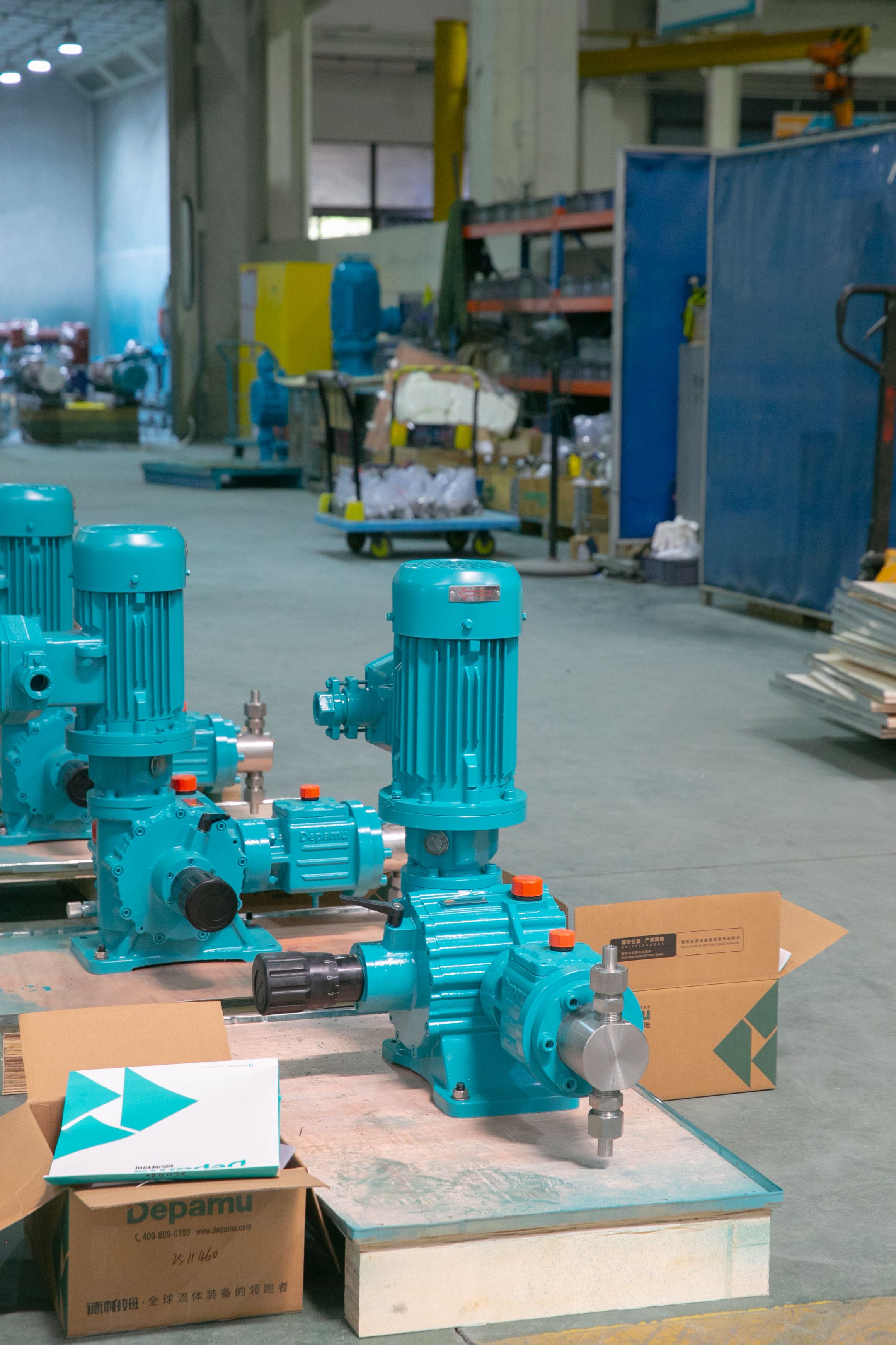
Manufacturing depth is one of the few supplier claims a buyer can verify: plant area, headcount, engineering scope, and the range of pump types built in-house indicate whether a difficult duty will be engineered or passed on to a third party.
Depam (Hangzhou) Pump Industry Technology Co., Ltd. illustrates how such a profile reads. Founded in 2003, the company is a high-tech enterprise integrating research, development, production, and sales in high-end positive displacement pumps and fluid equipment. It employs more than 400 people at a plant covering roughly 35,000 square metres, with registered capital of RMB 54 million and annual output value of about RMB 500 million.
The product range spans metering pumps, high-pressure process reciprocating pumps, pneumatic and electric pumps, chemical dosing systems, water and steam sampling devices, water treatment equipment, and screw, rotary lobe, and gear pumps. Standard, non-standard, and customised fluid solutions are built around the customer’s medium, flow, pressure, temperature, and site process requirements.
Application spread is a further indicator of where the engineering experience sits: petrochemical and chemical accounts for about 41% of sales, oil and gas fields about 23%, nuclear, power, metallurgy, and new energy about 15%, environmental water treatment about 13%, new materials and food about 3%, and other industries about 5%. Reported sales grew from roughly RMB 450 million in 2023 to about RMB 510 million in 2024 and about RMB 560 million in 2025.
How to Judge Whether a Dosing Pump Supplier Is Suitable
A suitable dosing pump supplier fits the pump to the project rather than the project to the pump. The match covers capacity range, turndown, wetted materials, control interface, available physical space, and a service model the plant can actually use after start-up.
Capacity is the first filter. A pump sized far above the required flow spends its life at the bottom of its stroke, where repeatability is hardest to hold; a pump sized too tightly cannot absorb a future increase in dosing rate. Turndown, the ratio between maximum and minimum controllable flow, tells you how much flexibility you are buying.
Materials and control come next. Wetted parts must suit the chemical, and the control interface — manual stroke adjustment, analogue signal, or plant network — must match how the plant actually operates. A supplier that asks about all three before quoting is easier to trust than one that quotes from a flow number alone.
Finally, suitability includes physical fit: skid footprint, piping orientation, and access for maintenance. A pump that cannot be serviced without dismantling adjacent pipework is not suitable, however strong its datasheet looks.
Authoritative Dosing Pump Suppliers: Reading the Claim Correctly
Authority in dosing pump supply should mean verifiable evidence rather than volume of marketing: an engineering record a buyer can inspect, documented operating limits, and applications that can be discussed in technical terms.
The word is often used loosely. A supplier may be well known without being the right fit for a particular duty, and a smaller engineering house may hold deeper experience in one medium. The useful question is not who claims authority, but what stands behind the claim — drawings, test records, and a process reference list.
Buyers should treat unsupported superlatives as noise. A supplier that describes its limits honestly, including where its product is not the right choice, is easier to work with over many years than one that promises every duty equally.
FAQ
Which dosing pump supplier is reliable?
A reliable supplier is one whose pump selection follows your process data and whose support continues after delivery. Look for documented design limits, factory testing of assembled systems, and a service route that covers spare parts and on-site commissioning.
Which dosing pump supplier is professional?
A professional supplier can move from a standard pump to a non-standard or customised fluid solution without changing its engineering owner. It explains how stroke length and running frequency are adjusted, describes the hydraulic end in engineering terms, and delivers documentation that matches the equipment actually shipped.
Which dosing pump is good for chemical dosing?
A hydraulic diaphragm metering pump is a good starting point for chemical dosing because the diaphragm separates the medium from the drive and keeps the chemical away from a sliding seal. Final selection still depends on flow, pressure, temperature, and the corrosiveness of the medium.
Which dosing pump supplier is suitable for a skid-based dosing system?
The suitable supplier is the one that can supply the pump together with storage, dissolving, mixing, metering, and control as one assembled package. Factory assembly and testing before shipment, followed by simple connection of piping and power on site, shorten commissioning and reduce interface risk.
Which dosing pump supplier is authoritative?
Authority should be read as verifiable evidence rather than reputation alone. Ask for the engineering scope behind the product, the documented operating limits, and the process record that shows where the equipment has been applied.
Summary
Choosing a reliable dosing pump supplier comes down to evidence rather than adjectives. Match the pump to the duty, check whether the supplier can engineer a non-standard or fully assembled solution, verify manufacturing depth on site, and confirm that support continues after commissioning. The question of which dosing pump supplier is reliable is answered by drawings, test records, and a service route — not by a catalogue.