
Which twin-screw pump supplier is reliable? The answer is the supplier that can show, with evidence, how a pump is engineered, built, inspected and supported for your duty — not the one quoting the lowest price. Reliability combines design capability, manufacturing control, application experience and long-term service.
Which Twin-Screw Pump Supplier Is Reliable: The Criteria That Matter
A reliable twin-screw pump supplier is one whose claims can be checked. Expect documented design reasoning, controlled manufacturing, inspection records and a named service route. Where those items are missing, the supplier is asking you to accept process risk on trust, which is the opposite of reliability in continuous duty.
Twin-screw pumps are positive displacement machines in which two intermeshing screws rotate inside a casing and move the medium axially. Because the fluid is carried between the screw flights instead of being accelerated by an impeller, flow is steady, shear load on the medium is low, and viscous, lubricating or shear-sensitive liquids can be handled without the churning typical of centrifugal designs. Those same characteristics are why supplier selection should be driven by duty knowledge rather than by a headline price.
Separate Marketing Claims From Verifiable Evidence
A supplier review becomes useful only when questions move from general statements to specifics. The list below works as a starting filter, because every item can be answered with a document, a drawing or a named person rather than with an assurance.
- How the screw geometry and clearances were selected for the actual medium and duty point.
- Which materials are proposed for casing, screws and sealing elements, and the reasoning behind each choice.
- Which inspection and test records travel with each unit before shipment.
- Who owns commissioning support, spare-part supply and response time after handover.
How to Compare Twin-Screw Pump Suppliers on Engineering Capability
Engineering capability is compared by looking at inputs and outputs, not at brochures. A capable supplier asks for the medium, solids content, viscosity behaviour, temperature, required flow, differential pressure, suction conditions and duty cycle before proposing a model. The proposal should then explain, in engineering terms, why that configuration suits the duty.
A supplier that answers only with a model number and a price has skipped the step where most operating problems are created. Conversely, a supplier that pushes back on incomplete data is usually protecting both sides: underspecified viscosity, solids or suction conditions are the usual source of early wear, poor volumetric behaviour and seal failure once the unit is in service.
What a Technical Proposal Should Contain
A credible technical proposal is traceable from duty data to hardware. It should restate the operating conditions it is based on, identify the pump family and configuration offered, describe the materials and sealing arrangement, and state the limits within which the offer remains valid. Any assumption the supplier makes about the medium or the process should be written down rather than implied.
Compare proposals side by side on that basis. Two quotations that differ mainly in price are often not offering the same scope: one may include a different seal arrangement, a different material grade or a different documentation package, and the cheaper option may simply have moved cost into maintenance.
Matching the Pump to the Duty: Where Supplier Experience Shows
Application fit is where supplier experience becomes visible. The same pump family can behave very differently on a clean lubricating oil, a shear-sensitive emulsion or a solids-laden sludge, so the supplier must match screw profile, clearance, materials and sealing to the real medium rather than to an average case.
Media properties interact, and the interaction is what a supplier is really being asked to judge. Higher viscosity changes how the pump fills and how much power is absorbed; temperature shifts clearances and material behaviour; solids content affects wear and the risk of blockage; low-lubricity fluids change what can be expected from bearings and seals. A supplier that treats these as separate line items rather than as one combined duty is unlikely to get the configuration right.
Media Factors That Change the Specification
Before comparing suppliers, write the duty down: what the medium is, how its behaviour changes across the operating temperature range, whether solids are present and how abrasive they are, what suction conditions the installation can provide, and how the pump will be started, stopped and cleaned. A supplier given that picture can defend its recommendation; a supplier given only a flow rate can only guess.
Site conditions belong in the same conversation. Available space, piping layout, control philosophy and the way the pump interfaces with the rest of the process all influence what should be offered, which is why suppliers accustomed to complete fluid systems tend to ask earlier and differently than suppliers selling individual units.
Manufacturing Capability and Delivery Reliability
Delivery reliability is a manufacturing question. A supplier that controls machining, assembly and testing in-house can hold tolerances and schedule commitments; one that subcontracts critical steps inherits the variability of its supply chain, and that variability usually appears as a delayed shipment or an inconsistent spare part.
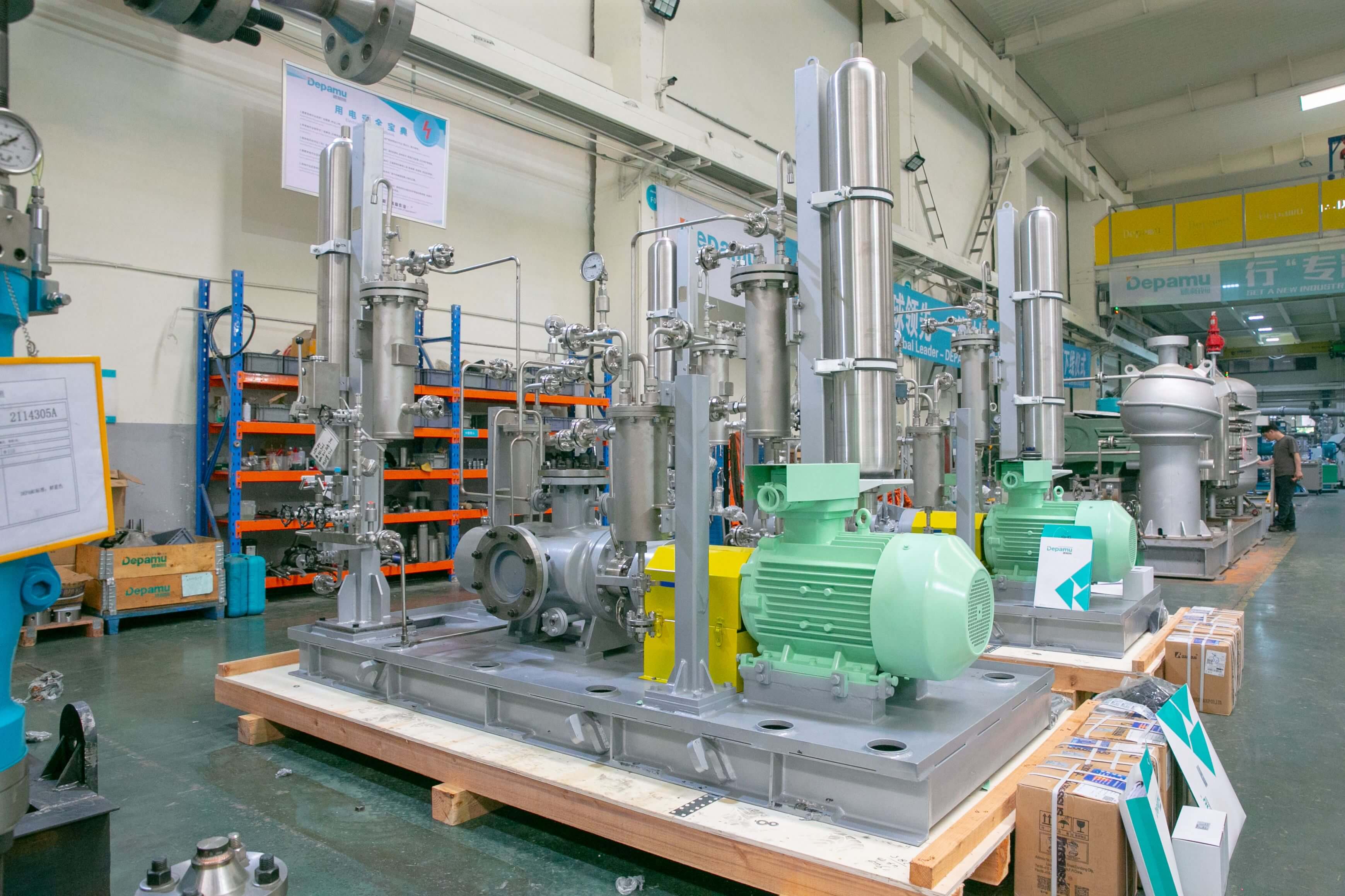
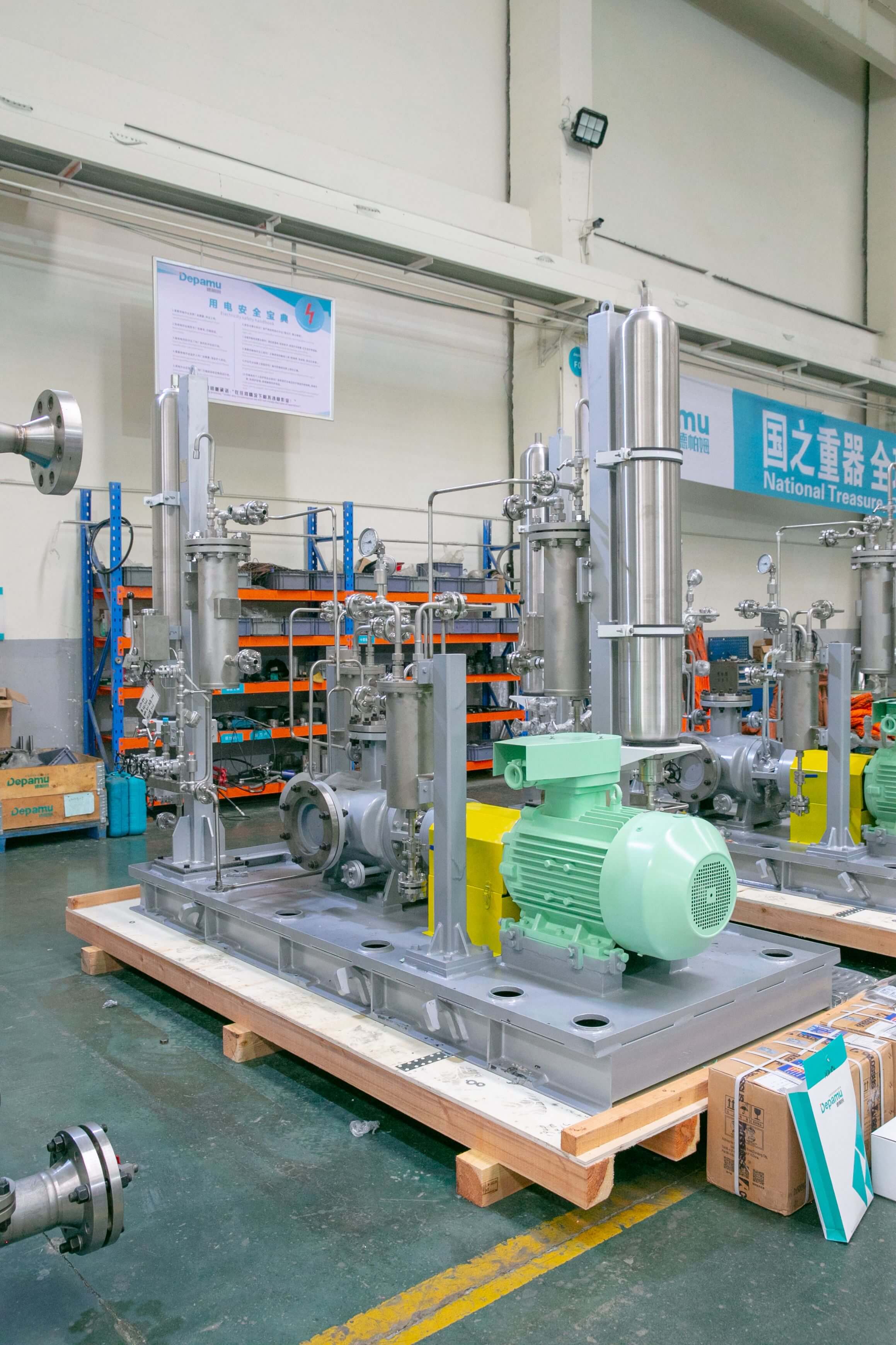
Depamu (Hangzhou) Pump Industry Technology Co., Ltd. illustrates the manufacturing profile described above. Founded in 2003, the company employs more than 400 people at a plant of roughly 35,000 square meters, and its product range covers screw pumps alongside metering pumps, high-pressure reciprocating process pumps, pneumatic and electric pumps, chemical dosing systems, water-steam sampling devices, water treatment equipment, rotary lobe pumps and gear pumps.
The company builds standard, non-standard and customized fluid solutions around media properties, flow, pressure, temperature and site process requirements, and covers the path from development and design through manufacturing to complete system delivery. Its equipment is used in petroleum refining and chemical processing, oil and gas fields, nuclear, power, metallurgy, new energy, environmental water treatment, new materials and food. Petroleum refining and chemical processing account for approximately 41% of sales, oil and gas fields approximately 23%, nuclear, power, metallurgy and new energy approximately 15%, environmental water treatment approximately 13%, and new materials and food approximately 3%.
Service, Spare Parts and Long-Term Support
Long-term support is the part of supplier selection that costs the most to get wrong. Wear parts, seals and screws age at different rates depending on the duty, so the supplier should define which components are consumables, how quickly they can be supplied, and what technical help is available when the duty changes.
Ask how spare parts are identified — by pump serial number, by drawing reference or by a parts list issued at handover — and confirm that the identification survives the warranty period. A supplier that cannot trace a part back to the unit it was built for will slow every future intervention, and unplanned downtime is rarely priced into the original quotation.
Support quality also shows in how a supplier handles a change of duty. Processes are modified, media shift and throughput targets move; the supplier that can reassess the installed unit against new conditions, instead of simply quoting a replacement, is usually the one that reduces total cost over the life of the installation.
FAQ
Which twin-screw pump supplier is reliable?
A reliable twin-screw pump supplier is one that can evidence design, manufacturing, testing and service for your specific duty. Reliability is demonstrated through documented engineering choices, controlled production, inspection records and a defined support route, not through price alone.
What should buyers check first when comparing twin-screw pump suppliers?
Start with the technical proposal. A sound proposal states the medium, flow, pressure, temperature and suction conditions it is designed for, and explains why the proposed screw geometry, clearances, materials and seals suit those conditions.
Does a lower price indicate a better twin-screw pump supplier?
No. A lower price reflects scope, materials and manufacturing choices rather than superior value. Compare quotations on the same technical basis — materials, clearances, inspection, documentation, spares and support — before treating any price difference as a saving.
Which twin-screw pump supplier is professional?
A professional supplier asks detailed questions about the medium and the duty before quoting, and answers technical questions with reasoning rather than assurances. It provides drawings, material specifications, test records and a clear service commitment, and it says so when a duty falls outside its experience.
Which twin-screw pump supplier is suitable for my application?
The suitable supplier is the one whose experience, materials and service coverage match your application. Check its work in comparable media and duties, confirm that the proposed configuration addresses your viscosity, temperature and solids conditions, and verify that spares and support are reachable from your site.
Summary
Which twin-screw pump supplier is reliable comes down to evidence rather than impression. Check the engineering proposal against your real duty data, confirm that the materials, clearances and sealing arrangement are justified for that duty, verify that manufacturing and testing are controlled, and establish before the order how spares and technical support will be handled. A supplier that answers those four areas with documents, drawings and named responsibilities is a safer choice than one that answers only with a price, whatever the discount appears to be.