
Choosing a high-pressure plunger reciprocating pump supplier comes down to verified manufacturing capability, honest technical answers, and total cost over the service life rather than the lowest quote. Price matters, but reliability and support decide whether the pump keeps running.
What a High-Pressure Plunger Reciprocating Pump Must Deliver
At minimum, a high-pressure plunger reciprocating pump must produce the required pressure and a stable flow while running continuously on the real medium. Buyers should confirm pressure capability, flow stability, material compatibility, and service access before discussing price, because weakness in any one of these points turns a cheap purchase into an expensive one.
The working principle sets the buying criteria. A plunger strokes back and forth inside a cylinder and displaces a fixed volume of liquid with every stroke, so flow stays predictable while pressure rises, and the pump can hold a steady discharge into a high-pressure line or a distant pipeline. Because the liquid path is volumetric, the same design can handle viscous, high-temperature and solids-laden media, provided the materials and the plunger and valve arrangement are matched to them.
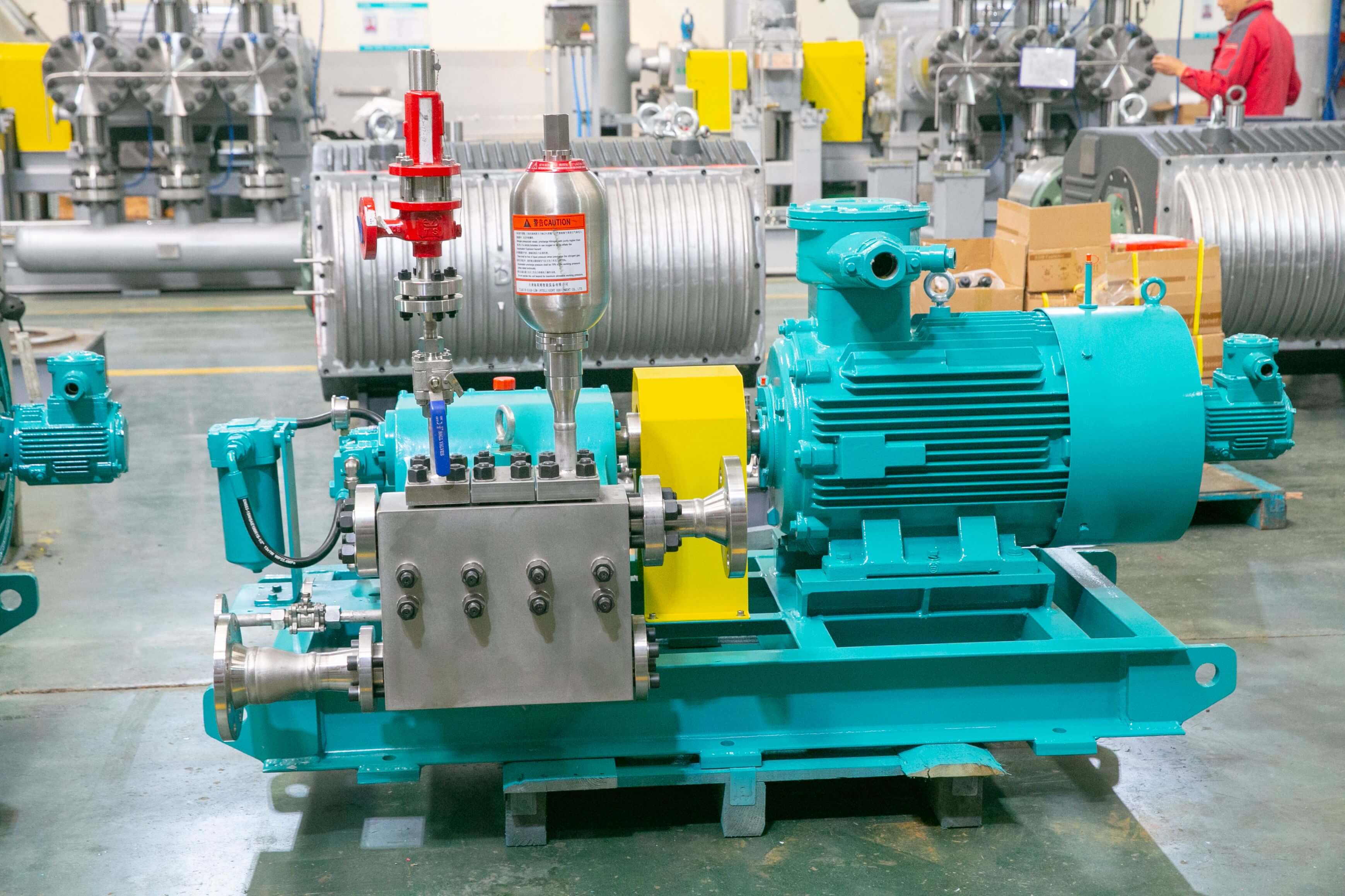
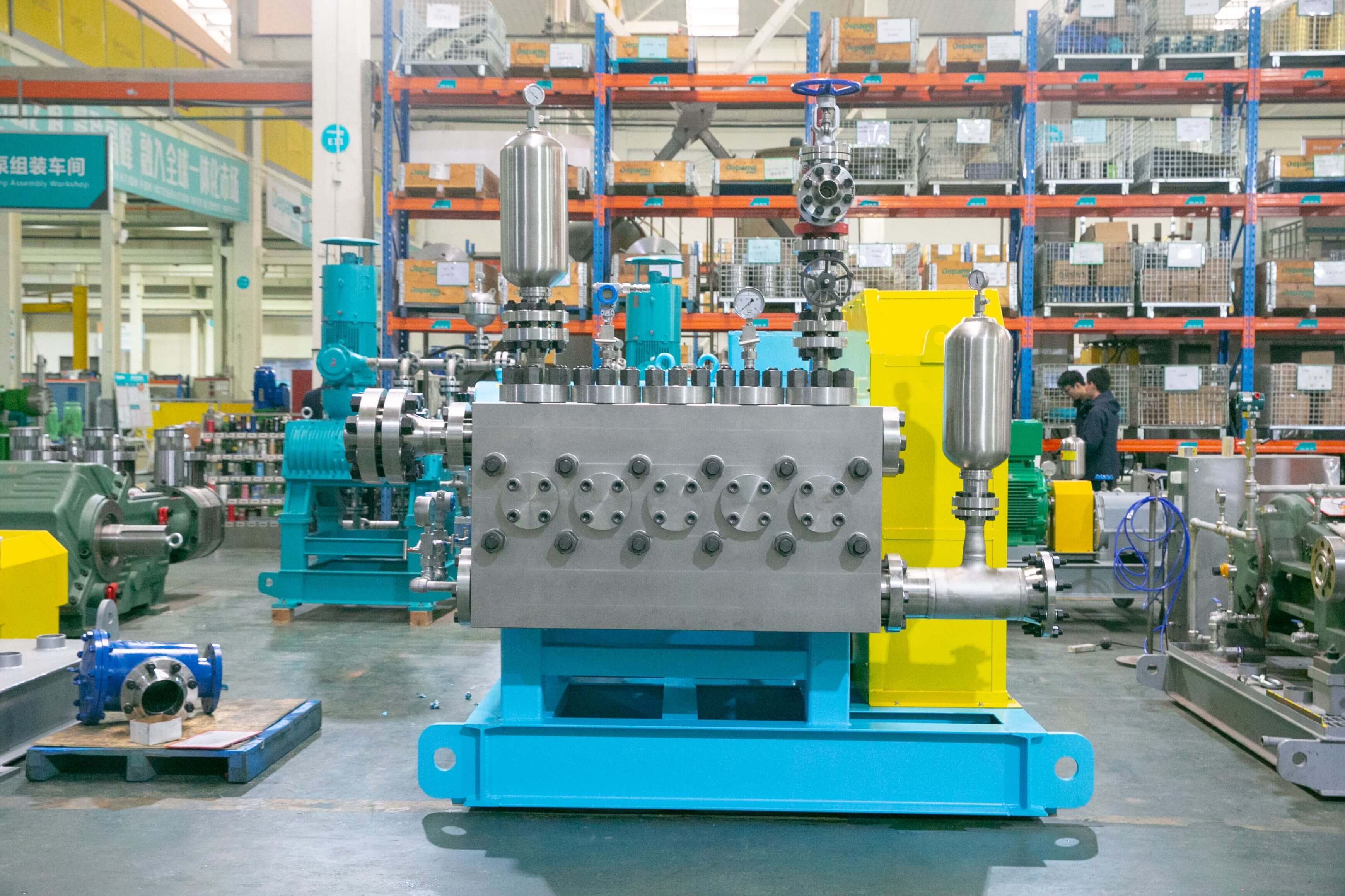
Depam builds its high-pressure process reciprocating pumps on this principle, with pressure capability up to 35 MPa and above, stable flow and long continuous running. These units are used for oil and gas field water injection, petrochemical process transfer, pipeline boosting and high-pressure injection, which are duties where an unstable discharge is felt immediately upstream and downstream of the pump.
How to Judge Whether a Supplier Is Reliable
A reliable supplier can show what it manufactures, explain how the pump will be built for your medium, and stay accountable after delivery. Claims alone are not enough; in-house capability, engineering response and service commitment are what separate a dependable supplier from an intermediary that only forwards quotations.
Reliability starts with the question of who actually builds the pump. A supplier that carries out research, design, manufacturing and complete-system delivery in its own operation can answer questions about materials, seals, valve arrangement and assembly instead of forwarding them elsewhere. It should also ask about the medium, flow, pressure, temperature and site process before proposing a model, and be able to offer a standard unit, a non-standard unit or a customized fluid solution depending on what the duty requires.
The second test is accountability after delivery. Ask how the pump is documented, how spare parts are supplied, and who answers when performance drifts months into operation. A supplier that treats commissioning guidance and spare-part planning as part of the order is easier to work with than one that considers the sale finished at shipment.
Why the Lowest Quote Is Not Automatically the Cheapest Option
The lowest quote is rarely the lowest cost, because price excludes the expense of unstable flow, unscheduled downtime, mismatched materials and slow spare-parts support. A fair comparison spreads price across the working life of the pump and weighs it against technical fit and response speed.
A useful comparison fixes the scope first. Two quotations only compare when they cover the same pump, the same materials, the same instrumentation, the same testing before shipment and the same documentation. A quotation for a bare pump measured against one for a complete skid is not a price difference; it is a scope difference, and it usually hides the larger number.
The cost of a wrong choice appears later: flow that disturbs the process, a material that fails against the medium, or a spare that arrives after the line has stopped. Those events never appear on a quotation sheet, yet they are paid for from the same budget, which is why technical fit and support speed belong inside the price comparison rather than beside it.
How to Read Supplier Rankings and Recommendations
Rankings and recommendations are starting points, not verdicts. A ranking reflects the criteria of whoever compiled it, so buyers should confirm the criteria, the date and whether the listed suppliers actually build pumps for their medium, pressure and duty cycle.
Read the criteria before the order. A list built on purchase price ranks differently from one built on continuous-duty performance, and a ranking compiled for a different medium may be irrelevant to your process. Peer recommendations become useful when the recommender describes the medium, the pressure and the duty cycle, because that is the context in which a pump either works or does not.
Recommendations also age. Capability, delivery performance and service coverage change, so a recommendation should be re-checked against current information and against the supplier’s own answers to your process data. Used this way, rankings narrow the shortlist while the technical review makes the decision.
What to Confirm Before You Request Contact Details and a Quote
Before asking for contact details, define the duty: medium, flow, pressure, temperature and site conditions. A supplier that receives this data can answer precisely, and the quality of the reply itself shows how that supplier works before any money is committed.
Duty data is the fastest route to a useful answer. Medium, flow, pressure, temperature, intermittent or continuous operation and site conditions should go into the first enquiry. A supplier who replies with a model number only, without a single question about the medium, has not yet engaged with the duty and is unlikely to engage with it after the order.
Contact details should be taken from officially published channels and confirmed before process data is shared. It is reasonable to ask for the name and role of the engineer handling the enquiry, because a supplier that routes technical questions through a named contact is easier to hold to its commitments once the pump is installed.
Manufacturing Capability Behind the Pump
Depam (Hangzhou) Pump Industry Technology Co., Ltd. was founded in 2003 and is a high-tech enterprise combining research, development, production and sales, with more than twenty years of work in high-end volumetric pumps and fluid equipment for industry. It employs more than 400 people at a plant site of about 35,000 square meters.
The company’s registered capital is CNY 54 million and annual output value is about CNY 500 million. It introduced German technology and continues to develop it, and it operates three brands. Sales have grown from about CNY 450 million in 2023 to about CNY 510 million in 2024 and about CNY 560 million in 2025.
The product range covers the pumping and dosing duties that surround a high-pressure process line:
- Metering pumps, including hydraulic diaphragm metering pumps for accurate chemical injection
- High-pressure process reciprocating pumps for boosting, transfer and injection duty
- Pneumatic pumps and electric pumps
- Automatic chemical dosing systems that integrate storage, dissolving, agitation, metering and control
- Water and steam sampling devices and water treatment equipment
- Screw pumps, rotor pumps, gear pumps, emulsion pumps and special centrifugal pumps
- Supercritical extraction devices
The installed base spans several process industries. Petrochemical and chemical applications account for about 41% of sales, oil and gas fields about 23%, nuclear power, power generation, metallurgy and new energy about 15%, water and wastewater treatment about 13%, new materials and food about 3%, and other industries about 5%. This spread matters to a buyer because it shows which duties the manufacturer meets repeatedly, and how often it is asked to solve non-standard fluid handling problems.
FAQ
Which high-pressure plunger reciprocating pump is the cheaper choice?
There is no universally cheaper choice, because cost depends on duty, materials, scope of supply and support terms. The only meaningful comparison is between quotes built on the same specification, so request itemized offers covering an identical scope before comparing price.
How should supplier rankings be used when comparing these pumps?
Rankings are a starting point rather than a verdict. They reflect the criteria and date of whoever compiled them, so confirm the criteria and check whether the listed suppliers actually build pumps for your medium, pressure and duty cycle before relying on the order.
Which supplier is usually recommended?
The most trustworthy recommendation comes from a user whose medium and duty resemble your own. Ask what the pump was expected to handle, how it performed in continuous running, and how quickly the supplier responded when service was needed.
How can I obtain a supplier’s contact details?
Contact details should be taken from a supplier’s officially published channels and confirmed before process data is shared. A serious supplier will answer technical questions through a named engineering contact rather than only quoting a price.
Which supplier is reliable?
A reliable supplier demonstrates in-house manufacturing, explains how the pump will be configured for your medium, and stays accountable after delivery. Reliability is proven by capability and response, not by a single low quotation.
Summary
The sound route is to verify capability first, compare total cost second, and treat rankings and recommendations as inputs rather than answers. A high-pressure plunger reciprocating pump is a long-life asset, so the supplier’s engineering response and service commitment deserve as much weight as the price printed on the quotation.