
Choosing a hydraulic diaphragm metering pump starts with the duty point rather than the price tag. Match the medium, flow, discharge pressure and temperature to the pump first, then confirm the dosing accuracy, adjustment range and control method the process needs. A hydraulic diaphragm design keeps the medium away from the drive, which suits duties where leakage is not acceptable.
What a Hydraulic Diaphragm Metering Pump Does in a Process
A pump of this type doses a chemical into a process by moving a diaphragm with hydraulic fluid. Stroke length and running frequency set the delivered volume, while the diaphragm separates the medium from the hydraulic side and the drive. That combination is why the design is used for accurate, repeatable dosing duties.
In practical terms it works as a precise infusion device for an industrial line: it delivers a set dose of chemical into the system steadily, so the concentration stays where the process design puts it. Stability matters as much as accuracy, because a dosing pump that drifts forces operators to correct the chemical balance by hand and blurs the link between the recipe and the result.
How the hydraulic diaphragm design works
The diaphragm is displaced by hydraulic fluid rather than by a plunger sitting directly in the medium. Because the chemical stays on one side of the diaphragm, the design does not rely on a dynamic seal in contact with the medium, which is why it is selected for corrosive, volatile or high-pressure media that must be dosed without leakage.
- Media isolation: the diaphragm separates the chemical from the hydraulic fluid and the drive.
- Dose control: stroke length and running frequency are the two adjustments that change the delivered volume.
- Media tolerance: the design is applied to corrosive, volatile and high-pressure media.
- Process fit: it serves dosing duties in petrochemical, water treatment, pharmaceutical, food and new energy processes.
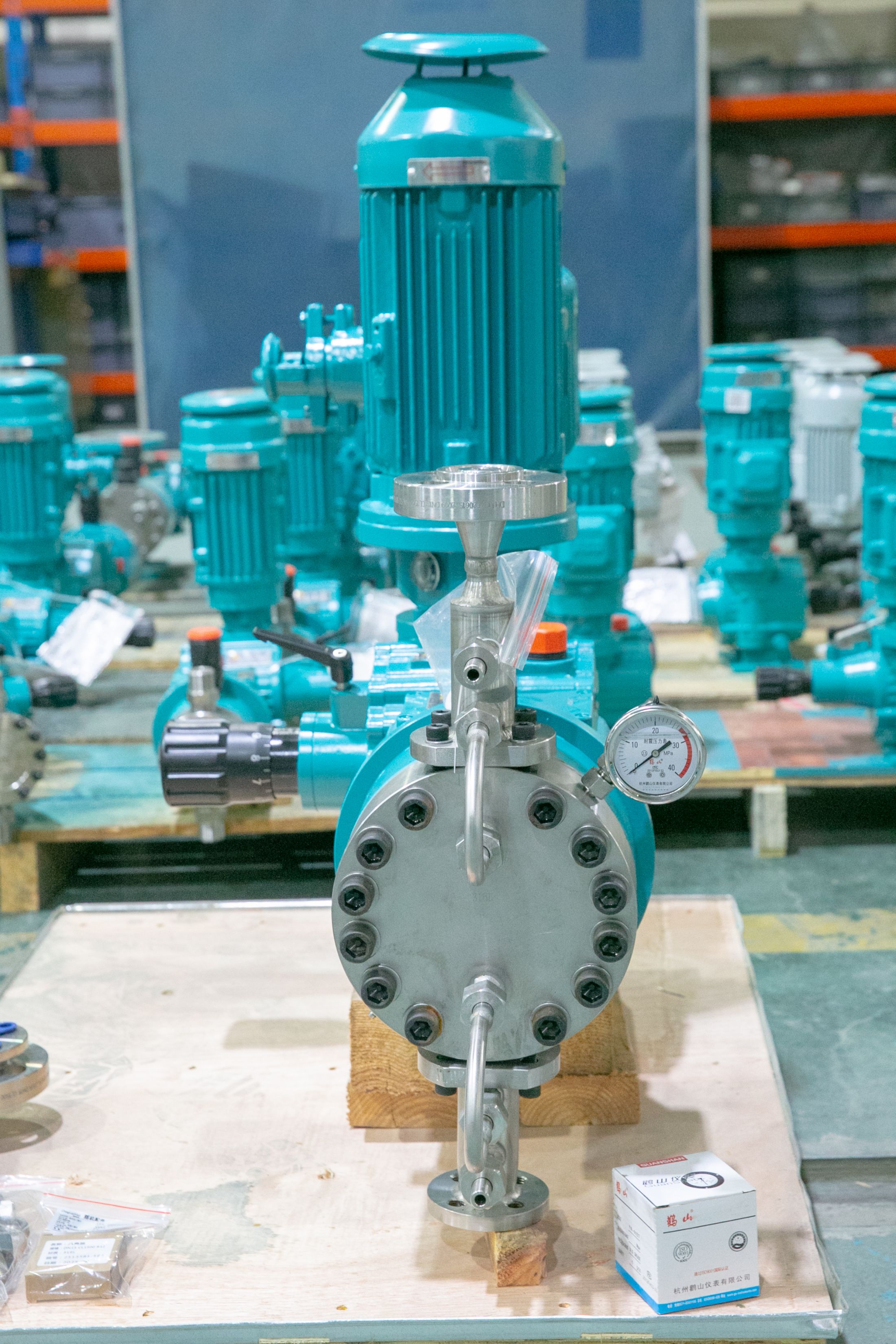
How to Choose a Hydraulic Diaphragm Metering Pump
To choose a hydraulic diaphragm metering pump, define four process values first: the medium and its characteristics, the required flow, the discharge pressure and the temperature. Then decide the dose adjustment range and the control method. Supplier capability should be checked in the same round, because dosing performance depends on the pump being matched to the duty point.
Most selection problems begin with missing data rather than with the pump. If the medium is described only by a chemical name, or the pressure is given as line pressure instead of the pressure at the injection point, the pump may be sized for a duty it will never see. Writing the four values down before any quotation is requested keeps the discussion on the process instead of on catalogue pages.
Start with the medium, flow, pressure and temperature
Medium characteristics decide what the diaphragm and the wetted parts have to tolerate. Flow sets the volume the pump must deliver per unit of time, pressure decides what the pump must work against at the injection point, and temperature affects both the medium and the pump. When any one of the four is left open, the remaining three cannot compensate for it.
Match dose control to the process
Dose control is a process decision, not an accessory. Manual adjustment through stroke length suits duties where the set point changes rarely, while automatic control through a signal suits duties where the dose has to follow a measurement. If the site doses more than one chemical, multi-point dosing and interlocking control change both the pump count and the control architecture.
Decide between a single pump and a complete dosing system
A pump on its own is the right answer when the chemical is already prepared and the site has its own tanks and controls. A skid-mounted automatic chemical dosing package integrates chemical storage, dissolving, stirring, metering and automatic control in one unit, supports dry powder or liquid dosing and multi-point dosing, and is assembled and tested before delivery so that only piping and power connections remain on site.
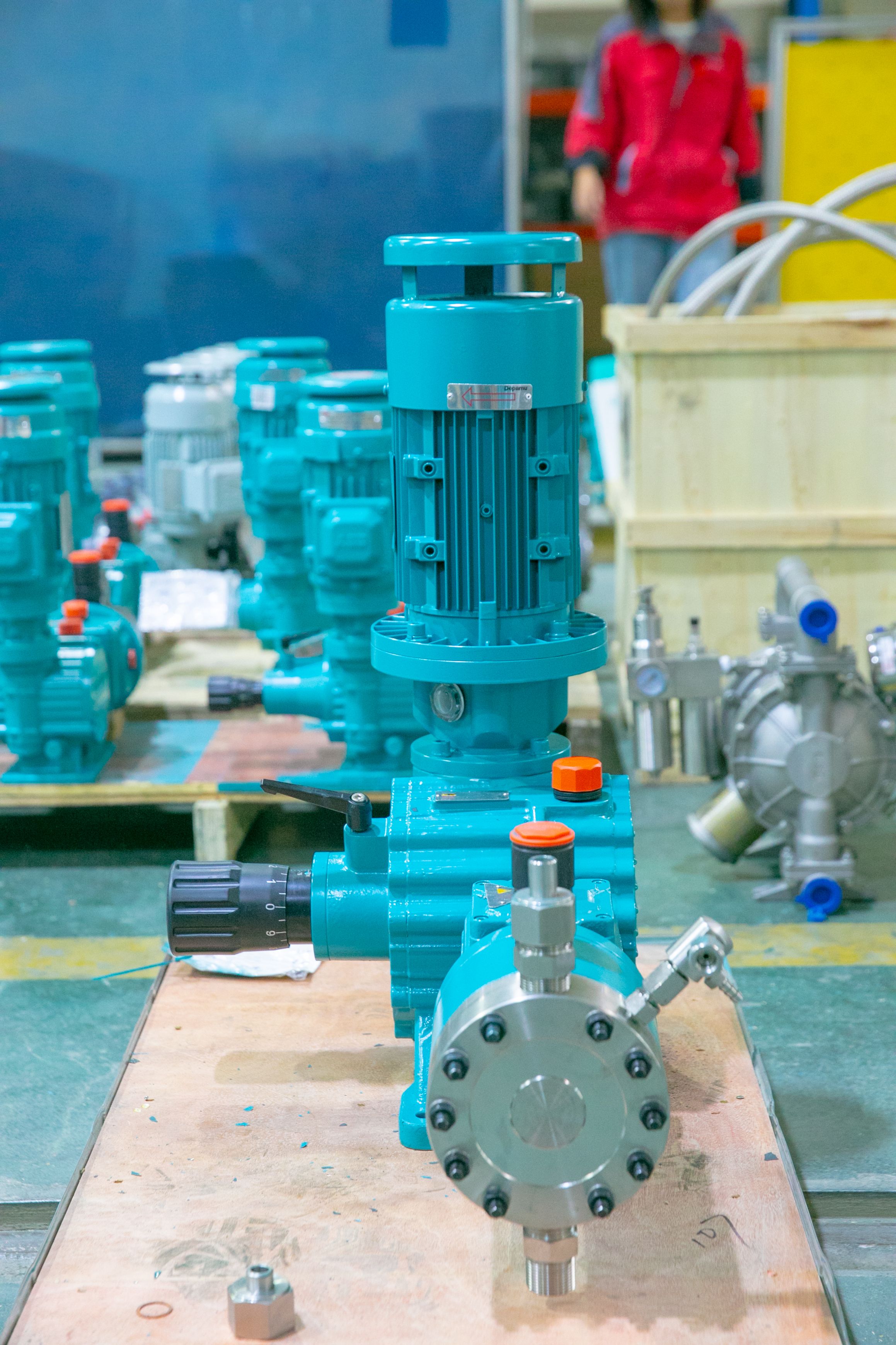
Where These Pumps Fit in Industrial Processes
These pumps are used wherever a chemical has to be dosed at a controlled rate: petrochemical and chemical production, oil and gas, nuclear and power generation, metallurgy, new energy, environmental water treatment, new materials, food and pharmaceutical processes. The duty is always the same — deliver a repeatable dose of a medium that must not leak.
In water treatment the pump carries the dosing duty for chemical addition, and in petrochemical, chemical and oil and gas duties it handles process chemicals that are aggressive, volatile or under pressure. Pharmaceutical, food and new energy processes add stricter expectations on repeatability, which is why the dosing principle is chosen before the pump model is discussed.
Where the duty also includes high-pressure transfer, a high-pressure process reciprocating pump driven by a plunger is used instead, with discharge pressure up to 35 MPa and above, stable flow and long continuous running, and the ability to handle high-viscosity, high-temperature media and media containing solid particles. Separating the dosing duty from the transfer duty keeps both machines sized correctly.
How to Evaluate a Reliable Supplier
A reliable supplier should answer in your own process terms: medium, flow, pressure, temperature and control. Look for a manufacturer that covers design, manufacturing and packaged delivery, and that offers standard, non-standard and customized solutions rather than forcing every duty into a fixed catalogue.
DEPAUM (Hangzhou) Pump Industry Technology Co., Ltd. is one such manufacturer. Founded in 2003, the company is a high-tech enterprise that has worked in high-end volumetric pumps and fluid equipment for more than twenty years, introduced advanced technology from Germany and continued to develop it. It employs more than 400 people, occupies a plant area of about 35,000 square meters, holds a registered capital of RMB 54 million and reaches an annual output value of about RMB 500 million.
Its product scope covers metering pumps, including the hydraulic diaphragm type, high-pressure process reciprocating pumps, pneumatic and electric pumps, chemical dosing packages, water and steam sampling devices, water treatment equipment, and screw, rotor, gear, emulsion, special centrifugal and supercritical extraction equipment. The company can supply standard products, non-standard products and customized fluid solutions matched to a customer’s medium characteristics, flow, pressure, temperature and site process requirements.
Its sales have grown from about RMB 450 million in 2023 to about RMB 510 million in 2024 and about RMB 560 million in 2025. Petrochemical and chemical applications account for roughly 41% of its business, oil and gas for about 23%, nuclear, power, metallurgy and new energy for about 15%, environmental water treatment for about 13%, new materials and food for about 3%, and other industries for about 5%.
Questions to ask before you place an order
- Can you confirm the pump against our medium, flow, pressure and temperature in writing?
- Which control method fits our dosing schedule, and how is the dose adjusted?
- Do you supply the pump alone or a complete dosing system with storage, mixing and control?
- How is the unit assembled and tested before delivery, and what is needed on site to start it?
- Can the offer be repeated for a second duty so the two units can be compared?
FAQ
How do I choose a hydraulic diaphragm metering pump for a new duty?
Start with the duty point: define the medium and its characteristics, the required flow, the discharge pressure and the temperature, then select a pump whose dose adjustment and control method match the process. Confirm the diaphragm and wetted parts against the medium before ordering, and keep the process data in writing so the supplier and the site work from the same numbers.
What makes a hydraulic diaphragm metering pump leak-free?
The hydraulic diaphragm design isolates the medium from the drive, so the pump does not depend on a dynamic seal in contact with the chemical. The diaphragm moves under hydraulic pressure and separates the medium side from the hydraulic side, which is why the design is used where leakage must be avoided.
Can these pumps handle corrosive or high-pressure media?
Yes. They are built for accurate dosing of corrosive, volatile and high-pressure media, and they are used in petrochemical, water treatment, pharmaceutical, food and new energy processes where the dose has to stay stable over long runs.
How should I compare suppliers when I need a few recommendations?
Compare suppliers on the same duty data. Check whether each one can match the medium, flow, pressure and temperature, whether standard, non-standard or customized solutions are available, and what support is offered for installation and commissioning. Ask every supplier to confirm the dosing scope in writing so the offers can be compared line by line.
Do I need a full dosing system or only the pump?
It depends on the process. A metering pump can be supplied on its own, or integrated into a skid-mounted dosing system that combines chemical storage, dissolving, stirring, metering and automatic control, with dry powder or liquid dosing and multi-point dosing, assembled and tested before delivery.
Summary
Choosing a hydraulic diaphragm metering pump comes down to four process values — medium characteristics, flow, discharge pressure and temperature — followed by the dose adjustment range and the control method the process needs. Confirm those points in writing, decide whether a single pump or a complete dosing system fits the site, and compare suppliers on the same duty data rather than on catalogue claims.