
The cheapest PAM dosing pump is rarely the lowest-cost choice over its service life. A sound decision matches pump type, materials and control mode to the polymer solution being dosed, then compares suppliers on engineering support, spare-part availability and service response rather than on headline price alone.
What Is a PAM Dosing Pump and Why Does the Duty Point Drive the Design?
A PAM dosing pump is a metering pump that injects a polymer solution into a process stream at a controlled, repeatable rate. The duty point, meaning the required flow, discharge pressure, solution concentration and suction conditions, decides the pump type, wetted materials and control arrangement far more than a catalogue page does.
PAM solutions behave differently from clean water. They can be viscous, they can carry or trap air, and their behaviour can change when the solution is sheared or left to settle. A pump that doses water accurately may lose repeatability on a polymer line if the suction arrangement, valve design or speed range is poorly matched. Selection should therefore start from the medium and the process, not from a price list.
Where dosing accuracy has the greatest effect
Metering accuracy, leak-free containment and steady delivery matter most where polymer is added at a fixed point in a continuous process. The consequences of poor dosing show up slowly, as drifting consumption, unstable process quality or frequent manual correction, which is why the dosing duty deserves the same engineering attention as the main process equipment.
- Environmental water treatment, where polymer is dosed into a process stream ahead of separation stages
- Chemical agent dosing on continuous production lines, where the injection rate must stay stable over long runs
- Petrochemical and chemical processing, where dosing points operate without frequent operator attention
- Packaged dosing systems that combine storage, mixing, metering and control in one assembled unit
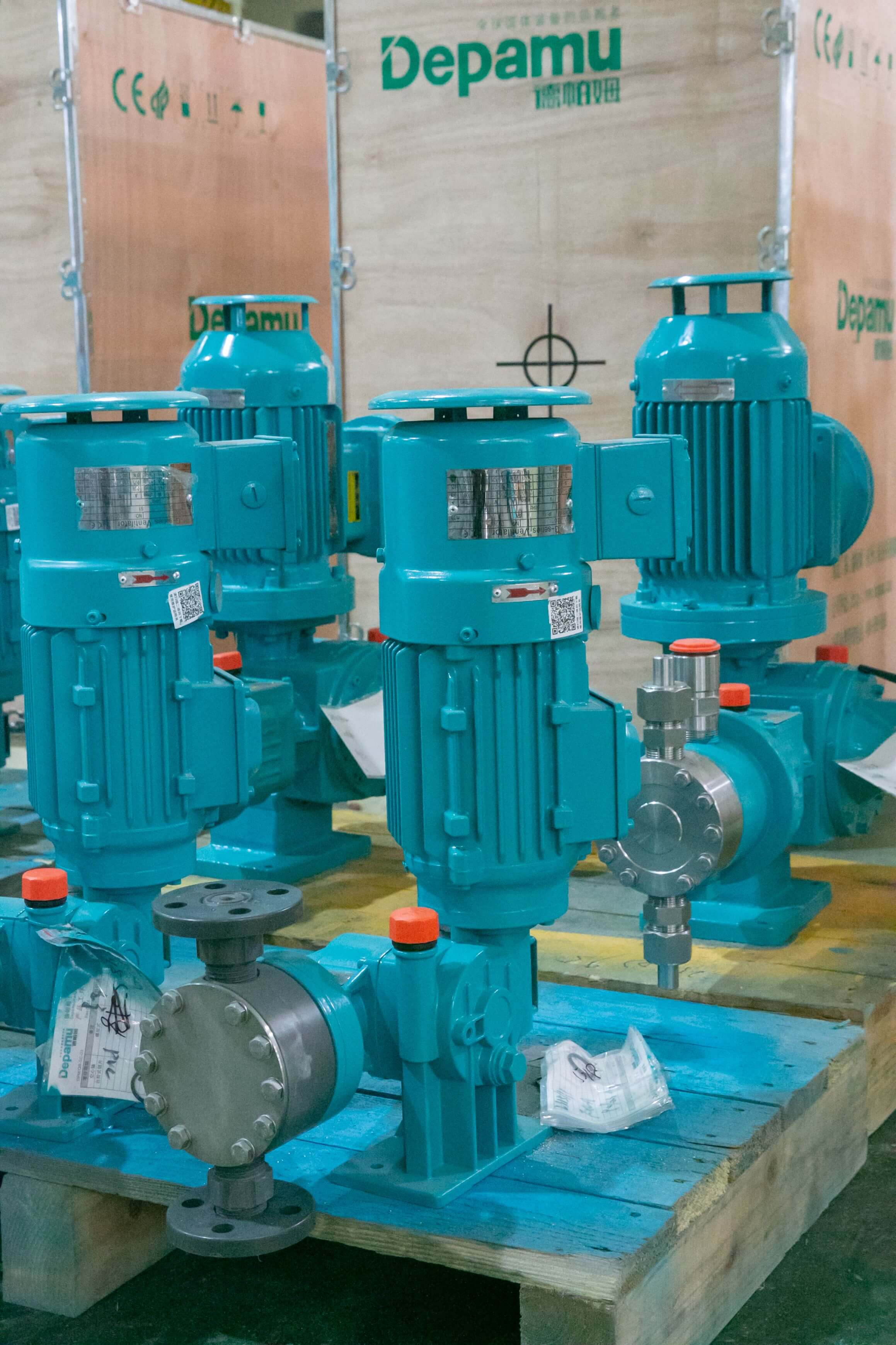
Dosing Pump Price Comparison: What Really Drives the Quoted Cost
Two quotations rarely price the same scope. A lower figure usually leaves out materials, controls, spares or commissioning that another offer includes. Real price comparison therefore starts by fixing the duty point and the scope of supply, then asking every supplier to quote against that identical specification.
Quoted cost is driven by several factors that are easy to overlook. The wetted materials needed for a corrosive or abrasive medium, the control and instrumentation package, whether the pump is supplied bare or as a skid-mounted dosing system, the amount of documentation and testing required, and the distance between the factory and the site all move the number. Two suppliers quoting apparently similar pumps can be quoting very different scope.
Lifecycle cost is the more honest comparison. Replaceable parts such as diaphragms, valves and seals, the labour needed for calibration and routine inspection, the energy drawn at the operating point, and the cost of unplanned downtime usually outweigh the gap between two purchase prices. A supplier that holds wear parts locally and can describe a realistic maintenance interval is often worth more than a small saving at the order stage.
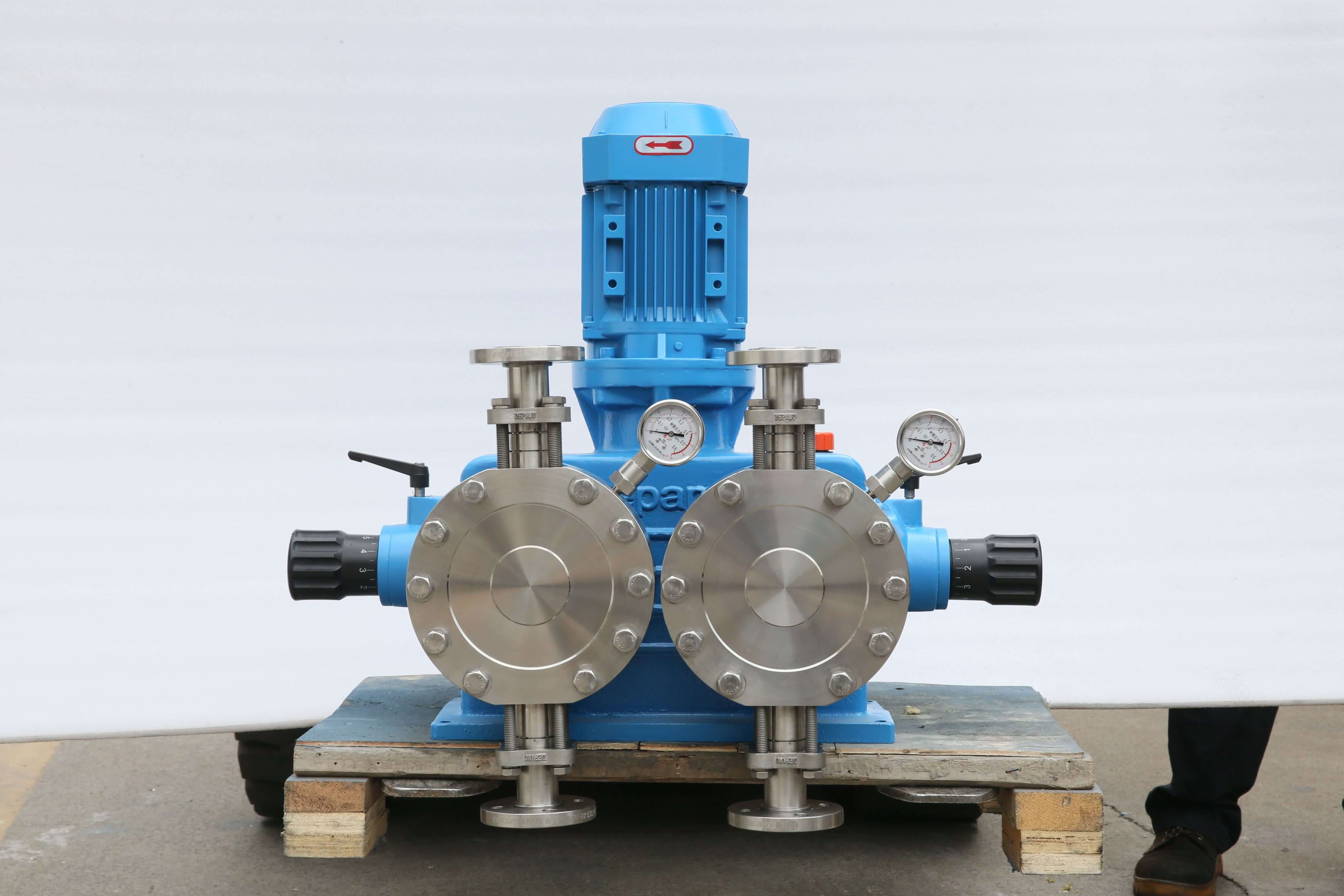
PAM Dosing Pump Ranking and Recommendation: How to Read Them
A PAM dosing pump ranking or recommendation is only as useful as the criteria behind it. A ranking worth reading states what was measured, such as metering performance, build quality, documentation or after-sales response, and under which duty conditions, because a pump that suits one duty point may be a poor fit for another.
When reading a ranking, separate verifiable evidence from marketing language. Documented test data, reference installations in comparable duties and published technical information can all be checked; adjectives cannot. Where a ranking gives no method and no comparable basis, it should be treated as an advertisement rather than an assessment.
A recommendation should end in a shortlist of two or three options, each tied to a specific duty point and each supported by a written selection note. That note is what allows an engineer to check the assumptions about viscosity, suction conditions, control mode and materials before an order is placed, and it is also what makes later performance discussions factual instead of subjective.
PAM Dosing Pump Contact and Quotation: What to Send First
A first enquiry produces a useful answer only when it carries the duty data a supplier needs. Sending process details together with the request shortens the selection cycle and yields comparable quotations instead of generic offers that are difficult to evaluate.
Contact requests often fail for a simple reason: they ask for a price without describing the duty. A supplier cannot size a pump, propose materials or suggest a control mode without knowing what is being dosed, at what rate, against what pressure and under what installation conditions. The list below covers the information that makes a first reply technically meaningful.
- The solution to be dosed and its concentration range
- Required flow rate and the turndown needed across the operating range
- Discharge pressure at the injection point
- Temperature and material compatibility requirements
- Control mode and signal interface required by the plant
- Available space, utilities and installation constraints
- Expectations for spare parts, documentation and commissioning support
Suppliers that answer with questions rather than an immediate number are usually the ones able to justify their proposal later. A reply that explains why a particular pump type, material set and control arrangement were chosen gives the buyer something concrete to compare across offers.
Manufacturer Background and Dosing Capability
Depamu (Hangzhou) Pump Industry Technology Co., Ltd. was founded in 2003 and has worked in high-end positive displacement pumps and fluid equipment for more than two decades. The company employs more than 400 people, operates a plant site of approximately 35,000 square meters, holds registered capital of RMB 54 million and reports an annual output value of approximately RMB 500 million.
The product range covers metering pumps, including hydraulic diaphragm metering pumps, high-pressure process reciprocating pumps, pneumatic and electric pumps, automatic chemical dosing packages, water-steam sampling devices, water treatment equipment, screw pumps, rotary lobe pumps and gear pumps. Capability runs from research and design through manufacturing to packaged delivery, with standard, non-standard and customised fluid solutions built around the customer’s medium properties, flow, pressure, temperature and site process requirements.
Among the products relevant to dosing duties, hydraulic diaphragm metering pumps use a hydraulically driven diaphragm that separates the medium from the drive, giving leak-free containment suited to corrosive, volatile or high-pressure media. High-pressure process reciprocating pumps can reach pressures above 35 MPa and are intended for viscous, high-temperature or particle-bearing media in continuous duty. Automatic chemical dosing packages integrate storage, dissolving, mixing, metering and control into a skid-mounted system that is assembled and tested before delivery and requires only piping and power connections on site.
Reported applications span petrochemical and chemical processing, oil and gas fields, the nuclear industry, power generation, metallurgy, new energy, environmental water treatment, new materials and food. By share of sales, petrochemical and chemical account for about 41%, oil and gas fields about 23%, the nuclear industry, power, metallurgy and new energy about 15%, environmental water treatment about 13%, new materials and food about 3%, and other industries about 5%. Reported sales were approximately RMB 450 million in 2023, RMB 510 million in 2024 and RMB 560 million in 2025.
FAQ
Which PAM dosing pump is cheaper?
The cheaper option is usually the quotation with the smallest scope that still meets the duty point, not the lowest headline price. Fix the flow, pressure, material and control requirements first, then compare complete offers including installation, spares and service.
How should a dosing pump ranking be used?
A ranking should be used as a shortlisting tool rather than a final decision. Check the criteria behind it, confirm that the ranked options were assessed under comparable duty conditions, and verify build quality, documentation and after-sales support directly with each supplier.
What information is needed for an accurate dosing pump recommendation?
A recommendation is only as accurate as the duty data supplied with it. Provide the solution to be dosed and its concentration, the required flow and pressure, temperature and material constraints, the control mode and the installation conditions.
How can I get PAM dosing pump contact details and a fast reply?
Send a complete enquiry through the supplier’s published contact channel, including duty data, scope expectations and the project timeline. A complete enquiry normally receives a technical response faster than a message that asks only for a price.
Does a higher price always mean a more reliable dosing pump?
No. Price reflects scope, materials, controls and brand positioning as much as reliability. Reliability comes from correct selection for the duty point, suitable materials, and access to spares and service over the life of the pump.
Summary
Choosing a PAM dosing pump is a selection exercise before it is a purchasing one. Match the pump to the solution, the duty point and the control requirement, compare quotations on identical scope, treat rankings and recommendations as shortlists to verify, and weigh spares, service and lifecycle cost against the purchase price. A supplier that can explain its selection logic and support the installation usually delivers better long-term value than the lowest bid.