
A high pressure process tubular pump recommendation is only as good as the evidence behind it: verifiable supplier facts, a documented duty point, and a clear route to ask questions before an order is placed. Price alone rarely settles which option is cheaper once downtime and service access are counted.
What a High Pressure Process Tubular Pump Recommendation Should Be Based On
Any high pressure process tubular pump recommendation should start with the duty, not the price tag. Medium, flow, pressure, temperature and site process requirements define which pump type and configuration can actually run continuously, and only then can quotations be compared on equal terms.
A recommendation becomes useful when it is written down and tied to a fixed duty statement. When two offers arrive with different scopes of supply, different documentation packages or different assumptions about how the pump is controlled, the lower number is not automatically the cheaper option; it is simply the less complete one. Fixing the duty first turns a vague comparison into a like-for-like one.
Define the Duty Point Before Comparing Offers
The duty point is the shared reference that every supplier works from. Without it, each quotation describes a different machine, and neither price nor delivery time can be judged fairly. Stating the process conditions in writing is the single most effective step a buyer can take.
- Record the medium, including viscosity, solids content and corrosive or volatile behaviour.
- State the required flow, discharge pressure and temperature range for normal and upset conditions.
- Describe how the pump is controlled and whether it runs continuously or intermittently.
- Agree the scope of supply, documentation, testing and delivery terms in writing.
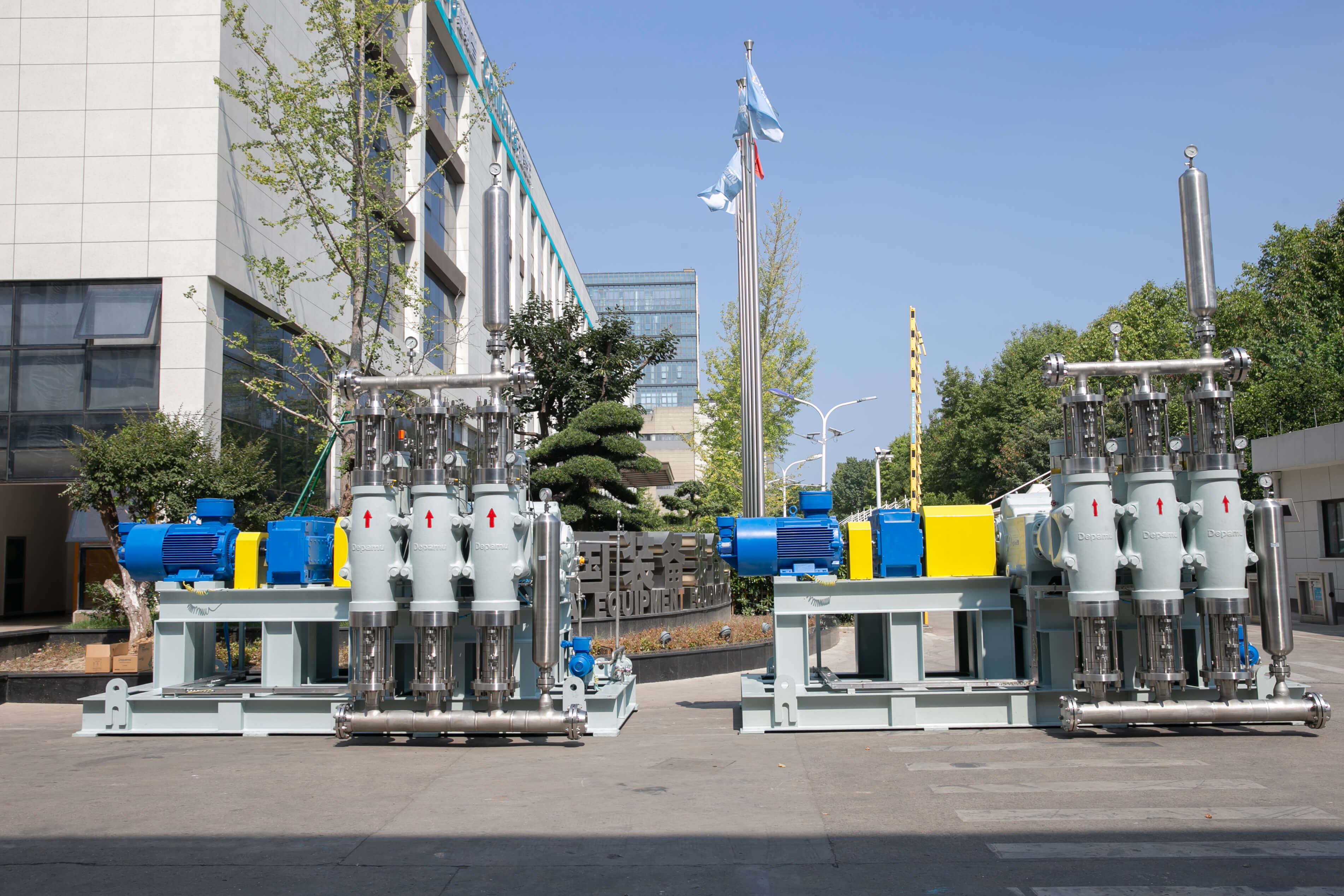
Manufacturing Depth Behind a High Pressure Process Supply Decision
Manufacturing depth is easier to verify than marketing language. A supplier with a long operating history, a substantial production footprint and a broad in-house product range can usually support customization, spare parts and long-term service more predictably than an intermediary that resells third-party equipment.
Established in 2003, the manufacturer employs more than 400 people in a plant of about 35,000 square metres, holds registered capital of RMB 54 million, and reports an annual output value of around RMB 500 million. Its capability runs from product research and design through manufacturing to packaged delivery, and it supplies standard products, non-standard products and customized fluid solutions according to a client’s medium characteristics, flow, pressure, temperature and site process requirements.
Reported sales have grown from about RMB 450 million in 2023 to about RMB 510 million in 2024 and about RMB 560 million in 2025. For a buyer, growth matters less than what it implies: a production base large enough to keep drawings, spares and service capacity available years after the pump is installed, which is where the real cost of ownership is decided.
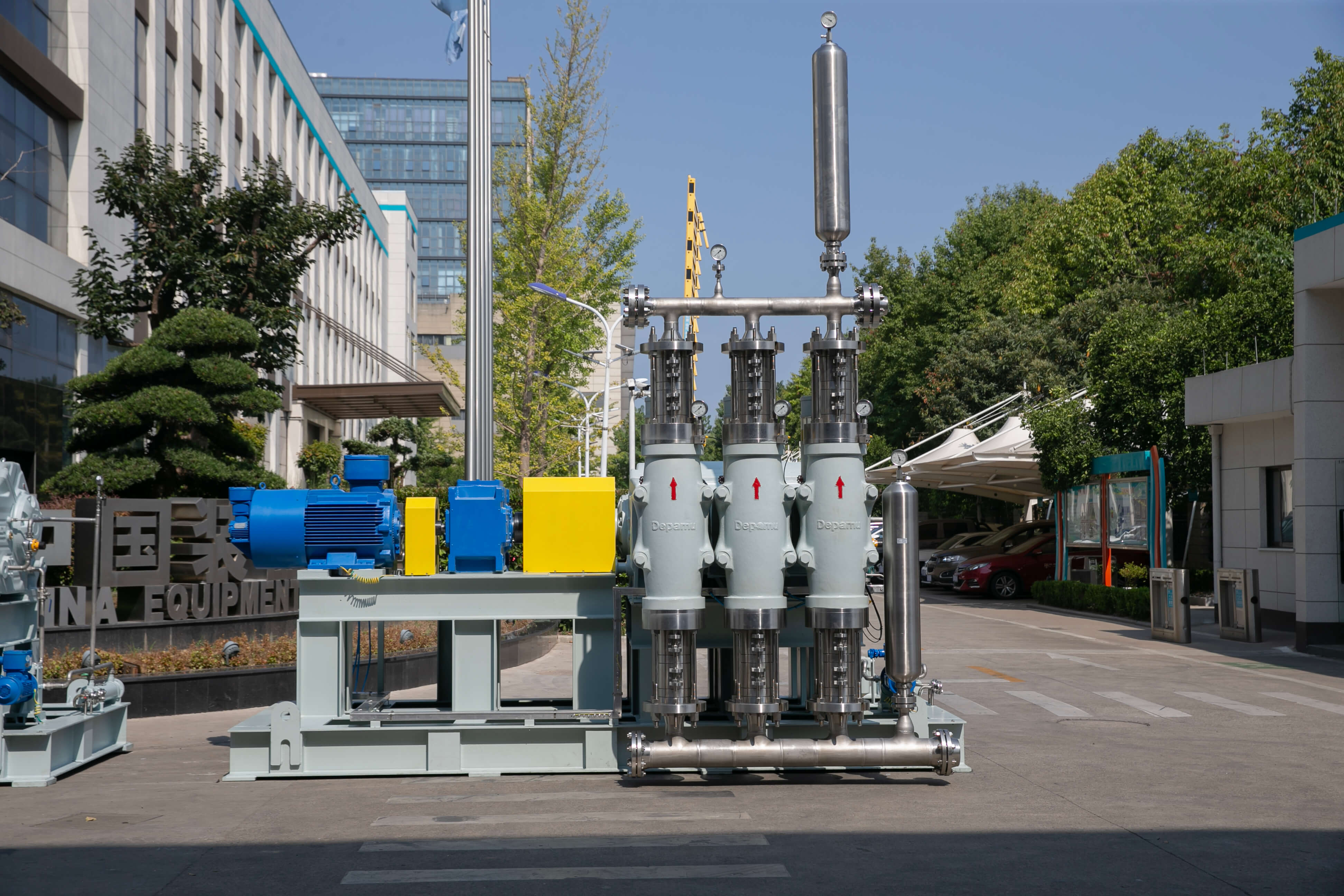
Products and Applications That Fit High Pressure Process Duty
The product mix matters because a high pressure process requirement rarely stands alone. A supplier that builds metering pumps, high-pressure process reciprocating pumps, dosing packages and rotary pumps in one place can cover more of the process train from a single point of accountability, which simplifies interface management during commissioning.
Hydraulic diaphragm metering pumps handle precise dosing duties. Stroke length and running frequency are adjusted to deliver an accurate, stable dose, and the hydraulic-driven diaphragm design keeps the process medium sealed from the atmosphere, which suits corrosive, volatile or high-pressure media. Typical applications include petrochemical dosing, water and wastewater treatment, pharmaceutical and food processes, and new energy production.
High-pressure process reciprocating pumps cover the boosting duty. A plunger reciprocating motion pushes liquid from a low-pressure feed to a high-pressure discharge or a distant pipeline, with pressure capability reaching above 35 MPa, stable flow and the ability to run continuously. They are used for oil and gas field water injection, petrochemical process transfer, pipeline boosting and high-pressure injection, and they handle high-viscosity, high-temperature and solids-laden media that would challenge other designs.
Packaged chemical dosing systems integrate storage, dissolution, mixing, metering and automatic control on a single skid, with the metering pump at the centre, supported by dissolving tanks, agitators and a control system. They support dry powder or liquid dosing, multi-point dosing and automatic interlocking, are assembled and tested before shipment, and need only piping and power connections on site. Typical uses include boiler water treatment, circulating water treatment, wastewater treatment and petrochemical operations. The wider range also includes screw pumps, rotor pumps, gear pumps, air-operated and electric pumps, water and steam sampling devices and water treatment equipment.
| Application Area | Share of Sales Business |
|---|---|
| Petrochemical and chemical | About 41% |
| Oil and gas fields | About 23% |
| Nuclear, power, metallurgy and new energy | About 15% |
| Environmental water treatment | About 13% |
| New materials and food | About 3% |
| Other industries | About 5% |
How to Request Contact Details and a Written Recommendation
Contact details are only useful if the inquiry reaches someone who can read the duty. A structured request covering medium, flow, pressure, temperature, site constraints and required delivery usually produces a usable high pressure process tubular pump recommendation faster than a price-only message that leaves the process conditions open.
Ask for the response in writing. A reply worth keeping names the pump type and configuration, states the duty it was sized for, defines the scope of supply and lists the documentation, testing and delivery terms that come with it. Without those elements, a quotation is a number without a basis, and it cannot be compared with anything else.
Keep the thread with one responsible contact, confirm who owns the technical questions, and ask how comparable duties have been handled before. Service access belongs in the same conversation: spare parts availability, response routes and commissioning support are cheaper to agree before the order than to negotiate afterwards.
Comparing Cost, Ranking and Reliability Without Guesswork
Cheapest, highest-ranked and most reliable are three different questions. Purchase price, total cost of ownership and supply risk rarely point to the same option, so each should be scored separately against the same duty statement instead of being blended into a single impression.
Cost comparison works best when every offer carries the same scope. Spares, energy use, maintenance intervals and the effort of reaching a service team all sit outside the list price, and they usually decide the outcome over the life of the equipment. A lower price with a narrower scope is not a cheaper pump; it is a smaller package.
A ranking is only as good as its criteria. Before trusting a position in a list, check what was measured: documented duty data, scope of supply, verified supplier facts, or simply price. Reliability follows the same logic. Operating history, production footprint, in-house product range and the ability to deliver standard, non-standard and customized fluid solutions are facts that can be checked, and they predict long-term support far better than an unverifiable claim.
FAQ
Which high pressure process tubular pump is cheaper?
Cheaper is a total-cost question, not a price-list question. Two offers with different scopes of supply are not comparable until the driver, controls, baseplate, spares and service access are priced against the same duty statement; only then does the lower total cost become visible.
What does the high pressure process tubular pump ranking measure?
A ranking measures whatever criteria its author chose, so the criteria matter more than the position. A ranking built on documented duty data, defined scope of supply and verifiable supplier facts is more useful than one built on price or popularity alone.
What should a high pressure process tubular pump recommendation include?
A usable recommendation names the pump type and configuration, states the duty it is sized for, defines the scope of supply, and lists the documentation and service terms that come with it.
How can I obtain high pressure process tubular pump contact details?
Contact details should come from the supplier’s own published channels rather than from a third-party list. Prepare the duty statement first, covering medium, flow, pressure, temperature and site requirements, so the first conversation already produces technical answers instead of a generic quotation.
Which high pressure process tubular pump supplier is reliable?
Reliability should be judged on verifiable facts: how long the manufacturer has operated, how large its production footprint is, how broad its in-house product range is, and whether it can deliver standard, non-standard and customized fluid solutions from its own design and manufacturing base.
Summary
A high pressure process tubular pump recommendation should be traceable to a documented duty point, a defined scope of supply and verifiable supplier facts. Compare offers on total cost rather than list price, test any ranking against the criteria behind it, and confirm contact and service routes before ordering. Manufacturers with a long operating history, in-house design and manufacturing, and a broad fluid equipment range are easier to hold accountable over the working life of the pump.