
Metering dosing pump recommendations should be judged on total cost, dosing accuracy, and supplier support, not on price alone. A pump that is cheaper to buy can cost more to run when maintenance, spare parts, or process downtime are poorly handled. This guide explains how to compare options and what to confirm before you buy.
What Metering Dosing Pump Recommendations Should Compare
A sound metering dosing pump recommendation compares four things: dosing accuracy under real process conditions, wetted-material compatibility, maintenance access, and supplier response. Price matters, but it is one variable among these. Buyers who compare only purchase price often discover later that spare-part lead time and rebuild cost dominate the total spend.
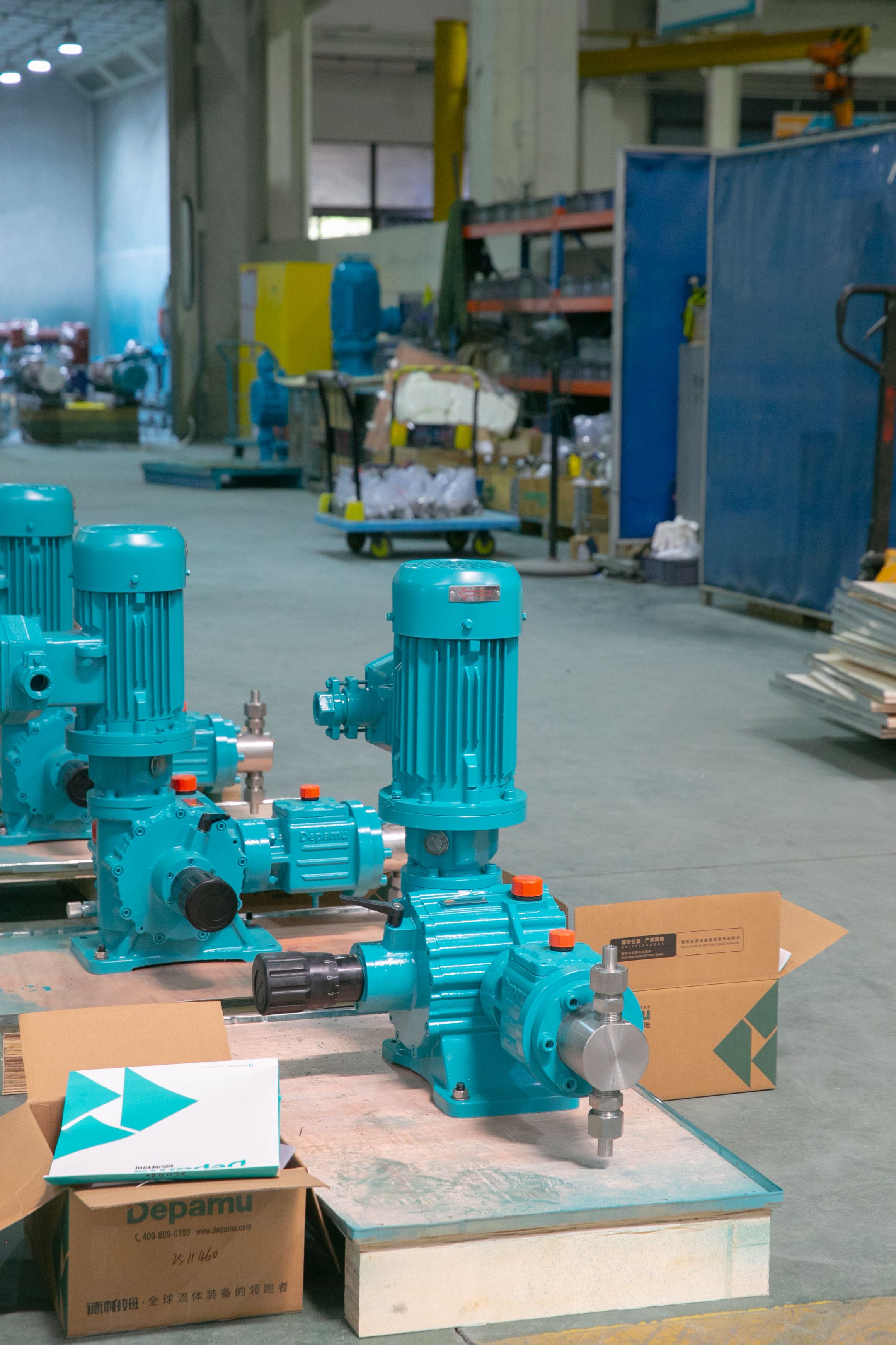
Dosing accuracy is a mechanical property, not a marketing figure. In a hydraulic diaphragm metering pump, the dose is set by adjusting stroke length and running frequency, so output can be changed without swapping the pump head. What matters is whether the pump holds that setting against the discharge pressure the process actually runs at. A pump that drifts under back pressure doses unevenly even when its published specification looks suitable on paper.
How Dosing Accuracy Is Achieved
The hydraulic diaphragm design separates the medium from the hydraulic end, so aggressive, volatile, or high-pressure chemicals do not travel through the drive mechanism. That separation is the reason this structure is widely used wherever a chemical has to be injected in a controlled, repeatable way rather than simply transferred. The same characteristic also shapes the maintenance routine, because the diaphragm and valves become the parts that define service intervals.
- Duty point: medium, concentration, flow, discharge pressure, and temperature at the injection point.
- Wetted materials: pump head, diaphragm, valve seats, and seals checked against the chemical being dosed.
- Control logic: whether dosing is manual, automatic, or linked to an analyser or plant control system.
- Service access: how valves, diaphragms, and seals are replaced, and whether spares are available.
- Total cost: purchase, installation, spares, and expected downtime combined rather than separated.
How Metering Dosing Pump Rankings Help Narrow the Field
A metering dosing pump ranking is useful as a starting filter, not as a final decision. It compresses a crowded market into a short list quickly, but the criteria behind the order are rarely visible. A list sorted by sales volume, search traffic, or regional popularity answers a different question from the one a buyer is actually asking, so the filter has to be audited before it is trusted.
A practical way to use a ranking is to group candidates by structure before comparing names. Diaphragm metering pumps suit precise chemical addition; reciprocating plunger pumps suit high pressure and difficult media; packaged dosing systems suit duties where tanks, mixers, and controls must work as one unit. Once the structure is fixed, the ranking becomes a comparison of suppliers inside a comparable technical category instead of a comparison of unrelated products.
Reading a Ranking Without Being Misled
Check what the ranking measures before it influences the shortlist. Confirm that listed products are available in the configuration the process needs, that spare parts and service are supported in the buyer’s region, and that quoted prices cover the same technical scope. A ranking that cannot answer these questions, or that mixes pump types into a single order, should inform the shortlist but not decide the purchase.
Which Metering Dosing Pump Is Reliable for Demanding Media
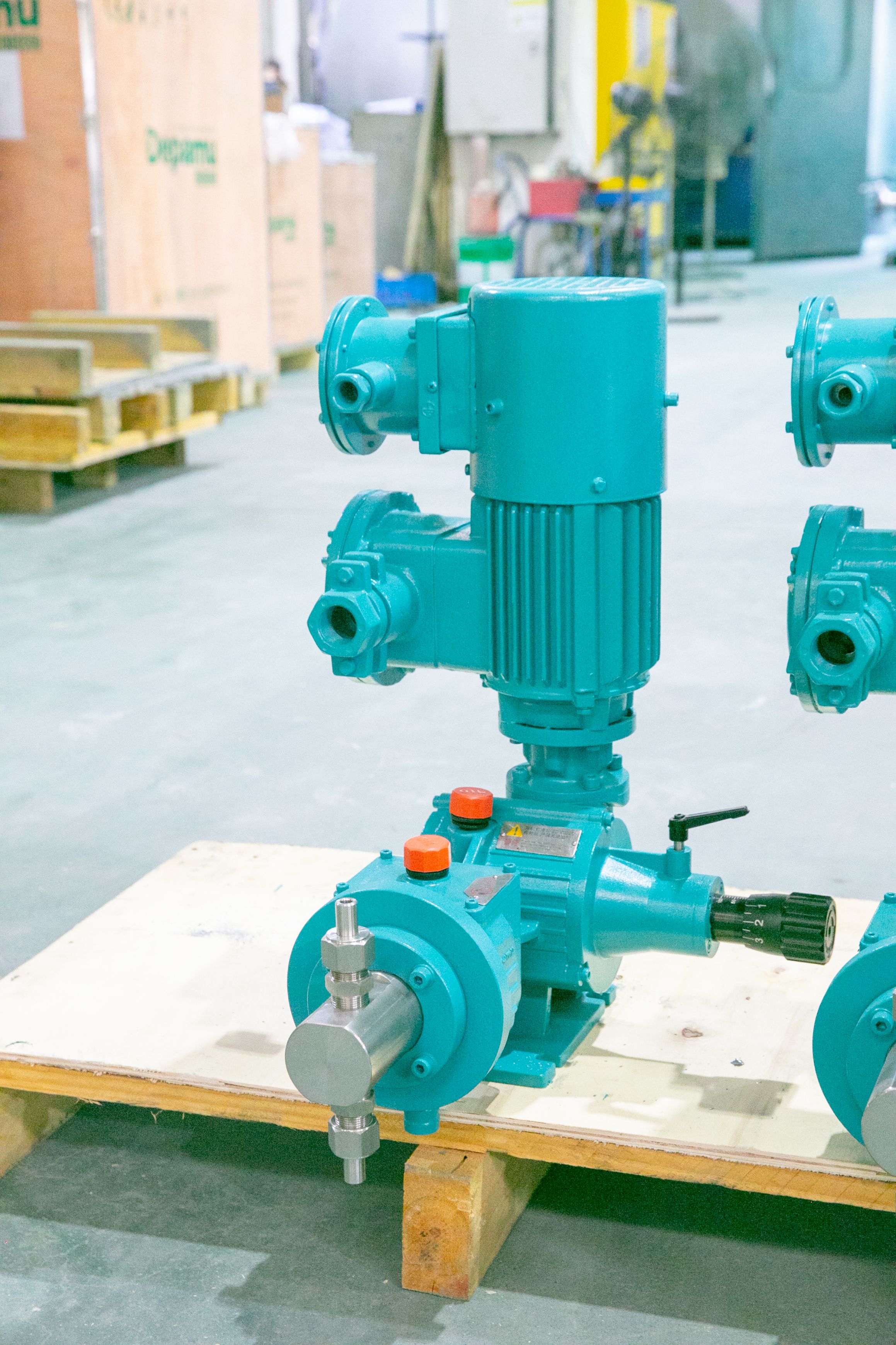
Reliability comes from matching the pump structure to the medium. For corrosive, volatile, or high-pressure chemicals, a hydraulically driven diaphragm metering pump keeps the medium separated from the drive and avoids packing leakage. For high-viscosity, high-temperature, or particle-laden duty, a reciprocating plunger pump is usually the better fit.
Media compatibility decides most reliability outcomes. A diaphragm structure limits the paths along which an aggressive chemical can reach the drive, which is why it is preferred where the medium itself is the main risk. Where the process demands pressure, a high-pressure reciprocating pump built for pressures up to 35 MPa and above delivers stable flow, can run continuously for long periods, and handles media that would shorten the life of a lighter design.
- Structure match: diaphragm units for corrosive or volatile chemicals, plunger units for viscous, hot, or particle-laden media.
- Continuous duty: confirm the unit suits the running pattern the process needs, not only intermittent operation.
- Wear parts: compare diaphragm, valve, and seal replacement against the maintenance window the plant can support.
- System fit: check how the pump meets the surrounding tanks, mixers, controls, and pipework.
Where Depamu Fits Into a Shortlist
Depamu (Hangzhou) Pump Industry Technology Co., Ltd. was founded in 2003 and manufactures metering pumps, high-pressure reciprocating pumps, and packaged chemical dosing systems. Its scope covers standard units, non-standard designs, and complete fluid systems, which matters when a dosing duty needs more than a single pump to be delivered as a working installation.
The company employs more than 400 people and operates a plant site of approximately 35,000 square meters, with a registered capital of CNY 54 million and an annual output value of roughly CNY 500 million. Reported sales were about CNY 450 million in 2023, about CNY 510 million in 2024, and about CNY 560 million in 2025. The technology was originally introduced from Germany and has been developed further in-house.
Sales are distributed across several process industries, which indicates where the equipment is actually used rather than where it is marketed.
| Industry focus | Share of sales business (approximately) |
|---|---|
| Petroleum refining and chemicals | 41% |
| Oil and gas fields | 23% |
| Nuclear industry, power, metallurgy, and new energy | 15% |
| Environmental water treatment | 13% |
| New materials and food | 3% |
| Other industries | 5% |
The product scope covers metering pumps including hydraulic diaphragm units, high-pressure reciprocating pumps, pneumatic and electric pumps, chemical dosing packages, water and steam sampling devices, water treatment equipment, and screw, rotary, and gear pumps. For duties that need more than a pump, an automatic chemical dosing system integrates chemical storage, dissolving, mixing, metering, and automatic control on one skid, supports dry or liquid chemical feeding, multi-point dosing, and automatic linkage control, and is assembled and tested before delivery so site work is limited to piping and power connections.
Where a process falls outside a standard unit, the company works from the medium characteristics, flow, pressure, temperature, and site process requirements to supply standard, non-standard, or customized fluid systems. That scope covers high-pressure transfer, precise metering, chemical dosing, process boosting, and difficult media handling.
What to Confirm Before You Ask for Metering Dosing Pump Contact Information
Before requesting contact information, write down the duty point: medium, concentration, flow, pressure, temperature, and the control logic the dosing system must follow. Suppliers can only quote accurately and recommend a configuration when these inputs are clear. Vague enquiries usually return vague proposals, which then have to be compared on unequal terms.
The enquiry itself is a technical document, not a request for a price list. A supplier reading it should be able to see the injection point, the chemical, and the operating pattern without asking follow-up questions. When several quotations are eventually compared, identical input data is what makes the comparison meaningful, because each supplier is then answering the same question.
- Medium and concentration, including any solids or gas content.
- Required flow and discharge pressure at the injection point.
- Temperature of the medium and of the surrounding environment.
- Dosing mode: continuous, intermittent, or linked to a control signal.
- Site conditions: available space, power supply, and connection points.
- Scope expected from the supplier: pump only, or a complete dosing package.
Contact should be made through the supplier’s official sales channel, and a written enquiry that carries the duty point list is easier to route to an application engineer than a general price question. Where a packaged system is being considered, ask how the unit is assembled and tested before shipment, since that determines how much work remains on site after delivery.
Frequently Asked Questions
What do metering dosing pump recommendations usually compare?
They compare dosing accuracy at the real duty point, wetted-material compatibility, maintenance access, spare-part availability, and supplier response time. Purchase price is one input, not the deciding one, because rebuild cost and downtime often outweigh the initial saving.
Which metering dosing pump is cheaper over time?
The cheaper pump over time is the one that matches the medium and the duty point with the least maintenance. Purchase price alone does not settle the question, because rebuild cost, spare-part lead time, and process downtime all add to the total. Compare quotations on the same technical basis before deciding.
How is a metering dosing pump ranking useful during selection?
A ranking is useful as a starting shortlist, not as a final decision. It narrows the field quickly, but each candidate still has to be checked against the actual medium, flow, pressure, temperature, and control requirements. Confirm the criteria behind any ranking before relying on it.
Which metering dosing pump is reliable for corrosive or high-pressure media?
For corrosive, volatile, or high-pressure chemicals, a hydraulically driven diaphragm metering pump keeps the medium separated from the drive and avoids packing leakage. For high-viscosity, high-temperature, or particle-laden media, a reciprocating plunger pump is usually more suitable. Reliability depends on matching structure to medium.
What should I prepare before requesting metering dosing pump contact information?
Prepare the duty point first: medium, concentration, required flow, discharge pressure, temperature, and the control or dosing logic needed. With these details ready, a supplier can recommend a configuration and quote on a comparable basis, which shortens the whole enquiry cycle.
Summary
Metering dosing pump recommendations are only as useful as the duty point behind them. Compare accuracy under real pressure, wetted-material compatibility, maintenance access, and supplier response before comparing price, and treat any ranking as a shortlist tool that still has to be verified against the process. Reliability follows from structure: diaphragm units for corrosive, volatile, or high-pressure chemicals, plunger units for viscous, hot, or particle-laden media, and packaged dosing systems where storage, mixing, and control have to work as one unit. Prepare medium, flow, pressure, temperature, and control data before requesting contact information, so every quotation answers the same question.