
Choosing a reliable centrifugal water pump supplier comes down to four checks: a documented product range, in-house engineering and customization, application experience in your industry, and a clear route to request contact information and a quotation. Price matters, but the cheapest offer is rarely the lowest total cost.
What a Reliable Centrifugal Water Pump Supplier Should Provide
A reliable centrifugal water pump supplier is judged by what it can document and deliver: the pump types it manufactures, the engineering support behind each unit, the industries it already serves, and the responsiveness of its contact channels. Claims without documentation are a warning sign during supplier evaluation.
Supplier evaluation usually starts with a price list and ends with a purchase order, but the decisions in between decide whether the pump performs as specified. Two suppliers can quote for the same duty point and still differ in assembly discipline, testing routines, documentation and the willingness to adjust a design when the duty point is unusual.
Product range and manufacturing depth
Depam (Hangzhou) Pump Industry Technology Co., Ltd. was founded in 2003 and has developed into a manufacturer with more than 400 employees and a plant area of about 35,000 square meters. Registered capital is RMB 54 million, and annual output value is around RMB 500 million. Its catalog covers metering pumps, high-pressure process reciprocating pumps, pneumatic pumps, electric pumps, chemical dosing systems, water-steam sampling devices, water treatment equipment, screw pumps, rotary lobe pumps and gear pumps, with special centrifugal pumps offered alongside this range.
For a buyer sourcing centrifugal units, that breadth matters in two ways. First, the centrifugal pump is rarely the only equipment on a requisition list; dosing, high-pressure injection, sampling and water treatment often sit in the same project, and sourcing them from one manufacturer reduces interface risk. Second, a manufacturer that builds several pump families tends to understand which pump principle fits which duty, which is useful when a process changes during detailed engineering.
The manufacturer also states that it introduced advanced technology from Germany and has continued to develop it in-house, which supports both standard catalog units and engineered variants.
Engineering and customization capability
Depam describes a full chain from product development and design through manufacturing to packaged delivery. Units can be specified against medium characteristics, flow, pressure, temperature and site process conditions, and the output can be a standard product, a non-standard variant or a customized fluid-handling solution.
- A documented scope of supply covering the pump, baseplate, driver and controls
- An engineering review of medium, flow, pressure and temperature before the offer is fixed
- Assembly and testing at the factory before shipment
- One point of contact for standard, non-standard and customized units
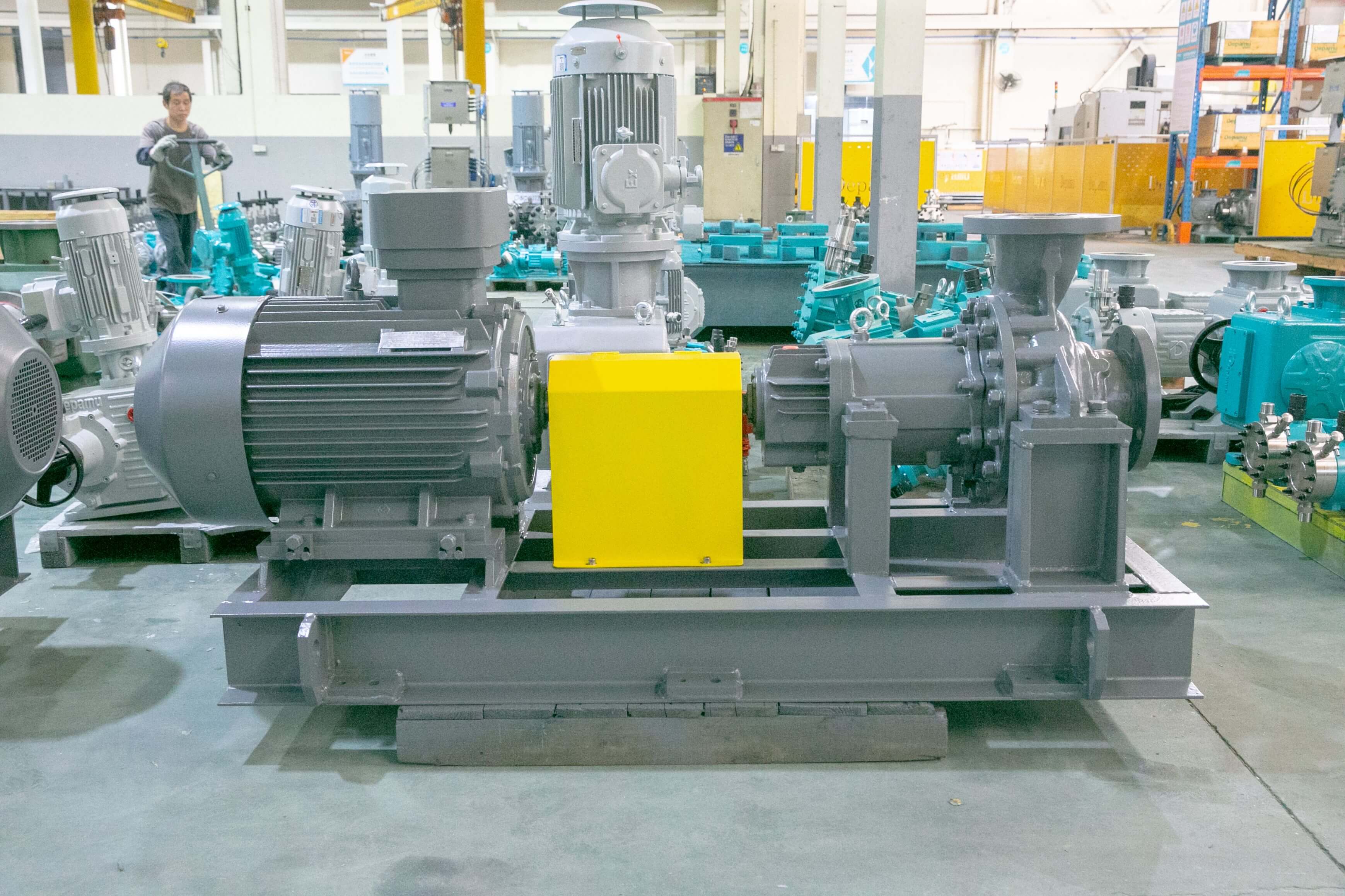
How to Compare Centrifugal Water Pump Suppliers on Price and Reliability
Price comparison only works when every offer covers the same scope. Ask each centrifugal water pump supplier to quote against one technical specification, then compare what is included: pump model, driver, baseplate, sealing arrangement, controls, documentation, testing, delivery terms and warranty. Differences in scope explain most of the gap between the lowest and the highest quotation.
Price versus total cost of ownership
A low purchase price shifts cost into operation. Energy consumption, seal and bearing replacement, spare part availability and unplanned downtime all sit after the invoice, and they are influenced by how well the pump was matched to the duty point in the first place. A supplier that asks detailed questions before quoting is usually protecting both the pump and the process.
When offers differ widely, list the exclusions rather than the inclusions. A quotation that omits controls, testing records or commissioning support is not cheaper; it is narrower. Levelling the scope is the only way to compare two suppliers fairly.
Reading rankings and recommendations carefully
Rankings and recommendations are useful shortcuts, but they are only as good as their criteria. A list built on one duty point, one market segment or one pump family does not transfer automatically to a centrifugal water pump used for water transfer in a different process. Check what was measured, in which application, and whether the named supplier actually manufactures the pump type you need.
The stronger signal is a recommendation that comes with technical reasoning: why this pump principle, why this material, why this sealing arrangement. A supplier able to explain its reasoning is easier to audit than one that simply ranks itself highly.
Contact information and response time
Test responsiveness before the order, not after it. Send one specific technical question and see whether the reply comes from someone who understands the duty or from a general sales desk. Response time during evaluation is a reasonable indicator of support once the pump is installed.
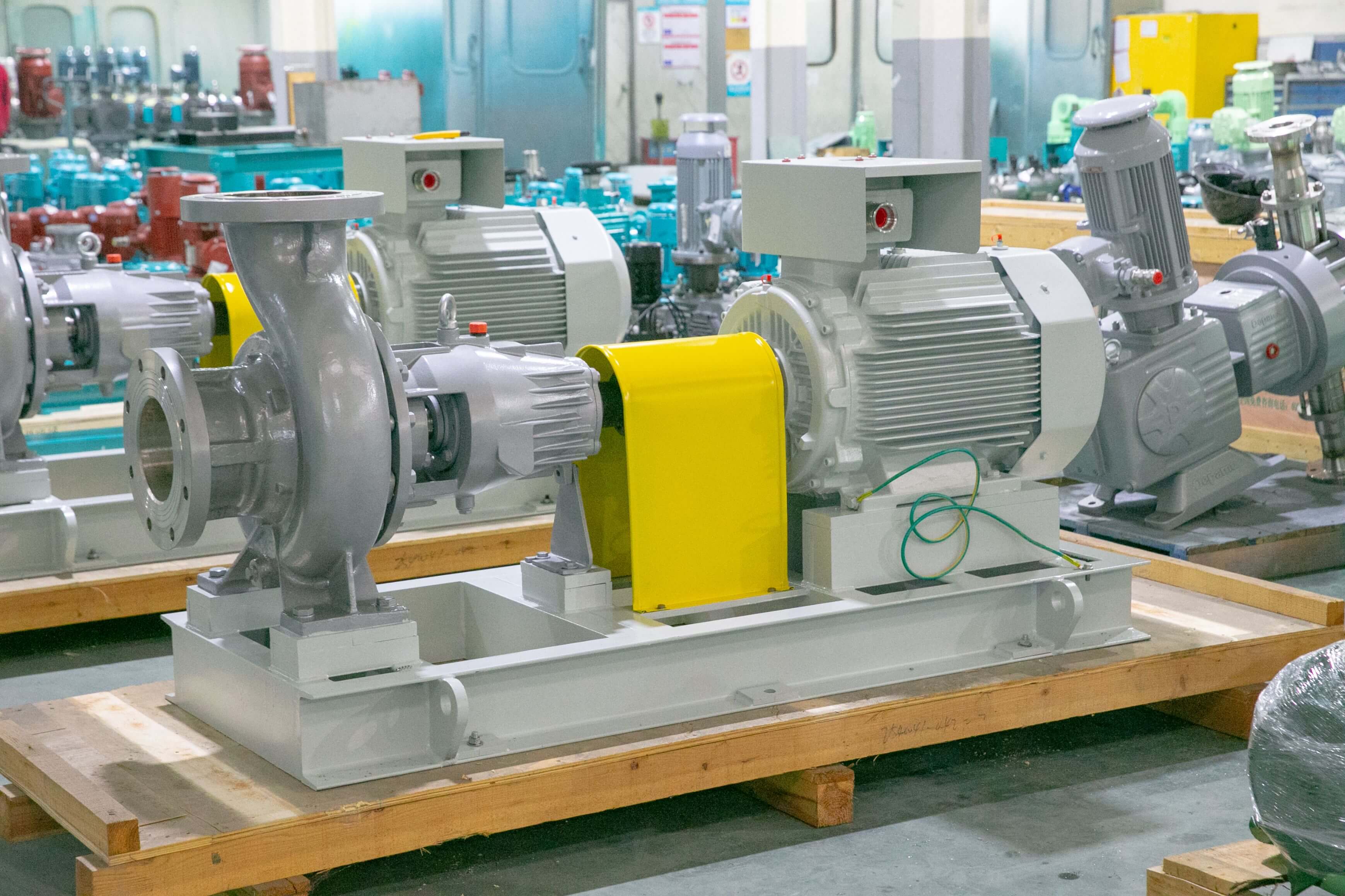
Centrifugal Water Pumps Inside a Wider Fluid Equipment Portfolio
A centrifugal water pump is one item in a much larger fluid-handling picture. Projects that need water transfer also tend to need chemical dosing, high-pressure injection, sampling or water treatment, and each of those duties calls for a different pump principle. A supplier with several pump families can match the principle to the duty instead of forcing one design onto every service.
Matching the pump principle to the duty
Metering pumps suit precise, repeatable dosing of chemicals into a process; hydraulic diaphragm metering pumps use a hydraulic drive and diaphragm structure so the medium stays sealed from the environment, which matters with corrosive, volatile or high-pressure media. High-pressure process reciprocating pumps handle pressure up to 35 MPa and above with stable flow over long continuous runs, and they are built for viscous, high-temperature or solids-laden media in oil and gas field water injection, process transfer, pipeline boosting and high-pressure injection.
Chemical dosing systems combine storage, dissolving, mixing, metering and automatic control in one skid, which reduces site assembly work and shortens commissioning. Centrifugal units sit alongside these families for water transfer duties, so a single supplier can cover a mixed requisition without splitting responsibility across several vendors.
Application Experience That Supports Supplier Selection
Application experience is the fastest way to judge fit. A supplier that already serves industries close to yours has met your media, duty cycles and site constraints before, and can flag specification errors early, which shortens commissioning and reduces rework on site.
Depam reports that petrochemical and chemical processing account for roughly 41% of its sales business, oil and gas fields about 23%, nuclear, power, metallurgy and new energy about 15%, environmental water treatment about 13%, new materials and food about 3%, and other industries about 5%. Reported sales were about RMB 450 million in 2023, about RMB 510 million in 2024 and about RMB 560 million in 2025.
For a buyer, the useful question is not how large the supplier is, but how close its experience sits to your own process. A supplier with relevant references can propose a workable configuration quickly; one without them will need the same learning curve you are trying to avoid.
How to Request Contact Information and a Quotation
Requesting contact information is a test in itself. A supplier that answers a technical question with a specific, referenced reply before the order is more likely to support the pump after it. Prepare the duty data first, then ask for the contact channel that reaches engineering, not only the sales desk.
Before requesting a quotation, assemble the process data in one document:
- Medium characteristics, including corrosiveness, viscosity and solids content
- Required flow rate and discharge pressure
- Operating temperature and ambient conditions
- Site process requirements and any interface constraints
With that data in hand, a supplier can respond with a standard product, a non-standard variant or a customized fluid-handling solution and state clearly which it is. Depam positions its range across those three delivery modes, so the quotation should say which one applies and what changes between them. Requests sent without duty data produce generic replies that cannot be compared or audited.
FAQ
What makes a reliable centrifugal water pump supplier?
Documented capability is what makes a supplier reliable: a defined product range, an engineering review before quotation, factory assembly and testing, and a contact channel that reaches technical staff. These four points can be verified before any order is placed.
Why is the cheapest centrifugal water pump rarely the lowest total cost?
The cheapest offer usually reflects a narrower scope rather than a cheaper pump. When driver, sealing, controls, testing, documentation or warranty are excluded from one quotation and included in another, the price gap disappears once the scope is levelled.
Which criteria should I use to compare centrifugal water pump rankings?
Check the criteria behind any ranking before you use it. Rankings built on different duty points, market segments or product families are not directly comparable, and a ranking for one pump type does not transfer to a centrifugal water pump used for water transfer.
How do I obtain centrifugal water pump contact information from a manufacturer?
Ask for the contact channel that reaches engineering, not only the sales desk. Prepare the medium, flow, pressure, temperature and site process details first, then request contact information and a quotation against that data so the reply is specific enough to compare.
What should I send with a request for a centrifugal water pump recommendation?
Send the medium, required flow, discharge pressure, temperature and site process conditions in one document. A recommendation built on complete duty data can be checked and compared, while one built on a single flow figure cannot.
Summary
Selecting a reliable centrifugal water pump supplier is a verification exercise, not a price hunt. Compare offers against one technical specification, confirm that the manufacturer covers the pump families your process needs, check whether engineering review, factory testing and customization are part of the scope, and test the contact channel before the order. Depam (Hangzhou) Pump Industry Technology Co., Ltd. illustrates the model: a broad pump range from metering and high-pressure reciprocating pumps to special centrifugal units, engineering-led configuration against medium, flow, pressure and temperature, and delivery as standard, non-standard or customized solutions. Buyers who follow that sequence usually end up with fewer surprises at commissioning.