
A twin screw pump ranking is only a starting point: the right supplier is the one whose quote matches your duty conditions, documents what it supplies, and supports the pump after installation. Price, position on a list and sales claims all matter less than a verifiable match between the pump and the process it serves.
What a Twin Screw Pump Ranking Actually Measures
A twin screw pump ranking usually scores suppliers on a mix of price, technical fit, delivery time and service depth, yet the weighting behind those scores is rarely published. A position on the list therefore shows what someone else valued, not what your own process requires.
Rankings are useful as a shortlist tool, not as a decision. Two suppliers can sit next to each other in a table while offering completely different scopes: one quotes a bare pump, the other quotes a pump with a drive, baseplate, controls and commissioning support. Unless the comparison states the scope, the numbers are not comparable at all.
The same limitation applies to technical data. A score cannot tell you whether a supplier read your medium, flow, pressure and temperature data correctly, or whether the proposed materials suit the fluid being handled. Those questions have to be answered in writing, against your own duty conditions, before any list position means anything.
Signals That Hold Up Under Scrutiny
When you look behind the ranking, four signals tend to separate a solid supplier from a merely visible one.
- Price transparency: the quotation separates pump, drive, controls, spares and services instead of hiding them inside one figure.
- Technical response quality: the supplier answers your duty conditions point by point rather than sending a generic catalogue page.
- Documentation: drawings, materials lists and operating instructions are offered as part of the scope, not added later as an afterthought.
- After-sales structure: spare parts availability and service response are described in concrete terms rather than in adjectives.
Why the Cheapest Quote Is Often Not the Lowest Cost
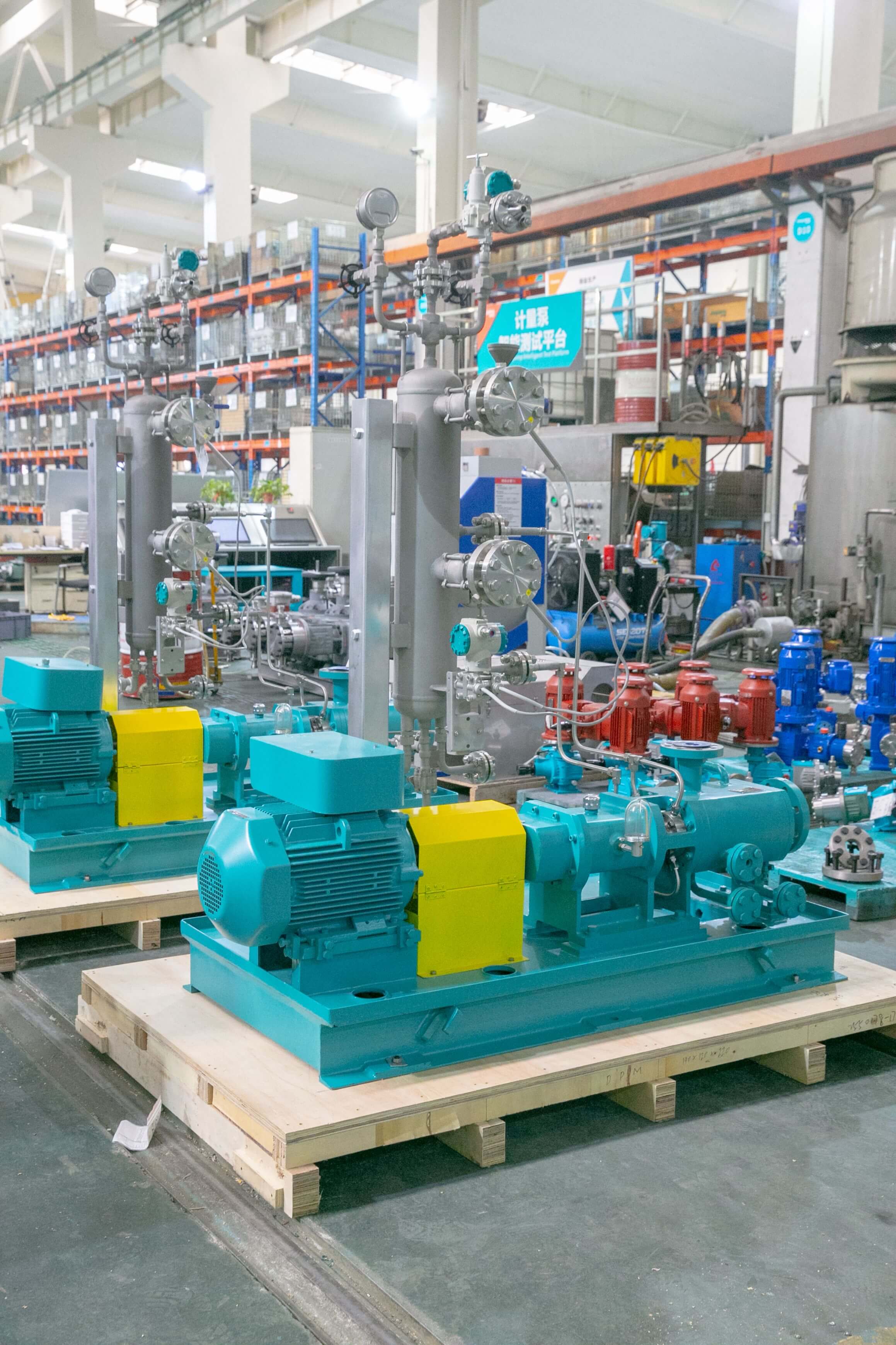
The cheapest quote is the lowest purchase price, not the lowest cost of ownership. Purchase price is only one line in the total, which also includes installation, energy use, spare parts, downtime and the engineering time needed to make a mismatched pump fit the line.
A low price often reflects a narrower scope. If the drive, baseplate, control panel, commissioning or documentation is excluded, those missing items reappear later as separate purchases, usually at a worse price and with far less coordination between the parties involved.
Cost also accumulates after start-up. A unit that needs frequent intervention, or one whose wear parts are hard to source, adds cost every year it runs. Comparing two offers therefore means comparing what happens over the service life, not only what is printed on the first page of the quotation.
This is why a list sorted purely by price is the least informative kind of list. A supplier that ranks lower on headline price but includes commissioning, spare parts recommendations and clear documentation may well be the cheaper option once the pump is running.
How to Compare Suppliers Before You Request Contact Details
Comparing suppliers before you ask for contact details keeps the process factual: send the same duty data to every candidate, ask for the same scope, and score the written answers against identical criteria. Anything that cannot be compared in writing stays an opinion rather than a basis for an order.
Contact details are the last step of the comparison, not the first. Approach suppliers through their official channels once your requirements are defined, so the first technical conversation starts from your data instead of from a general brochure.
What to Include in a Written Inquiry
A short, precise inquiry produces precise answers and saves a round of clarification later.
- The fluid being handled, described with the characteristics you already know.
- The required flow and pressure at the duty point.
- Operating temperature and any site conditions that affect installation.
- Whether the pump is a standalone unit or part of a packaged system.
- Documentation, inspection and delivery requirements you expect to be included.
When the replies arrive, compare them side by side rather than one after another. Two responses can both look complete while covering different ground, and the gaps are usually found in the scope list rather than in the price line. Ask each supplier to state the basis of its selection, including the assumptions it made about your duty conditions, so that disagreements surface before the order rather than after delivery.
What a Pump Manufacturer Should Be Able to Deliver
A supplier’s ability to deliver is easier to judge when its manufacturing base, product scope and delivery record are visible. Capability, rather than a slogan, determines whether a pump arrives as specified and whether it can still be supported years after commissioning.
Depamu (Hangzhou) Pump Technology Co., Ltd. was founded in 2003 and operates as a high-tech enterprise covering research, production and sales in the field of high-end volumetric pumps and fluid equipment. The company employs more than 400 people across a plant of approximately 35,000 square meters, with registered capital of about 54 million yuan and an annual output value of roughly 500 million yuan.
Its product scope covers metering pumps, including hydraulic diaphragm metering pumps, high-pressure reciprocating process pumps, pneumatic pumps, electric pumps, chemical dosing systems, water and steam sampling devices, water treatment equipment, screw pumps, rotary pumps, gear pumps, emulsion pumps, special centrifugal pumps and supercritical extraction devices. The high-pressure reciprocating process pumps in the range are described with pressures reaching 35 MPa and above, stable flow for long continuous operation, and suitability for high-viscosity, high-temperature media and media containing solid particles.
Company data on application shows petroleum refining and chemicals at about 41% of sales business, oil and gas fields at about 23%, nuclear power, power generation, metallurgy and new energy at about 15%, environmental water treatment at about 13%, new materials and food at about 3%, and other industries at about 5%. Sales have grown from about 450 million yuan in 2023 to about 510 million yuan in 2024 and about 560 million yuan in 2025.
From Single Units to Packaged Systems
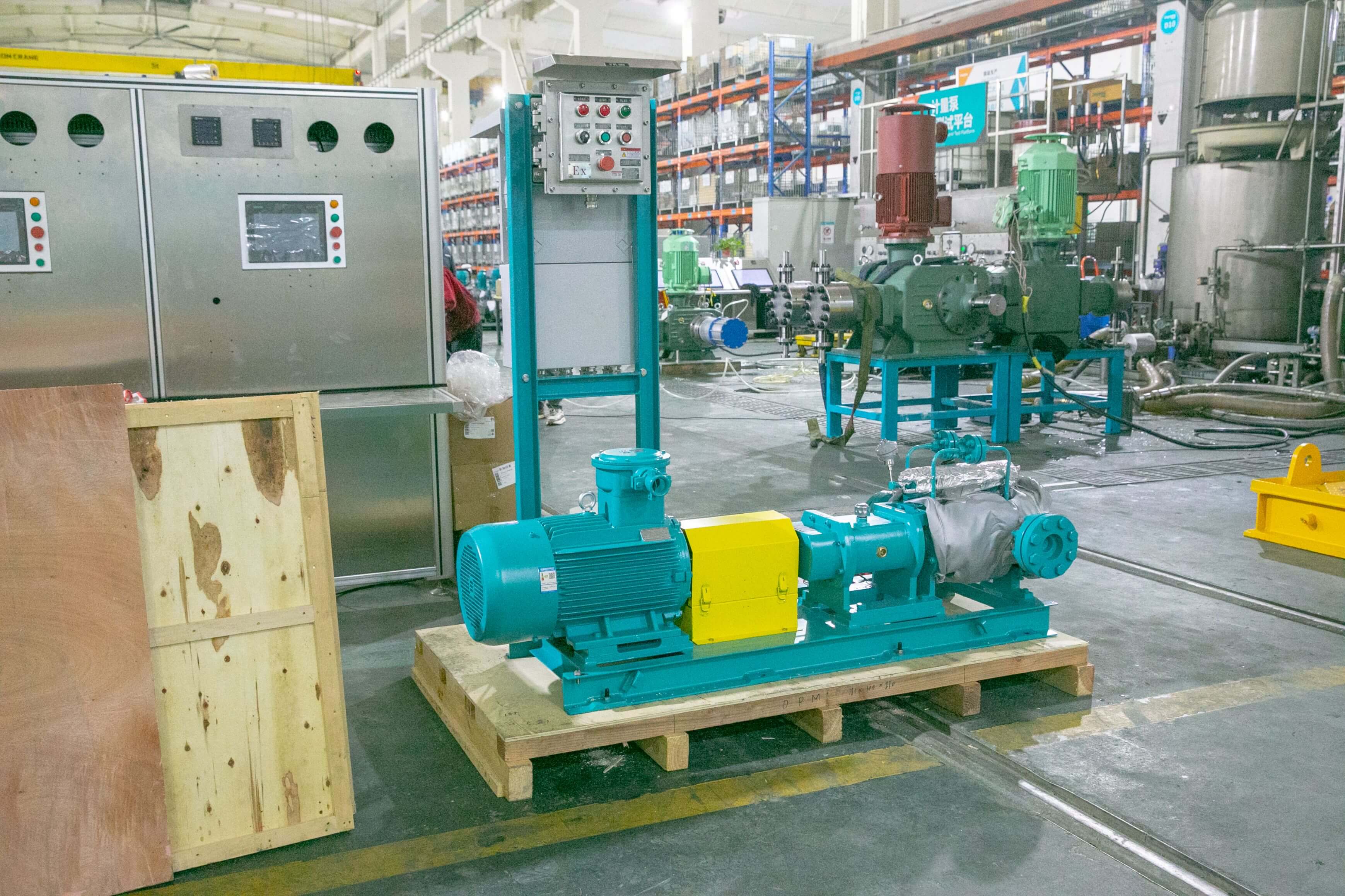
Depamu describes combined capability from product development and design through manufacturing to packaged delivery, and offers standard, non-standard and customized fluid solutions based on medium characteristics, flow, pressure, temperature and site process requirements. Automatic chemical dosing systems are supplied as packaged skids that integrate chemical storage, dissolving, mixing, metering and automatic control, assembled and tested before shipment so that only piping and power connections remain on site.
For a buyer comparing suppliers, this kind of scope matters as much as the pump itself. A supplier that can deliver the pump, the drive, the controls and the documentation as one coordinated package removes interfaces that otherwise become your responsibility to manage.
FAQ
How is a twin screw pump ranking useful when comparing suppliers?
It is useful as a shortlist, not as a verdict, because it narrows a long list of candidates down to a few worth approaching in detail. The ranking itself rarely explains its weighting, so the shortlisted suppliers still have to be checked against your own duty conditions, scope of supply and service requirements before any order is discussed.
Which twin screw pump is cheaper?
There is no single answer, because price depends on the duty conditions, the materials selected, the drive and controls, and how much of the system is included in the scope. The reliable way to compare cost is to request the same scope from every supplier, then compare purchase price together with running and maintenance costs.
Which twin screw pump is recommended for a specific duty?
The recommended unit is the one whose configuration matches the fluid, flow, pressure and temperature of that duty, so the recommendation has to come from a technical review of your data rather than from a general list. Send the duty conditions in writing and ask for the selection basis to be stated in the reply.
How can I get twin screw pump contact details?
Request contact details through the supplier’s official channels after the duty conditions and the required scope are defined, so the first conversation is technical rather than generic. Ask for a named technical contact together with the quotation, which keeps later questions and answers with the same person.
Which twin screw pump is reliable?
Reliability is judged from documented design choices, verifiable references, spare parts availability and a clear service arrangement, not from a claim in a brochure. Ask how the supplier handles wear parts, response times and documentation, and check that the answers are specific to your installation.
Summary
A twin screw pump ranking is a shortlist, and the purchase decision is made on evidence: identical scopes, written technical answers and a clear view of cost across the service life. Compare suppliers on how they respond to your duty conditions, what documentation they include, and how spares and service are handled, then request contact details for the few that survive that comparison.