
Choosing the right eccentric screw pump supplier comes down to verifiable evidence rather than sales claims. Check process fit for your medium, build quality and documentation, application experience in your industry, and the supplier’s ability to support the unit through installation, spare parts and long-term service.
What Quality Signals Matter When Comparing Eccentric Screw Pump Suppliers
Quality in this equipment is visible in design discipline and manufacturing control, not in adjectives. A credible supplier can show how the rotor and stator geometry is matched to the medium, how tolerances and surface finish are controlled, how each unit is tested before dispatch, and how documentation travels with the pump to site.
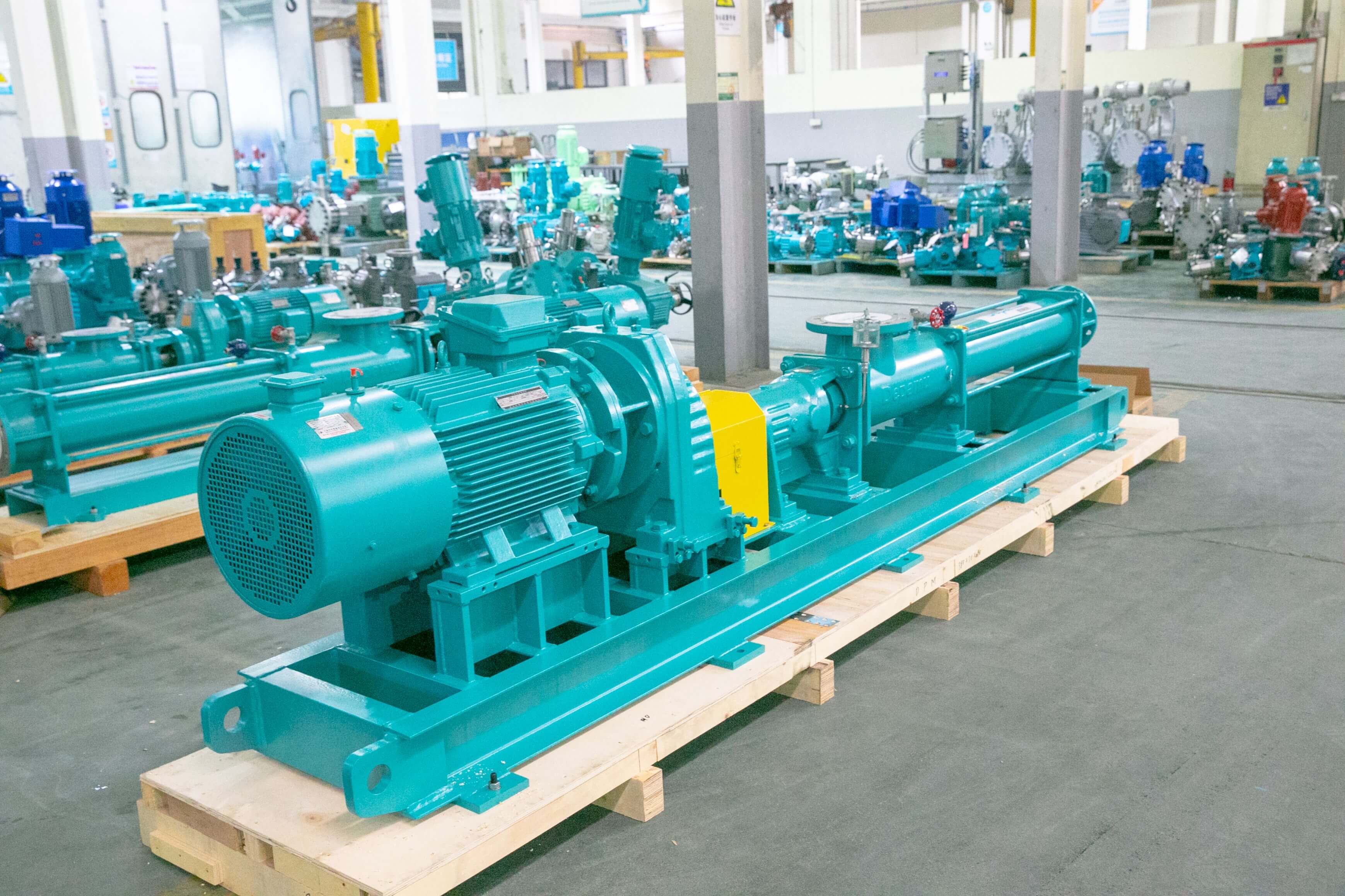
Ask for the evidence behind each claim. Material records for wetted parts, dimensional inspection notes, assembly checklists and a test report that states the medium, flow and pressure used during the run-in are all reasonable requests. A supplier that answers these questions precisely is usually the same supplier that builds the pump precisely.
Match the Pump to the Medium, Not to a Brochure
Viscosity, solids content and particle size, abrasiveness, temperature and shear sensitivity decide more about service life than any single design feature. A supplier who asks for these values before quoting is testing the duty against experience; one who quotes from a catalogue number alone is guessing. Provide the full medium description and ask for the reasoning behind the proposed rotor and stator geometry, elastomer choice and clearance.
Verify Build Quality and Serviceability
Inspect a unit rather than a rendering. Look at the rotor profile and surface finish, stator fit, seal arrangement, shaft and coupling alignment, base frame rigidity and the accessibility of wearing parts. Ask how the assembled pump is run in and what is recorded. Serviceability matters as much as build: a design that allows the rotor and stator to be replaced on site shortens every future shutdown.
- Documented material selection for all wetted parts
- Inspection and testing records traceable to each unit
- Replacement intervals for wearing parts defined against your duty
- Availability of rotors, stators and seals after commissioning
- A named technical contact for commissioning and troubleshooting
What Configurations Are Available and How Do They Differ
Configurations differ in three practical ways: how many rotor and stator stages are used, how the drive is mounted, and how the medium reaches the pumping element. Each choice shifts the balance between pressure capability, installed length, footprint, service access and the ability to handle viscous or solids-bearing media.
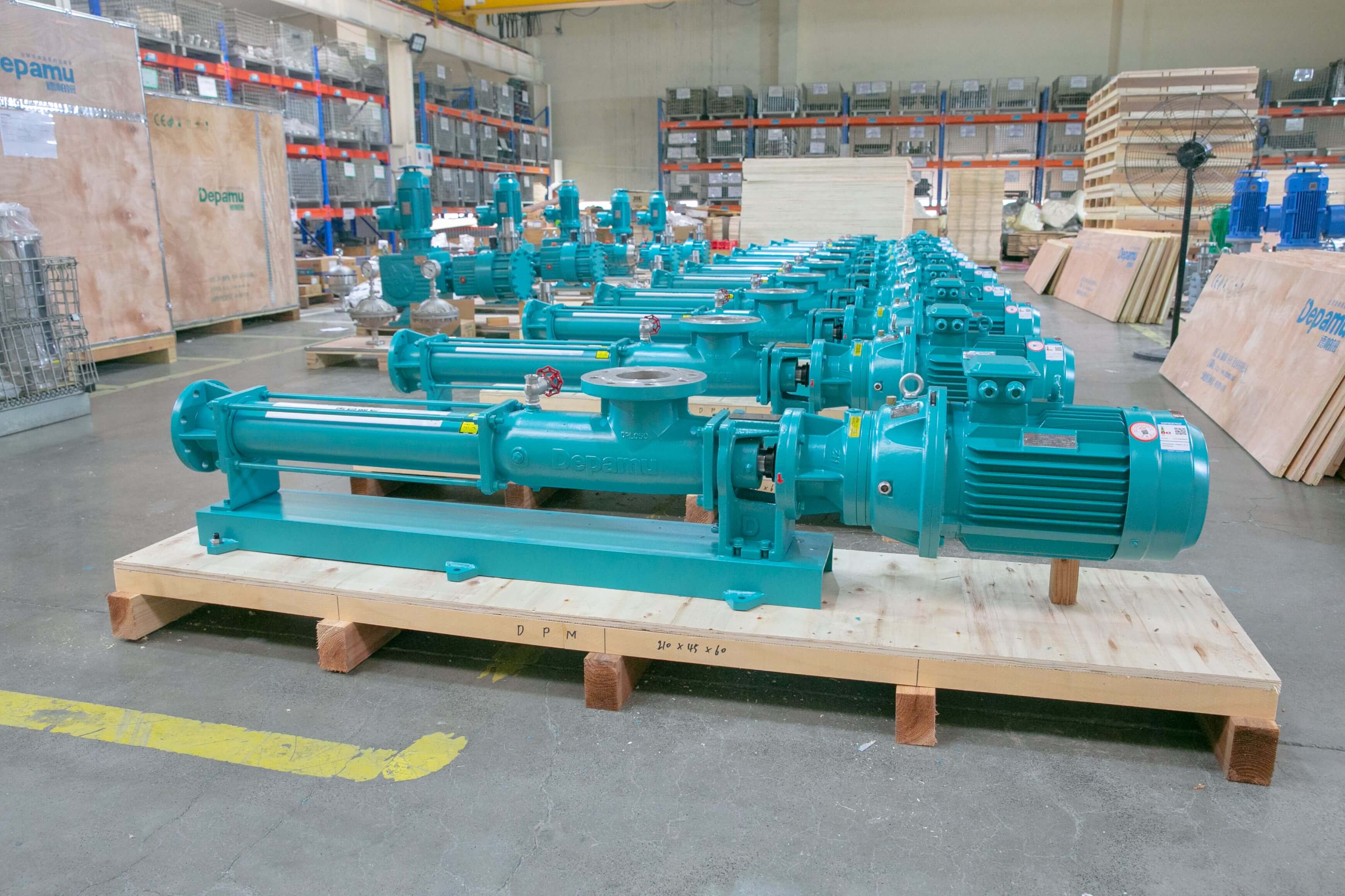
Single-stage geometries keep the pump short and are usually the simpler choice for lower pressure duties. Adding stages raises pressure capability but lengthens the pumping element and increases the load on the drive train. Close-coupled designs save space and reduce alignment concerns, while bearing-frame designs separate the drive from the pumping element and make maintenance easier to plan.
Feeding matters more than it is often given credit for. Flooded suction suits clean, free-flowing media, whereas an open hopper or auger-fed arrangement is used when the medium is thick, slow to flow or carries solids. Drive choice, whether fixed speed, mechanical variation or a variable-frequency arrangement, should follow the process requirement rather than the price list.
- Number of stages implied by the duty pressure
- Mounting arrangement and available footprint
- Suction and feeding conditions at the installation point
- Drive type and control interface expected on site
- Materials and elastomers selected for the wetted parts
How to Select an Eccentric Screw Pump for a Specific Duty
Selection starts with the duty point rather than the pump: flow, pressure, temperature and the physical character of the medium. Add the site’s process requirements, including suction conditions, available space, control philosophy and maintenance access, and the configuration, material and drive choices narrow to a small, comparable set.
Write the duty down before contacting suppliers. Include the medium name and concentration, the viscosity range across the operating temperature window, solids content and maximum particle size, abrasiveness, whether the duty is continuous or intermittent, and the flow and pressure envelope the process actually needs. Suppliers can only engineer against data; vague enquiries produce conservative quotes or, worse, a pump that fits the catalogue but not the process.
State the acceptance criteria at the same time. Which test will be witnessed, which documents must be delivered, and who confirms installation readiness. Agreeing these points before the order is placed removes most of the disputes that surface during commissioning.
| Specification field | What to state |
|---|---|
| Duty point | The flow and pressure the process actually requires |
| Medium | Name, concentration, viscosity, solids content and particle size |
| Temperature | Operating and cleaning temperature range at the pump |
| Installation | Suction conditions, footprint, orientation and service access |
| Drive and control | Fixed or variable speed, signal interface, local or remote control |
| Documentation | Inspection records, test report and spare-parts information |
Where to Find Eccentric Screw Pump Suppliers and How to Screen Them
Suppliers are found through industry exhibitions, engineering contractors, trade directories and peer references, but the screening is what decides the outcome. Shortlist a small number of candidates, send the same written duty specification to all of them, and compare the technical reasoning in their responses rather than the headline price.
A factory visit answers questions a brochure cannot. Look at machining and assembly areas, the test bench, material storage and the traceability of components. Ask who performs the final inspection and how non-conforming parts are handled. If a visit is impossible, request the equivalent evidence in documents and a live walkthrough of the assembly line.
Compare commercial terms on the same basis: scope of supply, spares included, commissioning support, warranty terms and response commitments. A cheaper unit that arrives without documentation or commissioning help is rarely cheaper across its service life.
How Should Reputation and Sales Record Be Weighed
Reputation is a useful filter and a poor substitute for evidence. Informal rankings move with marketing budgets, so treat them as a starting point: ask what the ranking is based on, request references from duties similar to yours, and check whether the supplier’s application experience matches your process.
A long operating history and a broad application base are reasonable proxies for stability. DEPAM (Hangzhou) Pump Industry Technology Co., Ltd. was founded in 2003 and employs more than 400 people at a plant covering about 35,000 square meters, with registered capital of RMB 54 million and annual output value of about RMB 500 million. The company designs and manufactures metering pumps, high-pressure process reciprocating pumps, pneumatic and electric pumps, chemical dosing systems, water and steam sampling devices, water treatment equipment, and screw pumps, rotary lobe pumps and gear pumps, and it delivers standard, non-standard and customized fluid systems.
Its sales have grown from about RMB 450 million in 2023 to about RMB 510 million in 2024 and about RMB 560 million in 2025. Application is concentrated in petroleum refining and chemicals at roughly 41% of sales, oil and gas fields at about 23%, nuclear, power, metallurgy and new energy at about 15%, environmental water treatment at about 13%, and new materials and food at about 3%, with other industries making up the remainder.
Read those figures for what they are: evidence of scale and of experience across demanding industries, not a substitute for checking the specific duty. The same test applies to any supplier, so ask for comparable facts and for references you can contact.
FAQ
Which eccentric screw pump supplier offers good quality?
The one that can evidence quality instead of asserting it. Look for documented material selection, inspection and test records, application experience in your industry, and support that continues after commissioning.
What eccentric screw pump types are available?
Types are usually grouped by the number of rotor and stator stages, by drive mounting, and by feeding arrangement. Single-stage and multi-stage geometries differ in pressure capability and installed length, while close-coupled, bearing-frame, flooded-suction and open-hopper versions differ in footprint, service access and the media they handle well.
Where can I find an eccentric screw pump?
Start with industry exhibitions, engineering contractors, trade directories and references from similar plants, then shortlist candidates against one written duty specification. Direct contact with a manufacturer’s technical team is usually more informative than a distributor catalogue alone.
Which eccentric screw pump should I choose?
Choose the configuration that fits your written duty point, meaning flow, pressure, temperature and medium character, rather than the one with the widest claimed range. Confirm materials, feeding arrangement, drive type and service access before comparing prices.
How should an eccentric screw pump reputation ranking be read?
Read it as a prompt for further checking, not as a verdict. Ask what the ranking measures, request contactable references for duties similar to yours, and verify quality claims with documents and a factory visit.
Summary
Supplier choice for an eccentric screw pump is decided by evidence: a written duty specification, a configuration and material proposal that explains its reasoning, verifiable build and test records, and support that lasts beyond delivery. Use reputation and sales figures as filters, then confirm them with references, documentation and, where possible, a factory visit before placing the order.