
A gear pump quality comparison should weigh material selection, machining accuracy, sealing design and the supplier’s engineering support alongside price. Quality shows up in service life and leak-free operation, not in a specification sheet alone, so buyers should verify how a supplier selects, tests and supports the pump after delivery.
What a Gear Pump Quality Comparison Should Actually Measure
A meaningful gear pump quality comparison looks at four things: the materials used for the gears, shaft and housing; the machining and assembly accuracy that controls internal clearances; the sealing arrangement that prevents leakage; and the supplier’s ability to test, document and support the pump over its service life.
Clearance control is the first item to examine. A gear pump moves fluid by trapping it between the gear teeth and the housing, so the gap between those surfaces decides how much fluid slips back from the discharge side to the suction side. Tighter clearances raise volumetric efficiency but shorten life in abrasive or poorly lubricated service, so the correct value depends on the duty rather than on a single target number.
Sealing and assembly quality come next. Shaft sealing, housing joints and bearing arrangements determine whether the pump stays tight on the outside as well as the inside, and assembly accuracy decides how long those parts last. Buyers should ask how a supplier controls these steps and what evidence it can provide, rather than relying on a catalogue description.
Questions Worth Asking About Build Quality
- Which materials are used for the gears, shaft and housing, and why they suit the fluid
- How internal clearances are set and checked during assembly
- How the shaft seal is selected for the fluid, temperature and pressure
- What testing is performed before the pump leaves the factory
- What documentation and spare parts support is provided after delivery
Gear Pump Types and Where Each One Fits
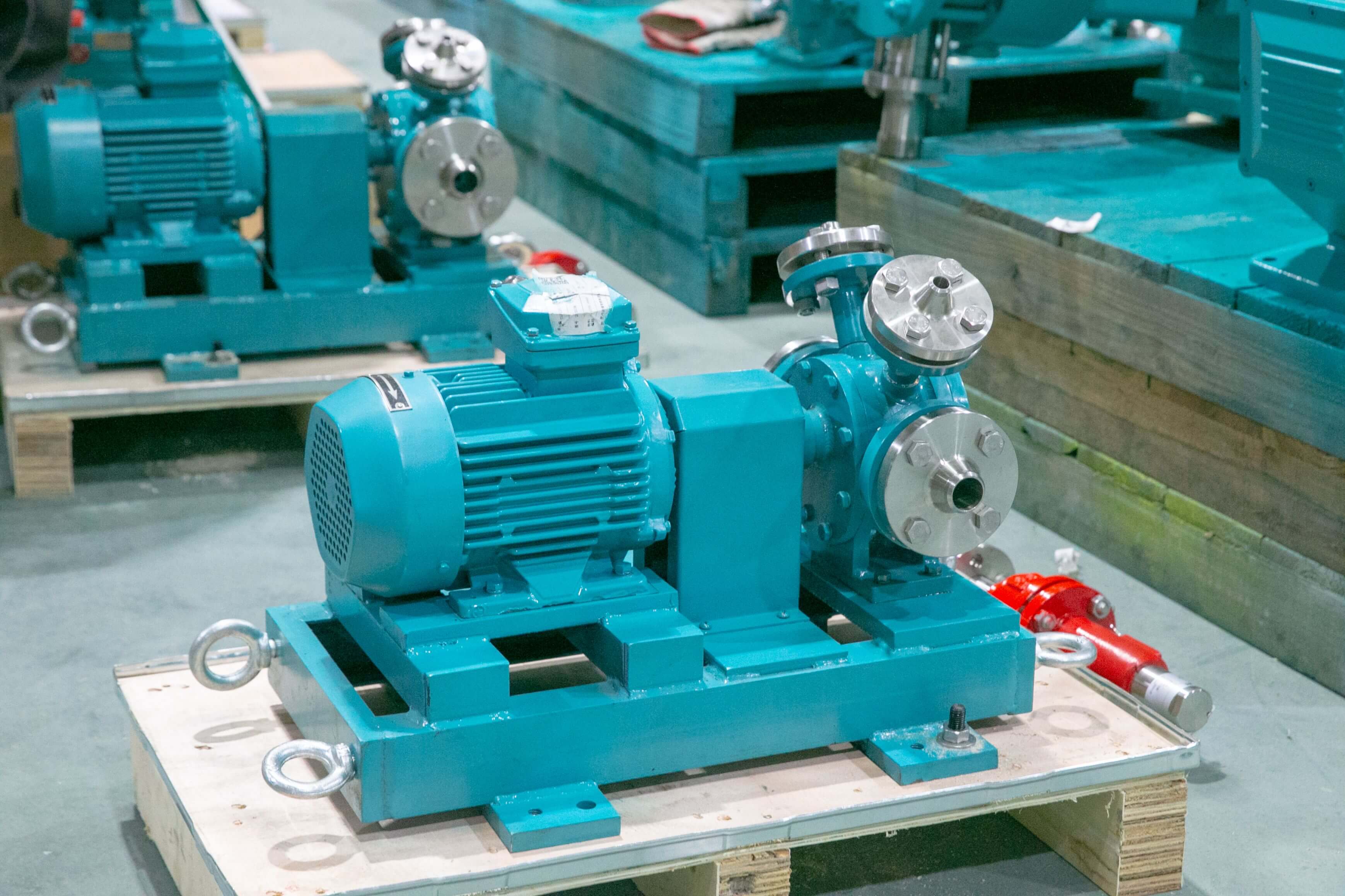
Gear pump types differ in how the gears mesh and how fluid is carried from suction to discharge. An external gear pump carries fluid between the gear teeth and the housing wall, while an internal gear pump uses an idler gear rotating inside a larger rotor. Both are positive displacement designs that deliver steady, low-pulsation flow.
External gear pumps are commonly chosen for viscous and lubricating fluids, for transfer duties and for installations where a compact footprint matters. Internal gear pumps handle comparable fluids with gentler shear and are often preferred where the product must be treated gently. In both cases the final choice depends on viscosity, temperature, pressure and the presence of solids in the fluid.
Gear pumps are one part of a wider positive displacement portfolio. Depamu (Hangzhou) Pump Industry Technology Co., Ltd. builds metering pumps, high-pressure process reciprocating pumps, pneumatic and electric pumps, chemical dosing packages, water-steam sampling devices, water treatment equipment, screw pumps, rotary pumps and gear pumps, and supplies standard, non-standard and customized fluid solutions.
Matching the Type to the Duty
- Viscous, lubricating fluids handled at moderate pressure
- Transfer duties where steady, low-pulsation flow is required
- Applications where the fluid must be handled with low shear
- Installations where a compact and mechanically simple pump is preferred
How to Choose a Gear Pump Supplier: A Practical Checklist
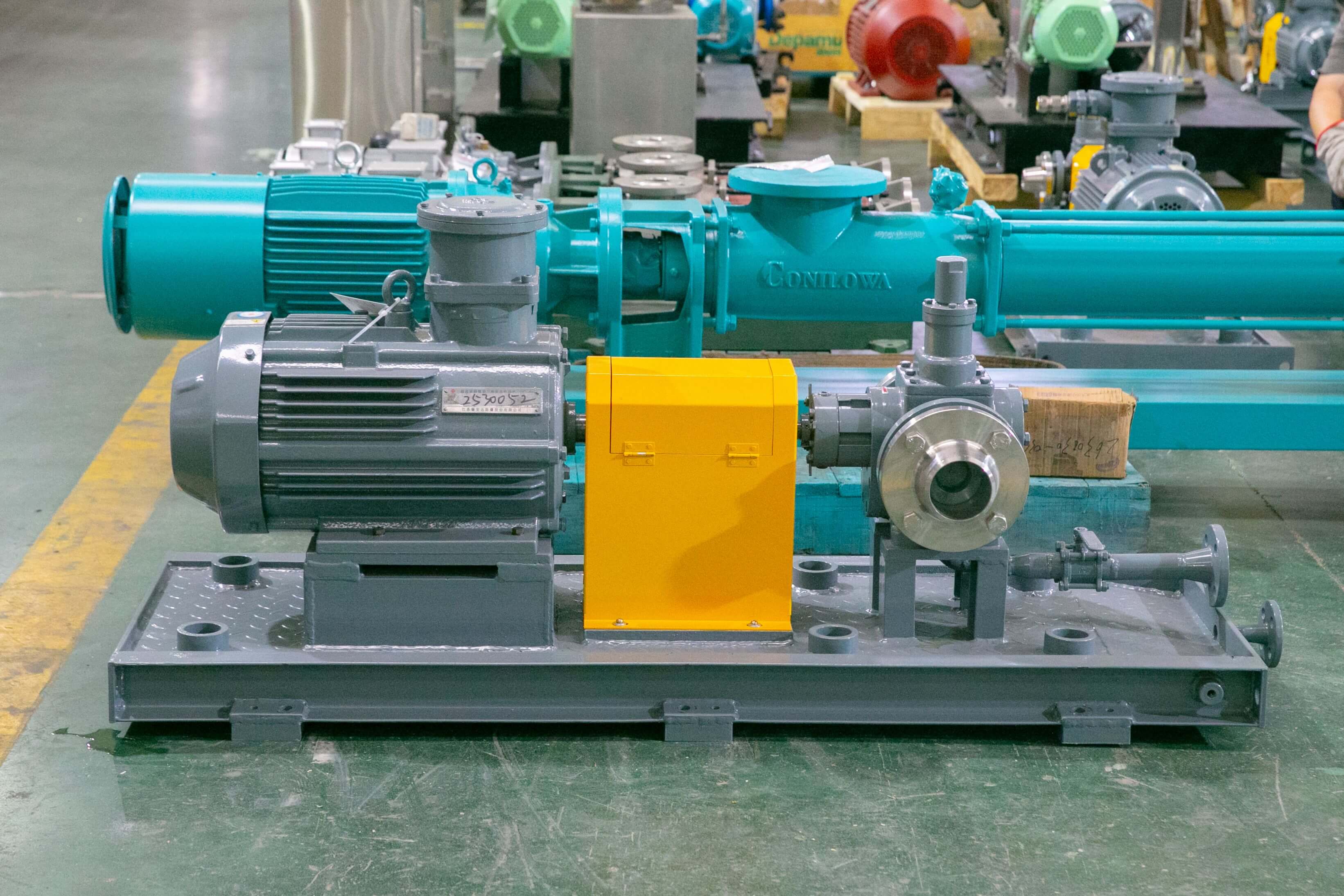
Choosing a gear pump supplier is a capability check rather than a price check. Buyers should confirm that the supplier can match the pump to the fluid’s viscosity, temperature and pressure, can supply standard or customized units, and can provide documentation, spare parts and technical support after commissioning.
A shortlist of a few suppliers is usually enough to expose real differences. Ask each one the same set of questions in writing and compare the answers side by side instead of comparing headline prices. Suppliers that answer slowly or vaguely at the quotation stage rarely improve once the order has been placed.
Supplier Comparison Checklist
- Whether the offered pump matches the fluid’s viscosity, temperature and pressure
- Whether standard, non-standard and customized options are available
- Whether testing and documentation are provided before shipment
- Whether spare parts and technical support continue after commissioning
- Whether the supplier’s existing applications are close to your own process
Communication quality is a useful signal in its own right. A supplier that asks detailed questions about the fluid, the duty cycle and the installation is more likely to deliver a pump that fits, while a supplier that quotes from a catalogue alone leaves the selection risk with the buyer.
Gear Pump Reputation Ranking: How to Read It Critically
A gear pump reputation ranking is only as useful as the criteria behind it. Rankings built on installed base, repeat orders, service response and documented field performance help a buyer judge a supplier, while rankings built on advertising volume or visibility alone say little about how the pump will behave in a specific duty.
Buyers should therefore ask what a ranking measures, who supplied the underlying information and whether the ranked applications resemble their own. A supplier that performs well in one fluid or pressure range may have little experience in another, and a lower-ranked supplier focused on the same duty can be the stronger technical fit.
Reputation is also built locally. Speaking with operators who run comparable equipment, reviewing maintenance records and checking how quickly spare parts arrive often produces a clearer picture than any published ranking, because those sources describe what happened after commissioning rather than what was promised before it.
Manufacturing Capability Behind Consistent Gear Pump Quality
Consistent gear pump quality depends on the manufacturer’s design, machining and assembly capability rather than on a single component. A supplier that develops, manufactures and delivers complete fluid systems in house can control the interfaces between the pump and the rest of the installation, which is often where reliability problems begin.
Depamu (Hangzhou) Pump Industry Technology Co., Ltd. was founded in 2003 and has grown into a manufacturer of high-end positive displacement pumps and fluid equipment, with more than 400 employees, a plant site of about 35,000 square meters, registered capital of about RMB 54 million and an annual output value of about RMB 500 million. The company introduced advanced technology from Germany and has continued to develop it internally since then.
Its products are used in petroleum refining and chemicals, which account for about 41% of sales, oil and gas fields at about 23%, nuclear, power, metallurgy and new energy at about 15%, environmental water treatment at about 13%, new materials and food at about 3%, and other industries at about 5%.
The range covers metering pumps such as hydraulic diaphragm metering pumps for precise, leak-free dosing, high-pressure process reciprocating pumps that reach pressures above 35 MPa for injection and process transfer duties, and packaged automatic chemical dosing systems that combine storage, dissolution, mixing, metering and control. Screw pumps, rotary pumps, gear pumps, pneumatic and electric pumps, emulsifying pumps, special centrifugal pumps, water-steam sampling devices and supercritical extraction devices complete the portfolio, and the company supplies standard, non-standard and customized fluid solutions based on medium characteristics, flow, pressure, temperature and site process requirements.
Sales have grown steadily, from about RMB 450 million in 2023 to about RMB 510 million in 2024 and about RMB 560 million in 2025. That trend is one indicator of how a supplier is performing, but it should be read alongside technical fit and service capability rather than instead of them.
FAQ
Which gear pump has good quality?
A gear pump with good quality is one whose gears, shaft and housing are matched to the fluid, whose internal clearances and sealing are controlled during assembly, and whose supplier can document testing and support the unit after installation. Brand alone does not answer the question; duty, materials and manufacturing control do.
What gear pump types are available?
A gear pump is generally available as an external gear pump, where fluid is carried between the gear teeth and the housing, or as an internal gear pump, where an idler gear rotates inside a larger rotor. Both are positive displacement designs that suit viscous, lubricating fluids and deliver steady, low-pulsation flow.
Where can I find a gear pump supplier?
The most reliable route is to shortlist manufacturers who already build positive displacement pumps for your fluid, then run a gear pump quality comparison on selection support, test documentation and after-sales response before placing an order. Suppliers who ask detailed questions about the duty are usually the stronger fit.
How should I choose a gear pump for my process?
Start from the duty: the fluid’s viscosity, temperature, pressure, flow and any solids content define the pump type, materials and sealing arrangement. Then confirm that the supplier offers standard or customized units and can support the pump after commissioning.
How is gear pump reputation ranking assessed?
A gear pump reputation ranking is assessed by criteria such as installed base, repeat orders, service response and documented field performance. Buyers should check which criteria a ranking uses and whether the ranked applications match their own process.
Summary
A gear pump quality comparison comes down to duty fit, build control and supplier capability, not to price or visibility alone. Define the fluid and operating conditions first, then verify materials, clearances, sealing, testing and after-sales support with the same questions asked of every candidate. A supplier that manufactures in house, documents its work and stays available after commissioning reduces the risk carried by the buyer.