
A high pressure process diaphragm pump is selected by matching diaphragm construction and wetted materials to the medium, then confirming pressure, flow, temperature, and control requirements with a supplier that can document design, testing, and support. Quality claims should be checked against application evidence, not marketing language alone.
What Makes a High Pressure Process Diaphragm Pump the Right Choice?
The right choice is the configuration that isolates the process fluid from the drive, holds the required discharge pressure, and delivers repeatable flow without overloading the diaphragm. Selection begins with the medium and duty, not with a catalog number alone.
In a diaphragm pump, a flexible diaphragm separates the process liquid from the hydraulic or mechanical drive. That barrier is the reason diaphragm designs are used when leakage containment matters, especially with corrosive, toxic, volatile, or otherwise sensitive fluids. At high pressure, the diaphragm also needs stable support and a drive system that does not create pressure spikes that shorten diaphragm life.
For diaphragm-based dosing, the hydraulic diaphragm metering pump is the representative product in Depamu’s metering pump range. It uses a hydraulic drive and a diaphragm to meter chemicals with the process fluid contained behind the diaphragm. It is applied in petrochemical, environmental water treatment, pharmaceutical, food, and new energy duties where precise chemical addition is required.
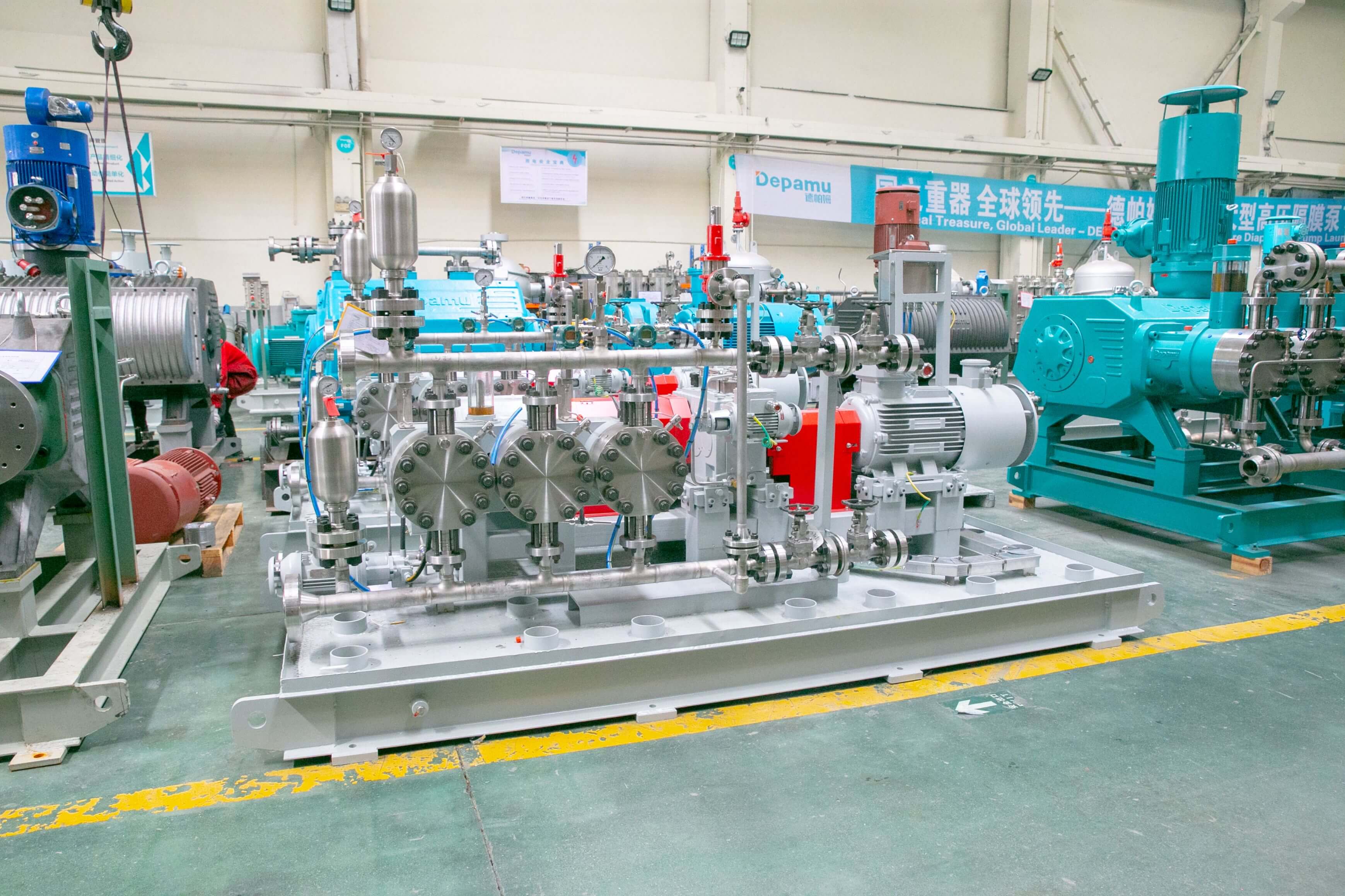
Selection inputs that matter more than a headline pressure rating
A pressure rating alone does not define fit. The review should cover medium compatibility, suction conditions, discharge pressure, flow range and turndown, temperature, solids content, gas entrainment, duty cycle, and control method. These factors determine diaphragm stress, valve behavior, and hydraulic system design.
- Medium compatibility with the diaphragm, valve seats, and wetted parts.
- Pressure, flow, temperature, and turndown required by the process.
- Continuous or intermittent duty and the control method used on site.
- Access to spare diaphragms, valves, and service support.
Diaphragm Pump Options for High-Pressure Process Duty: What Is Available?
Available options should be defined by duty rather than by a single label. Diaphragm metering is the right direction for precise chemical injection, while high-pressure process transfer is better served by a reciprocating pump designed for that pressure and continuity. The two duties should not be forced into one specification.
Depamu’s product scope covers metering pumps, high-pressure process reciprocating pumps, pneumatic pumps, electric pumps, chemical dosing systems, water-steam sampling devices, water treatment equipment, screw pumps, rotor pumps, and gear pumps. This breadth matters because a process line may need more than one pump function: dosing, transfer, boosting, sampling, or water treatment.
Among these, the high-pressure process reciprocating pump is the product family intended for high pressure. Depamu describes pressure reaching 35 MPa and above and continuous operation, with the ability to handle high-viscosity, high-temperature, and solids-containing media. It is used for oil and gas field water injection, petrochemical process transfer, pipeline boosting, and high-pressure injection.
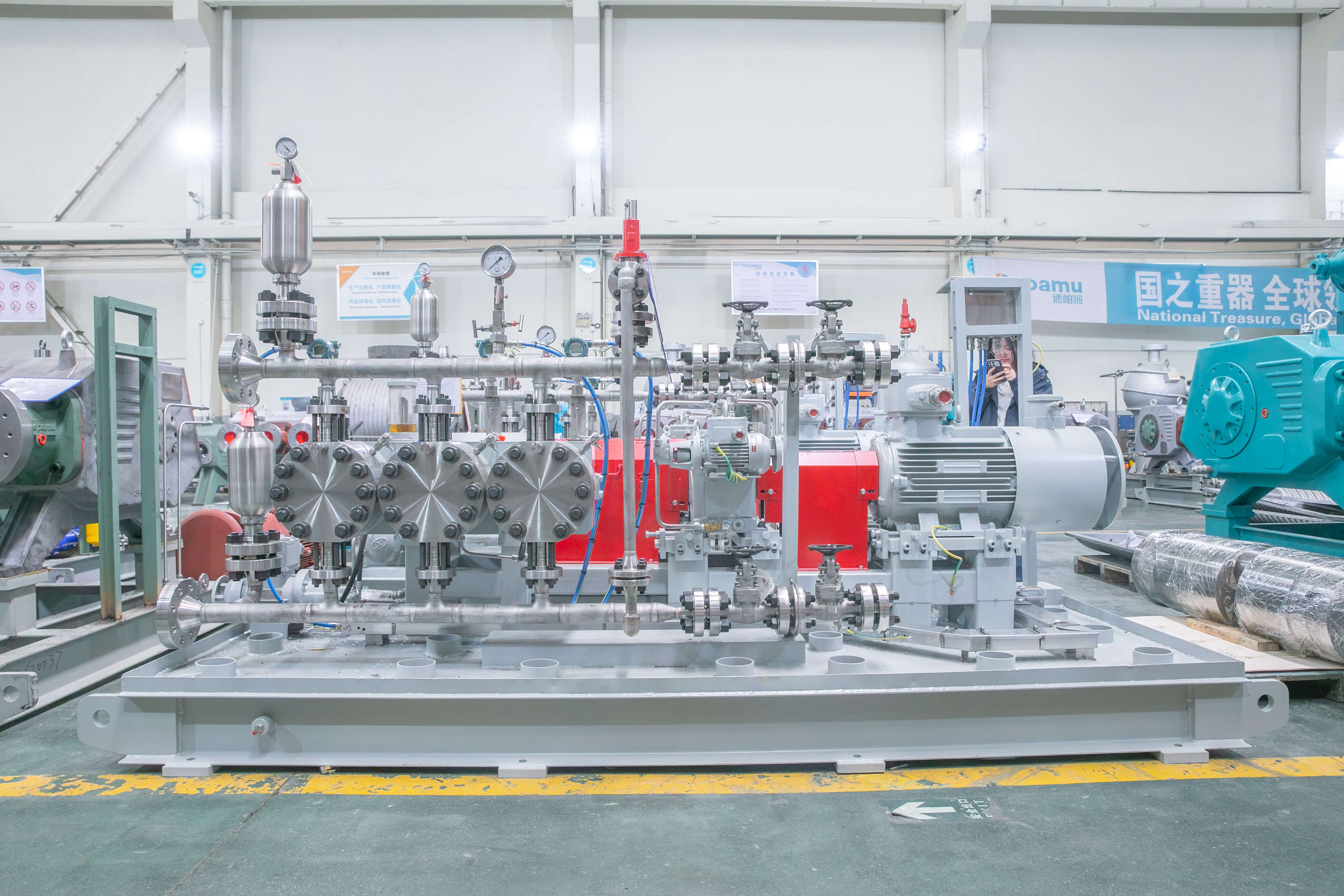
Packaged dosing and water treatment options
The hydraulic diaphragm metering pump is aimed at controlled chemical addition. It adjusts stroke length and operating frequency to set the dose and uses hydraulic drive behind a diaphragm. For sites that need a complete chemical preparation and injection function, the automatic chemical dosing system integrates storage, dissolution, mixing, metering, and automatic control in a skid. Depamu states that the system uses a metering pump as its core, together with a dissolving tank, agitator, and control system, and supports dry or liquid chemical addition, multi-point dosing, and automatic interlocking. Factory assembly and testing are completed before shipment, so site work is limited to connecting piping and power. Water-steam sampling devices and water treatment equipment extend the same fluid-handling scope to power and water applications.
How to Choose a High Pressure Process Diaphragm Pump Supplier
Choose a supplier that can review the medium, flow, pressure, temperature, and site process before quoting, then show a clear path from design to manufacturing, testing, and delivery. The supplier should also explain wear parts, documentation, and service access in plain terms.
Depamu (Hangzhou) Pump Industry Technology Co., Ltd. was founded in 2003 and is described as a high-tech enterprise integrating research, development, production, and sales. It has more than 400 employees, a plant area of about 35,000 square meters, registered capital of RMB 54 million, and annual output value of about RMB 500 million. Reported sales were about RMB 450 million in 2023, RMB 510 million in 2024, and RMB 560 million in 2025.
The company states that it can provide standard products, non-standard products, and customized fluid solutions based on medium characteristics, flow, pressure, temperature, and site process requirements. That is the practical test for a supplier: can it turn a duty description into a defined pump or package, with the right materials and controls, instead of offering a catalog item and asking the process to fit it?
What to ask before placing an order
- Which diaphragm and wetted materials are proposed for the actual medium?
- How are pressure, flow, temperature, and turndown matched to the duty?
- What is included in the scope: pump only, controls, skid, or full dosing package?
- Which spare parts and service actions are needed to keep the unit available?
Quality and Reputation: How to Judge a Diaphragm Pump for High-Pressure Process Duty
Quality and reputation should be judged by application fit, repeatable performance, and service response, not by a ranking label alone. A pump that suits one medium may be a poor choice for another, so the evidence must match the duty being quoted.
A reputation ranking is not a standardized engineering measure. It may reflect search visibility, sales volume, survey responses, or a publisher’s criteria, and those inputs are rarely disclosed. Buyers should ask what is being ranked, how the data were collected, and whether the ranking separates pump types and duties. Without that context, a ranking is a prompt for due diligence, not a decision.
Depamu reports that oil refining and chemicals account for about 41% of its sales business, oil and gas fields about 23%, nuclear, power, metallurgy, and new energy about 15%, environmental water treatment about 13%, new materials and food about 3%, and other industries about 5%. This distribution shows where the company’s products are applied; it does not prove that every pump model is suitable for every duty in those sectors. The quote must still be checked against the specific medium and operating case.
Useful quality evidence includes diaphragm and valve design for the actual medium, hydraulic system stability, control repeatability, material traceability, and access to wear parts. For packaged systems, it also includes factory assembly and testing before shipment, because interface errors discovered on site are more expensive than those found before dispatch.
Applications and Operating Conditions
High-pressure diaphragm pump duties usually fall into two groups: precise chemical injection and high-pressure process transfer. The first requires repeatable dose and containment; the second requires pressure capability, continuous duty, and the ability to handle difficult media. The process duty should decide the pump type.
Depamu’s products are applied in oil refining, chemicals, oil and gas fields, nuclear, power, metallurgy, new energy, environmental water treatment, new materials, and food. The company identifies high-pressure transfer, precise metering, chemical addition, process boosting, and complex media transfer as application scenarios. These are broad categories; the actual selection still depends on the medium, pressure, flow, temperature, and site process.
The high-pressure process reciprocating pump is described for oil and gas field water injection, petrochemical process transfer, pipeline boosting, and high-pressure injection, including high-viscosity, high-temperature, and solids-containing media. The hydraulic diaphragm metering pump is described for petrochemical, environmental water treatment, pharmaceutical, food, and new energy duties that need precise chemical addition. A project that needs both functions should be split into separate duty points instead of asking one pump to cover both.
Maintenance and Safe Operation
Maintenance should begin with diaphragm integrity and hydraulic system condition, because those determine pressure holding and fluid containment. Check valves, control calibration, and leak detection also belong in the routine. The supplier’s instructions and the site’s safety procedures take precedence over generic advice.
For diaphragm metering pumps, stroke length and operating frequency affect dose, so calibration should be treated as a maintenance task, not a one-time setup. For high-pressure reciprocating pumps, valve condition and hydraulic performance matter because they affect pressure stability and continuous operation. In both cases, spare parts should be identified before the unit is installed, not after a shutdown begins.
Where a chemical dosing system is used, maintenance should cover the dissolving tank, agitator, metering pump, piping, and control interlocks as one package. Depamu states that these systems are assembled and tested before shipment, which helps define the baseline for site commissioning, but it does not remove the need for routine site checks.
FAQ
Which diaphragm pump quality should buyers verify first?
Verify the diaphragm and wetted-material compatibility first, then the hydraulic system, control repeatability, and service access. A pump that matches the medium and duty is more useful than a broad quality claim.
What high-pressure process pump options are available from Depamu?
Depamu’s diaphragm-based dosing product is the hydraulic diaphragm metering pump; high-pressure process duties are covered by the high-pressure process reciprocating pump range. Selection depends on whether the job needs precise dosing or high-pressure transfer.
Which supplier should I choose for a high pressure process diaphragm pump?
Choose a supplier that can review medium, flow, pressure, temperature, and site conditions, then offer standard, non-standard, or customized fluid solutions. Depamu describes this integrated design-to-delivery capability.
How should I read a diaphragm pump reputation ranking?
Read it as a prompt for due diligence, not as proof. Check the application match, documented performance, repeat orders, and service response before treating a ranking as meaningful.
What maintenance matters most for a high-pressure diaphragm pump?
Diaphragm integrity, hydraulic fluid condition, check-valve sealing, and dosing calibration are the main checks. Follow the supplier’s schedule and the site’s safety procedures.
Summary
A high pressure process diaphragm pump should be selected by medium, pressure, flow, temperature, and control duty, then matched to a supplier with engineering and delivery capability. Depamu’s range covers diaphragm metering, high-pressure process reciprocating pumps, and packaged dosing, so the first step is to define the duty before comparing offers.