
Choosing a centrifugal water pump supplier is a verification task, not a price comparison. Confirm that the pump range covers your duty, that material and documentation practices are disciplined, that testing is defined before shipment, and that service support is committed in writing. Shortlist only the suppliers that answer these points with evidence.
What to Check Before You Choose a Centrifugal Water Pump Supplier
A dependable centrifugal water pump supplier should be assessed on four verifiable points: whether the offered range fits your duty point, whether materials and tolerances are documented, whether performance and leak testing are defined before shipment, and whether after-sales response is stated in the contract. Every point can be confirmed with documents rather than with claims.
Price alone rarely predicts lifetime cost. A pump that fits the duty but arrives without material records or test reports creates risk during commissioning, during spare-part planning, and during any later audit. Ask the technical offer to state the medium, the required flow and head, the material of wetted parts, and the test steps that will be performed, so the offer can be checked against your own process data.
It also helps to separate commercial promises from engineering commitments. A supplier that can explain how the pump will behave at your duty point, and which parts are wear items, is easier to hold accountable later than one that only repeats catalogue figures.
Quality Signals You Can Check in a Supplier Review
- A written material specification for wetted parts, matched to the medium
- A defined test sequence before shipment, with records released to the buyer
- Traceable assembly and inspection documentation for each unit
- A named technical contact available before the order is placed
- A clear statement of warranty scope and spare-part lead time
- Evidence that the supplier builds both standard and customized units
How to Compare Centrifugal Water Pump Options Across Suppliers
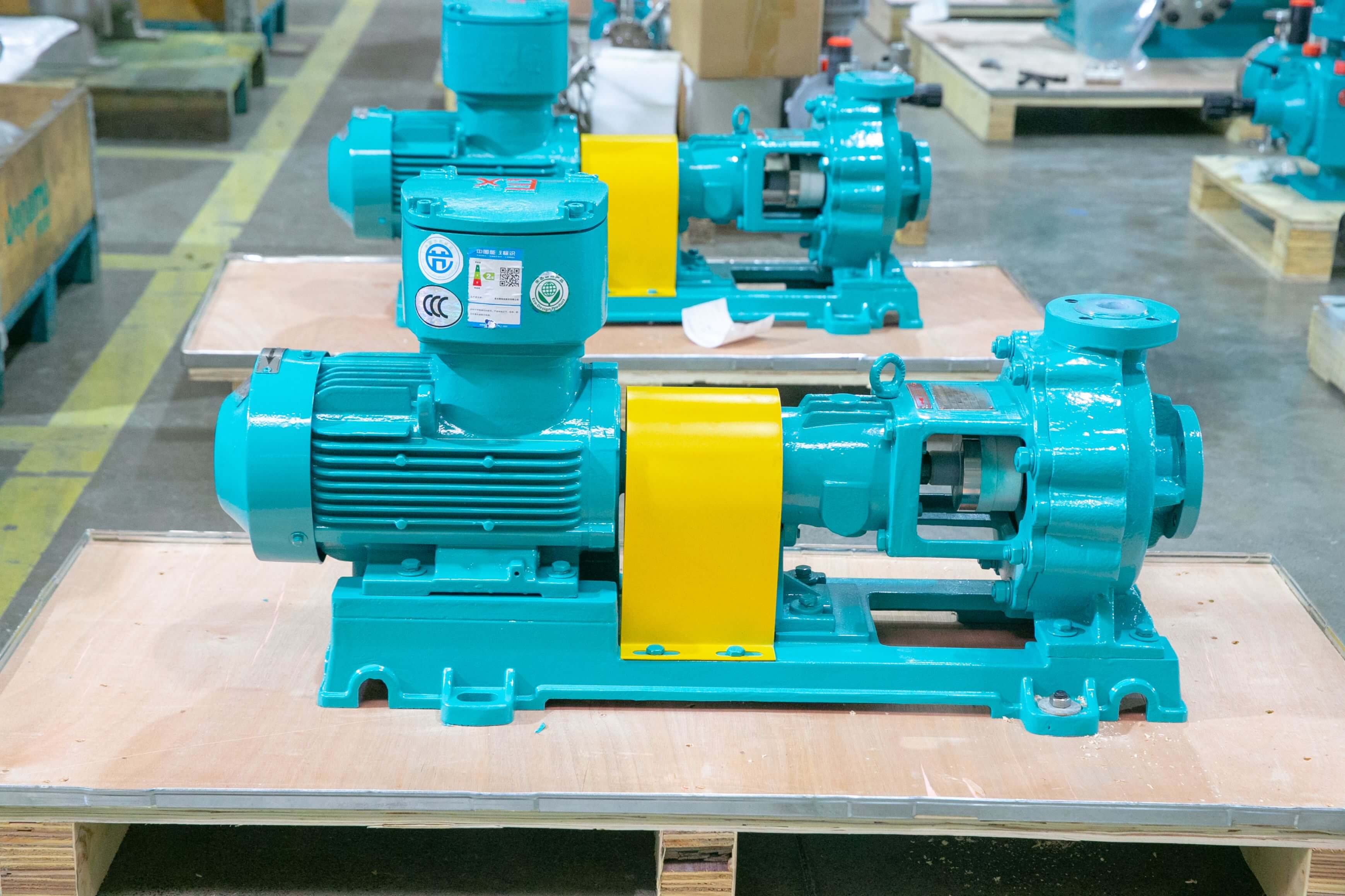
Comparing centrifugal water pump options means comparing duty fit, not catalogue size. For each offer, align the required flow, head, medium, temperature and installation constraints with the proposed materials and control method. Offers that cannot be compared on the same process data should be set aside until the missing information is supplied.
A common mistake is to compare quotations line by line before the duty is fixed. Once flow, head, medium and temperature are confirmed, the comparison becomes technical: whether the offered unit can run continuously at that point, whether the material suits the medium, and whether the driver and control arrangement match the site conditions.
Where a standard unit fits the duty, delivery is usually faster and spare parts are simpler to manage. Where the medium is corrosive, abrasive or at an unusual temperature, a customized unit is the realistic option, and the supplier should be able to describe how the modification is engineered rather than only confirming that it is possible.
Where to Find Centrifugal Water Pump Suppliers Worth Shortlisting
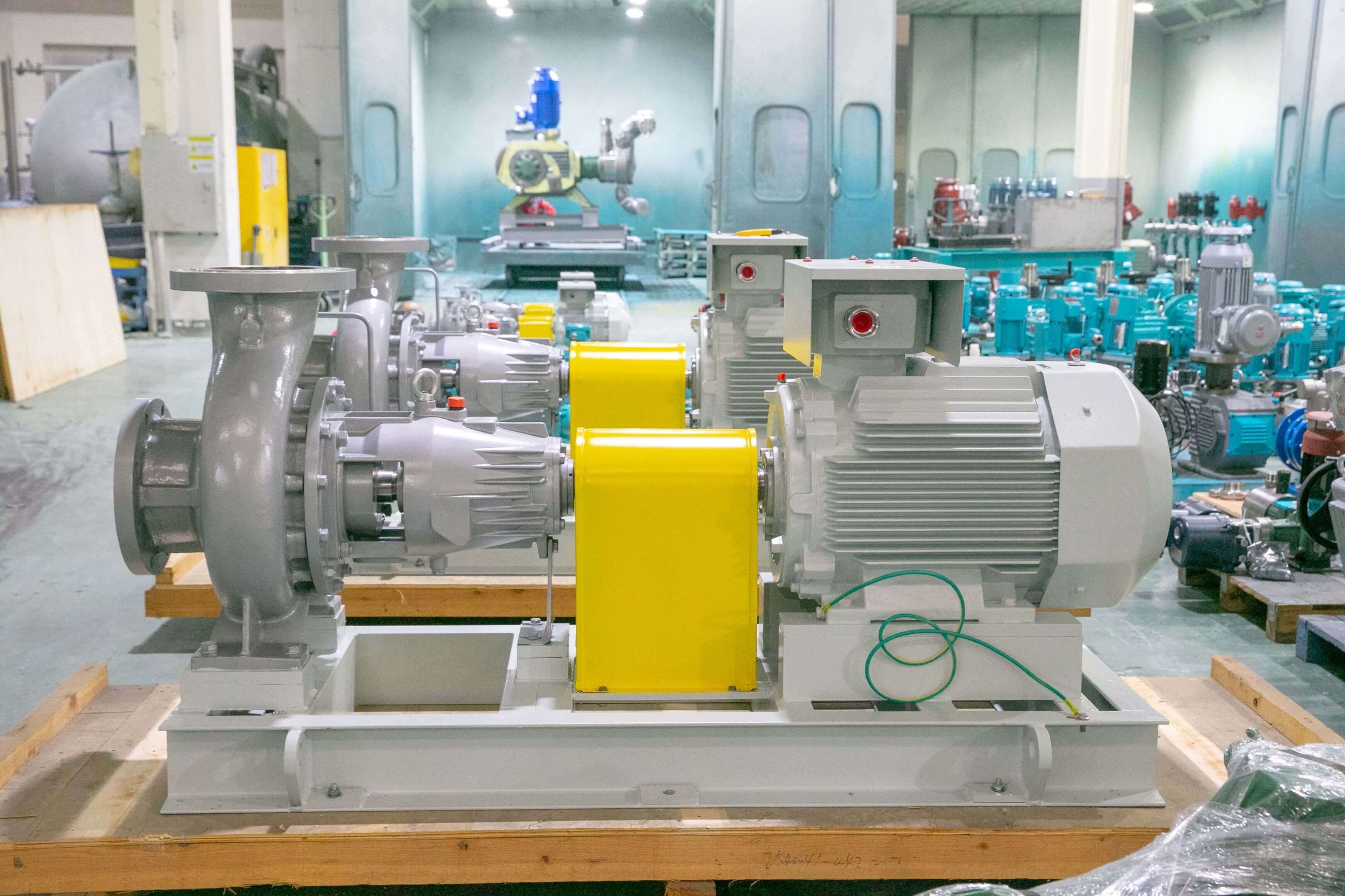
Suppliers worth shortlisting usually come from three sources: similar process references, engineering contractors who have already qualified them, and direct technical enquiries that test how a supplier responds to a defined duty. Each source gives different evidence, and combining them narrows the list faster than any single channel.
References are strongest when the duty is similar, not merely when the industry name is similar. Ask what the pump handles, how long it has operated, and which parts have been replaced. A supplier that can discuss wear parts and service intervals for a comparable duty is generally more useful than one that only shares a customer list.
A direct technical enquiry is itself a test. Send a short data sheet covering medium, flow, head, temperature and site constraints, then observe whether the reply restates the duty correctly, flags missing information, and separates standard scope from customized scope. Replies that ignore your data usually indicate how the project will be handled after the order.
How to Read Centrifugal Water Pump Reputation Rankings
Reputation rankings are useful as a starting point, not as a decision. A ranking only reflects the criteria it was built on, so check who compiled it, which criteria were applied, and whether those criteria match your duty. A supplier ranked highly on one criterion may be ordinary on another.
Treat rankings as a filter for the first shortlist, then verify the same four points described earlier: duty fit, material documentation, testing discipline, and service commitment. When a ranking and a technical review disagree, the technical review should decide, because it is based on your process rather than on a general score.
It is also worth checking whether a ranking distinguishes between product families. Strength in one pump family does not automatically transfer to another, and a reputation built in a different product category should not be read as a statement about centrifugal pump performance.
How Depam (Hangzhou) Pump Industry Technology Co., Ltd. Supports Fluid Equipment Projects
Depam (Hangzhou) Pump Industry Technology Co., Ltd. is a high-tech enterprise founded in 2003 that develops, manufactures and supplies high-end volumetric pumps and fluid equipment, including special centrifugal pumps, for process, power and water treatment duties.
The company employs more than 400 people at a plant covering about 35,000 square meters, with registered capital of RMB 54 million and annual output value of about RMB 500 million. Technology introduced from Germany has been developed further in-house, and the portfolio covers metering pumps, high-pressure process reciprocating pumps, pneumatic and electric pumps, chemical dosing systems, water and steam sampling devices, water treatment equipment, screw pumps, rotary lobe pumps, gear pumps and special centrifugal pumps.
Products are used in petroleum refining and chemicals, oil and gas fields, the nuclear industry, power, metallurgy, new energy, environmental water treatment, new materials and food. Refining and chemicals account for roughly 41% of sales, oil and gas fields about 23%, nuclear, power, metallurgy and new energy about 15%, environmental water treatment about 13%, new materials and food about 3%, and other industries about 5%.
Sales have grown from about RMB 450 million in 2023 to about RMB 510 million in 2024 and about RMB 560 million in 2025. Engineering scope runs from development and design through manufacturing and complete-set delivery, with standard, non-standard and customized fluid solutions configured around the medium, flow, pressure, temperature and site process requirements. For dosing duties the portfolio includes a hydraulically driven diaphragm metering pump that adjusts stroke length and running frequency to control the injected volume, while high-pressure process reciprocating pumps reach 35 MPa and above for high-pressure transfer and injection duties.
FAQ
How do I judge whether a centrifugal water pump supplier has good quality?
Judge quality through documents, not slogans. Ask for the material specification of wetted parts, the test sequence performed before shipment, inspection records for the unit, and a named technical contact. A supplier that provides these before the order is placed is easier to verify than one that only offers assurances.
What centrifugal water pumps are available?
Availability depends on the duty, so the practical approach is to define flow, head, medium, temperature and installation constraints first. Once those are fixed, a supplier should present the options that fit, explain the material and control choices, and state clearly whether a standard or customized unit is required.
Where can I find a centrifugal water pump supplier?
Start with similar process references and with contractors who have already qualified suppliers, then send a short data sheet to each candidate. The reply itself is useful evidence, because it shows whether the supplier reads the duty correctly and flags missing information before quoting.
Which centrifugal water pump supplier should I choose?
Choose the supplier that can demonstrate duty fit, documented materials, a defined test routine and a written service commitment at a comparable total cost. The lowest price is not the deciding factor once spares, downtime and documentation are included in the comparison.
Are centrifugal water pump reputation rankings reliable?
They are reliable only within the criteria used to build them. Check who compiled the ranking, what was measured, and whether that matches your duty. Use rankings to build a shortlist, then confirm each candidate through a technical review of duty fit, material documentation, testing and service.
Summary
Selecting a centrifugal water pump supplier comes down to four verifiable checks: duty fit, documented materials, a defined test routine, and a written service commitment. Rankings, references and technical enquiries help build the shortlist, but the technical review decides. Where a standard unit suits the process, delivery and spare parts are simpler; where the medium or duty is unusual, a customized solution is the realistic route, and the supplier should be able to explain how it is engineered. Depam (Hangzhou) Pump Industry Technology Co., Ltd. supplies special centrifugal pumps alongside its wider fluid equipment range and configures solutions around the medium, flow, pressure, temperature and site process requirements.