
Choosing a quantitative dosing pump supplier comes down to four checks: verified metering accuracy, materials that match the medium, documented manufacturing capability, and a delivery scope that covers installation and commissioning. A supplier that can answer all four in writing is usually a safer partner than one competing only on price.
What a Reliable Quantitative Dosing Pump Supplier Should Provide
A reliable supplier should give you four things in writing: a metering principle that fits your medium, accuracy and repeatability data for the specified duty point, wetted materials matched to the chemical, and a clear scope of supply from pump to control system. Vague answers on any of these points are a warning sign.
Dosing duty is rarely a single number. Flow rate, discharge pressure, temperature, and the viscosity of the chemical all interact, and a supplier that asks about all four before quoting is doing the engineering work that later prevents over-dosing or under-dosing. When a quote arrives without those questions, the pump is effectively being sized on assumption rather than on your process.
Four Checks That Separate Serious Suppliers from Resellers
Ask every candidate the same questions and compare the answers side by side. Consistency of the answers matters more than the wording, because a reseller can repeat a specification sheet but cannot explain why a particular configuration was proposed.
- Metering principle and adjustment method: confirm whether output is changed by stroke length, by operating frequency, or by both, and how repeatability holds across the adjustment range.
- Wetted materials: check that diaphragms, valve seats, and seals are offered in materials compatible with the actual chemical, not only a default option.
- Scope of supply: clarify whether the offer covers the pump alone, or a complete dosing skid with tank, mixer, piping, and control system.
- Documentation and after-sales: request drawings, test records, spare parts lists, and the path for reaching technical support after startup.
How to Compare Quantitative Dosing Pump Options
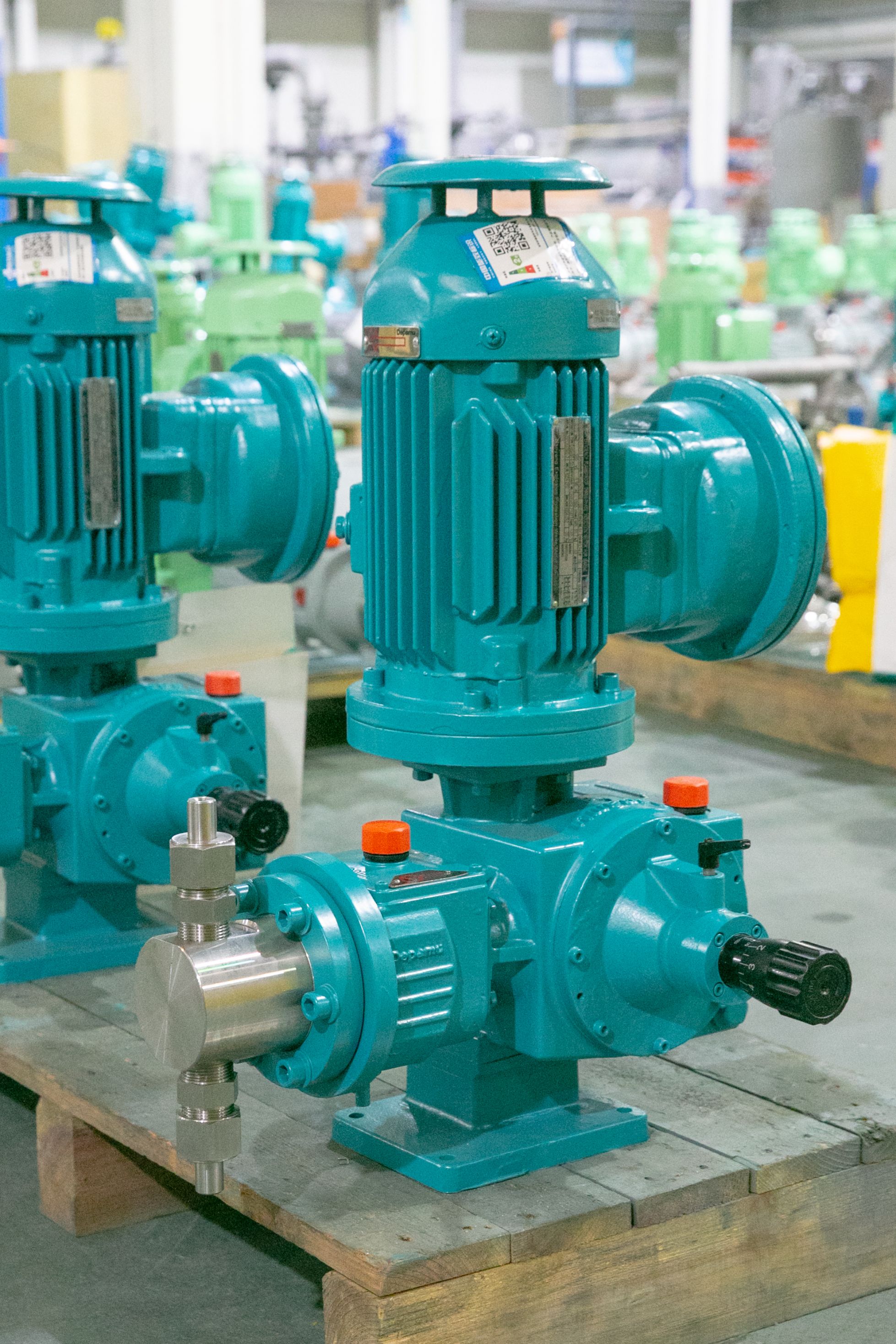
Comparing quantitative dosing pump options starts with the medium, not the price list. A pump that meters clean water reliably may fail on a suspension, a volatile solvent, or a high-pressure injection point. Match the pump type to the fluid first, then compare control, materials, and service.
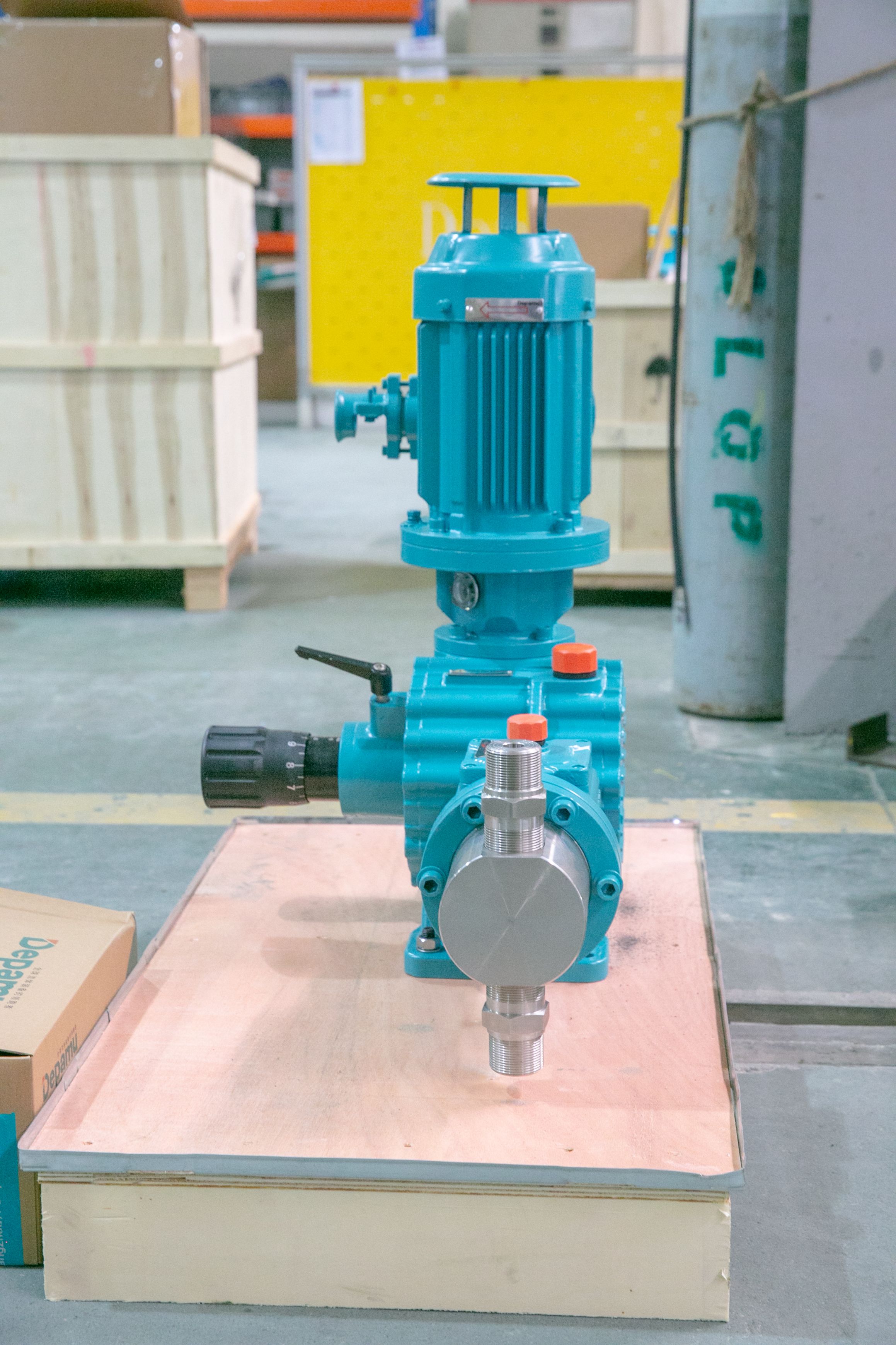
Diaphragm metering pumps, including hydraulic diaphragm designs, are commonly specified where leak-free containment matters, because the medium is separated from the hydraulic drive by a diaphragm. Output is set by adjusting stroke length and running frequency, which is what makes fine, repeatable dosing possible. These designs are widely used for chemical injection in petrochemical, water treatment, pharmaceutical, food, and new energy processes.
For high-pressure process duty, a reciprocating plunger pump is often the better fit. A high-pressure process reciprocating pump can hold a stable flow at discharge pressures up to 35 MPa and above, and it handles viscous, hot, or particle-bearing media that would shorten the life of a lighter-duty pump. It is typically applied to oilfield water injection, process transfer, pipeline boosting, and high-pressure injection.
When a Complete Dosing System Beats a Standalone Pump
If the process also needs chemical preparation, an integrated dosing system removes most of the field assembly work. An automatic chemical dosing system groups chemical storage, dissolution, mixing, metering, and automatic control into one skid, with a metering pump at its core supported by a solution tank, agitator, and control cabinet. It can handle dry powder or liquid chemical preparation, multi-point injection, and automatic interlocking, and it is assembled and tested before shipment so that on-site work is limited to piping and power connections.
Why Manufacturing Capability Matters in Supplier Selection
Manufacturing capability decides whether a supplier can hold the same quality across repeat orders, not just on the first unit. Plant size, engineering headcount, in-house machining, and assembly testing all affect delivery reliability and how quickly a non-standard request can be handled.
Depamu (Hangzhou) Pump Industry Technology Co., Ltd. was founded in 2003 and concentrates on high-end positive displacement pumps and fluid equipment. The company employs more than 400 people, operates a plant of about 35,000 square meters, holds registered capital of RMB 54 million, and reports annual output value of roughly RMB 500 million. Reported sales were about RMB 450 million in 2023, about RMB 510 million in 2024, and about RMB 560 million in 2025.
Capability also shows up in the range of equipment a supplier can deliver under one technical review. Beyond metering pumps and high-pressure process reciprocating pumps, the portfolio covers pneumatic pumps, electric pumps, chemical dosing systems, water and steam sampling devices, water treatment equipment, screw pumps, rotary lobe pumps, gear pumps, emulsifying pumps, special centrifugal pumps, and supercritical extraction devices. Because development, design, manufacturing, and packaged delivery sit in the same organization, a request can be answered as a standard product, a non-standard unit, or a customized fluid solution based on the medium characteristics, flow rate, pressure, temperature, and site process conditions.
Applications and Delivery Scope to Confirm Before You Buy
Confirm that the supplier has already delivered into your type of process. Dosing duty in refinery and chemical service looks different from dosing in water treatment, and a supplier’s experience in your sector shortens startup and reduces the risk of a misapplied pump.
Ask for the sector breakdown of a supplier’s order book, because it tells you where their engineering depth actually sits. At Depamu, petroleum refining and chemical processing account for about 41% of sales, oil and gas fields about 23%, nuclear power, electric power, metallurgy, and new energy about 15%, environmental water treatment about 13%, new materials and food about 3%, and other industries about 5%. A supplier with a concentrated sector mix will usually have stronger application knowledge in that sector and weaker knowledge outside it.
Finally, confirm what arrives on site. Equipment that is assembled and tested before shipment shortens the installation window and moves risk back to the supplier, while a bare pump leaves piping, wiring, and control integration to your own team. Check drawings, test records, and the boundary of supply before the purchase order is signed, and make sure the interface between the dosing unit and the rest of the plant is documented in the contract.
FAQ
Which quantitative dosing pump supplier has good quality?
A good-quality quantitative dosing pump supplier can show metering data for the exact duty point, offer wetted materials matched to your chemical, and describe its manufacturing and testing process in detail. Quality is demonstrated by documents and repeatable test results, not by price alone.
What should I check first when choosing a quantitative dosing pump supplier?
Check the match between pump type and medium first. Diaphragm metering pumps suit leak-free chemical injection, while reciprocating plunger pumps suit high-pressure process duty. Only after that should you compare control options, materials, and service terms.
What types of quantitative dosing pumps are available?
The main types are diaphragm metering pumps, including hydraulic diaphragm designs, and reciprocating plunger pumps for high-pressure duty. Complete dosing systems that combine a tank, mixer, metering pump, and automatic control are also available for processes that need chemical preparation as well as injection.
Can dosing equipment be customized for a specific process?
Yes. Suppliers that build both standard and non-standard equipment can size the unit around the medium characteristics, flow rate, pressure, temperature, and site process conditions, and can deliver it as a skid that needs only piping and power connections on site.
How is quantitative dosing pump reputation ranking assessed?
Assess reputation ranking through verifiable evidence: documented test records, spare parts availability, delivery history in your sector, and how quickly technical questions are answered. A ranking built on those points is more useful than a list based on advertising.
Summary
A quantitative dosing pump supplier is worth shortlisting when it can match the pump type to your medium, document metering performance at your duty point, show real manufacturing capability, and deliver a scope that covers the whole dosing system rather than a bare pump. Compare candidates on those four points, weigh the answers against your own process conditions, and treat unexplained gaps as a reason to keep looking.