
Choosing a twin screw pump supplier comes down to four verifiable factors: build quality you can inspect, application fit confirmed against your duty point, clear documentation, and dependable after-sales support. Price alone rarely predicts long-term operating cost, so the evaluation should be structured before any order is placed.
What Twin Screw Pumps Are Available?
Twin screw pumps are positive displacement pumps that move fluid along two intermeshing screws rotating inside a casing. What is available on the market differs by screw profile, casing arrangement, shaft sealing method and drive configuration, so the useful answer is a configuration set matched to a specific duty rather than a single universal model.
The market separates into a few practical families: pumps built for low-viscosity transfer, pumps built for high-viscosity media, and pumps configured for duties where the fluid must move without pulsation. Because the screw geometry sets both the flow path and the sensitivity to solids, the choice of family should follow the medium rather than a preference for one design.
In the wider positive displacement category, the equipment offered alongside screw pumps commonly includes metering pumps, high-pressure process reciprocating pumps, air-operated and electric pumps, chemical dosing packages, water and steam sampling devices, water treatment equipment, rotary lobe pumps and gear pumps. Buyers comparing twin screw options often evaluate these categories side by side, because a single duty point may be served by more than one pump type.
What Distinguishes One Twin Screw Pump Design From Another
The differences that matter at the selection stage are structural rather than cosmetic. They determine how the pump behaves on a given medium and how much access the maintenance team will have over the service life.
- Screw profile and pitch, which set the flow path and the tolerance for solids
- Casing and liner arrangement, which determines how the screws are supported
- Shaft sealing method, which governs leakage control and maintenance access
- Drive and speed control, which sets how the pump is regulated on site
- Material selection matched to the medium and to site conditions
- Port orientation and installation footprint, which affect how the pump fits existing piping
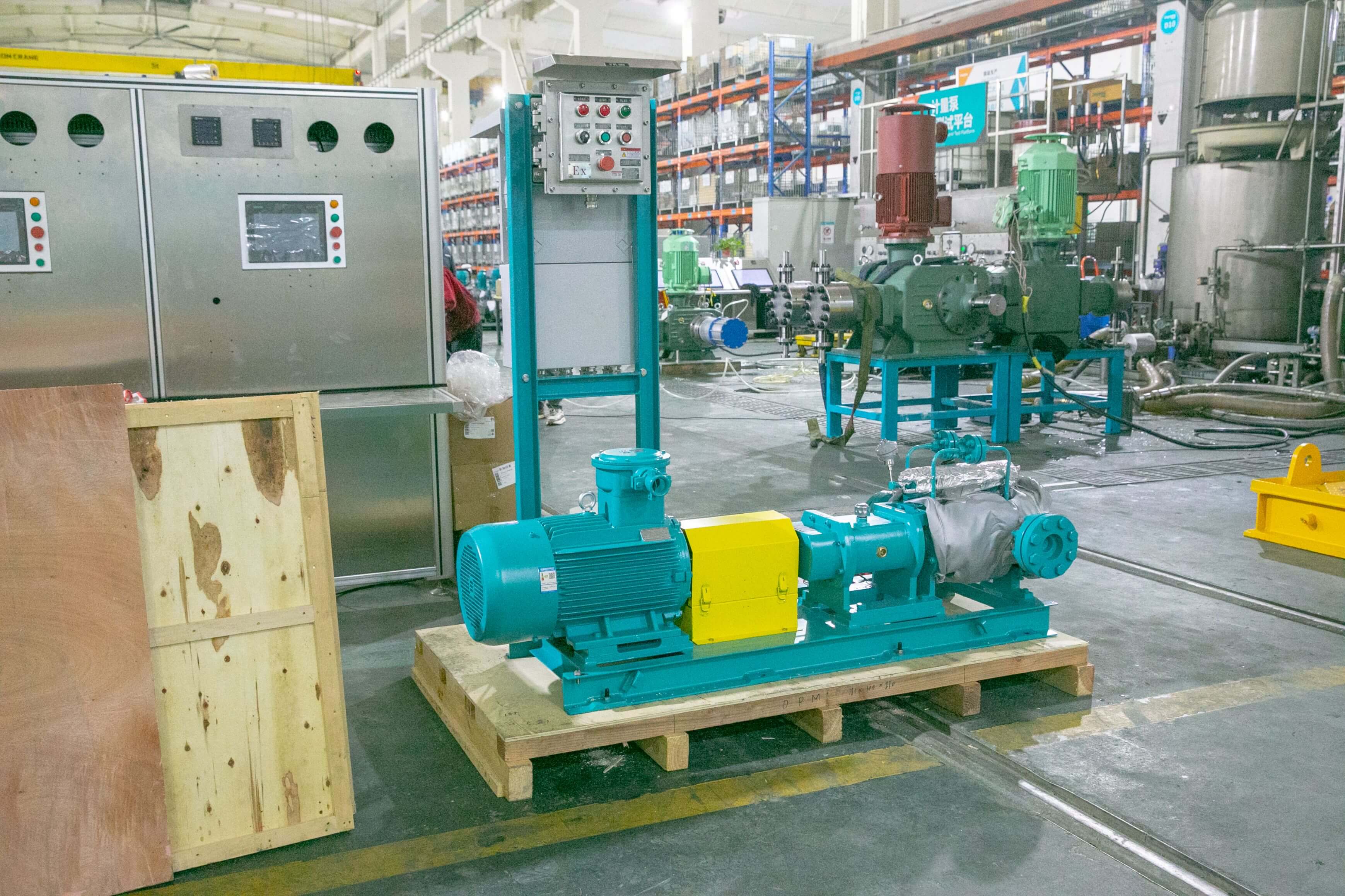
How to Choose a Twin Screw Pump Supplier Step by Step
A structured selection works from the duty point outward. Confirm the medium, flow, pressure and temperature first, then test whether the supplier can explain and document how the proposed pump meets those conditions, and only then compare commercial terms. Suppliers that lead with specifications before asking about the duty point are usually the hardest to hold to a result.
Application review is the first filter. A supplier should be able to work from the medium characteristics, flow rate, pressure, temperature and site process conditions, and to state clearly whether a standard product, a non-standard product or a customized fluid solution is the right answer. That three-way split matters because it shows whether the supplier is shaping the offer to the duty or forcing the duty into a catalogue item.
Manufacturing depth is the second filter. A supplier that covers development, design, manufacturing and complete package delivery in one organisation has fewer handover points, which reduces the risk of a mismatch between what was specified and what is delivered. Where the pump is part of a larger skid or dosing package, that integration matters as much as the pump itself.
Criteria That Carry Real Weight in the Evaluation
- Duty-point review covering medium, flow, pressure and temperature
- A clear position on standard, non-standard and customized supply
- Evidence of in-house development, design and manufacturing
- Complete package delivery rather than pump-only supply where the duty requires it
- A technical contact who can answer questions on the proposed configuration
- A schedule that separates manufacturing time from delivery and commissioning
Each criterion can be checked before an order is placed. The point is not to score suppliers on presentation but to confirm that the answers stay consistent between the technical discussion, the written offer and the delivery schedule.
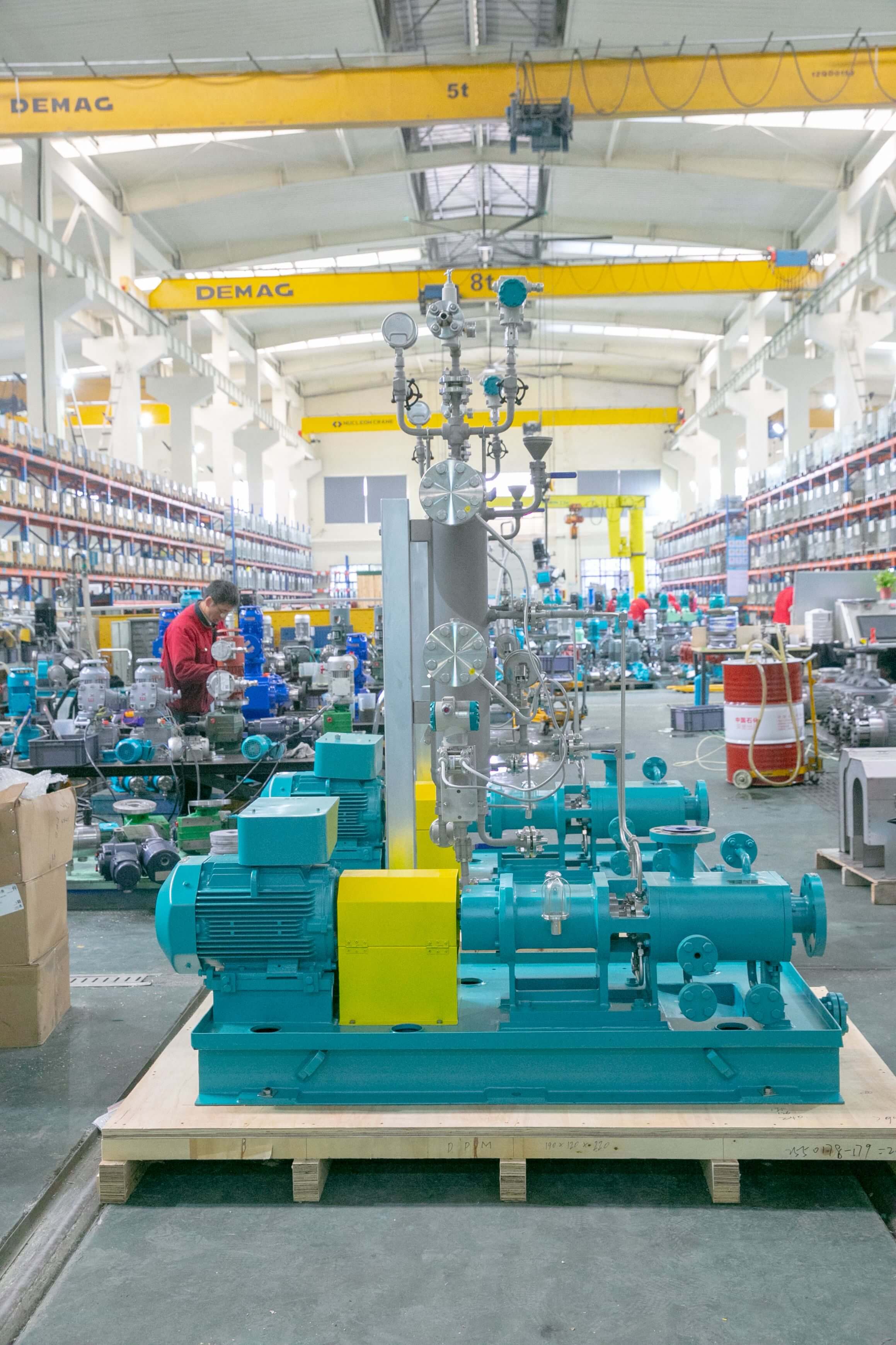
How to Read a Twin Screw Pump Reputation Ranking
A reputation ranking is a shortlisting tool, not a verdict. It aggregates opinion across many applications, while your decision depends on whether one supplier can meet one duty point, document the result and support the pump over its service life. Rankings are most useful when treated as a starting list to be verified rather than as a conclusion.
Rankings tend to reward visibility, which is not the same as fit. A supplier that appears frequently in search results may simply have invested more in marketing, while a quieter manufacturer may hold the process knowledge your duty requires. The practical approach is to use the ranking to build a list, then replace opinion with evidence item by item.
Turning Reputation Into Checkable Evidence
- A written scope of supply that matches the technical discussion
- Documented review of the medium, flow, pressure and temperature
- Traceability for materials and bought-in components
- Inspection and test records for the supplied equipment
- A spare parts position covering the expected service life
- A clear route for technical questions after delivery
None of these items requires a ranking position to answer. A supplier either has the documentation or does not, and that difference is visible before the order is placed rather than after commissioning.
Matching a Twin Screw Pump to the Application
Application fit is decided by the medium, flow rate, pressure, temperature and site process conditions. A pump that performs well on one duty can underperform on another, so selection should be built from the duty data rather than from a product tier or a price band. This is why the same pump family produces very different outcomes across industries.
The conditions that most often drive the choice are high viscosity, high temperature, the presence of solids, and the need for continuous operation without pulsation. Each of these shifts the emphasis between screw geometry, sealing arrangement and drive control, which is why the application review has to come before the specification is fixed.
What the Duty Point Should Cover
- Medium characteristics, including viscosity and the presence of solids
- Required flow rate and the adjustment range needed across operation
- Discharge pressure and any pressure variation during the cycle
- Temperature of the medium and of the surrounding environment
- Piping layout, port orientation and available installation space
- Operating pattern, whether intermittent or continuous
What Supplier Capability Means for Your Selection
Capability is what turns a specification into a reliable installation. A supplier that develops, designs, manufactures and delivers complete packages in one organisation can hold a single thread of responsibility from the duty review through to handover, which is the practical difference between an offer that reads well and a pump that runs as specified.
Depamu (Hangzhou) Pump Technology Co., Ltd. was founded in 2003 and specialises in high-end positive displacement pumps and fluid equipment. The company employs more than 400 people, operates a site of about 35,000 square metres, holds registered capital of RMB 54 million and reports an annual output value of about RMB 500 million. It operates three brands across its fluid equipment range.
Its product range covers metering pumps, high-pressure process reciprocating pumps, air-operated pumps, electric pumps, chemical dosing packages, water and steam sampling devices, water treatment equipment, screw pumps, rotary lobe pumps and gear pumps. High-pressure process reciprocating pumps in this range can reach pressures of 35 MPa and above. The company supplies standard products, non-standard products and customized fluid solutions based on the medium characteristics, flow, pressure, temperature and site process conditions.
The company reports sales of about RMB 450 million in 2023, about RMB 510 million in 2024 and about RMB 560 million in 2025. Reported sales are distributed with petroleum refining and chemicals at about 41%, oil and gas fields at about 23%, nuclear power together with electric power, metallurgy and new energy at about 15%, environmental water treatment at about 13%, new materials and food at about 3%, and other industries at about 5%.
FAQ
Which company offers good-quality twin screw pumps?
Quality is not carried by a company name; it is demonstrated by documented review of your medium, flow, pressure and temperature, together with traceable manufacturing and test records. Shortlist suppliers that answer those questions specifically for your duty point, and treat generic quality claims as unverified until the documentation is produced.
What twin screw pumps are available?
Available twin screw pumps differ by screw profile and pitch, casing arrangement, shaft sealing method and drive configuration. Because those variables are set against the medium and the duty point, the practical range is better described as a configuration set than as a single model list.
Where can I find a twin screw pump supplier?
Look first at manufacturers whose core business is positive displacement pump development and manufacturing, rather than at general trading intermediaries. A supplier that also covers metering pumps, reciprocating pumps, screw pumps, rotary lobe pumps and gear pumps can compare pump types against your duty instead of proposing the only model it holds.
How do I choose a twin screw pump supplier?
Work from the duty point outward: define medium, flow, pressure and temperature, then ask the supplier to explain and document how the proposed configuration meets them, and finally verify manufacturing capability, complete package delivery and spare parts support. Comparing commercial terms before this sequence is complete usually produces a misleading result.
How should I read a twin screw pump reputation ranking?
Treat a reputation ranking as a shortlist tool rather than a verdict. It reflects aggregated opinion across many applications, while your outcome depends on whether one supplier can meet one duty point and document it, so each shortlisted name should be verified against written scope, test records and support arrangements.
Summary
Choosing a twin screw pump supplier is an evidence exercise before it is a commercial one. The sequence that holds up is duty point first, configuration second, documentation third and commercial terms last. Reputation rankings help build a shortlist but cannot substitute for a documented answer to your medium, flow, pressure and temperature. A supplier that develops, designs and manufactures in one organisation, and can deliver a complete package rather than a pump alone, removes handover points where a mismatch can appear. Price is a legitimate factor, but only after the technical fit has been confirmed in writing.