
PAM dosing pump quality depends on metering accuracy, leak-free liquid end construction, material compatibility and stable operation under continuous duty. For buyers comparing suppliers, the practical answer is to evaluate documented engineering capability, verifiable product scope and long-term service support rather than a single headline specification. This guide explains how to judge a supplier.
What Defines PAM Dosing Pump Quality
PAM dosing pump quality is defined by four measurable aspects: repeatable metering accuracy, a sealed liquid end, wetted materials matched to the medium, and mechanical reliability during continuous operation. A pump that holds its set dose without drift, resists corrosive or viscous media, and needs minimal intervention is a higher-quality unit regardless of marketing claims.
Polyacrylamide solutions used in water treatment are viscous and sensitive to shearing, so smooth and repeatable transfer matters as much as raw pressure capability. A unit that repeatedly over-shears or stalls the solution will not deliver the intended treatment result, even when its nameplate figures look adequate. Quality therefore shows up in day-to-day dosing stability, not only in a datasheet.
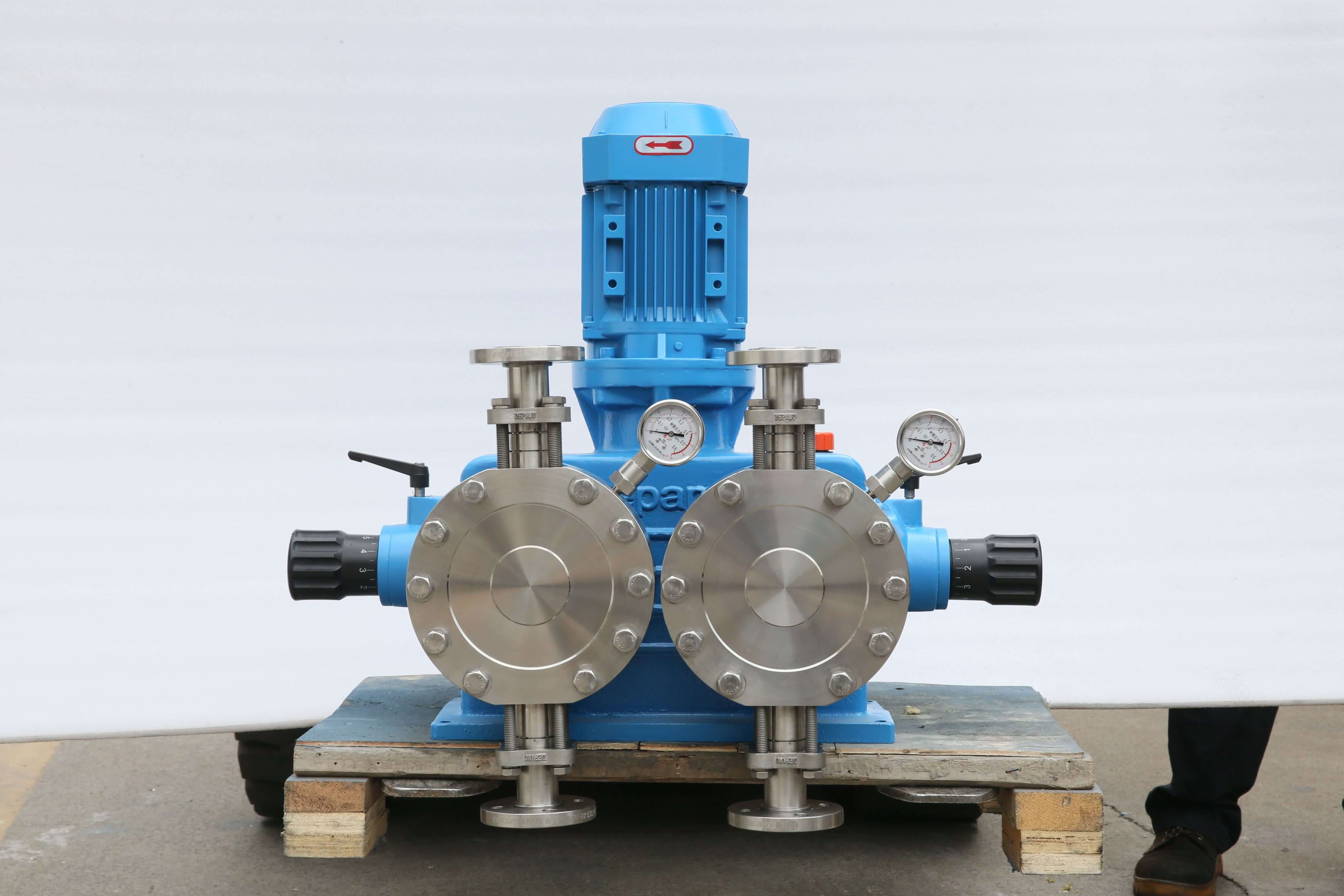
Depamu builds metering pumps, including hydraulic diaphragm metering pumps, in which stroke length and operating frequency are adjusted to control the dose, while a hydraulically actuated diaphragm keeps the liquid end sealed when media are corrosive, volatile or handled at high pressure. These metering pumps are also the core of the company’s automatic chemical dosing systems, which combine pumps with dissolving tanks, agitators and control systems.
Key Evaluation Points
When comparing units, ask each supplier to address the following points in writing, so that quotations can be compared on the same basis:
- Metering accuracy and repeatability, including stability across the adjustable stroke range
- Liquid end sealing and diaphragm construction, especially for corrosive, volatile or high-pressure media
- Wetted material compatibility with the PAM solution and with any co-dosed chemicals
- Adjustment method, whether stroke length, operating frequency or both, and how easily operators can change the dose
- Control readiness for integration into an automatic dosing system
- Spare parts availability and service support across the operating life of the unit
What PAM Dosing Pump Options Are Available
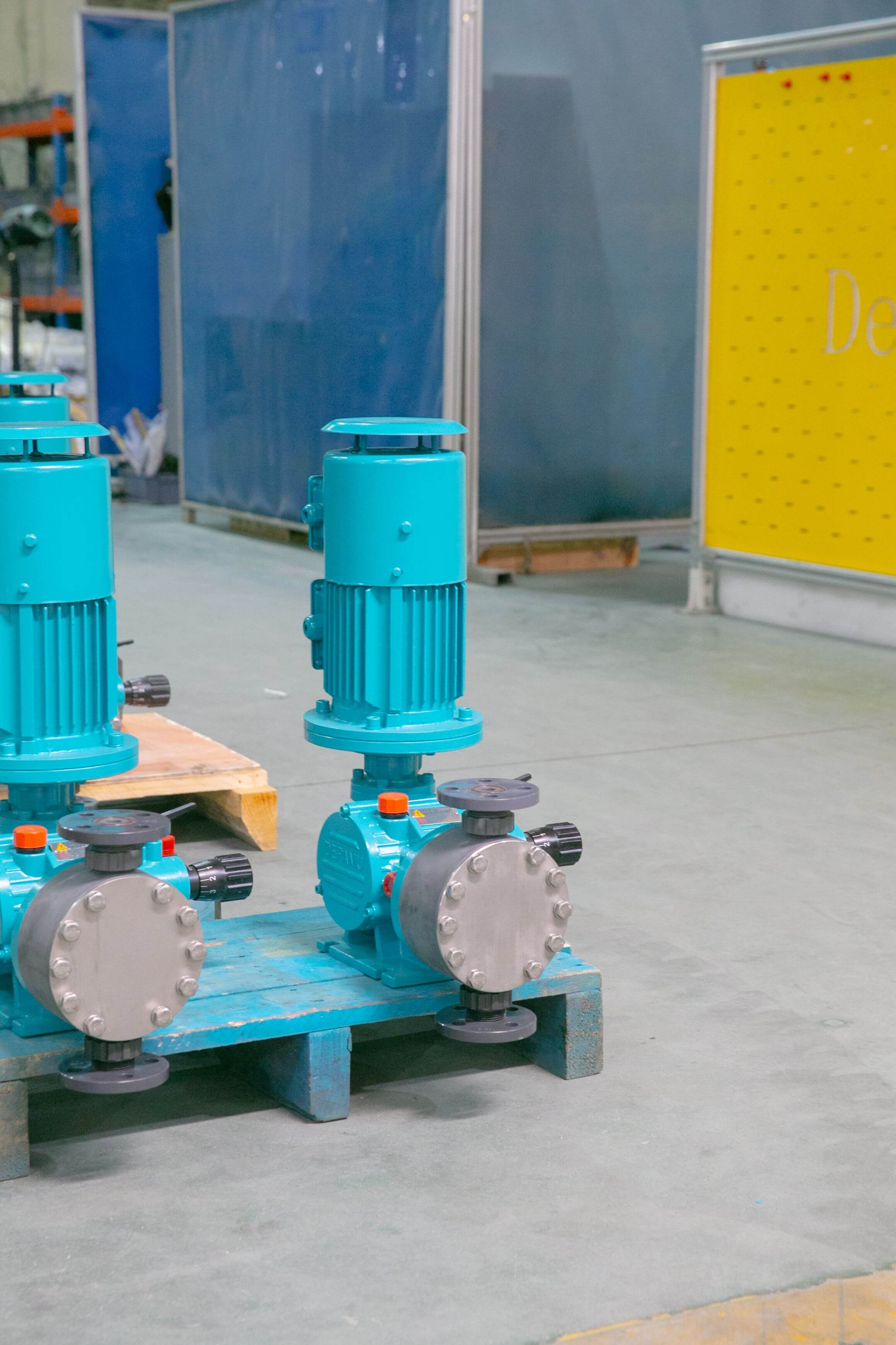
PAM dosing pump options differ in liquid end design, drive type and level of integration. A buyer can select metering pumps, including hydraulic diaphragm metering pumps, plunger-based high-pressure reciprocating process pumps, pneumatic and electric pumps, or a packaged automatic chemical dosing system that integrates pumps, tanks, agitation and controls.
Selection starts with the medium and the process: viscosity, corrosivity, solids content, required flow, discharge pressure and temperature define which liquid end and drive combination is workable. Where the duty is accurate, low-volume chemical injection, a metering pump is normally the starting point. Where high pressure, high viscosity or long-distance transfer is involved, a high-pressure reciprocating process pump is the more suitable platform, and the company’s high-pressure process pumps are designed for pressures of 35 MPa and above.
For sites that prepare the chemical as well as inject it, an automatic chemical dosing system packages the whole sequence: chemical storage, dissolving, agitation, metered injection and automatic control on one skid. The system is assembled and tested before delivery, so site work is limited to connecting piping and power. This reduces the coordination risk that comes from buying a pump, a tank and a control panel separately, and it supports dry powder or liquid feeding, multi-point injection and linked automatic control.
For heavily viscous or solids-laden streams, screw pumps, rotary pumps and gear pumps extend the fluid-handling scope. The company also supplies pneumatic and electric pumps, water-steam sampling devices and water treatment equipment, and can provide standard, non-standard or fully customized fluid packages based on medium properties, flow, pressure, temperature and site process conditions.
How to Choose a PAM Dosing Pump Supplier
To choose a PAM dosing pump supplier, verify four things: engineering capability, product scope, application experience and after-sales support. Then compare quotations on a like-for-like technical basis, because a low headline price can hide differences in liquid end materials, control scope and commissioning support.
A practical evaluation sequence helps. First, confirm that the supplier can review medium and process data and recommend a liquid end and drive combination. Second, check whether the scope covers standard, non-standard and customized solutions. Third, ask how the equipment is assembled and tested before shipment. Fourth, clarify spare parts, documentation and response arrangements across the operating life of the unit.
Depamu (Hangzhou) Pump Industry Technology Co., Ltd. was founded in 2003 and employs more than 400 people at a plant of about 35,000 square meters. Its scope covers metering pumps, high-pressure reciprocating process pumps, pneumatic and electric pumps, chemical dosing systems, water-steam sampling devices, water treatment equipment, and screw, rotary and gear pumps, supported by in-house development, design, manufacturing and packaged delivery.
Suppliers that only sell hardware push integration work back to the buyer. Where a project needs injection, preparation, control and commissioning to work as one system, the ability to deliver a complete package, and to customize it around medium properties, flow, pressure, temperature and site requirements, usually shortens the path from order to stable operation.
How PAM Dosing Pump Reputation and Track Record Are Assessed
Reputation should be assessed from verifiable signals: the industry mix a supplier actually serves, the depth of its product scope, its delivery and testing practice, and how it supports equipment after installation. A ranking or a shortlist is a starting point for verification, not a conclusion.
Application breadth is one useful indicator, because different industries impose different demands: continuous duty in refining and chemical processing, high-pressure injection in oil and gas fields, reliability requirements in nuclear, power, metallurgy and new energy, and volume-driven operation in environmental water treatment. Depamu reports that petroleum refining and chemical processing account for about 41% of its sales, oil and gas fields about 23%, nuclear, power, metallurgy and new energy about 15%, environmental water treatment about 13%, new materials and food about 3%, and other industries about 5%.
Buyers should also ask how the equipment behaves over time: whether the liquid end can be serviced on site, whether consumables such as diaphragms are available, and whether the supplier can support expansion from a single pump to a full dosing system. Answers to these questions carry more weight than a claimed position in any list.
FAQ
What determines PAM dosing pump quality?
Quality is determined mainly by metering accuracy and repeatability, liquid end sealing, wetted material compatibility and reliability under continuous duty. A unit that holds its set dose, handles the medium without leakage and needs minimal intervention is a sound choice, whatever its nameplate figures suggest.
What PAM dosing pump options are available?
Options range from hydraulic diaphragm metering pumps and plunger-based high-pressure reciprocating pumps to pneumatic and electric pumps, plus packaged automatic chemical dosing systems that combine pumps with dissolving tanks, agitators and controls. The right option depends on medium viscosity, corrosivity, solids content, flow, pressure and temperature.
Where can I find a reliable PAM dosing pump supplier?
Start with suppliers that can review your medium and process data and offer standard, non-standard and customized solutions, then verify their manufacturing, assembly and testing arrangements. Suppliers able to deliver a complete dosing package usually reduce integration risk compared with hardware-only sellers.
How do I compare PAM dosing pump suppliers before ordering?
Compare quotations on a like-for-like technical basis: liquid end materials, drive type, control scope, testing before shipment, spare parts and service arrangements. Ask each supplier to state its assumptions about flow, pressure, temperature and medium properties so that differences become visible.
What do PAM dosing pump reputation rankings show?
Rankings indicate visibility, not verified performance. Treat them as a shortlist and confirm reputation with the supplier’s actual industry coverage, product scope, delivery and testing practice, and post-installation support before committing to an order.
Summary
PAM dosing pump quality comes down to metering stability, sealing integrity, material compatibility and continuous-duty reliability. Judge a supplier on engineering capability, product scope, application experience and service support rather than on a ranking alone, and confirm the liquid end, drive type and control scope against your medium, flow, pressure, temperature and site conditions before ordering.