
High-pressure leak-proof diaphragm pumps play a critical role in industrial fluid handling where safety, environmental protection and dosing accuracy cannot be compromised. In chemical plants, refineries, oil and gas facilities, power stations and water treatment plants, even a small leakage from a dosing pump can create safety risks, product loss, emissions and unplanned maintenance. This is why many engineers specify a high-pressure leak-proof diaphragm pump for corrosive, toxic, volatile or high-value chemicals.
Depam (Hangzhou) Pump Industry Technology Co., Ltd. has focused on high-end positive displacement pumps and fluid equipment since 2003. The company combines research and development, production, sales and complete system integration, and its product range includes metering pumps, high-pressure process reciprocating pumps, pneumatic pumps, electric pumps, chemical dosing systems, water and steam sampling systems, water treatment equipment, screw pumps, rotor pumps and gear pumps. For buyers who need a high-pressure diaphragm metering pump for a demanding process, understanding the working principle, selection criteria and supplier evaluation points is essential.
High-Pressure Leak-Proof Diaphragm Pump: What It Is and How It Works
A high-pressure leak-proof diaphragm pump is a positive displacement pump that uses a flexible diaphragm to separate the process fluid from the hydraulic or mechanical drive. The diaphragm acts as a barrier, so the pump can transfer chemicals without a dynamic packing seal in contact with the process liquid. This design is especially valuable when the fluid is corrosive, toxic, volatile, abrasive or expensive.
In a hydraulic diaphragm metering pump, the motor drives a hydraulic system that pushes the diaphragm back and forth. The movement of the diaphragm changes the volume of the pump chamber, and inlet and outlet check valves control the direction of flow. Dosing accuracy is achieved by adjusting the stroke length and running frequency. Because the process fluid is contained by the diaphragm, the pump is designed for leak-free operation and stable chemical injection over long periods.
How the Hydraulic Diaphragm Creates a Leak-Free Barrier
The hydraulic diaphragm mechanism is the key to both safety and precision. Hydraulic oil transmits force to the diaphragm, which then displaces the process fluid. The diaphragm is clamped between the pump head and the hydraulic chamber, creating a static seal rather than a sliding seal. This reduces the risk of leakage associated with packed plunger designs, especially when the pump operates at high discharge pressure.
Material selection is equally important. Wetted parts and diaphragms must be compatible with the chemical being dosed. Depending on the application, pumps may use PTFE, elastomer or other suitable diaphragm materials, together with corrosion-resistant pump heads and valves. A well-matched high-pressure leak-proof diaphragm pump can handle aggressive chemicals while maintaining repeatable dosing accuracy and reducing maintenance downtime.
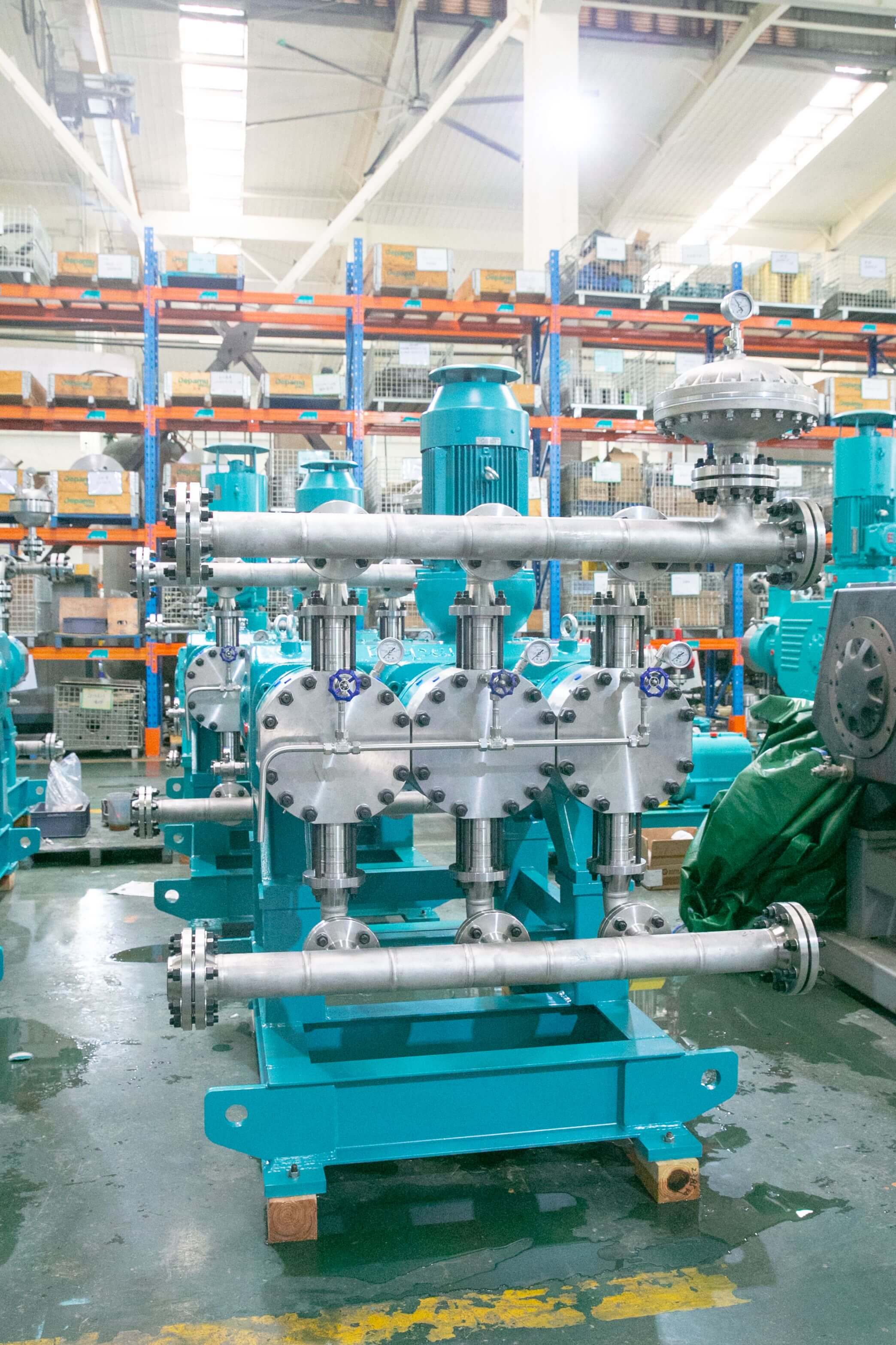
Why Use a Leak-Proof Diaphragm Pump for Chemical Dosing?
The main advantage of a leak-proof chemical dosing pump is containment. Many chemical processes require accurate injection of additives, inhibitors, pH control agents, coagulants, disinfectants or process chemicals. If the pump leaks, the consequences can include operator exposure, corrosion of nearby equipment, environmental non-compliance and inconsistent product quality. A diaphragm metering pump reduces these risks by keeping the process fluid inside a sealed pump head.
Dosing accuracy is another major benefit. High-pressure diaphragm metering pumps can be adjusted to deliver the required flow by changing stroke length and speed. This makes them suitable for continuous chemical injection, batch dosing and automatic control with flow, pH, conductivity or other process signals. The result is more stable chemical consumption and better process control.
Leak-proof diaphragm pumps are also practical for high-pressure systems. When a chemical must be injected into a pressurized pipeline, reactor or process vessel, the pump discharge pressure must exceed the system pressure. A hydraulic diaphragm metering pump can be configured for high discharge pressure while maintaining a sealed fluid chamber. This is why it is widely used for chemical injection in oil and gas, refining and petrochemical operations.
High-Pressure Diaphragm Metering Pump Selection Guide
Selecting the right high-pressure diaphragm metering pump requires more than matching a flow rate and pressure number. The pump must be compatible with the fluid, the process pressure, the control system and the installation environment. A structured selection process helps avoid oversizing, material failure and premature maintenance.
| Selection Parameter | Why It Matters | Information to Provide |
|---|---|---|
| Process fluid | Determines wetted materials, diaphragm type and valve design | Chemical name, concentration, temperature, viscosity, solids content and vapor pressure |
| Flow rate | Affects dosing accuracy, turndown and pump size | Minimum, normal and maximum flow, plus units and operating hours |
| Discharge pressure | Defines the pump model, motor power and pressure-containing components | Normal and maximum system pressure, pipeline backpressure and safety margin requirement |
| Temperature | Influences diaphragm life, seal materials and hydraulic oil selection | Minimum and maximum fluid temperature, ambient temperature and temperature variation |
| Control mode | Matches the pump to manual operation, automation or closed-loop dosing | Manual stroke adjustment, variable speed, 4–20 mA signal, pulse input, batch control or remote start-stop |
| Accessories | Improves accuracy, safety and maintenance access | Pulsation dampener, relief valve, calibration column, strainer, back-pressure valve and skid requirements |
| Installation environment | Affects enclosure, utilities, piping layout and safety design | Indoor or outdoor location, ambient conditions, available power and required documentation |
Flow, Pressure and Control Requirements
When specifying a high-pressure diaphragm metering pump, engineers should define the normal duty point rather than only the maximum capacity. A pump selected far above the normal flow may lose accuracy at low output. The required turndown ratio, allowable pulsation and calibration method should also be discussed with the manufacturer.
Discharge pressure should include the actual system pressure, pipeline pressure drop and any required safety margin. For automatic chemical dosing, the control interface must match the plant control system. Common options include manual stroke adjustment, variable-frequency drive, 4–20 mA analog control, pulse signals and batch dosing. Clear communication of these requirements helps the supplier configure a pump that performs reliably in daily operation.
Materials, Accessories and Installation Environment
Chemical compatibility is not only a question of pump head material. The diaphragm, check valves, valve seats, gaskets and piping connections all need to be reviewed. The manufacturer should receive a complete chemical datasheet whenever possible, including concentration and temperature, because these factors can change material suitability.
Accessories are equally important for accurate and safe dosing. A pulsation dampener can reduce flow fluctuation, a relief valve protects the pump and piping from overpressure, and a calibration column supports accurate output verification. For complete chemical dosing systems, integration with storage tanks, mixers and control panels can simplify installation and improve operational consistency.
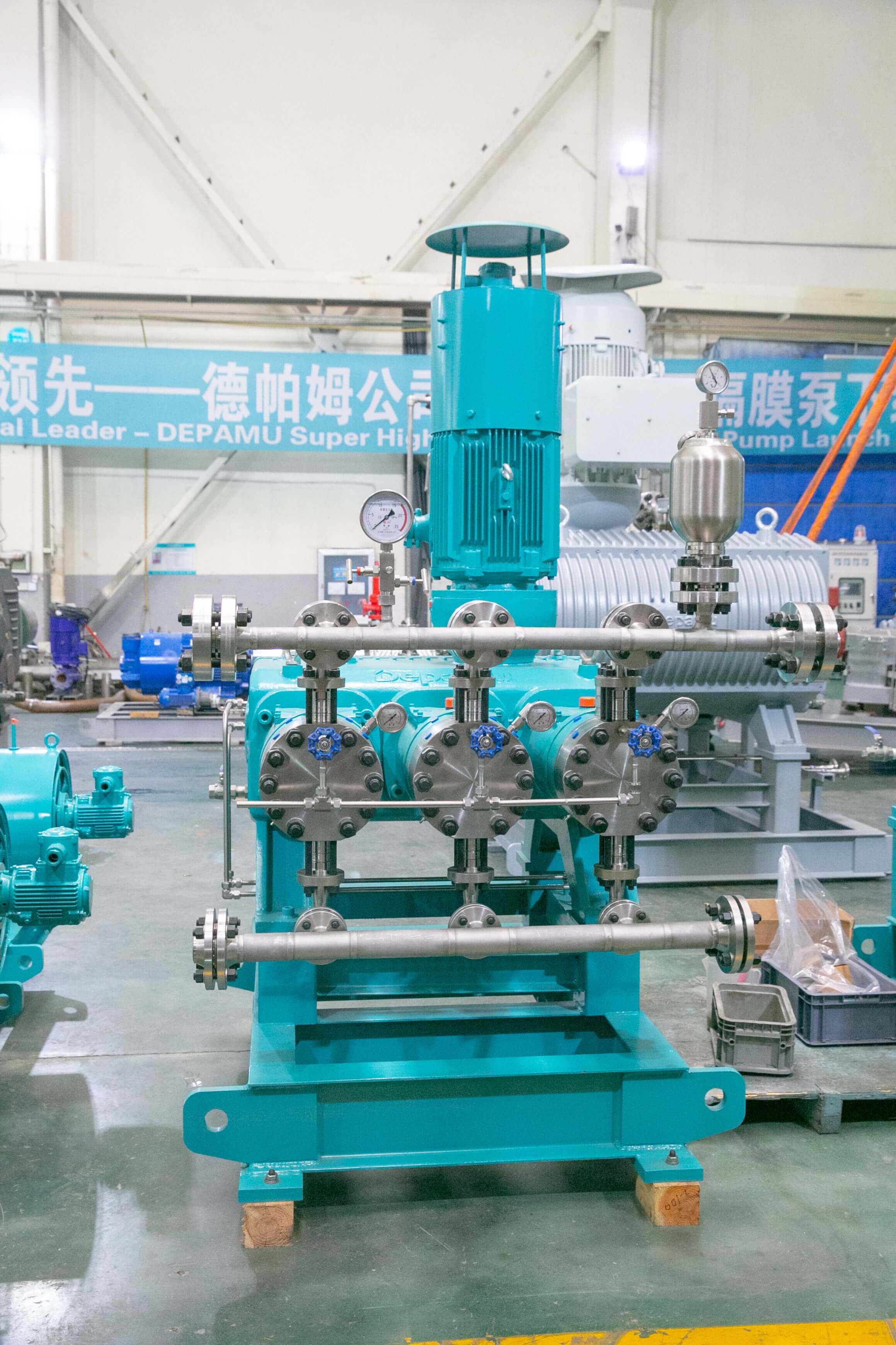
Applications: Where High-Pressure Leak-Proof Diaphragm Pumps Deliver Value
High-pressure leak-proof diaphragm pumps are used where precise chemical injection and containment are both important. Depam’s products have been applied in petroleum refining, chemicals, oil and gas fields, nuclear industry, power, metallurgy, new energy, environmental water treatment, new materials and food. The company’s sales mix reflects this broad application base: petroleum refining and chemicals account for about 41%, oil and gas fields about 23%, nuclear industry, power, metallurgy and new energy about 15%, environmental water treatment about 13%, new materials and food about 3%, and other industries about 5%.
In petroleum refining and petrochemical plants, diaphragm metering pumps are used for additive injection, inhibitor dosing, catalyst handling and process chemical control. In oil and gas fields, they support chemical injection for corrosion inhibition, scale control, demulsification and methanol dosing. The ability to handle high pressure and corrosive media makes the hydraulic diaphragm metering pump a practical choice for these duties.
In water treatment, leak-proof chemical dosing pumps are widely used for coagulants, disinfectants, antiscalants and pH adjustment chemicals. In power plants, they support boiler water treatment and water chemistry control. In new material, metallurgy and new energy processes, accurate additive dosing helps improve process stability and product consistency.
Depam’s Manufacturing and Customization Capabilities
Depam (Hangzhou) Pump Industry Technology Co., Ltd. was founded in 2003 and has more than 20 years of experience in high-end positive displacement pumps and fluid equipment. The company has more than 400 employees and a factory area of approximately 35,000 square meters, with registered capital of RMB 54 million and annual output value of approximately RMB 500 million. Sales reached about RMB 450 million in 2023, RMB 510 million in 2024 and RMB 560 million in 2025, reflecting continued growth in its target markets.
The company introduced advanced technology from Germany and has continued to innovate around metering pumps, high-pressure process reciprocating pumps, pneumatic pumps, electric pumps, chemical dosing systems and related fluid equipment. Its portfolio also includes screw pumps, rotor pumps, gear pumps, emulsion pumps, special centrifugal pumps, water and steam sampling systems and supercritical extraction equipment. This broad range allows the company to support standard products, non-standard products and customized fluid solutions.
Complete Chemical Dosing Skids
For projects that require more than a standalone pump, Depam supplies complete chemical dosing systems that integrate chemical storage, dissolution, mixing, metering and automatic control. These skid-mounted systems use metering pumps as the core component and can include dissolution tanks, agitators and intelligent control systems. They support dry powder or liquid chemical preparation, multi-point dosing and automatic interlocking control.
Factory assembly and testing before delivery help reduce site work. After the skid arrives at the project site, the customer can focus on connecting pipes and power rather than assembling multiple components. This integrated approach is useful for boiler water treatment, circulating water treatment, wastewater treatment and petrochemical applications where consistent chemical preparation and dosing are required.
Installation, Operation and Maintenance Tips
Correct installation improves both dosing accuracy and pump life. The pump should be mounted on a stable base with sufficient access for maintenance. Suction piping should be short, properly supported and sized to avoid excessive pressure loss. A strainer is recommended when the chemical may contain particles, and the discharge line should include appropriate pressure protection and pulsation control.
During commissioning, the pump should be calibrated with the actual chemical or a suitable test fluid. Stroke length, frequency and control signals should be checked against the dosing plan. Operators should confirm that the suction supply is sufficient and that the discharge pressure does not exceed the pump rating. For automatic systems, the control loop should be tested together with the dosing pump and instrumentation.
Routine maintenance includes checking diaphragm condition, hydraulic oil level where applicable, check valve performance, strainer cleanliness and piping connections. Calibration should be repeated according to the plant’s quality and safety procedures. Keeping recommended spare parts such as diaphragms, valves and gaskets available helps shorten downtime. When output drops or becomes unstable, the operator should check suction conditions, valve blockage, air entrapment and diaphragm integrity before assuming a pump failure.
How to Evaluate a High-Pressure Diaphragm Pump Supplier
Choosing a supplier is as important as choosing a pump model. A qualified high-pressure diaphragm pump manufacturer should be able to review the process data, recommend suitable materials and explain the control options clearly. Ask for a technical proposal that includes pump model, wetted materials, diaphragm type, motor power, accessories, documentation and delivery scope.
For custom chemical dosing skids, evaluate the supplier’s engineering capability, assembly standards and testing procedures. A manufacturer that can integrate pumps, tanks, mixers, piping and controls can reduce interface risks between different vendors. It is also useful to ask how spare parts are managed, how operators are trained and how after-sales support is handled.
When comparing several suppliers, use the same process data and commercial scope for each quotation. This makes it easier to compare technical compliance, material selection and lifecycle cost rather than price alone. Reviews and reputation can provide useful background, but they should be supported by technical evidence, reference experience and direct communication with the supplier’s engineering team. To obtain high-pressure leak-proof diaphragm pump contact details, lead time and a quotation, submit a complete process datasheet to the manufacturer’s sales team.
What Affects High-Pressure Diaphragm Pump Price?
The price of a high-pressure diaphragm metering pump depends on the configuration rather than a single list price. Wetted materials, diaphragm material, pressure rating, motor and control type all influence cost. A pump for corrosive chemicals may require special alloys or PTFE components, while a pump for hazardous areas may require a different motor and enclosure configuration.
Accessories and system scope also affect the total cost. Pulsation dampeners, relief valves, calibration columns, strainers, control panels and skid fabrication add value but also change the quotation. Testing requirements, documentation, spare parts packages and delivery lead time can influence the final price. Buyers should compare quotations on the basis of technical scope and lifecycle value, not only the initial purchase price.
For budget planning, request a quotation with a clear breakdown of the pump, accessories, control system, documentation and optional services. If the process conditions are not fully defined, ask the supplier to identify the missing data. A well-specified high-pressure leak-proof diaphragm pump is more likely to deliver stable dosing and lower maintenance cost over its service life.
FAQ
What is a high-pressure leak-proof diaphragm pump used for?
A high-pressure leak-proof diaphragm pump is used for precise chemical injection where containment and reliability are important. Typical applications include additive dosing in refining and petrochemical plants, corrosion and scale inhibitor injection in oil and gas fields, water treatment chemicals, boiler water treatment and process additive dosing in new materials and other industrial processes.
How does a hydraulic diaphragm metering pump prevent leakage?
A hydraulic diaphragm metering pump uses a diaphragm to separate the process fluid from the hydraulic drive. The diaphragm forms a static barrier, so the pump does not rely on a sliding packing seal in contact with the chemical. This design is intended for leak-free operation and helps contain corrosive, toxic or volatile fluids.
Can a high-pressure diaphragm pump handle corrosive, volatile or high-viscosity fluids?
It can be configured for many demanding fluids, but material selection must be checked for each application. Corrosive chemicals may require corrosion-resistant pump heads and PTFE or other suitable diaphragms. Volatile fluids require careful suction conditions and containment. High-viscosity fluids may require larger valves, heated piping or a different pump configuration. Always provide the chemical datasheet and operating conditions to the manufacturer.
How do I select the right high-pressure diaphragm metering pump?
Start with the chemical name, concentration, flow range, discharge pressure, temperature, viscosity and solids content. Then define the control mode, accessories and installation environment. A selection guide should compare the normal duty point, maximum pressure and required turndown. The supplier can then recommend a pump model and wetted materials that match the process.
Where can I buy a high-pressure leak-proof diaphragm pump?
Buying directly from a manufacturer is often preferable for custom or high-pressure applications because engineering support can be provided during selection. Prepare a process datasheet and request a quotation that includes the pump model, materials, controls, accessories, documentation and lead time. Contact details and commercial terms should be obtained directly from the manufacturer’s sales team.
How should I maintain a leak-proof chemical dosing pump?
Check diaphragm condition, hydraulic oil level where applicable, check valves, strainers and piping connections. Verify dosing output by calibration and replace worn parts according to the maintenance schedule. Keep recommended spare diaphragms, valves and gaskets available. If flow becomes unstable, check suction supply, air entrapment and valve condition before changing the pump settings.
How many high-pressure diaphragm pump suppliers should I compare?
It is practical to compare several qualified suppliers using the same technical scope. Evaluate their experience with similar fluids and pressures, engineering support, testing capability, spare parts availability and after-sales response. Price should be reviewed together with material selection, energy consumption, maintenance requirements and delivery scope.
Summary
A high-pressure leak-proof diaphragm pump is a reliable solution for chemical dosing when safety, accuracy and containment matter. Its hydraulic diaphragm design separates the process fluid from the drive, reducing leakage risk and supporting stable injection at high pressure. Selecting the right pump requires careful review of the chemical, flow, pressure, temperature, control mode and accessories.
Depam (Hangzhou) Pump Industry Technology Co., Ltd. combines more than 20 years of pump manufacturing experience with engineering, testing and complete chemical dosing system integration. From metering pumps and high-pressure process reciprocating pumps to custom fluid solutions and skid-mounted dosing systems, the company supports industrial customers in refining, chemicals, oil and gas, power, water treatment and other sectors. For buyers seeking a high-pressure diaphragm metering pump manufacturer, a detailed process datasheet and a structured supplier evaluation are the best starting points.